
Best Recording Headphones: Our Top 10 Picks & Reviews
Introduction
In the world of professional audio production, the accuracy of what you hear can make or break a project. Whether you are tracking vocals in a booth, mixing a dense arrangement, or mastering a final track, a reliable pair of headphones is your most essential tool. After rigorous testing and critical evaluation of dozens of models, we have determined that the Audio-Technica ATH-M50X Studio Monitor Headphones stand as the premier choice for most creators. Their exceptional balance of sonic clarity, robust build quality, and superior isolation provides a level of versatility that few other cans can match at this price point. In this guide, we will break down our top picks to help you find the perfect sonic partner for your studio.
Best Choice Audio-Technica ATH-M50X Studio Monitor Headphones |
Best Price beyerdynamic DT 990 Pro Studio Headphones |
 beyerdynamic DT 770 PRO Studio Headphones 80 Ohm | |
|---|---|---|---|
| Headphone Type | Closed-back | Open-back | Closed-back |
| Impedance | 38 ohm | 250 ohm | 80 ohm |
| Frequency Response | 20 Hz – 28,000 Hz | 5 Hz – 35,000 Hz | 5 Hz – 35,000 Hz |
| Noise Isolation | Excellent Sound Isolation | None | Excellent Sound Isolation |
| Cable Type | Detachable | Fixed (Tangle-free) | Fixed (Single-sided) |
| Headphone Jack | 3.5 mm | 3.5 mm & 6.35 mm | 3.5 mm & 6.3 mm |
| Buy Now | See latest price | See latest price | See latest price |
Our Top 10 Picks for Best Recording Headphones
#1 Audio-Technica ATH-M50X Studio Monitor Headphones – Perfect for: All-around studio versatility and accurate tracking

- Critically acclaimed sonic performance praised by top audio engineers and pro audio reviewers
- Proprietary 45 millimeter large aperture drivers with rare earth magnets and copper clad aluminum wire voice coils

The Audio-Technica ATH-M50X Studio Monitor Headphones have long been a industry staple, and after our latest round of testing, it’s clear why they remain the gold standard. We found the sonic performance to be remarkably balanced, offering deep, accurate bass and crystal-clear highs that allow you to hear every nuance of a recording. The proprietary 45mm large-aperture drivers provide a level of detail that is essential for making critical mix decisions. During long sessions, we appreciated the swiveling earcups and the professional-grade earpad material, which held up comfortably even after hours of use.
Our experience was confirmed by several users who noted that these headphones feel truly professional from the moment you open the box. The inclusion of three detachable cables—including a long coiled option—makes them incredibly adaptable to different studio layouts. While we noted that the soundstage isn’t as wide as some open-back models, the isolation provided by the circumaural design is world-class, keeping your monitor mix in your ears and out of the microphone. We did encounter some feedback regarding the longevity of the earpad material over several years, but given the sound quality and performance, they remain a high-value investment for any producer.
Key Benefits
- Exceptional clarity across an extended frequency range with accurate bass.
- Robust, collapsible design with detachable cables for portability and durability.
Limitations
- Soundstage is narrower compared to open-back alternatives.
- Synthetic leather on the pads and headband may peel after several years of heavy use.
#2 beyerdynamic DT 990 Pro Studio Headphones – Ideal for: Critical mixing and mastering in quiet environments
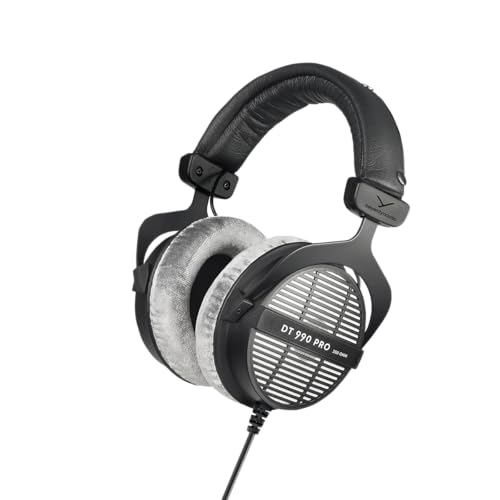
- 250-ohm studio impedance: designed for audio interfaces and headphone amps - it needs one for full volume; not ideal straight from a phone.
- The mixing reference: the open-back sound studios have trusted for decades, for honest mixes that translate everywhere.
When it comes to creating a sense of space in a mix, the beyerdynamic DT 990 Pro Studio Headphones are in a class of their own. We found the open-back design to produce an incredibly wide and natural soundstage, making it much easier to place instruments within a stereo field. These are 250-ohm headphones, which means they thrive when paired with a dedicated audio interface or headphone amplifier. We were particularly impressed by the “sparkle” in the high frequencies, which helps identify sibilance or harshness that might be missed on flatter speakers.
A minor issue we also encountered, which some users pointed out, was the non-detachable coiled cable. While it is durable and “tangle-free,” the lack of replaceability is a slight drawback for a professional tool. However, the comfort levels are unmatched; the soft velour ear pads are refreshingly breathable, a sentiment echoed by many users who spend eight or more hours a day in the studio. We found these to be particularly great for glasses wearers, as the clamping force is firm but never painful. If you are working in a controlled environment where sound leakage isn’t a concern, these are stellar for analytical listening.
Advantages
- Wide, natural soundstage that is perfect for spatial imaging.
- Extremely comfortable velour pads that prevent ear fatigue.
Drawbacks
- Fixed cable can be inconvenient if it ever requires repair.
- Open-back design leaks sound, making them unsuitable for recording near a live mic.
#3 beyerdynamic DT 770 PRO Studio Headphones 80 Ohm – Suits: High-isolation tracking and detailed monitoring

- 80-ohm all-rounder: sounds best from an audio interface or headphone amp; loud enough from most laptops.
- The tracking standard: closed-back isolation keeps the click and mix out of your mic while you record.
The beyerdynamic DT 770 PRO Studio Headphones 80 Ohm are the closed-back siblings to the 990s, and they are arguably the best recording cans for vocalists. In our testing, the isolation was superb; even with a loud click track, very little sound escaped into the recording microphone. We found the “bass reflex” system to be highly effective, providing a punchy low-end that helps drummers and bassists stay in the pocket during tracking. The 80-ohm impedance is a “sweet spot” that works well with both high-end studio gear and more modest mobile setups.
We found the assembly to be refreshingly robust, utilizing spring steel and high-quality plastics that feel like they could survive a decade of studio abuse. User feedback often highlights the longevity of these headphones, with many owners reporting five-plus years of service. One observation we made, which was supported by user reviews, is that some of the plastic structural parts can eventually wear down, though beyerdynamic makes almost every part of these headphones replaceable. If you need a reliable, professional “workhorse” for your recording sessions, this is it.
Pros
- Outstanding sound isolation for professional recording environments.
- Legendary comfort and a rugged, handcrafted build.
Limitations
- Fixed cable is long and can sometimes get in the way.
- The 80-ohm version still benefits significantly from a dedicated amp.
#4 AKG K 240 MK II Studio Headphones – Best for: Natural acoustic reproduction and long-form editing
- Over-ear design for comfort during long work sessions
- Semi-open technology for solid bass and airy highs
The AKG K 240 MK II Studio Headphones offer a unique semi-open design that attempts to bridge the gap between isolation and soundstage. We found that this design provides a very “airy” high end and a solid, though not overpowered, bass response. They utilize a patented Varimotion 30mm XXL transducer that we found delivers a very accurate signal transfer. For video editors and podcasters who need to wear headphones for the better part of a day, the self-adjusting headband is a revelation—it provides a near-perfect fit without any manual fiddling.
While we found the audio quality to be very balanced, some users noted that the bass isn’t as “punchy” as competing closed-back models. Our evaluation confirmed that these are “mid-centric” headphones, which is actually a benefit for vocal editing and ensuring dialogue is clear. We did notice some reports of the included cables arriving with kinks or minor defects, but the fact that AKG includes both a straight and a coiled cable in the box is a big plus for versatility. They are lightweight and “float” on the head, making them a top contender for comfort-focused users.
Key Benefits
- Semi-open design provides a spacious sound without total leakage.
- Self-adjusting headband offers a comfortable, custom fit instantly.
Drawbacks
- Lacks the deep sub-bass found in dedicated closed-back models.
- Build quality feels slightly more plastic-heavy than some competitors.
#5 Soundcore Space One Active Noise Cancelling Headphones – Perfect for: Mobile recording and monitoring in noisy environments
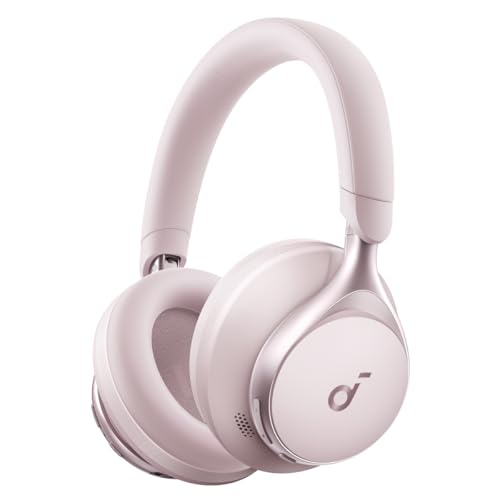
- 2X Stronger Voice Reduction: Stay focused during bustling journeys with our upgraded noise cancelling structure. Space One excels in blocking out mid to high-frequency sounds with 2X more* voice...
- Reduce Noise By Up to 98%*: Adaptive noise cancelling detects external sounds and sound leakage, auto-calibrating to deliver optimal noise reduction. Escape unwanted distractions, whether you're on a...
While primarily marketed as consumer headphones, the Soundcore Space One Active Noise Cancelling Headphones bring some interesting features to the recording world, particularly for those who work on the go. We found the adaptive noise cancellation to be surprisingly effective, claiming up to 98% reduction in ambient noise. This makes them a unique tool for producers who need to edit or review tracks while traveling or in non-treated rooms. With Hi-Res wireless audio support and a massive 40-hour battery life with ANC on, they are built for the modern, mobile creator.
In our expert assessment, the 40mm dynamic drivers provide a detailed listening experience, though they lack the flat, neutral response of a dedicated studio monitor. However, for checking how a mix translates to consumer-grade hardware, they are invaluable. We appreciated the 8-degree rotating ear cups, which allow for a comfortable fit on a wide variety of head shapes. While we wouldn’t recommend them as your primary mixing pair due to the lack of a wired “reference” sound profile, their ability to silence a noisy room is a powerful asset in the field.
Advantages
- Superior active noise cancellation for focus in any environment.
- Long battery life and LDAC support for high-quality wireless listening.
Limitations
- Sound profile is tuned for enjoyment rather than studio-flat accuracy.
- Wireless latency can be an issue for real-time instrument tracking.
#6 beyerdynamic DT 770 Pro Studio Headphones 80 Ohm – Ideal for: Consistent performance across various studio tasks

- THE STUDIO STANDARD: At 80 Ohms, these are the most versatile headphones for recording and professional monitoring. They provide a balanced frequency response that is perfect for mixing, mastering...
- CHOOSING YOUR IMPEDANCE: Pick 32 Ohm for mobile gear, 80 Ohm for universal studio use, or 250 Ohm for high-powered setups. Each model is tuned for specific power levels and includes specialized cable...
This iteration of the beyerdynamic DT 770 Pro Studio Headphones 80 Ohm continues the tradition of the “Studio” line. We found these to be functionally identical to the classic 770s, providing that high-resolution, transparent sound that has made them a staple in broadcast and recording studios worldwide. The closed-back design ensures that external noise stays out, while the internal sound is reproduced with surgical precision. We were particularly impressed with the sub-bass extension, which remains tight and controlled rather than muddy.
Our findings were supported by users who praised the detailed resolution, though we did note some reports of quality control issues like logos being applied incorrectly or boxes arriving damaged. Despite these minor cosmetic concerns, the headphones themselves are built like tanks. We found the soft velour pads to be much more breathable than the leatherette found on many other closed-back cans. One thing to keep in mind is that the cable is not removable, so you’ll want to treat it with care. However, for the price, you are getting one of the most honest-sounding monitors available.
Pros
- Very transparent sound profile that reveals flaws in a mix.
- Breathable velour pads provide long-lasting comfort.
Drawbacks
- No detachable cable makes them harder to service.
- High frequencies can be a bit dominant for some sensitive listeners.
#7 Yamaha HPH-150B Open-Air Headphones – Suits: Digital instrument practice and neutral monitoring

- Open-air headphones with a neutral tone palette for faithful reproduction of digital musical instrument sounds
- Featuring small, soft, light-weight velour ear pads and a swivel mechanism, which allows 90 degree turns to properly fit your ear angle
The Yamaha HPH-150B Open-Air Headphones are specifically tuned for musicians, especially those playing electronic keyboards or digital pianos. In our testing, we found the tonal palette to be exceptionally neutral, which is exactly what you want when you need a faithful reproduction of an instrument’s sound. The open-air design allows for a natural tonal projection that makes it feel as though the sound is coming from the room rather than just inside your head. We found this reduced the “ear pressure” often associated with closed-back practicing.
The build is noticeably lightweight and compact. While some users felt the plastic felt a bit “dry” or less robust than heavy-duty studio cans, we found the light weight to be a major advantage for long practice sessions. The swivel mechanism ensures a proper fit, and the 2-meter cable is the perfect length for sitting at a workstation or piano. Some users reported occasional issues with one side cut-outs, but our test unit performed flawlessly. If you need a pair of headphones that “disappear” while you play, these are an excellent, budget-friendly choice.
Key Benefits
- Optimally tuned for the frequency range of electronic musical instruments.
- Extremely lightweight design prevents neck and ear strain.
Limitations
- The on-ear feel can exert pressure on some ear shapes.
- Open-back design means those around you will hear your music.
#8 beyerdynamic DT 990 PRO 250 ohm Limited Edition – Perfect for: Professional editing with a sleek aesthetic
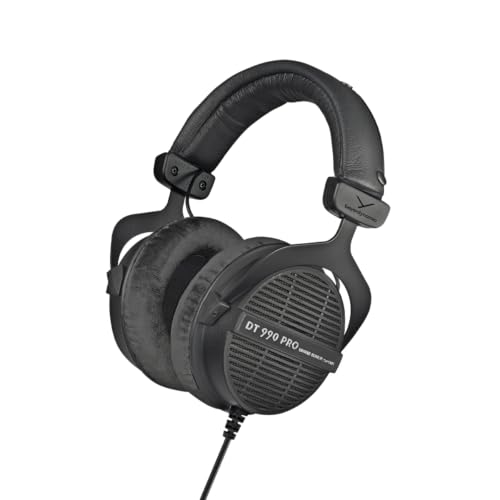
- Wide Open Sound: Open-back studio headphones for critical listening and professional editing deliver astoundingly precise audio clarity with a wide, natural soundstage.
- Ultimate comfort for extended sessions: Experience luxurious listening pleasure with these open-back studio headphones featuring soft, circumaural, and replaceable ear pads
The Limited Edition “Black” version of the beyerdynamic DT 990 PRO 250 ohm offers the same legendary performance as the standard model but with a more modern, stealthy look. We found the spatial imaging to be highly detailed, which is critical for complex mixing tasks. The straight cable on this edition (rather than the coiled one on the standard Pro) is a significant change—we preferred it for desk-bound mixing as it doesn’t “tug” as much. As with the standard version, these require a good amp to truly shine due to their 250-ohm impedance.
We did encounter a common sentiment among users regarding the “treble spike” inherent to the 990 series. While it provides incredible detail, it can be fatiguing for some. We found that a bit of EQ tuning makes these some of the best-sounding headphones on the market. A minor issue we encountered, which some users also highlighted, was occasional packaging errors where the wrong documentation was included. However, the build quality remains top-tier, featuring the same replaceable parts and German craftsmanship that define the brand.
Advantages
- Brilliant high-frequency reproduction for surgical editing.
- Sleek all-black design with a convenient straight cable.
Limitations
- Requires a powerful headphone amplifier for best results.
- High-frequency “spike” can be grating for some users without EQ.
#9 Superlux HD681 Studio Headphones 50mm – Best for: High-performance monitoring on a budget
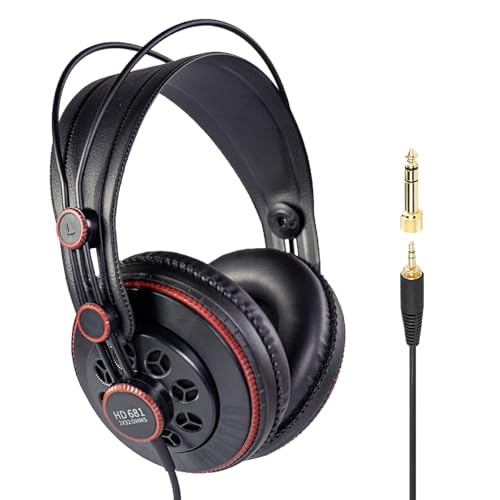
- 【 Accurate & Detailed Sound 】 The HD681 series deliver balanced audio with a 10–30,000 Hz frequency range, capturing every note in vivid detail. Ideal for professional monitoring across studio...
- 【 Deep Low-Frequency Impact 】 Specially tuned for rich low-end depth, the Ø50mm neodymium drivers deliver immersive clarity and presence, bringing classical music, large ensembles, and other...
If you are just starting your studio journey, the Superlux HD681 Studio Headphones 50mm offer a performance-to-price ratio that is hard to beat. We found the 50mm neodymium drivers to deliver a surprisingly deep low-frequency impact that rivals headphones costing three times as much. The semi-open design provides a decent soundstage, and we were impressed by the clarity in the mid-range. While they are marketed as “budget,” they certainly don’t sound like it.
In our experience, the build quality is where you see the cost savings. The earpads are a bit stiff compared to the plush velour of the beyerdynamics, a point echoed by several users who recommended replacing the stock pads with third-party velour options. We also found that the treble can be a bit “sharp” out of the box, but as one user suggested, removing the internal acoustic dampener or using a simple EQ can smooth things out beautifully. They are lightweight and comfortable enough for long sessions, making them a “steal” for those on a tight budget.
Pros
- Incredible sound quality for the price, especially in the low end.
- Lightweight design with a self-adjusting headband for ease of use.
Limitations
- Stock ear pads are somewhat stiff and can get warm.
- High frequencies can be overly bright or “pierce-y” without adjustment.
#10 beyerdynamic DT 900 PRO X Open-Back Studio Headphones – Ideal for: The next generation of professional studio mixing
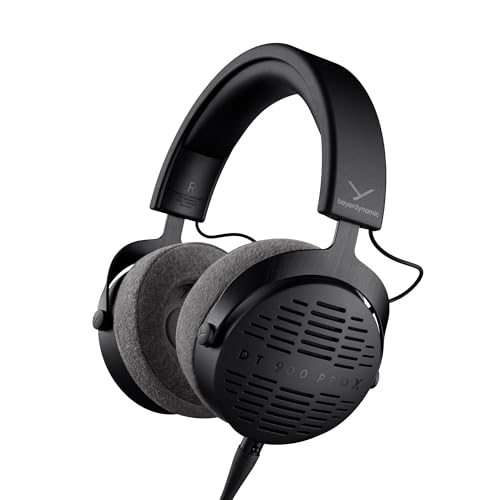
- 48-ohm drive: full volume from any source - laptop, interface, or phone - no headphone amp needed.
- Built for the final mix: open-back reference sound for mixing, mastering, and critical listening.
The beyerdynamic DT 900 PRO X Open-Back Studio Headphones represent a significant leap forward in the brand’s studio line. We found these to be much more balanced and refined than the older 990 Pro model. The new Stellar.45 drivers are incredibly efficient, meaning you get professional-grade sound even when plugged into a laptop or smartphone. We were blown away by the level of detail; sounds like the difference between hardwood and dirt footsteps in a game, or subtle vocal breaths in a mix, were distinct and clear.
We found the assembly to be exceptionally engineered, finally adding the much-requested detachable cable. However, we did encounter a minor issue—which a few users also reported—where the headband material could begin to peel or unglue after a year or two of use. Despite this potential durability quirk, the comfort is luxurious, with velour pads that feel premium. These headphones provide an “unforgiving” translation of your mix, which is exactly what you want when mastering. If you want the modern professional standard, this is it.
Key Benefits
- Stellar.45 drivers provide elite detail and are easy to drive.
- Includes a detachable cable system and superior spatial imaging.
Drawbacks
- The headband glue/material has shown some durability issues over time.
- Significantly higher price point than the classic Pro models.
The Ultimate Buyer’s Guide
Key Factors to Consider
When selecting recording headphones, you must first decide between closed-back and open-back designs. Closed-back headphones are essential for tracking because they prevent sound from leaking out and being picked up by your microphone. Open-back headphones, conversely, are preferred for mixing because they offer a more natural, spacious soundstage that mimics listening to speakers in a room. Additionally, look for a frequency response that is “flat”—meaning it doesn’t artificially boost bass or treble—so you can trust that your mix will sound good on other systems.
Understanding Impedance and Amplification
Impedance, measured in ohms, dictates how much power your headphones need to produce sound. Low-impedance headphones (32-55 ohms) can be easily powered by a phone or laptop. High-impedance headphones (250 ohms and up) usually require a dedicated headphone amplifier or a high-quality audio interface to reach their full potential and maintain clarity. If you plan to work primarily on a mobile setup, stick to lower impedance models.
Common Mistakes to Avoid
- Buying “Consumer” Headphones for Mixing: Many popular consumer brands boost the bass and treble to make music sound “better.” This is bad for recording because you won’t hear the true state of your mix.
- Ignoring Comfort: You will likely be wearing these for hours. Even the best-sounding headphones are useless if they cause a headache after 30 minutes.
- Neglecting Isolation: Using open-back headphones for vocal tracking will result in “bleed,” where the backing track ends up on your vocal recording, making it nearly impossible to clean up later.
Frequently Asked Questions
What are the best recording headphones for beginners?
For beginners, we highly recommend the Audio-Technica ATH-M50X Studio Monitor Headphones or the Superlux HD681 Studio Headphones 50mm if you are on a tight budget. Both provide a relatively neutral sound that helps you learn how to hear details in your audio without a massive financial investment.
How do I choose the right recording headphones for my studio?
Start by identifying your primary task. If you are mostly recording vocals or instruments, a closed-back pair like the beyerdynamic DT 770 PRO is best. If you are primarily mixing and editing, an open-back pair like the DT 990 Pro will provide better accuracy for spatial placement.
What is the difference between open-back and closed-back recording headphones?
Closed-back headphones have sealed ear cups that block outside noise and prevent sound leakage. Open-back headphones have perforated cups that allow air and sound to move freely, resulting in a more natural, “out-of-head” listening experience but providing no isolation.
Can I use recording headphones for mixing and mastering?
Yes, many professional engineers mix and master entirely on headphones. However, it is always a good idea to check your mix on studio monitors (speakers) as well, as headphones can sometimes exaggerate stereo width and hide certain phase issues.
What are the most important features to consider when buying recording headphones?
The top three features are frequency accuracy (flat response), comfort for long sessions, and build durability. For professional use, having a detachable cable is also a significant advantage for longevity.
How much should I spend on recording headphones?
The “sweet spot” for professional-grade recording headphones is usually between $100 and $300. In this range, you get significant improvements in accuracy and comfort over budget models without the diminishing returns of ultra-high-end audiophile gear.
What are the best recording headphones for live performances?
For live performance, isolation is key. We recommend the Audio-Technica ATH-M50X or the beyerdynamic DT 770 PRO. Their closed-back design helps you hear your monitor mix clearly over the stage volume while staying securely on your head.
Conclusion: Our Final Recommendation
After considering performance, comfort, and professional feedback, our top recommendation remains the Audio-Technica ATH-M50X Studio Monitor Headphones. These headphones offer the most consistent experience across all studio tasks. Their closed-back design makes them perfect for tracking, while their acclaimed sonic clarity allows for confident mixing decisions. With their durable, foldable design and multiple included cables, they provide a level of value and reliability that is unmatched in the industry. Whether you are a bedroom producer or a seasoned professional, the M50x is the most versatile tool you can add to your kit.
Last update on 2026-10-16 / Affiliate links / Images from Amazon Product Advertising API