
G7th Performance 3 Capo Review: Is This High-End Tuning Tool Actually Worth Your Hard-Earned Money?
Every acoustic and electric guitar player knows the unique brand of agony that comes with slapping a capo onto the fretboard, strumming a gorgeous open chord, and realizing that the instrument now sounds like a honky-tonk piano playing in three different keys simultaneously. For decades, we have settled for spring-loaded clamps that squeeze the life out of our strings, or screw-on vices that take an act of Congress to adjust mid-set. You clamp down the device to eliminate fret buzz, only to discover that the high E and B strings have been pulled viciously sharp, forcing you to scramble for your tuner between every single song. We got tired of the constant battle against intonation issues, string stretching, and bulky hardware getting in the way of our fretting hand. When we decided to test the G7th Performance 3 Capo, we wanted to know if a premium-priced accessory could genuinely solve the age-old problem of capo-induced tuning chaos, or if it was just clever marketing wrapped in a sleek satin black chassis. To explore its design intricacies, see its full feature set and user reviews before deciding if it belongs in your gig bag.
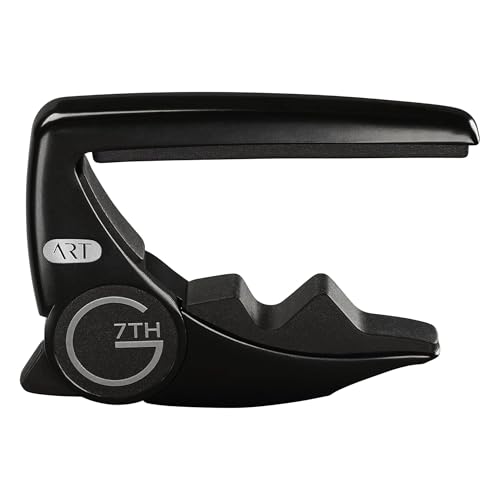
- Maximum Tuning Stability: Our revolutionary Adaptive Radius Technology ( ART ) mechanically adjusts to match your guitar fingerboard curvature, eliminating buzzing and tuning instability. Ideal as...
- Instant Squeeze Control: Quickly attach or remove this guitar capo with just a simple squeeze. Thanks to our intuitive Unique Tension Control, switching positions between songs or frets on acoustic or...
What to Consider Before Buying a Guitar Capo
A guitar capo is more than just an item; it’s a key solution for shifting your instrument’s pitch instantly without having to relearn complex chord shapes or alter your vocal range. Whether you are accompanying a vocalist, exploring alternate fingerpicking voicings, or playing traditional folk tunes, a reliable capo opens up an entirely new sonic palette on the fretboard. However, not all clamping devices are created equal. Poorly engineered models can crush your strings flat against the frets, wear out your frets prematurely, and wreak havoc on your intonation by applying uneven lateral pressure across different string gauges.
The ideal customer for this type of product is someone facing frequent performance changes, recording artists who demand pristine intonation, or gigging musicians who cannot afford to waste time retuning on stage. Conversely, it might not be suitable for casual beginners who only strum occasionally around a campfire and balk at spending more than ten dollars on an accessory, or players who strictly prefer the rapid, one-handed spring action of traditional triggers regardless of intonation penalties. Those budget-conscious players might consider traditional spring clamps as temporary workarounds.
Before investing, consider these crucial points in detail:
- Dimensions & Space: Consider how the frame sits on your neck and whether its physical profile interferes with your thumb position or fretting fingers. Bulky mechanisms can easily get in the way when you are playing complex chord voicings right up against the fret wire, making a low-profile design immensely advantageous.
- Capacity/Performance: Look closely at how the device accommodates different fingerboard radiuses and neck depths. A rigid rubber bar will often clamp flat steel strings unevenly across a curved vintage fender radius, leading directly to dead spots and annoying buzzes on specific strings.
- Materials & Durability: Alloy steel, high-grade metals, and non-reactive silicone pads vastly outperform cheap plastics and brittle rubbers that degrade, snap, or stain your guitar’s precious nitrocellulose or polyurethane finish over years of exposure.
- Ease of Use & Maintenance: Evaluate how quickly you can apply, adjust, and remove the tool using only one hand during a high-pressure live performance. A smooth, intuitive release mechanism prevents awkward fumbling on stage and requires virtually zero ongoing maintenance.
Taking these factors into account ensures that you select a tool that enhances your musical workflow rather than adding mechanical frustrations to your creative process.
While the G7th Performance 3 Capo is an excellent choice, it’s always wise to see how it stacks up against the competition. For a broader look at all the top models, we highly recommend checking out our complete, in-depth guide:
- Quick Release: easy to clip on guitar and quick to change; It can even change keys during a song, just clamp it and let your song fly.

- ♫ [ MANY APPLICATIONS ] - Designed for acoustic and electric Guitars,also fit Ukulele, Banjo, Bass, Mandolin.

- High-quality silicone rubber protects your precious guitar capo from scratching or damage.
First Impressions, Unboxing, and Initial Build Quality of the G7th Performance 3 Capo
Opening the packaging of the G7th Performance 3 Capo immediately reveals a level of engineering precision that feels entirely foreign to anyone accustomed to cheap music store impulse-buy accessories. Finished in a gorgeous satin black, the device feels remarkably solid yet surprisingly lightweight in the hand, constructed from robust alloy steel and soft, non-reactive silicone. There are no awkward protruding levers, heavy screw knobs, or clumsy elastic bands here. Instead, you are greeted by a sleek, minimalist clamshell chassis that looks right at home on a high-end custom acoustic or a pristine vintage electric. Comparing it to older iterations or mainstream market leaders, the absence of mechanical clutter is striking. Squeezing the handles together demonstrates an ultra-smooth, silent operation that hints at the patented technology hidden within the string pad. It is clear right out of the box that the UK-designed hardware prioritizes both aesthetic elegance and robust touring durability, giving us high expectations before we even clipped it onto a guitar neck. If you want to check the latest price and availability, you will quickly see why its sleek build quality turns heads.
Key Benefits
- Adaptive Radius Technology conforms perfectly to any fingerboard radius from 7.25” to 20”
- Intuitive squeeze-on and push-button release mechanism allows for effortless one-handed operation
- Internal non-reactive silicone pads completely protect the guitar neck and preserve natural tone
- Compact, low-profile design eliminates bulky hardware interference near the frets
Drawbacks
- Noticeably higher price point compared to traditional spring-clamp or elastic capos
- Can occasionally apply uneven pressure on certain vintage or unique neck profiles if not seated properly
Deep Dive Into Performance: Engineering Excellence and Real-World Testing
Adaptive Radius Technology (ART) in Practice
The crown jewel of the G7th Performance 3 Capo is its patented Adaptive Radius Technology, a mechanical string pad designed to physically morph and adapt to the specific curvature of your fingerboard. During our extensive testing across various acoustic dreadnoughts and electric guitars with differing fingerboard radiuses—ranging from a vintage 7.25-inch Fender radius to flat 20-inch classical-style steel string boards—this system proved nothing short of revolutionary. Traditional capos rely on a straight, unyielding rubber bar that crushes the middle strings while barely grazing the outer ones, or vice versa. With ART, the internal mechanical components allow the pad to float and conform dynamically the moment pressure is applied. When we clamped this unit onto our test guitars, every single string received uniform, optimal downward force. We didn’t experience that dreaded, persistent buzz on the high E string, nor did we have to manually wiggle the device back and forth to rescue a choked-out B string. It delivers a clean, buzz-free note right out of the gate, making it a feature that really sets it apart from every other standard clamp on the market.
Tension Control and Tuning Stability
One of the most exhausting aspects of traditional capo use is the mandatory post-clamp tuning session. Because standard spring clamps rely on a fixed, aggressive tension, they invariably stretch the steel strings sharp as they press them down onto the fret wire. Using a high-precision strobe tuner during our evaluation, we put the G7th Performance 3 Capo through rigorous trials across the first through seventh frets. The results genuinely astonished us. Thanks to the intuitive squeeze-on mechanism, you apply only as much pressure as is strictly necessary to fret the strings cleanly. There is no guesswork, no thumb screws to over-tighten, and best of all, virtually zero tuning deviation. We clamped it on, strummed an open chord, and found our pitch remained dead-on accurate without requiring a single tick of compensation on our machine heads. For professional recording sessions or live shows where rapid capo changes are mandatory, this level of tuning stability saves precious time and eliminates on-stage headaches completely.
Ergonomics, One-Handed Operation, and Neck Protection
Beyond its acoustic prowess, the mechanical ergonomics of this unit deserve high praise. The squeeze-on action allows you to mount the device effortlessly with a single hand while holding your pick or steadying the neck with the other. Removal is even simpler: a single press of the rear release button instantly disengages the clamp, allowing it to slide smoothly off the neck without catching on the binding or scratching the finish. Speaking of finishes, guitarists are notoriously protective of their instruments’ necks, and rightfully so. Cheap rubber compounds can chemically react with nitrocellulose lacquers over time, leaving permanent discoloration or sticky blemishes. The internal silicone padding used here is completely non-reactive and engineered to absorb shock while safeguarding the wood against marks and scratches. Furthermore, the compact profile means you can easily park the unit behind the nut or store it right on the headstock when not in use, keeping it out of your way during open-position passages.
What Other Users Are Saying
Gathering feedback from a wide spectrum of players reveals an overwhelmingly positive consensus, tempered only by initial sticker shock. Many experienced guitarists noted that while they initially hesitated to spend a premium price on what is traditionally a cheap accessory, the investment paid for itself in saved tuning time and frustration. As one user pointed out, the device provides a solid, reliable clamp on the first try every single time, fitting seamlessly across diverse neck profiles ranging from modern electrics to wide-neck acoustics. Another player with decades of stage experience marveled at how it eliminated the tedious back-and-forth jiggling usually required to keep the B and high E strings from buzzing. Naturally, not every single experience was flawless; a few users working with vintage instruments reported occasional pressure inconsistencies on ultra-narrow or uniquely shaped fretboards, occasionally leading to muted high strings if not positioned with absolute care. However, the vast majority of players agree that the frictionless release mechanism, compact footprint, and immaculate intonation make it an indispensable part of their daily musical toolkit. To read more firsthand accounts and explore detailed user feedback, take a look at what fellow musicians have experienced.
Comparing the G7th Performance 3 Capo to Its Top Alternatives
Before making your final purchasing decision, it is essential to look at how this flagship tool compares against other industry standards available on the market today. Each alternative brings a different philosophy regarding tension, price, and handling.
1. Shubb C1 Steel String Capo

The Shubb C1 is a legendary staple in the guitar community, beloved for its rugged brass construction and custom-machined lever-locking mechanism. Unlike squeeze-on models, the Shubb uses a mechanical screw-and-cam design that allows you to dial in the exact tension manually. It sits very low on the neck, preserves your tuning remarkably well, and costs a fraction of the price of luxury alternatives. However, it requires two hands to adjust and lock properly, making it less than ideal for lightning-fast, mid-song key changes on stage. Traditionalists who value simplicity, unbreakable metal durability, and budget-friendly reliability often swear by Shubb over any modern competitor.
2. Kyser Quick-Change 6-String Guitar Capo

- The original one-handed Quick-Change guitar capo
- Strong, lightweight aluminum with steel spring
If you have ever attended a live acoustic concert, you have undoubtedly seen a Kyser Quick-Change clamped onto a headstock. Built like a heavy-duty spring-loaded clothespin, it offers the absolute fastest one-handed mounting and removal in the industry. It is virtually indestructible and budget-friendly. The major drawback, however, is its fixed, heavy spring tension, which frequently pulls steel strings sharp and causes intonation headaches—particularly on guitars with lower action or sensitive string gauges. It is the ultimate choice for casual campfire players and punk-rock acoustic strummers who prioritize raw speed and low cost over pristine intonation.
3. Paige 6-String Guitar Capo
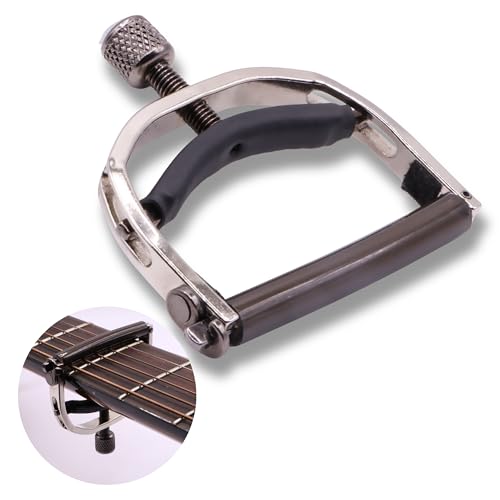
- 🎯 Premium Craftsmanship – The Paige Capo for 6-string acoustic guitars is meticulously crafted in the USA. Designed with precision and care, it delivers reliable performance, long-term...
- ⚙️ Upgraded Design & Fit – Now features durable, replaceable tinted tubing for extended life, upgraded clips for smoother handling, and a felt lining for added protection. The clip locks...
The Paige capo utilizes a central tension-adjustment wheel positioned directly behind the neck, pulling the bar evenly across the frets from both sides. This center-pull design ensures exceptional tuning stability and eliminates lateral string pulling entirely, rivaling much more expensive units in pure intonation accuracy. Its ultra-thin profile also stays completely out of the way of your fretting hand. The trade-off is that adjusting the tension wheel takes multiple turns, meaning you cannot quickly snap it on or off with one hand during a fast-paced performance. It is a fantastic tool for studio purists and fingerstyle players who demand pinpoint accuracy.
Final Verdict on the G7th Performance 3 Capo
The G7th Performance 3 Capo successfully bridges the gap between high-end engineering and practical, real-world utility. While its price tag is undeniably higher than conventional spring-clamp alternatives, the brilliant integration of Adaptive Radius Technology, intuitive one-handed operation, and immaculate tuning stability justifies the cost for serious players. It eliminates the frustration of capo-induced intonation issues, protects your instrument’s finish with non-reactive silicone, and stays entirely out of your way while you navigate complex fretboard patterns. Whether you are tracking in a professional recording studio or playing grueling multi-set gigs every weekend, this device delivers elite performance where it counts. If you are ready to upgrade your playing experience and banish fret buzz for good, order your G7th Performance 3 Capo today and experience true tuning freedom on your fretboard.
Last update on 2026-10-09 / Affiliate links / Images from Amazon Product Advertising API