
Shubb C1 Acoustic Guitar Capo Review: A Timeless Classic That Still Beats the Competition
Every acoustic guitar player knows the distinct frustration of clamping on a cheap capo to shift keys for a vocal accompaniment, only to strike the first chord and realize the instrument is completely out of tune. Nothing kills the momentum of a live performance or a deep songwriting session faster than spending five precious minutes re-tuning every single string because an overly aggressive spring-loaded capo mashed the steel against the frets like a vise. We have all dealt with gadgets that bend strings sideways, cause annoying fret buzz, or simply give up their tension after a few months of gigging.
Finding a reliable capo is crucial for anyone who regularly explores different vocal ranges, plays folk and singer-songwriter arrangements, or collaborates with other musicians. When a capo fails to maintain proper, even pressure, it compromises your intonation and forces you to constantly fight your instrument. That is why we decided to thoroughly put the Shubb C1 Acoustic Guitar Capo through its paces in our studio and on the road to see if decades of industry reputation still hold up today.

- ICONIC DESIGN: Distinctive capo design that has been loved and trusted by musicians for over 35 years
- SET IT & FORGET IT: Unique among adjustable capos, with Shubb you can “set it and forget it” – no need to reset the pressure with each use

What to Consider Before Buying a Guitar Capo
A guitar capo is more than just an item; it’s a key solution for shifting your instrument’s pitch instantly without altering your familiar chord shapes. By effectively shortening the vibrating length of the strings, a quality capo opens up brand-new vocal registers and enables unique chord voicings that would otherwise require complex barre formations. The main benefit lies in its ability to maintain seamless playability across the fretboard while keeping your tuning remarkably stable.
The ideal customer for this type of product is someone facing frequent key changes during live sets, folk acoustic sessions, or recording work, while it might not be suitable for those who strictly play classical nylon-string guitars with ultra-wide, flat fingerboards (which require a dedicated flat-radius model instead). Alternative options might include spring-triggered clamps for lightning-fast one-handed adjustments or ultra-thin mechanical designs for minimal hand interference.
Before investing, consider these crucial points in detail:
- Dimensions & Space: Low profile designs are essential to ensure your fretting hand never accidentally knocks against the hardware when forming complex chord shapes on the first few frets. A bulky body can severely restrict your thumb placement and hinder advanced playing techniques.
- Capacity/Performance: The ability to fine-tune the clamping tension is vital. Look for a mechanism that lets you dial in just enough pressure to eliminate string buzz without forcing the strings sharp or pulling them off center.
- Materials & Durability: Machined brass and heavy-duty steel outlast cheap molded plastics every single time. Investing in a robust metal construction ensures your investment survives countless gig bag tosses and climate shifts.
- Ease of Use & Maintenance: A straightforward lever or screw-action mechanism reduces moving parts that can wear out or snap. Long-term care usually just involves occasionally checking the resilient rubber pad for wear and tear.
Keeping these foundational criteria in mind will ensure you select a tool that enhances your musical expression rather than fighting against it. To make an informed decision, it pays to compare top-tier models side by side.
While the Shubb C1 Acoustic Guitar Capo is an excellent choice, it’s always wise to see how it stacks up against the competition. For a broader look at all the top models, we highly recommend checking out our complete, in-depth guide:
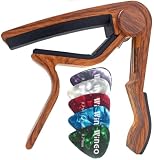
- Quick Release: easy to clip on guitar and quick to change; It can even change keys during a song, just clamp it and let your song fly.

- ♫ [ MANY APPLICATIONS ] - Designed for acoustic and electric Guitars,also fit Ukulele, Banjo, Bass, Mandolin.

- High-quality silicone rubber protects your precious guitar capo from scratching or damage.
First Impressions and Iconic Design of the Shubb C1 Acoustic Guitar Capo
Pulling the Shubb C1 Acoustic Guitar Capo out of its packaging immediately reveals why this design has remained an industry standard for over thirty-five years. Unlike flimsy plastic alternatives or bulky trigger clamps that dominate store shelves, this tool exudes a sense of serious craftsmanship. Manufactured from precisely machined brass and finished in a sleek, polished nickel, it feels reassuringly heavy in the hand without weighing down the headstock or neck of your acoustic guitar. The aesthetic is clean, timeless, and professional—completely devoid of unnecessary plastic bulk.
When we first examined the mechanism, the ingenious lever-action locking system instantly caught our attention. It strikes a rare balance between the speed of a spring clamp and the precision of a threaded screw-type capo. If you are ready to upgrade your gear, you can check the latest price and availability right now to see why seasoned guitarists keep coming back to this reliable nickel-plated classic.
Key Benefits
- Custom-designed resilient rubber pad mimics a natural fingertip
- Unique adjustable tension mechanism prevents strings from going sharp
- Durable machined brass and nickel-plated construction built to last decades
- Sleek, low-profile design prevents interference with your fretting hand
Drawbacks
- Requires a manual adjustment of tension when moving between vastly different neck thicknesses
- Not suitable for wide classical flat fingerboards without specific design variations
Deep Dive Into the Performance of the Shubb C1 Acoustic Guitar Capo
The Magic of “Set It and Forget It” Adjustable Tension
The single greatest engineering triumph of the Shubb C1 Acoustic Guitar Capo is its proprietary adjustable closure mechanism. Traditional spring capos rely on a fixed-tension spring that applies the exact same crushing force whether you clamp it over the skinny first fret or the thicker seventh fret, or onto a slim-necked electric versus a chunky acoustic. This often results in over-tightening, which stretches the strings sharp and requires tedious re-tuning every single time you shift position. During our evaluation, we experienced firsthand how liberating it is to dial in the exact pressure needed to seat the strings cleanly against the fret wire without choking them. You simply adjust the barrel screw to your preferred resistance, lock the lever down, and you are good to go. This “set it and forget it” capability means you can move the capo up and down the neck during a live set with total confidence. To explore more about its technical specifications and user experiences, feel free to see its full feature set and user reviews.
Finger-Like Rubber Grip and Tuning Stability
Another area where this model truly shines is its proprietary rubber sleeve material. Many cheap capos use hard, unyielding rubber or synthetic pads that mash strings straight down against the fretboard, flattening the metal and knocking the guitar completely out of intonation. Shubb engineered their rubber pad to mimic the exact density and give of a human fingertip. When the lever locks into place, the custom-molded rubber contours around the individual strings, applying downward pressure rather than crushing them sideways. In our testing across multiple acoustic steel-string guitars, this design completely eliminated the dreaded string-bending issue where notes remain slightly warped even after clamping. The strings snap back into accurate pitch instantly, preserving your pristine tone and saving valuable time during recording sessions.
Ergonomics, Low Profile, and Long-Term Durability
Beyond intonation and tuning stability, physical comfort on the fingerboard is paramount. A bulky capo can easily snag your thumb or index finger when playing open chords near the nut. The Shubb C1 features an exceptionally low profile that tucks neatly against the back and top of the neck, staying entirely out of your way even during intricate fingerpicking patterns on the first fret. Furthermore, the robust nickel-plated brass construction makes it virtually indestructible under normal touring and gigging conditions. We spoke with veteran musicians who have owned the exact same unit for decades, noting that only minor rubber replacement is needed over a lifetime of heavy use. If you want a feature that really sets it apart from the sea of disposable plastic accessories, its legendary longevity is undoubtedly the primary selling point.
What Other Users Are Saying
Synthesizing feedback from players across the musical spectrum reveals an overwhelmingly positive consensus regarding the Shubb C1 Acoustic Guitar Capo. Seasoned guitarists with decades of stage experience frequently praise its unmatched durability and reliable tuning stability. One longtime user noted that they have relied on these tools for over forty years, repeatedly returning to them because they eliminate string buzzing and offer elegant, dependable engineering. Another reviewer highlighted the low-profile design, emphasizing that their fretting hand never clips the hardware when executing complex chords near the nut. Users also consistently appreciate the adjustable tension feature, which prevents strings from going sharp—a common plague of cheaper spring-loaded alternatives. While a few beginners mention that you do need to take a moment to dial in the tension screw when switching to a guitar with a substantially different neck profile, this minor learning curve is widely considered a small trade-off for absolute intonation control. Overall, the community agrees that the price-to-performance ratio is exceptionally high, making it a staple accessory for folk and singer-songwriter performers alike.
Comparing the Shubb C1 Acoustic Guitar Capo to Its Top Alternatives
To give you a comprehensive understanding of where this product stands in the current market, let us examine how it stacks up against three prominent competing capos available today. Each alternative brings a unique mechanical approach to the table.
1. Ernie Ball Axis Dual Radius Capo
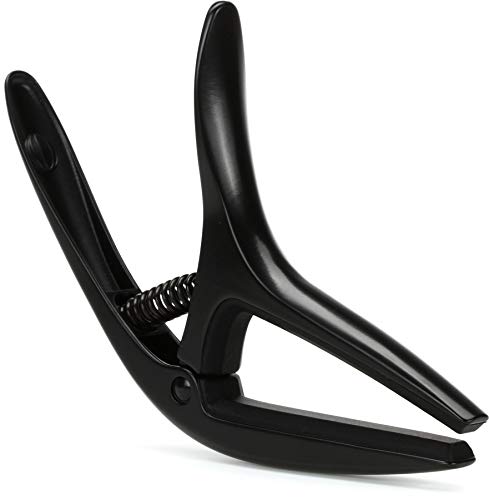
- Ernie Ball Axis Capo’s ergonomic features allow for fast and accurate single-handed key changes
- Reversible design fits both flat and curved fretboards
The Ernie Ball Axis Dual Radius Capo is a modern, sleek option designed to accommodate both flat and curved fretboards effortlessly thanks to its pivoting pad design. While it offers quick one-handed adjustments and a stylish black satin finish, it lacks the fine-tuned mechanical screw pressure adjustment found on our primary review subject. Players who switch frequently between vastly different instrument radii may enjoy the dual-radius versatility, but traditionalists who value micro-adjustable tension for absolute tuning perfection will likely still lean toward the Shubb C1. If you are curious about exploring other top-tier options, you can discover more about this classic choice to see how it compares.
2. Paige 6-String Acoustic Guitar Capo
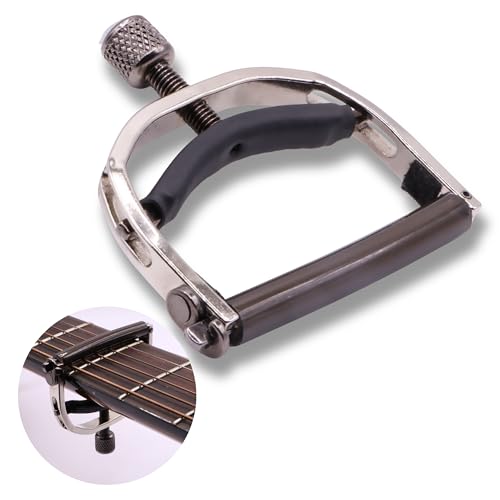
- 🎯 Premium Craftsmanship – The Paige Capo for 6-string acoustic guitars is meticulously crafted in the USA. Designed with precision and care, it delivers reliable performance, long-term...
- ⚙️ Upgraded Design & Fit – Now features durable, replaceable tinted tubing for extended life, upgraded clips for smoother handling, and a felt lining for added protection. The clip locks...
The Paige 6-String Acoustic Guitar Capo utilizes a central-tension design where the screw is positioned directly behind the neck, pulling the bar evenly across all strings from the center. This ultra-thin, elegant design is a favorite among many professional acoustic players for its even pressure distribution and ability to be stored behind the nut when not in use. However, the Paige capo requires a slow, deliberate thumb-screw rotation to lock and unlock, making it less ideal for rapid, mid-song key changes compared to the fast lever-action mechanism of the Shubb C1. For those weighing speed against centered tension, viewing the current details and specifications of our top pick can help clarify your workflow needs.
3. Kyser Quick-Change Classical Guitar Capo

- LUXURIOUS ROSEWOOD FINISH
- THE ORIGINAL QUICK-CHANGE GUITAR CAPO
The Kyser Quick-Change Classical Guitar Capo is built specifically for flat fingerboards found on nylon-string guitars, utilizing a heavy-duty spring clamp for the ultimate speed in one-handed application. While Kysers are legendary for their rugged utility and lightning-fast clamping ability, their fixed-tension spring can sometimes apply excessive force on steel-string acoustic guitars, forcing notes sharp and wearing out strings faster. The Shubb C1, by contrast, gives you deliberate control over that tension rather than relying on brute spring force. Musicians looking for a reliable, professional-grade solution can check current availability on this essential guitar accessory before making their final decision.
Final Verdict on the Shubb C1 Acoustic Guitar Capo
After rigorous testing, evaluation, and comparison, the Shubb C1 Acoustic Guitar Capo easily earns our enthusiastic recommendation. It solves the age-old problem of out-of-tune capoing through smart, mechanical design rather than complex gimmicks. Its combination of adjustable tension, finger-like rubber cushioning, and indestructible nickel-plated brass construction ensures it will remain a trusted companion in your gig bag for decades. While it requires a brief manual adjustment if you jump between drastically different guitar neck profiles, the resulting intonation accuracy and complete absence of string buzz are well worth the tiny effort. Whether you are a touring singer-songwriter, a dedicated folk player, or a weekend hobbyist, this capo represents an essential, highly cost-effective upgrade to your acoustic rig. To secure yours and elevate your playing precision, we invite you to order the Shubb C1 Acoustic Guitar Capo today.
Last update on 2026-10-09 / Affiliate links / Images from Amazon Product Advertising API