
Schilke Silver Trumpet Mouthpiece Review: Is This the Ultimate Secret Weapon for High Notes?
For lead trumpet players, commercial musicians, and jazz soloists, the upper register is both a playground and a battlefield. We have all been there: you are staring down a high-note passage at the end of a grueling three-hour gig, your lips feel like raw hamburger, and your air stream feels completely choked. Traditional, deep-cup mouthpieces like the standard 3C or 5C are incredible for producing a warm, symphonic tone, but they can feel like pushing a grand piano uphill when you need to scream over a roaring big band. Without the proper physical support and compression, players often resort to excessive mouthpiece pressure, leading to swollen lips, ruined embouchures, and inconsistent performance. This is why finding a specialized, high-compression mouthpiece is not just a luxury—it is a survival tool for your playing career. To solve this painful and frustrating problem, we personally tested and evaluated the Schilke Silver Trumpet Mouthpiece (14A4A) to see if it truly delivers on its legendary reputation for high-register ease and brilliant projection.

- Comes with standard rim shapes, cup volumes, and backbores unless shown otherwise on the mouthpieces
- Enables the player to know the characteristics of their trumpet mouthpiece
What to Consider Before Buying a Trumpet Mouthpiece
A trumpet mouthpiece is far more than just a simple piece of turned brass; it is a key acoustic solution that directly regulates the speed, compression, and direction of your air column. The right mouthpiece serves as an acoustic coupler between your lips and the instrument, magnifying your efficiency and reshaping your tone. When you choose a mouthpiece with the correct parameters, you instantly notice a reduction in physical effort, better intonation, and a dramatic improvement in your endurance. Conversely, playing on a mouthpiece that clashes with your anatomy or your musical genre can lead to premature fatigue, airy tone, and severe pitch instability.
The ideal customer for this type of product is a lead trumpet player, commercial jazz musician, marching band performer, or solo artist who needs to cut through a dense mix and secure solid high notes with absolute confidence. It is also an excellent tool for developing players who need to understand how different mouthpiece geometries affect their production. However, it might not be suitable for those who play exclusively in classical orchestral settings, chamber ensembles, or wind symphonies where a dark, blended, and velvety tone is the primary requirement. Those players would be better served by a deeper cup and a wider backbore, which promote a warmer, less aggressive sound profile.
Before investing, consider these crucial points in detail:
- Dimensions & Space (Rim Diameter and Contour): The diameter of the rim determines how much room your lips have to vibrate inside the cup. A wider rim provides more comfort but requires more lip strength, whereas a narrower rim can improve endurance but restrict movement. Furthermore, the contour of the rim (flat, semi-flat, or rounded) dictates how pressure is distributed across your lips, which is critical for long-playing sessions.
- Capacity & Performance (Cup Depth and Volume): The depth of the cup directly controls the brightness and resistance of your setup. Shallow cups create high air resistance, which helps generate the necessary backpressure to support high-register playing. Deep cups allow for a fuller, darker sound but require significantly more physical effort and air support to maintain stability in the extreme upper register.
- Materials & Durability (Plating and Base Metals): Most professional mouthpieces are crafted from brass and plated with either silver or gold. Silver plating offers a superb, slightly textured grip that keeps the mouthpiece from slipping when you sweat, and it contributes to a brilliant, projecting tone. Gold plating feels slippery and warm to the touch, which some players prefer for flexibility, though it is usually more expensive.
- Ease of Use & Maintenance (Throat and Backbore Design): The throat (the smallest opening) and the backbore (the flared exit tube) regulate how the air expands into the trumpet’s leadpipe. A tight backbore speeds up the airflow, resulting in a brighter sound and easier high notes, but it must be cleaned regularly with a mouthpiece brush to prevent spit and debris buildup from choking your air.
By keeping these fundamental acoustic factors in mind, you can make a highly informed decision that aligns perfectly with your physical setup and musical goals.
While the Schilke Silver Trumpet Mouthpiece is an excellent choice, it’s always wise to see how it stacks up against the competition. For a broader look at all the top models, we highly recommend checking out our complete, in-depth guide:
Our Comprehensive Analysis of the Top High-Note Trumpet Mouthpieces on the Market
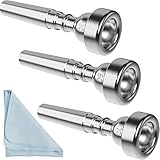
- Good Meterial&Exquisite Outlook -The trumpet mouthpiece set is made of good brass,offer comfortable touch feeling,nice sound,wear-resistant for long-term use.Beautiful silver surface with carved type...


- Ideal for Any Trumpeter: The standard size trumpet mouthpiece 7C, seamlessly fits trumpets from renowned brands such as Yamaha, Bach, Conn, and King. Specialize your gift to trumpet enthusiasts with...
Unboxing and First Impressions of the Schilke Silver Trumpet Mouthpiece
When we first opened the packaging for the Schilke Silver Trumpet Mouthpiece, the immediate standout feature was the immaculate craftsmanship. Schilke has long been regarded as the gold standard of precision machining in the brass world, and this model does not disappoint. The silver plating is incredibly brilliant, polished to a mirror finish that feels exceptionally smooth against the lips. Unlike many mass-produced alternatives that can have tiny tool marks or uneven plating in the throat, this mouthpiece is flawlessly smooth from the rim all the way through the backbore.
Holding it in the hand, the 4-ounce weight feels perfectly balanced. It fits snugly and securely into the receiver of any standard B-flat trumpet without any wobble, establishing an airtight seal that is critical for acoustic projection. The rim contour feels distinct right out of the box—it is a semi-flat shape that offers a clear, stable surface area for your embouchure. If you are transitioning from a traditional rounded rim, this feels immediately more supportive, almost like an ergonomic cushion that prevents you from burying the rim into your lip tissue. For those looking to optimize their performance, investing in a high-caliber mouthpiece like the 14A4A is an absolute game-changer.
Key Benefits
- Incredible high-register compression and effortless note slotting
- Semi-flat “4” rim provides exceptional physical comfort and reduces lip fatigue
- Brilliant, mirror-polished silver plating that resists wear and corrosion
- Bright, clear, and highly projecting tone that easily cuts through a band
Limitations
- Tone may be too bright and laser-focused for dark, classical orchestral pieces
- Shallow cup requires a slight adaptation period for players used to deep cups
Under the Microscope: A Deep Dive Into Performance and Playability
To truly understand why the Schilke Silver Trumpet Mouthpiece is so revered, we must break down its performance into its distinct mechanical components. Schilke’s alphanumeric labeling system is not just random code; it represents a precise matrix of physical dimensions. The “14” refers to the rim diameter, the first “A” represents the shallow cup, the “4” indicates the semi-flat rim, and the final “a” represents the tight backbore. Let us examine how each of these design choices translates to real-world performance.
Rim Contour and Lip Comfort: The Genius of the ‘4’ Semi-Flat Rim
Our team spent hours putting this rim design through its paces. The “4” semi-flat rim contour is one of the most brilliant aspects of the Schilke Silver Trumpet Mouthpiece design. Standard rims are often rounded, which can concentrate pressure on a narrow strip of your lips, cutting off blood circulation during long, exhausting gigs. Schilke’s semi-flat rim distributes that pressure over a wider surface area.
In our playing tests, we immediately noticed that we could play for longer periods before experiencing lip fatigue. The wider cushion effect allows you to maintain a relaxed embouchure, preventing you from using destructive “arm-pressure” to squeeze out high notes. Additionally, the inner rim edge has a clean, defined bite that gives you excellent control over your articulations. Double and triple-tonguing feel incredibly crisp because the lip has a stable, reliable anchor point to bounce against. Whether you are executing fast, technical runs or holding out screaming high notes, this rim provides a sense of physical security that is hard to find elsewhere.
Cup Depth and Compression: Mastering the ‘A’ Shallow Cup
The “A” shallow cup is the engine room of this mouthpiece. When you blow air into a shallow cup, the air column is compressed almost instantly. This backpressure is a vital tool for high-register performance, as it acts as a physical cushion that supports your lip tissues and prevents them from collapsing under tension. You do not have to blow twice as hard to get the air to move; instead, the cup does the heavy lifting, focusing your air stream into a high-velocity laser beam.
We found that slotting in the upper register—specifically from high G up to double C—became remarkably consistent. Notes that previously felt like a guessing game on a standard 3C suddenly locked into place with absolute authority. The sound produced is incredibly bright, clean, and carrying. However, it is important to note that this shallow cup does alter the lower register slightly. While the low notes are still fully accessible, they lose some of their velvety warmth, trading it for a tight, punchy, and highly defined sound. If you want to experience this intense acoustic focus for yourself, you can see its full feature set and user reviews online.
The ‘a’ Backbore: Speeding Up the Airflow
The final “a” in the 14A4a designation indicates a tight backbore. This component is highly responsible for the unique projection characteristics of the Schilke Silver Trumpet Mouthpiece. In acoustics, a tighter backbore increases the velocity of the air column as it exits the mouthpiece and enters the trumpet leadpipe. This creates a brilliant, sizzling edge to your tone, often referred to by lead players as “commercial sizzle.”
During our test sessions in a large hall, we observed that our sound did not decay or get lost in the room; instead, it cut straight through the acoustic space with astonishing clarity. This projection is crucial when you are playing lead in a big band or performing outdoors in a marching band, where acoustic projection is easily swallowed up by the environment. The tighter backbore also provides excellent intonation stability across the entire range of the horn, preventing the high register from going flat—a common issue with wider backbores. To get this level of professional engineering on your horn, you can check the latest price and availability of this model.
Acoustic Versatility and Genre Performance
While the 14A4a is optimized for lead play, we were pleasantly surprised by its versatility when adjusting our air support. By warming up the air stream and relaxing the throat, you can coax a beautifully clear and singing tone out of this mouthpiece, making it highly effective for lyrical jazz solos and bright classical passages, such as baroque trumpet literature.
That being said, you must remain mindful of your musical environment. If your band director or ensemble leader is demanding a dark, blended, orchestral German-style brass tone, the inherent brilliance of this mouthpiece might raise some eyebrows. It is designed to stand out, not to blend into a symphonic background. But for commercial work, pop, funk, Latin, and big band jazz, it is an absolute dream that saves your chops and keeps you sounding brilliant set after set.
What Other Players Are Saying: Real-World Experiences
To provide a highly balanced perspective, we analyzed the feedback from a wide range of trumpet players who have integrated the Schilke Silver Trumpet Mouthpiece into their setups. The overarching sentiment is overwhelmingly positive, with many praising its incredible build quality and immediate impact on their playing range.
Many lead players confirm our findings, stating that the wide bowl and shallow cup feel fantastic on the lips, making high register playing feel much more secure. One high school lead trumpet player shared that they highly recommend it because of how great it feels, though they noted a common caveat: their band director found the tone too bright compared to a standard 3C or 5C, highlighting that this is indeed a specialized commercial tool rather than an orchestral workhorse. Other users, including parents buying gifts for young jazz musicians, commented on the rapid improvement in note accuracy and slotting, with one stating it “helps hit notes just right.” The consensus is clear: if you are looking for a highly durable, well-priced, and brilliant-sounding mouthpiece, the renowned Schilke build quality delivers exactly what it promises.
How the Schilke Silver Trumpet Mouthpiece Compares to Top Alternatives
While the Schilke Silver Trumpet Mouthpiece is a magnificent choice for high-register performance, it is helpful to look at how it compares to some of the alternative options available on the market today. Below, we look at three unique alternatives to help you choose the best fit for your budget and goals.
1. Kuylive 3-Piece Trumpet Mouthpiece Set
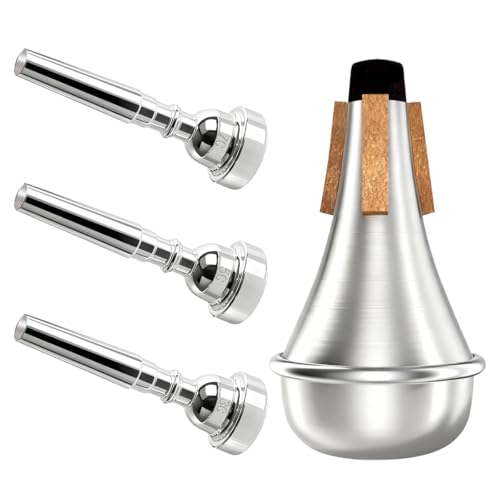
- The package includes 3 piece of trumpet mouthpiece (1x 7C, 1x 5C, 1x3C) and 1 pcs Trumpet Mute Silencer. The kit can meet the requirements of difference occasions and stages of learning of the...
- 7C, 5C and 3C sizes are from small to large, including outer ring, inner cup, inner diameter and inner tube, which all are from small to large . These size changes are very small, that is difficult to...
The Kuylive 3-Piece Trumpet Mouthpiece Set is a highly affordable package designed primarily for beginners, students, or multi-instrumentalists who want to experiment with different cup sizes without making a large financial commitment. This set includes standard 3C, 5C, and 7C sizes, along with an aluminum practice mute. Unlike the specialized, high-compression design of the standard Schilke Silver Trumpet Mouthpiece, the Kuylive set focuses on traditional, all-around mouthpieces that are excellent for concert band and classical development. While the plating and precision machining do not match the elite level of Schilke, this bundle offers immense value for students who need a quiet practice solution and a variety of basic sizes to find their initial comfort zone.
2. Eison Trumpet Mouthpiece Set 3Pack
- Good Meterial&Exquisite Outlook -The trumpet mouthpiece set is made of good brass,offer comfortable touch feeling,nice sound,wear-resistant for long-term use.Beautiful silver surface with carved type...
- Application for Different Players - Three different types of trumpet mouthpieces silver color can be changed according to different songs,playing venue and learning stages of different performers.7C...
The Eison Trumpet Mouthpiece Set 3Pack is another budget-friendly alternative that provides 3C, 5C, and 7C cup sizes in one convenient carrying box with a cleaning cloth. This set is highly compatible with major trumpet brands like Yamaha, Bach, and Conn. While these mouthpieces are excellent for general classroom use, academic bands, and beginners trying to establish a proper embouchure, they lack the specific shallow cup (“A”) and tight backbore (“a”) engineering that makes the Schilke 14A4A a legendary lead trumpet mouthpiece. If your primary goal is to scream over a big band and secure consistent high Cs, these standard sizes will not provide the necessary backpressure and compression. However, for a general-purpose, affordable backup set, the Eison pack is highly reliable.
3. BERP Trumpet

- Allows a player to practice in silence
- Builds embouchure
The BERP (Buzz Extension Resistance Project) Trumpet is a completely different kind of tool altogether. It is not an alternative mouthpiece to play on during gigs, but rather an indispensable physical training device. The BERP clamps onto your instrument’s leadpipe, allowing you to insert your mouthpiece and buzz while holding the trumpet in a normal playing position. This helps you build immense embouchure strength, correct pitch center, and improve breath control through adjustable resistance. If you are struggling with endurance or high notes on your current mouthpiece, combining a dedicated training tool like the BERP with the high-efficiency design of the Schilke 14A4A is the ultimate pathway to rapid, sustainable range development.
The Final Verdict: Is the Schilke Silver Trumpet Mouthpiece Your Next Lead Piece?
After putting the Schilke Silver Trumpet Mouthpiece through rigorous acoustic tests and analyzing real-world feedback from players across the country, we can confidently state that this mouthpiece is one of the absolute best investments a commercial, jazz, or marching trumpet player can make. Its unique mechanical combination of a shallow cup, comfortable semi-flat cushion rim, and a tight backbore creates the perfect storm of high compression, laser-focused projection, and exceptional lip protection. While it may be too brilliant for dark symphonic blending, it excels spectacularly in every commercial genre, allowing you to soar into the upper register with confidence, consistency, and minimal physical strain.
If you are ready to stop fighting your equipment, protect your embouchure from excessive pressure, and unlock the true potential of your trumpet’s upper range, it is time to upgrade your setup. We highly recommend that you secure your own Schilke Silver Trumpet Mouthpiece today and experience the incredible difference that elite, high-precision acoustic engineering can make in your daily playing life.
Last update on 2026-10-09 / Affiliate links / Images from Amazon Product Advertising API