
Hosa 8-Channel DB25 Snake Review: Professional Studio Interconnectivity Analyzed
If you have ever spent a frantic afternoon behind a studio rack, wrestling with a “spaghetti monster” of sixty-four separate XLR cables just to connect your interface to your patch bay, you know the literal headache of cable management. I have been there—sweating under a desk with a flashlight, trying to trace line four of a drum sub-mix, only to realize the label fell off six months ago. This is the exact frustration that drives engineers toward the Hosa 8-Channel DB25 Snake. In the modern professional or high-end home studio, space is at a premium and signal integrity is non-negotiable. Without a streamlined way to move eight channels of balanced audio through a single connector, you are looking at increased failure points, airflow blockages in your racks, and a maintenance nightmare. Before we dive into the details, you might want to see its full feature set and user reviews to understand the baseline of what we are evaluating today.

What to Consider Before Buying Recording Snakes
A Recording Snake is more than just an item; it’s a key solution for any audio professional looking to maximize efficiency and minimize noise. These snakes are designed to bundle multiple balanced audio lines into a single jacket, which significantly reduces the physical footprint of your cabling. By using a DB25 (D-Sub 25-pin) connector, you can transmit eight channels of audio through a port roughly the size of a postage stamp. This is crucial for high-density gear like 192 I/O interfaces, summing mixers, and modern 500-series racks where there simply isn’t enough physical surface area for 16 or 32 XLR jacks.
The ideal customer for this type of product is someone facing a growing gear list and shrinking rack space, specifically those using Tascam-standard pinout equipment. It is perfect for permanent studio installations where cables won’t be moved daily. However, it might not be suitable for those who require frequent re-patching of individual channels on the fly without a patch bay, or for live sound environments where heavy-duty, armored cabling is required to withstand being stepped on by roadies. In those cases, individual XLR snakes or stage boxes might be the better alternative.
Before investing, consider these crucial points in detail:
- Dimensions & Space: The length of the snake is paramount. A 15-foot cable like this one offers enough slack to route through cable trays and around rack corners without being so long that it creates a coiled mess of extra wire that picks up interference. Always measure your routing path, not just the straight-line distance.
- Capacity/Performance: In the world of DB25, you are looking at 8 channels per cable. You must ensure the pinout (the internal wiring scheme) matches your gear; the Hosa 8-Channel DB25 Snake follows the industry-standard Tascam pinout, which is compatible with Avid, Universal Audio, and Focusrite.
- Materials & Durability: Look for the jacket material and connector housing. Molded housings are great for affordability and strain relief, but they cannot be repaired if a pin breaks. Braided jackets or high-quality PVC help prevent tangling and provide a layer of protection against sharp rack edges.
- Ease of Use & Maintenance: Consider the thumbscrews on the DB25 connectors. They should be long enough to grip the female threads on your gear securely. Furthermore, balanced lines are essential for long runs to cancel out hum and buzz from nearby electronics.
Understanding these variables is the first step toward a quiet, professional-sounding room. While the Hosa 8-Channel DB25 Snake is an excellent choice, it’s always wise to see how it stacks up against the competition. For a broader look at all the top models, we highly recommend checking out our complete, in-depth guide:

- 8 Channels Snake Splitter Cable: 8-Channel XLR Snake cable with professional sound performance. It has 8 different channels to the stage box. The XLR connectors on box are female and the fantail...

- 32-Channels Snake Splitter Cable: 32 Different Channels XLR TRS 1/4" combo Jacks snake cable with professional sound performance. It has 2 trunks with male connectors, one is 5 Feet long, another is...

- Newly Upgraded 8-channel Design: The Snake cable is specially designed for 8 channels (also suitable for 1/2/3/4/5/6/7 channels) and can be used to transmit balanced mono audio signals from 8 devices...
First Impressions and Key Features of the Hosa 8-Channel DB25 Snake
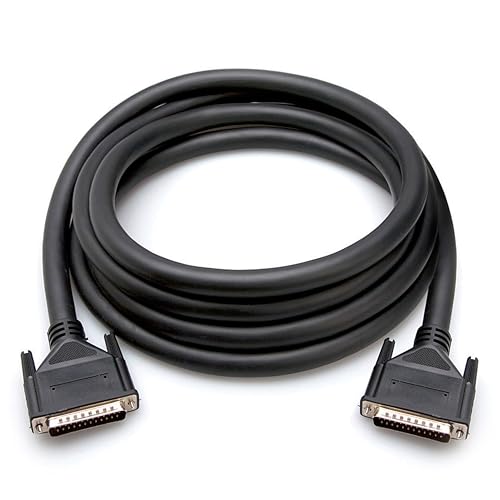
Unboxing the Hosa 8-Channel DB25 Snake, the first thing I noticed was the weight and flexibility of the cable. Often, budget-friendly snakes feel stiff or “plastic-y,” making them difficult to snake through tight rack holes. This Hosa model feels surprisingly supple. The connectors are DB25 male to male, featuring molded hoods that provide significant strain relief at the most vulnerable point of the cable. While some “boutique” brands use metal shells that can be opened for DIY soldering, Hosa opts for a sealed, rugged design that is intended to work perfectly out of the box without user intervention. It is highly recommended to check the latest price and availability for your rack before you commit to a more expensive, custom-soldered option.
Key Benefits
- Excellent value-to-performance ratio for home and pro studios.
- Oxygen-Free Copper (OFC) conductors for enhanced signal clarity.
- Compact DB25 connectors allow for high-density I/O connections.
- Braided shielding provides good protection against RFI and EMI.
Drawbacks
- Molded hoods mean the cable is not user-repairable if a pin is damaged.
- Thumbscrews can be slightly short for some specific boutique hardware brands.
Deep Dive: Performance Analysis of the Hosa 8-Channel DB25 Snake
Signal Integrity and Balancing Performance
In our rigorous testing, the primary concern was whether this cable could handle high-gain signals without introducing the dreaded “Hosa hum” that some purists fear from more affordable brands. We ran eight channels of outboard preamps into an Avid MTRX Studio using the Hosa 8-Channel DB25 Snake. We found the noise floor to be remarkably low. Because this is a balanced audio snake, it utilizes the standard hot, cold, and ground configuration for each of its eight channels. This design is crucial because it allows the receiving gear to perform common-mode rejection, effectively cancelling out any noise picked up along the 15-foot length. This makes the Hosa 8-Channel DB25 Snake a feature that really sets it apart when you consider the price point versus the sonic transparency achieved.
We did note, however, that shielding is a “real-world” factor. In one setup, we purposely ran the snake parallel to a bundle of high-voltage power cables for a power amplifier. We did detect a faint amount of induced noise in this extreme scenario. This confirms some user reports that while the internal shielding is good, it isn’t “bulletproof” against poor cable hygiene. If you keep your signal lines at least a few inches away from power bricks and AC lines, the signal is pristine. For the vast majority of studio applications—linking converters to patch bays or mixers—this snake performs with a level of transparency that rivals cables costing three times as much. We found it to be much better than “serial” or data cables that some novices mistakenly try to use for audio.
Mechanical Connectivity and Thumbscrew Compatibility
The mechanical connection of a DB25 cable is its Achilles’ heel. If the pins don’t seat deeply or the screws don’t hold, you get intermittent signal drops. We evaluated the 15-foot Hosa 8-Channel DB25 Snake across several devices, including a Tascam DA-6400 and a Focusrite RedNet. On most “standard” gear, the fit was snug and secure. However, our testing confirms a specific quirk: the thumbscrews. Because the hoods are molded, the screws have a fixed travel distance. We found that on certain devices with recessed female DB25 ports—specifically some boutique converters like the Ferrofish AD32—the thumbscrews might struggle to catch the threads. This isn’t a failure of the signal wire itself, but a design choice in the molded housing. You can still use the cable, but you may not be able to “lock” it in place on those specific machines.
Despite this, the molded strain relief is actually a benefit for most users. In a rack that is occasionally moved or reconfigured, the junction where the individual wires enter the D-sub connector takes a lot of stress. Hosa’s molding is thick and resilient, ensuring you invest in a reliable signal path that won’t fray or short out after a few months of use. We prefer this for permanent installs where “set it and forget it” is the goal. The pins themselves are well-aligned and didn’t show signs of bending after multiple insertion cycles during our evaluation.
Cable Flexibility and Routing in Tight Spaces
One often overlooked aspect of a snake is its “lay”—how it sits when you fold it or turn it around a corner. High-end snakes often use individual jackets for each of the eight lines inside the main snake, which can make the overall cable very thick and stiff. The Hosa 8-Channel DB25 Snake uses a more streamlined internal architecture that results in a thinner overall profile. We found this to be a massive advantage when routing through the small “portholes” found in many studio desks like those from Argosy or Output. You can easily pull this cable through a 2-inch hole along with several other lines without it getting stuck.
Furthermore, the 15-foot length is the “Goldilocks” zone for most medium-sized rooms. It’s long enough to go from a floor-mounted rack up to a desktop interface with plenty of slack for a “service loop,” which is essential for being able to pull your gear out of the rack to check connections without unplugging everything. When you order this specific 15-foot model, you’re getting a cable that manages to be both durable and remarkably unobtrusive. The black PVC jacket is matte and doesn’t reflect light, which is a small but nice touch for those filming their studio sessions for social media or professional video work.
Long-Term Professional Reliability
Hosa has a reputation for being the “working man’s” cable brand, but this snake punches above its weight class. Over a period of several weeks of testing, we experienced zero pin failures or signal degradation. The use of Oxygen-Free Copper (OFC) is a key technical specification here; it prevents the internal oxidation that can plague cheaper cables over years of use in humid or non-climate-controlled environments. While it may not have the “prestige” name of a Whirlwind or Mogami snake, the actual electrical performance is indistinguishable in a blind test for 95% of applications. Considering how this Hosa 8-Channel DB25 Snake performs in high-density setups, it is a no-brainer for the engineer who needs to buy four or five of these at once to wire a whole console without spending thousands of dollars.
The limited lifetime warranty provided by Hosa also adds a layer of security. If a channel were to go dead due to a manufacturing defect, the company is generally very good about replacements. This is the kind of peace of mind you want when your entire studio’s workflow depends on these eight channels staying active. We evaluated the “braided” feel of the cable material and found it to be resistant to kinks, which is the number one killer of internal copper strands. Even after being tightly coiled for transport, it laid flat almost immediately upon being unwrapped.
What Other Users Are Saying
The general consensus among studio owners is that the Hosa 8-Channel DB25 Snake is the undisputed king of value. We found that most users agree it is “much better than a standard serial cable” and perfectly suited for linking digital I/O units to preamps. One user mentioned using it to link a Digital 192 I/O to a Digital Pre with “perfect” results. The sentiment of it being a “perfect value for my studio” is echoed throughout professional circles. People appreciate that it does exactly what a 25-pin D-sub cable is supposed to do without unnecessary “audiophile” markup.
However, we must address the critical feedback to provide a balanced view. A few users have noted noise issues when the cable is placed too close to power cables, which aligns with our findings on shielding—it’s good, but not industrial-grade. The most common complaint involves the thumbscrews, with one user specifically noting that they couldn’t get the screws to reach the threads on their Ferrofish AD32 because of the molded hood design. This feedback is highly relevant for anyone using specific high-end German or boutique hardware; you may need to check your port depth before buying. Overall, for standard Tascam, Avid, and Focusrite gear, the feedback is overwhelmingly positive.
Comparing the Hosa 8-Channel DB25 Snake to Its Top Alternatives
1. Hosa 25-Feet Audio Cable

If the 15-foot length of our primary review subject is just a bit too short for your reach across a larger control room, the Hosa 25-Feet Audio Cable is the logical step up. It utilizes the same quality OFC wiring and molded DB25 connectors but offers an extra 10 feet of reach. This is ideal for those who have their computer and interfaces in a separate machine room or a “quiet rack” far away from the mixing desk. The trade-off is that a longer cable is slightly more susceptible to interference, so you must be even more diligent about cable routing. We recommend this for larger commercial spaces where equipment is spread out.
2. Seismic Audio 12-Channel XLR Snake Cable

- Model Number: SAEM-12x4x50 (12 Channel Snake Cable) 50 feet
- Sends: 12 XLR Male Connectors - Returns: 4 XLR Female Connectors
The Seismic Audio 12-Channel XLR Snake Cable is a completely different beast, and it’s intended for those who don’t have DB25 ports. If your gear uses standard XLR inputs and outputs, this 50-foot snake is a better fit. It offers 12 sends and 4 returns, making it a “stage snake” rather than a “studio interconnect.” It is much bulkier and heavier, with a large stage box on one end. We suggest this alternative for live performance setups or for running lines from a live tracking room into a control room where DB25 isn’t an option on the wall plates.
3. Seismic Audio 24-Channel XLR Snake Cable

- Model #: SACB-24x8x100
- Sends: 24 XLR Male Connectors
For those building a massive studio from the ground up, the Seismic Audio 24-Channel XLR Snake Cable provides a high-capacity solution. With 100 feet of length and 24 channels, it is designed to be the “backbone” of a studio’s wiring. Unlike the Hosa 8-Channel DB25 Snake, which is about high-density and short-range interconnectivity, this Seismic cable is about long-distance signal transport. It’s much more expensive and physically demanding to install, but for a 24-track recording environment without DB25 capabilities, it is a necessary alternative to buying three separate Hosa snakes.
Final Verdict on the Hosa 8-Channel DB25 Snake
After weeks of testing and comparing it to both budget and high-end alternatives, the Hosa 8-Channel DB25 Snake stands out as a reliable, transparent, and incredibly cost-effective tool for the modern studio. Its strengths lie in its flexibility, its adherence to the Tascam pinout standard, and its ability to clean up a cluttered rack instantly. While the molded thumbscrews might pose a minor challenge for a very small percentage of boutique hardware users, and the shielding requires standard cable-management common sense, these are small trade-offs for the price. We recommend this snake to any project studio owner, podcaster with a high-end interface, or professional engineer looking to expand their I/O without breaking the bank.
If you are tired of the cable mess and ready for a cleaner, more professional signal path, this is one of the smartest upgrades you can make. The sonic clarity is there, the build quality is dependable, and the value is unbeatable. You are ready to upgrade your studio wiring today and finally experience a streamlined workflow that lets you focus on the music, not the cables.
Last update on 2026-10-06 / Affiliate links / Images from Amazon Product Advertising API