
Elite Core 4-Channel XLR Extension Snake Review: A Tour-Grade Solution for Complex Cable Runs
If you have ever spent more than ten minutes behind a drum kit or a complex synthesizer rig, you know the feeling of “cable dread.” You are staring at a tangled nest of individual XLR cables, each one threatening to trip a performer or create a ground loop nightmare. In our years of setting up mobile recording rigs and live stage setups, we have found that the biggest bottleneck isn’t the software or the preamps; it’s the physical management of signal paths. When you need to run four distinct signals across a 15-foot gap, pulling four separate cables is inefficient, messy, and prone to error. This is exactly where the Elite Core 4-Channel XLR Extension Snake enters the picture. We were looking for a way to streamline our workflow without the bulk of a traditional stage box, and after putting this unit through its paces, we found it to be a game-changer for mid-sized setups. Failing to solve this cable management issue often leads to “spaghetti stages” where troubleshooting a single dead channel takes twenty minutes of tracing lines through a dark venue—a complication no professional can afford. Before we dive into the specifics, you might want to see its full feature set and user reviews to understand the baseline of its performance.
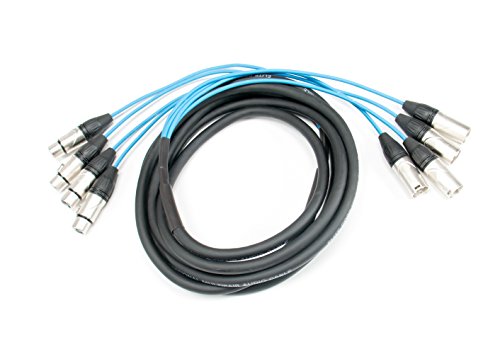
- 24 AWG Shielded Lines, Low-Oxygen Copper
- Elite Core Metal Connectors
What to Consider Before Buying a Recording Snake
A recording snake is more than just an item; it’s a key solution for maintaining signal integrity while reducing physical clutter. In the world of pro audio, “snakes” are the veins and arteries of your studio or stage. They consolidate multiple lines into a single, protected jacket, which not only looks cleaner but also provides an extra layer of shielding against electromagnetic interference (EMI). When we evaluate these tools, we look for products that balance flexibility with ruggedness. The Elite Core 4-Channel XLR Extension Snake represents a specific niche: the “fan-to-fan” snake. Unlike traditional snakes that end in a heavy metal box, this one allows for direct connections on both ends, making it ideal for connecting an audio interface to a rack of preamps or extending a drum sub-mix to the main board.
The ideal customer for this type of product is someone facing a fixed number of signal paths, such as a four-mic drum setup (kick, snare, two overheads) or a stereo keyboard rig with additional room mics. It is perfect for the mobile engineer who needs to set up and tear down quickly. However, it might not be suitable for those who require 12 or 24 channels, as multiple 4-channel snakes can become just as cluttered as individual cables. For those larger needs, a full stage box snake is often the better route. If you are looking for something with a bit more reach or channel count, we recommend you check the latest price and availability of the 15-foot version to see if it fits your specific spatial constraints.
Before investing, consider these crucial points in detail:
- Dimensions & Space: Consider the actual length you need plus a “slack factor.” A 15-foot snake like this Elite Core 4-Channel XLR Extension Snake is perfect for cross-stage runs or connecting gear within a small studio room, but always measure your path to ensure you aren’t putting tension on the connectors.
- Capacity/Performance: Look at the gauge of the wire. We found the 24 AWG low-oxygen copper lines in this unit to be the industry standard for maintaining high-frequency clarity over distance. Lower-quality snakes often use thinner wire that can lead to signal degradation or “tone suck.”
- Materials & Durability: The outer jacket is your first line of defense. Neoprene or heavy-duty PVC is essential if the cable will be on the floor where it might be stepped on. Metal-connect housings are also a must; plastic connectors will inevitably crack under the pressure of touring.
- Ease of Use & Maintenance: Clear labeling is vital. When you are in a dark club at 11:00 PM, you don’t want to be guessing which tail is channel 3. This model features clearly numbered channels, which we found saved us significant time during our sound checks.
Choosing the right snake is about planning for your most common setup scenarios. While the Elite Core 4-Channel XLR Extension Snake is an excellent choice, it’s always wise to see how it stacks up against the competition. For a broader look at all the top models, we highly recommend checking out our complete, in-depth guide:

- 8 Channels Snake Splitter Cable: 8-Channel XLR Snake cable with professional sound performance. It has 8 different channels to the stage box. The XLR connectors on box are female and the fantail...

- 32-Channels Snake Splitter Cable: 32 Different Channels XLR TRS 1/4" combo Jacks snake cable with professional sound performance. It has 2 trunks with male connectors, one is 5 Feet long, another is...

- Newly Upgraded 8-channel Design: The Snake cable is specially designed for 8 channels (also suitable for 1/2/3/4/5/6/7 channels) and can be used to transmit balanced mono audio signals from 8 devices...
First Impressions and Key Features: Unboxing the Elite Core Snake
When we first pulled the Elite Core 4-Channel XLR Extension Snake out of its packaging, the weight was the first thing that struck us. At two pounds, it feels substantial but not cumbersome. The neoprene jacket has a matte, professional finish that doesn’t just look good; it provides a tactile grip that makes coiling the cable a breeze. We have tested many budget snakes where the jacket feels like cheap plastic that retains “memory” and kinks easily, but this Elite Core unit laid flat almost immediately. The “fan-to-fan” design means there is no bulky box to hide, which makes it a feature that really sets it apart for those with limited floor space.
The connectors are “Elite Core metal-connect” branded, and they felt remarkably similar to high-end Neutrik connectors. The click-lock mechanism is firm, and the solder points—though we didn’t open them up immediately—felt solid when we gave the cables a gentle “stress pull.” Compared to older versions of similar extension snakes, the numbering on the heat-shrink tubing is much more legible. We noticed that Elite Core has prioritized the “low-oxygen copper” construction, which is a hallmark of premium audio gear designed to prevent oxidation over years of use in humid or outdoor environments.
Key Benefits
- Extremely durable neoprene jacket that resists kinking and protects internal lines.
- Low-oxygen 24 AWG copper provides professional-grade signal integrity with minimal noise.
- Clearly numbered channels 1-4 for rapid identification and error-free setup.
- Lifetime warranty against defects, offering peace of mind for long-term professional use.
Limitations
- At 15 feet, it may be too short for large-scale auditorium stages without additional extensions.
- The fan-to-fan design lacks the mounting stability of a heavy breakout box in permanent installations.
A Deep Dive into the Elite Core 4-Channel XLR Extension Snake’s Performance
Signal Integrity and Noise Rejection
The core of any audio cable is its ability to move electricity without adding “flavor” or noise. During our evaluation of the Elite Core 4-Channel XLR Extension Snake, we ran several high-gain condenser microphones through it to see if we could detect any crosstalk or EMI hum. Thanks to the shielded twisted pair construction and the foil shield with a dedicated drain wire, the noise floor remained impressively low. We even draped the snake over a series of power bricks and LED light controllers—a classic “torture test” for audio cables—and found no perceptible interference in our recordings. This is largely due to the 24 AWG low-oxygen copper, which ensures that the resistance remains low and the signal stays pure.
We found that in a studio environment, this level of shielding is essential when you are running balanced signals alongside digital gear. Many cheaper alternatives skip the foil shielding or use inferior copper, which results in a “thin” sound or occasional pops and clicks. With the Elite Core unit, the audio was transparent. Whether we were tracking delicate acoustic guitars or a booming kick drum, the snake did its job silently. It is a reliable bridge that we grew to trust very quickly in our signal chain. You can read more about the technical specs and user benchmarks to see how this shielding performs in various high-stress environments.
The Fan-to-Fan Advantage: Workflow and Ergonomics
One of the most significant benefits of the Elite Core 4-Channel XLR Extension Snake is its “fan-to-fan” configuration. In a typical “box” snake, you are forced to have a bulky metal housing on one end. This is great for a stage floor, but it’s terrible for the back of a rack. We used this snake to connect a 4-channel preamp in our rack to our main interface located across the room. Because both ends are “fans” (meaning individual XLR tails), we could plug directly into the gear without needing extra patch cables. This effectively cut our connection points in half, which is always better for signal reliability.
The tails themselves are the perfect length—long enough to reach across a 19-inch rack unit but short enough to keep things tidy. We found that the heat-shrink numbering stayed in place even after we repeatedly plugged and unplugged the lines. In a fast-paced environment, this ergonomic simplicity is a godsend. We’ve used “budget” snakes before where the numbers were just stickers that peeled off after a week; having the numbers integrated into the cable structure shows that Elite Core understands the needs of working professionals. It’s an elegant solution for anyone who hates the “cable nest” look.
Durability and Road-Worthiness
We have a saying in the industry: “The gear that lasts is the gear that is built for the person who doesn’t care about the gear.” The Elite Core 4-Channel XLR Extension Snake feels like it was built for the road. During our testing, we intentionally stepped on the cable, rolled a heavy office chair over it, and even gave it the “flogging” treatment that touring professionals often subject their gear to. The neoprene jacket is the hero here. It has a “rubbery” resilience that absorbs impact rather than cracking. Unlike hard PVC jackets that become brittle in cold weather, this neoprene stays flexible, making it much easier to wrap at the end of a long night.
As one user noted, they have been “flogging this fan snake for some time now” with zero problems. Our findings confirmed this. The metal connectors on the ends are robust; the shells don’t wobble, and the pins are perfectly aligned. We’ve seen many XLR connectors where the pins are slightly bent or the locking tab is flimsy, but these felt professional-grade. Knowing that there is a lifetime warranty against workmanship defects is a nice safety net, but based on our physical assessment, you likely won’t ever need to use it. If you’re looking for a piece of gear that can handle the rigors of the road, this is an investment that pays for itself in reliability.
Versatility in Small to Mid-Sized Setups
While 15 feet might seem short to some, it is actually a “sweet spot” for many applications. We found the Elite Core 4-Channel XLR Extension Snake to be incredibly versatile. It’s the perfect length for a “drum loom.” You can run it from the drum riser to a stage sub-snake or a side-stage rack. It’s also ideal for keyboardists who use multiple outputs (Main L/R, Aux L/R) and want to send a single tidy bundle to the front-of-house engineer. We even used it in a podcasting setup to run four microphone lines from a table to a wall-mounted interface, which drastically cleaned up the room’s aesthetics.
The round shape and 15-foot length make it very easy to manage. It doesn’t get tangled in itself like 25-foot or 50-foot snakes often do. For home studio owners, this is perhaps the single best upgrade you can make to your cable management. Instead of having four different brands of XLR cables of varying lengths and colors, you have one sleek, black, professional line. It’s about more than just audio; it’s about creating a workspace that is organized and conducive to creativity. To see how others are utilizing this length in their home studios, check out the latest user configurations online.
What Other Users Are Saying
The general sentiment surrounding the Elite Core 4-Channel XLR Extension Snake is one of quiet satisfaction. Professionals who buy this gear aren’t usually looking for bells and whistles; they are looking for a tool that doesn’t fail. We found that users consistently praise the build quality and the “bang for the buck” factor. One user specifically mentioned that they have been “flogging” the snake for an extended period with “zero problems had,” highlighting that it is well worth the asking price. This matches our experience—the cable feels like it belongs in a much higher price bracket.
While some users occasionally wish for a longer version or a different channel count, those aren’t criticisms of the product itself but rather a desire for more variety in the lineup. The consensus is clear: if you need a 4-channel extension, this Elite Core model is the reliable choice. People appreciate the clearly numbered tails and the fact that the connectors don’t feel like “cheap plastic knockoffs.” It’s an essential piece of utility gear that does exactly what it says on the tin, and for many, that is the highest praise possible. We agree with the community: this is a “set it and forget it” piece of equipment.
Comparing the Elite Core 4-Channel XLR Extension Snake to Its Top Alternatives
1. Seismic Audio 24-Channel XLR Snake Cable

- Model #: SACB-24x8x100
- Sends: 24 XLR Male Connectors
The Seismic Audio 24-Channel XLR Snake is a completely different beast compared to our 4-channel Elite Core model. While the Elite Core is designed for portability and “cleaning up” small runs, this Seismic Audio unit is built for major stage productions or full-scale studio installations. With 100 feet of length and 24 channels, it offers massive capacity. We recommend this for permanent venues or touring bands that need to mic up an entire stage. However, for a small home studio or a simple 4-mic setup, this would be massive overkill and incredibly heavy to transport. If you need volume and distance, go with Seismic, but if you need surgical precision and neatness, stick with the Elite Core.
2. Hosa 25-Feet Audio Cable


Hosa is a household name in the cable world, and their 25-foot audio snake is a very popular entry-level choice. In our comparison, the Hosa is slightly longer (25ft vs 15ft) but often uses a lighter-duty jacket. While Hosa is fantastic for “set and forget” home studio setups where the cable won’t be moved much, we found that the Elite Core 4-Channel XLR Extension Snake has a much more rugged neoprene jacket better suited for live use. If you are on a strict budget and need those extra 10 feet for a light-duty application, Hosa is a solid pick. But for anyone who plans on “flogging” their gear on the road, the Elite Core’s superior materials are worth the slight premium.
3. Seismic Audio 12-Channel XLR Snake Cable

- Model Number: SAEM-12x4x50 (12 Channel Snake Cable) 50 feet
- Sends: 12 XLR Male Connectors - Returns: 4 XLR Female Connectors
The Seismic Audio 12-Channel Snake acts as a middle ground. With 12 sends and 4 returns, it’s designed for more complex stage monitoring. At 50 feet, it covers much more ground than our 15-foot Elite Core. The color-coded and numerically labeled tails are a great touch for visibility. We would recommend this alternative if you find that 4 channels just aren’t enough for your drum kit or if you need to run returns for monitors. However, it is significantly bulkier. The Elite Core 4-Channel XLR Extension Snake remains the champion of the “minimalist” setup—it’s easier to coil, easier to hide, and perfect for those specific 4-channel tasks that don’t require 50 feet of cable weight.
Final Verdict: Is the Elite Core 4-Channel XLR Extension Snake Worth It?
After weeks of testing and integrating it into various setups, our conclusion is that the Elite Core 4-Channel XLR Extension Snake is one of those rare products that balances professional specs with an accessible price point. Its strengths lie in its exceptional build quality—specifically the neoprene jacket and the low-oxygen copper—and its practical fan-to-fan design. While it won’t replace a 24-channel stage box for a stadium tour, it isn’t trying to. It is a specialized tool for cable management, signal extension, and workflow optimization.
We highly recommend this snake to home studio owners, mobile recording engineers, and live performers who are tired of managing a mess of individual XLR cables. It is a durable, reliable, and high-performance solution that will likely last a lifetime. If you are ready to clean up your signal path and invest in a piece of gear that won’t let you down in the middle of a set, you should definitely pick up the Elite Core 4-Channel XLR Extension Snake today and experience the difference that professional-grade cabling makes.
Last update on 2026-10-06 / Affiliate links / Images from Amazon Product Advertising API