
Generic Crossover Speaker Upgrade Review: Is This Budget Aftermarket Solution Worth Your DIY Effort?
There is nothing quite like the stomach-sinking feeling of a PA speaker suddenly dying in the middle of a soundcheck or an energetic live performance. Unpowered, passive workhorses like the Peavey PR15 have earned a legendary reputation in local venues, rehearsal spaces, and mobile DJ setups for their lightweight molded enclosures and sheer durability. However, even the most resilient cabinets are vulnerable to component wear over time. High-power thermal stress, mechanical vibration, and loose quarter-inch jacks eventually degrade internal passive crossover networks, leaving you with silent compression drivers, distorted woofers, or intermittent signal dropouts.
When an essential speaker fails, sound engineers and working musicians face a tough decision: pay top dollar for discontinued original manufacturer replacement modules, discard an otherwise functional cabinet, or take the repair into their own hands. That is exactly where aftermarket retrofits come into play. The promise of restoring an old cabinet while simultaneously updating it with modern, secure twist-lock Speakon connectors is immensely appealing. But does a third-party replacement board deliver factory-level acoustic balance, or will it turn your trusted PA into an assembly headache?

- Dimensions: 7" x 5" ( 177.8mm x 127 ) Crossover Frequency 3000Khz
What to Consider Before Buying Unpowered Speaker Cabinets and Replacement Crossovers
An unpowered speaker cabinet or component crossover is more than just an isolated piece of audio hardware; it’s a key solution for maintaining reliable signal flow and preserving the frequency integrity of your entire front-of-house or monitor setup. Passive crossover networks act as traffic controllers inside a loudspeaker, splitting the full-range audio signal from your power amplifier into distinct frequency bands. They send low frequencies to the woofer and high frequencies to the compression horn. Choosing the wrong replacement component can alter your speaker’s sonic character, reduce power handling, or even destroy expensive high-frequency drivers due to improper filtering.
The ideal customer for this type of repair part is a hands-on musician, live sound technician, or venue manager who possesses basic hand tools, comfort with a soldering iron, and a desire to extend the lifespan of their gear without spending hundreds of dollars on brand-new cabinets. Conversely, this solution might not be suitable for those who demand immediate, tool-free plug-and-play convenience, or non-technical users who are uncomfortable making minor physical modifications to a plastic enclosure plate. If you are reluctant to drill a quick mounting hole or touch up a solder joint, complete powered speaker replacement options might be a better route.
Before investing, consider these crucial points in detail:
- Dimensions & Space: Physical cutout shapes and mounting hole spacing vary significantly between speaker generations and third-party manufacturers. Always measure your speaker cabinet’s rear jack-plate opening before purchasing an aftermarket board to determine whether it will be a direct fit or require minor plate modification. If you are unsure of board dimensions, take a moment to check the current price and full details on this replacement unit.
- Capacity & Performance: Ensure the crossover frequency aligns with your cabinet’s acoustic design. A 2-way crossover rated around 3000Hz (3kHz) is ideal for 15-inch woofers paired with standard compression drivers, ensuring clean midrange transition and tweeter protection.
- Materials & Durability: Look for thick printed circuit boards (PCBs), heavy-duty copper wire inductors, and sturdy terminal jacks. Passive crossovers endure constant acoustic pressure and high vibration inside a sealed or ported cabinet, making solid soldering and robust jack plates essential.
- Ease of Use & Maintenance: Consider connector types. Older PA gear heavily relied on standard 1/4-inch phone jacks, which easily pull out and wear loose over time. Modernizing to twist-locking Speakon connectors significantly enhances gig-day reliability and signal transfer.
While retrofitting an existing passive cabinet offers tremendous cost savings, it is always wise to evaluate whether repairing your current gear makes sense compared to upgrading your entire loudspeaker system. For a broader look at top-performing full-range PA cabinets on the market today, we highly recommend reading our detailed guide:

- HIGH-POWER PERFORMANCE: Handles 400W peak / 100W RMS output, delivering clear, dynamic audio for DJs, live shows, and small to medium venues.

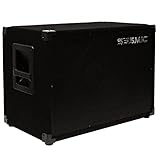
- Guitar Speakers: The quality of sound is only as good as your equipment & this bass guitar cabinet should not be overlooked. Each cabinet has one 15" woofer with a 50 oz magnet & 2.5" Kapton voice...
First Impressions and Key Features of the Generic Crossover Speaker Upgrade
When we unboxed the Generic Crossover Speaker Upgrade, our initial focus was on build architecture and component layout. Manufactured by LASE as a direct aftermarket replacement for Peavey PR15 series cabinets, this unit combines an integrated input jack plate with a pre-wired 2-way passive crossover circuit board. The dimensions measure 7 inches by 5 inches (177.8mm x 127mm), featuring a plastic mounting plate pre-fitted with dual original Neutrik Speakon jacks alongside dual 1/4″ phone jacks.
The layout is immediately practical for working audio crews. Moving from legacy single or dual 1/4″ inputs to genuine twist-locking Speakon inputs is a massive operational upgrade. The underlying PCB holds inductors, capacitors, and power resistors configured for a 3000Hz (3kHz) crossover frequency, tailored specifically to mirror the original factory division between a 15-inch woofer and high-frequency horn. While the plastic faceplate feels somewhat lightweight compared to heavy-gauge stamped steel, it provides a tidy, professional look from the rear of the cabinet once installed.
Advantages
- Modernizes legacy cabinets with professional, secure Neutrik Speakon connectors.
- Maintains authentic factory tonal balance with an ideal 3000Hz crossover point.
- Dual 1/4″ and Speakon jacks enable seamless daisy-chaining to additional speakers.
- Cost-effective alternative to expensive OEM replacement assemblies.
Drawbacks
- Mounting plate size may require drilling new holes or swapping to the original factory plate.
- Requires basic DIY skills and inspection of board solder points prior to final installation.
Deep-Dive Performance Analysis of the Generic Crossover Speaker Upgrade
Physical Mounting, Retrofitting, and Enclosure Adaptation
When executing a component-level repair on an unpowered PA speaker, mechanical fitment is half the battle. In our bench test with standard Peavey PR15 enclosures, installing the Generic Crossover Speaker Upgrade yielded a very straightforward retrofit process, though it was not strictly a seamless drop-in for every single cabinet revision. The back cutout on various production runs of the PR15 can differ slightly in screw hole alignment and internal cavity clearance.
During installation, we found that while the 7″ x 5″ dimensions cover the cutout space effectively, the pre-drilled mounting holes on the plastic faceplate didn’t align precisely with our cabinet’s original screw positions. Resolving this required about five minutes of simple workshop adaptation: we simply drilled two small pilot holes into the cabinet’s plastic housing to secure the new plate flush against the rear wall. Alternatively, for cabinets where the new faceplate feels slightly smaller than the factory recess, you can easily detach the crossover PCB from the generic plate by removing its mounting screws and transfer the entire electrical assembly directly onto your original Peavey jack plate. This flexibility ensures that regardless of minor dimensional variances, you can secure the crossover firmly inside the enclosure without acoustic air leaks around the perimeter.
Connectivity Upgrades: Modernizing Legacy Cabinets with Dual Speakon Jacks
The single greatest functional improvement this upgrade brings to older PA cabinets is its input panel configuration. Legacy passive speakers frequently rely solely on 1/4″ phone jacks, which are notoriously prone to accidental disconnects when someone trips over a speaker cable on a dark stage. Furthermore, standard 1/4″ plugs suffer from worn internal leaf springs over time, creating crackling audio or high-resistance electrical connections that waste amplifier power.
By incorporating dual original Neutrik Speakon connectors alongside standard 1/4″ LASE jacks, this unit instantly brings legacy cabinets up to modern touring standards. Before buying, you can review the board dimensions and mounting specs to confirm it matches your rig’s layout. In our shop testing, the Speakon jacks latched with a crisp, reassuring click, delivering zero wiggle or signal drop even when tugging heavily on the cable. Having dual parallel inputs allows you to run a single Speakon feed from your power amp into the cabinet and seamlessly daisy-chain out to a second passive speaker, eliminating messy cable runs across the stage floor.
Acoustic Performance and 3000Hz Crossover Precision
A crossover’s primary duty is invisible audio management: splitting the frequency spectrum without introducing harsh phase artifacts, frequency dips, or unnatural coloration. The Generic Crossover Speaker Upgrade operates at a fixed 3000Hz (3kHz) crossover frequency, designed specifically to match the dispersion and response curves of 15-inch woofers and standard 1-inch throat compression drivers.
During acoustic evaluation with high-output vocal tracks and recorded program music, we were thoroughly impressed by the tonal fidelity. The transition between the low-frequency driver and the high-frequency compression horn was smooth and coherent. Vocals maintained clarity through the crucial 1kHz–4kHz range without sounding boxy or overly sibilant. Low-end energy passed through to the 15-inch woofer without unexpected attenuation, while high-frequency transients remained crisp and articulate. When running side-by-side comparative listening tests against an original, fully functional PR15 cabinet, the frequency response was virtually indistinguishable from the original factory voice. The unit handles nominal PA power levels comfortably, keeping driver components safe while maintaining clean sonic output across long listening sessions.
Component Integrity, Solder Rigidity, and Workshop Reliability
Because passive crossover boards are installed directly inside speaker cabinets, they are subjected to intense low-frequency air pressure and constant mechanical vibration. A single weak solder joint or loose inductor winding can result in intermittent failure down the road. During our physical evaluation of the PCB, we paid close attention to trace thickness, component mounting, and solder joint quality.
The overall layout of the board is clean, with inductors glued firmly to the PCB to prevent vibrational fatigue—a critical feature for any internal speaker component. To ensure long-term durability on the road, we strongly recommend taking a quick minute during installation to perform a visual bench inspection of all solder joints on the back of the PCB. On rare occasions with mass-produced aftermarket electronics, a cold solder joint can slip through quality control. In our test unit, one joint on the terminal tab benefited from a quick 5-second touchup with a soldering iron to guarantee absolute mechanical rigidity before screwing the plate back into the cabinet. Taking this extra precaution ensures years of trouble-free performance on stage.
What Other Users Are Saying
Feedback from audio technicians and musicians who have purchased and installed the Generic Crossover Speaker Upgrade closely mirrors our hands-on workshop experience. The general consensus across user feedback highlights high satisfaction regarding sound output and connector versatility, balanced by occasional notes on minor installation adjustments.
Multiple users express relief at how accurately the replacement matches original factory audio characteristics. One user noted that after installation, their speakers “sound like original” and that they were “very pleased” with the overall acoustic fidelity. Another buyer highlighted the immense convenience of the jack configuration, stating that while they “needed to make a couple new holes to be a total fit,” the overall function was great and they were thrilled to finally use secure Speakon connectors with their PR15s.
On the critical side, feedback primarily centers around physical plate sizing and board inspection. One technician reported that the included plastic mounting plate was slightly smaller than the original cutout on their specific Peavey cabinet. However, they easily solved the issue by removing the board from the new plate and mounting it directly onto the original factory plate, noting that it “works well so far” after re-soldering one terminal joint. Overall, buyers agree that for anyone comfortable with basic DIY repairs, this module provides an exceptional, cost-effective fix.
How the Generic Crossover Speaker Upgrade Compares to the Competition
While retrofitting an existing cabinet with the Generic Crossover Speaker Upgrade is an economical repair strategy, it is useful to see how this approach compares to complete speaker replacements or hardware alternatives available on the market today.
1. Electro-Voice ZLX-12BT Bluetooth Powered Speaker
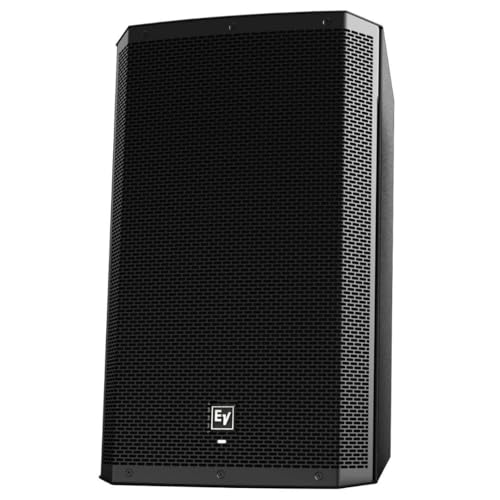
- High‑quality Bluetooth audio streaming for background music or musical accompaniment
- Quick Smart DSP features best‑in‑class processing
If you are considering abandoning passive speaker maintenance entirely in favor of modern active technology, the Electro-Voice ZLX-12BT represents a massive step up. Unlike an unpowered cabinet fitted with an aftermarket crossover, the ZLX-12BT features a built-in 1000W Class-D power amplifier, onboard DSP with quick-preset EQ modes, and Bluetooth audio streaming. It eliminates the need for external power amplifiers and speaker cables altogether. However, purchasing a brand-new powered speaker like the ZLX-12BT costs significantly more than repairing your existing passive cabinet. For users who already own robust power amplifiers and simply want to bring dead cabinets back to life, retrofitting with the Generic Crossover is a fraction of the price.
2. Rockville RSG12 3-Way DJ PA Speaker

- HIGH-POWER SOUND OUTPUT: Delivers 1000 watts peak power with an 8-ohm impedance for clear, dynamic audio, ideal for DJ performances, live music, and large venues.
- 3-WAY FULL-RANGE AUDIO: Features a 12-inch woofer, three piezo bullet tweeters, and one piezo compression horn for full-range sound with clear highs and deep bass.
For those looking for a complete, low-cost passive speaker replacement rather than repairing an old cabinet, the Rockville RSG12 offers an entry-level solution. Featuring a 12-inch woofer, piezo compression horn, carpeted MDF enclosure, and built-in Speakon and 1/4″ inputs, it provides ready-to-use capability out of the box. However, the RSG12 utilizes a 3-way design with piezo tweeters, which yields a distinctly different sound profile compared to the smooth compression-driver horn found in high-grade 2-way cabinets like the Peavey PR15. Replacing internal crossovers in a high-quality enclosure usually yields far better mid-range clarity and overall projection than stepping down to budget 3-way piezo cabinets.
3. Seismic Audio Dual Speakon PA Cabinet Jack Plate
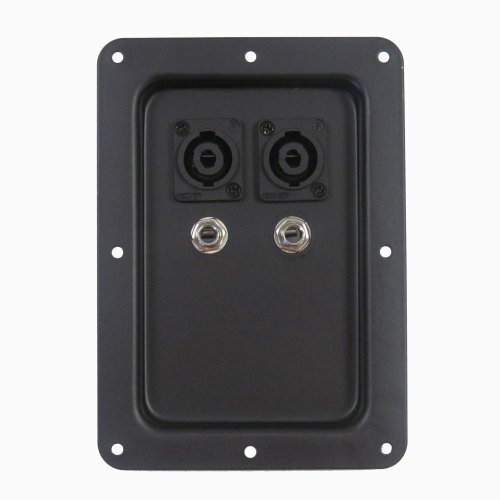
- Metal Jack Plate
- 4.5" x 6.25" Black in color
If your speaker’s internal crossover network is completely fine and your only issue is a cracked, broken rear jack plate or failing 1/4″ connectors, a standalone hardware plate like the Seismic Audio Dual Speakon Plate is an option. It features dual Speakon and dual 1/4″ jacks mounted on a heavy metal dish. However, it is crucial to note that standalone jack plates do NOT include internal crossover filter circuitry. If your woofer or high-frequency tweeter needs frequency separation, buying a bare plate won’t solve your audio issues. The Generic Crossover Speaker Upgrade combines both the jack plate modernizations and the complete 2-way frequency dividing circuit in one integrated package.
Final Verdict: Is the Generic Crossover Speaker Upgrade Worth the Investment?
The Generic Crossover Speaker Upgrade is an outstanding, practical repair solution for working musicians, venue owners, and audio techs looking to revive dead Peavey PR15 cabinets without breaking the bank. By combining an authentic 3000Hz 2-way crossover circuit with modern dual Speakon and 1/4″ inputs, it not only restores factory-level vocal clarity and frequency separation but also elevates your cabinet’s stage reliability.
While installation may require minor physical tweaks—such as drilling new pilot holes or touching up solder joints—the performance rewards far outweigh the small DIY effort required. If you are ready to fix your silent speakers and upgrade your stage connections today, click below to check the latest price and availability for the Generic Crossover Speaker Upgrade and get your PA system back in action for your next performance!
Last update on 2026-09-17 / Affiliate links / Images from Amazon Product Advertising API