
Tonebird PowerStage 700 Solid-State Guitar Amp Head Review: The Ultimate Clean Power Solution for Modern Gigging Musicians?
As guitarists who have fully embraced the digital modeling revolution, we know the immense freedom of having dozens of world-class amp models and complex pedal setups stored in a single floor unit. However, transitioning those meticulously crafted tones from a studio headphone environment to a loud, live stage often exposes a critical bottleneck: amplification. Running your digital processor into a traditional tube amp’s return jack frequently adds unwanted power-section sag and tonal coloration, while typical active PA speakers can feel harsh, directional, and uninspiring under your fingers. Lower-wattage power amps, on the other hand, quickly run out of clean headroom when competing with an aggressive drummer, causing unpleasant digital-style clipping.
Finding a power amplifier that delivers pristine, uncolored volume, massive dynamic headroom, and real stage presence without breaking your back during load-in has long been a headache for working guitarists. That is precisely why we put the Tonebird PowerStage 700 Solid-State Guitar Amp Head through a rigorous testing process in our studio and live rehearsal setups. Designed specifically to serve as the ultimate clean canvas for modelers and pedalboards, this compact power house promises to solve the tone-shaping and volume hurdles modern players face every day.

- Features Tonebird PlayReady bundle with high quality MXR patch cables (2), 15' XLR cable, 5' XLR cable, 10' insturment cable and a Groovetech guitar/bass multi-tool
- The PowerStage 700 is the perfect companion for the current crop of amp modelers and effects processors. With discrete stereo ins and outs you can reproduce your carefully crafted amp sounds in...
What to Consider Before Buying an Electric Guitar Power Amp
An electric guitar power amp is more than just an item; it’s a key solution for bridging the gap between digital modeling processors, analog preamp pedals, and physical speaker cabinets on stage. Unlike traditional guitar heads that generate high gain and colored overdrive within their own preamps, dedicated power amps are engineered to take your pre-shaped guitar signal and amplify it cleanly to gig-ready volume levels without altering your core tone.
The ideal customer for this type of product is someone facing stage volume limitations, gear weight constraints, or tonal inconsistency across different venues. If you rely on digital modelers, multi-effects processors, or complex pedalboard preamps and need explosive clean power, this category is built for you. However, it might not be suitable for those who prefer the natural sag, soft clipping, and vintage harmonic distortion produced by glowing vacuum tubes driven hard, or for beginners seeking an all-in-one practice amp with built-in effects and tiny built-in speakers.
Before investing, consider these crucial points in detail:
- Dimensions & Space: Consider how you plan to transport and rig your amplifier. Dedicated power amps range from tiny pedalboard-sized units to rack-mountable stereo powerhouses. Ensure the unit’s dimensions and mounting options match your gig bag, pedalboard, or flight case configuration. Weight is equally vital; modern class-D solid-state designs weigh under ten pounds while delivering hundreds of watts, making heavy tube racks obsolete.
- Capacity & Performance: Headroom is paramount when choosing a power amplifier. High output wattage (such as 700 watts) ensures that your signal remains crystal clear even at extreme stage volumes, preventing harsh transient distortion. Additionally, check speaker impedance flexibility—having dual outputs that handle 4 to 16 ohm cabinet loads allows you to connect to virtually any backline speaker cab without fear of mismatching.
- Materials & Durability: Live touring demands rugged construction. Look for heavy-gauge aluminum or steel enclosures, reinforced chassis corners, high-grade balanced XLR jacks, and heavy-duty potentiometers. Proper thermal ventilation or quiet internal cooling fans are essential to prevent thermal shutdown during demanding outdoor summer festival sets.
- Ease of Use & Maintenance: On a dark, fast-paced stage, you do not want to be scrolling through complex sub-menus to adjust your overall volume or venue EQ. Physical, musically voiced global EQ knobs allow for instant acoustic adjustments to match the room. Furthermore, solid-state designs require zero tube biasing, tube replacements, or delicate handling, resulting in years of maintenance-free operation.
Evaluating these core factors will help you select a power amplifier that seamlessly integrates into your existing rig while eliminating live performance headaches.
While the Tonebird PowerStage 700 Solid-State Guitar Amp Head is an excellent choice, it’s always wise to see how it stacks up against the competition. For a broader look at all the top models, we highly recommend checking out our complete, in-depth guide:

- Pure Analog Technology for Crystal-Clear Sound: Featuring full analog technology with a precise frequency response of 100Hz-20kHz @ ±3dB, delivering exceptional clarity and natural tone. With 10W...

- 🎸[Built-in 4 Effects] This portable guitar amp is suitable for electric guitar, and has 4 effects, clean, distortion, overdrive, reverb, which cater to your need of daily practice.

- A professional-grade, powerful electric guitar amplifier: We have completely upgraded this 20-watt amplifier to deliver all the power needed for both practice and performance. It comes with a...
First Impressions: Unboxing the Tonebird PowerStage 700 Rig
Unboxing the Tonebird PowerStage 700 Solid-State Guitar Amp Head immediately instills confidence. Despite delivering a staggering 700 watts of stereo power, the chassis itself feels surprisingly compact and manageable, measuring just 6.9 inches deep, 11.5 inches wide, and 2.2 inches high, with a manageable weight of roughly 7.3 pounds. The matte finish and industrial steel housing feel completely tour-ready, while the front panel layout is minimalist and uncluttered, dominated by smooth, tactile knobs for Master Volume, Bass, Mid, and Treble.
What sets this specific release apart is the included PlayReady bundle package. Opening the accessory box reveals a comprehensive toolkit for immediate deployment, including rack brackets for mounting into standard 19-inch rack cases, heavy-duty MXR patch cables, standard instrument cabling, and balanced XLR cables. The addition of the Groovetech guitar/bass multi-tool is a thoughtful extra that ensures you have every hex key and screwdriver necessary for on-the-fly hardware adjustments during soundcheck.
What We Like
- Massive 700-watt power output providing virtually unlimited clean headroom
- True Cab Circuitry (TCC) on XLR line outputs for seamless direct-to-FOH routing
- Musically voiced 3-band EQ for fast, menu-free room acoustics tweaking
- Extensive bundle with Groovetech multi-tool and high-quality cabling included
What We Didn’t Like
- Global volume and EQ controls affect both stereo input channels simultaneously
- Higher investment cost for players who only require practice-level output
In-Depth Performance Analysis: Putting the Tonebird PowerStage 700 to the Test
1. Raw Power, Uncompromised Headroom, and Dynamic Response
When evaluating solid-state power amplifiers, the primary test is how cleanly and accurately they amplify complex guitar dynamics at extreme volumes. During our studio testing, we hooked up the Tonebird PowerStage 700 Solid-State Guitar Amp Head to a variety of physical speaker cabinets, ranging from a custom 1×12 closed-back cab to a high-powered 4×12 standard stack. With 700 watts split across its stereo channels (350 watts per channel into 4 ohms), the volume output is nothing short of breathtaking.
What impresses us most is not just raw decibel levels, but the total absence of unwanted power-amp distortion. Digital amp modelers rely heavily on precise speaker cabinet impulse responses (IRs) and internal power amp modeling. If physical power amps clip or introduce mid-range hum, those carefully dialed digital tones degrade into harsh, muddy noise. The Tonebird PowerStage 700 preserves every delicate nuance of your pick attack, high-gain clarity, and ambient reverb tails without squishing the sound. Even when pushed to gig-level volumes that easily overwhelm a loud drummer, transient notes snap with immediate, punchy tactile feedback under your fingers.
2. True Cab Circuitry (TCC) and Direct-to-FOH Routing
One of the standout features that makes this unit an absolute game-changer for stage and studio workflows is the inclusion of True Cab Circuitry (TCC) on its rear-panel XLR outputs. In modern performance environments, front-of-house sound engineers often prefer receiving a balanced direct line signal rather than mic’ing physical cabinets on stage. The Tonebird PowerStage 700 allows you to run direct XLR lines straight to the PA mixing console or studio audio interface while simultaneously driving physical speaker cabinets on stage for real feel and air displacement.
In our direct recording trials, the TCC output produced an incredibly realistic, analog-voiced speaker cabinet response. It tames the harsh “fizz” typically associated with line-level guitar signals without introducing the phase issues or digital latency sometimes found in DSP-based IR loaders. We found that running the XLR outputs directly into our DAW yielded immediate, mix-ready guitar tracks that sounded warm, organic, and mid-focused. For touring guitarists wanting a consistent, reliable direct tone every single night regardless of venue mic quality, you can see its full feature set and user reviews to understand why this direct feature is so widely praised.
3. Musically Voiced EQ and Stereo Signal Routing
Stage acoustics vary wildly from venue to venue; a preset dialed in a damp rehearsal room can sound overly boomy in a high-ceiling club or thin on an outdoor stage. Rather than forcing you to modify your digital patch parameters inside complex software menus, the Tonebird PowerStage 700 features an intuitive, analog 3-band EQ right on the front panel. Seymour Duncan meticulously engineered the frequency bands (Bass, Mid, Treble) specifically for electric guitar spectrum management.
Boosting the Mid knob adds instant cut and weight to lead solos without adding low-end mud, while backing off the Treble slightly smooths out overly reflective venue rooms. The unit features discrete left and right stereo inputs and outputs, allowing complex ping-pong delays, wide chorus effects, and wet/dry/wet rig configurations to sound expansive and deep. It is worth noting, as confirmed by our tests and real-world user feedback, that the front panel EQ and Master Volume knobs operate globally across both channels. While individual channel volume controls would offer additional flexibility for dual-mono setups, for true stereo operation where balance is set at the preamp source, this global design ensures perfect stereo image tracking across the stage. To check if this compact routing matches your pedalboard setup, you can check the latest price and availability today.
4. Thermal Management, Build Quality, and Bundle Value
Durability under harsh gigging conditions is non-negotiable for professional musicians. Throughout extended multi-hour rehearsal sessions at high output levels, the chassis of the power amp remained impressively cool. Internal heat dissipation is handled effectively without introducing noisy fan interference into delicate studio recording mics. The physical switches yield a solid click, and the heavy-duty input jacks maintain a firm grip on cables, eliminating accidental unplugging on dark stages.
The included PlayReady bundle substantially increases the overall value proposition. Instead of having to purchase additional cables and tools separately, you receive high-grade MXR patch cables and balanced XLR cables straight out of the box. The bundled Groovetech multi-tool is robust and includes precision metric and imperial hex keys, perfect for adjusting guitar bridge saddles, truss rods, or rack mounting hardware on the fly. To see why this bundle offers exceptional value for working musicians, consider exploring how it fits into your touring rig.
What Other Users Are Saying
To supplement our hands-on testing, we analyzed feedback from real-world owners across various musical genres to gauge long-term satisfaction. The consensus among gigging players is overwhelmingly positive, particularly regarding the amp’s transparency and sheer headroom.
Users frequently note that the amp “completely revived” their digital modeler setups, offering a punchy, amp-in-the-room feel that active FRFR (Full Range Flat Response) monitors fail to deliver. One user summarized their experience succinctly: “Great power amp, super versatile. The only con is EQ and volume is the same on both inputs.” This sentiment echoes our findings regarding the global EQ design. While players running two completely separate instruments or distinct mono signal chains into inputs A and B might wish for independent level controls, stereo modeler users universally praise how clean and simple the single-knob stereo adjustment makes stage monitoring. The physical build quality, whisper-quiet operation, and direct XLR out capabilities consistently earn high marks across the board.
How the Tonebird PowerStage 700 Compares to the Competition
To help you determine if this unit is the right choice for your specific musical setup, we evaluated how it compares against three alternative amplification solutions across different price points and use cases.
1. Leo Jaymz 20W Electric Guitar Amplifier

- 20W electric guitar amplifier with crunch and clean channel.
- Very soft but solid fixing and comfortable handle, leather surface.
The Leo Jaymz 20W Electric Guitar Amplifier is an entry-level combo amp designed primarily for beginner practice, small bedroom sessions, or casual home playing. Featuring a single 6.5-inch speaker, built-in clean/distortion channels, and a headphone output, it serves a vastly different purpose than a professional power amplifier head. While the Leo Jaymz is budget-friendly and fully self-contained for absolute beginners, it lacks the wattage, headroom, direct XLR output capabilities, and stereo routing required for serious stage gigging or integrating high-end pedalboards and digital modeling rigs.
2. Donner Mini Electric Guitar Amp
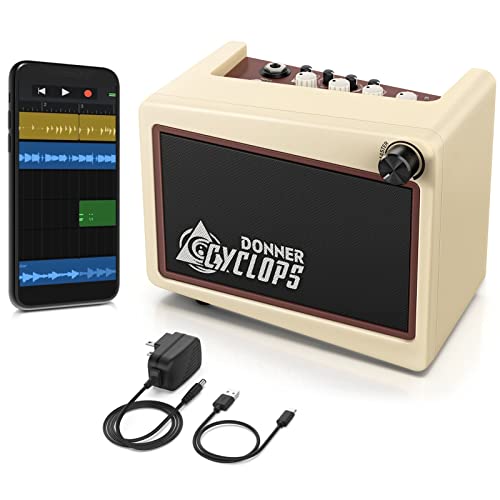
- 【7 Amplifier Models 】6 guitar amps models (based on world-famous classic/boutique/modern amplifiers) and a "flat" model with an unprocessed transparent sound. (Clean x2 - Overdrive x2 - Higain x...
- 【Drum Machine】40 drum patterns (incl. 10 metronome types) TAP button to set drum tempo.POP/ROCK/FUNK/METAL/BLUES/FUSION/METRO.
The Donner Mini Electric Guitar Amp is an ultra-portable, 5-watt desktop practice amplifier packed with digital amp models, onboard effects, and a drum machine. Powered wirelessly or via power adapter, it is engineered for ultra-compact portability, desktop songwriting, and quiet practicing. While it offers impressive multi-functionality for its microscopic size, it cannot drive physical guitar speaker cabinets on stage. Compared to the massive 700-watt clean headroom and professional stereo outputs of the Tonebird PowerStage 700, the Donner Mini is purely a practice companion rather than a gig-ready power unit.
3. Keen Eye Fly 3 Amplifier Power Supply
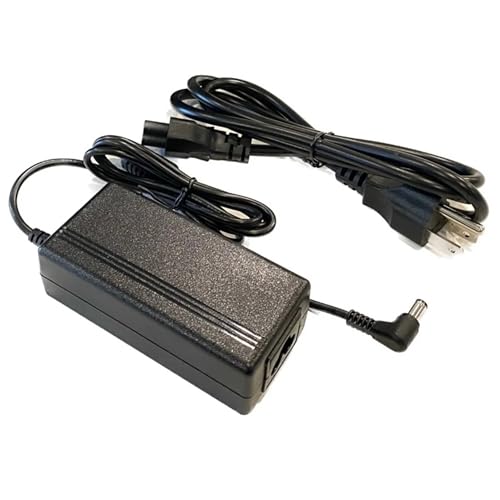
- Works with Blackstar Fly 3 Series Amps.
- Blackstar Fly 3
The Keen Eye Fly 3 Power Supply is an AC power adapter designed specifically to power small mini-amplifiers like the Blackstar Fly 3 series. It is an essential accessory if you own a battery-powered micro amp and want continuous desktop power without burning through AA batteries. However, it is an accessory power supply rather than an actual amplifier unit. For guitarists seeking high-power amplification for pedalboards and modelers, the dedicated 700-watt architecture of the Tonebird PowerStage 700 represents a completely different class of pro-audio equipment.
Final Verdict: Is the Tonebird PowerStage 700 Worth It?
After putting the Tonebird PowerStage 700 Solid-State Guitar Amp Head through intensive real-world testing, we can confidently state that it is one of the most capable, transparent, and versatile power amplifiers available for modern guitarists. Its massive 700-watt stereo engine provides pristine clean headroom that allows digital processors, analog preamps, and complex pedalboards to sound their absolute best without unwanted clipping or coloration.
Features like True Cab Circuitry on the XLR outputs simplify live direct routing, while the musical 3-band global EQ makes matching stage acoustics effortless. Although players seeking independent channel volume controls for dual-mono setups should take note of its shared controls, stereo rig users will love the streamlined design. Combined with the high-value PlayReady bundle featuring Groovetech tools and premium cabling, this amplifier head stands out as an outstanding investment for touring professionals and home studio recording artists alike.
Ready to unlock the true potential of your digital modeler or pedalboard rig? Click here to check current pricing and secure your Tonebird PowerStage 700 Bundle today.
Last update on 2026-09-17 / Affiliate links / Images from Amazon Product Advertising API