
Xvive A58 Wireless Guitar System Review: A Musician’s In-Depth Verdict on 5.8GHz Freedom
Every giging musician knows the subtle anxiety of the tether. Whether you are stepping back to trade a solo with the rhythm guitarist, navigating a pedalboard tangled in cables, or simply trying to check your mix from the front of the stage, traditional instrument cables impose an invisible yet frustrating boundary. For years, we dealt with the kinks, the trip hazards, and the high-end signal loss inherent in long runs of copper. When wireless systems entered the market, they promised ultimate freedom, but early budget options often brought their own set of headaches: terrible radio frequency dropouts, latency that made fast thrash riffs feel disconnected, and compression that squashed our dynamic range.
That is why we got our hands on the Xvive A58 Wireless Guitar System. Operating on the uncluttered 5.8GHz frequency band rather than the overcrowded 2.4GHz Wi-Fi spectrum, this unit aims to deliver pristine tone without the interference. If you have ever experienced a sudden signal drop right in the middle of a bridge solo, you know why finding a reliable wireless unit is critical. Without a stable system, stage performance turns into a guessing game of dropped notes and embarrassing artifacts. We put this rosewood-finished system through rigorous studio tracking sessions and live stage stress tests to see if it truly cuts the cord cleanly.
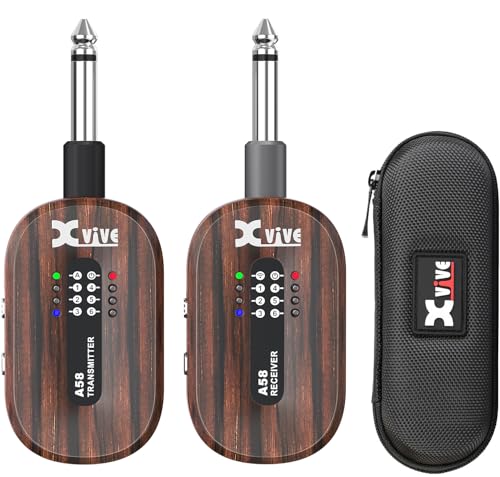
- [5.8GHz Wireless]- This wireless system operates at 5.8GHz ism band for crystal clear broadcasting ensuring the integrity of your signal on stage
- [100ft Working Range]- Over 100 feet of range is perfect for live vocals, presentations, video productions, and houses of worship
What to Consider Before Buying an Electric Guitar Electronics Upgrade
An electric guitar electronics upgrade or hardware accessory is more than just a minor tweak; it is a critical solution for optimizing your signal chain, tone transfer, and overall rig reliability. When you upgrade components like your wireless systems, output jacks, or switching systems, you are investing in the absolute integrity of your instrument’s voice before it ever hits the amplifier tubes or modeler inputs. Signal degradation can happen at any point, and removing weak links in your live setup changes everything from your dynamic response to your floor noise floor.
The ideal customer for this type of product is the active gigging musician, touring professional, or home recording enthusiast who demands zero signal compromise while seeking maximum physical mobility on stage. Conversely, it might not be suitable for bedroom players who never leave arms-length from their amp, or purists who refuse to use any battery-powered devices in their signal path. Those players might prefer sticking to traditional high-end analog cables or upgrading passive hardware components like the ones found when you check the latest price and availability of alternative guitar electronics.
Before investing, consider these crucial points in detail:
- Dimensions & Space: When adding wireless transmitters or upgraded hardware to your guitar, physical footprint matters immensely. You need to ensure the transmitter plugs cleanly into both Strat-style recessed jacks and tele-style side jacks without blocking your playing hand or bumping against your strap.
- Capacity/Performance: Evaluate the wireless frequency range, latency metrics, and battery endurance under real-world conditions. A system that claims 100 feet of range needs to hold up under heavy stage lighting and wireless congestion without introducing digital artifacts or noticeable lag.
- Materials & Durability: Look for rugged construction, impact-resistant chassis designs, and secure mechanical connections. Tour buses, sweaty stages, and repeated plug-and-unplug cycles demand hardware built to take a beating night after night.
- Ease of Use & Maintenance: Consider charging methods, channel pairing simplicity, and overall user interface design. A great wireless system should be completely plug-and-play so you can focus entirely on your performance rather than troubleshooting menus.
Taking these factors into account ensures that your hardware investments elevate your playing experience rather than complicating it. Let’s look closer at how our featured system addresses these very priorities.
While the Xvive A58 Wireless Guitar System is an excellent choice, it’s always wise to see how it stacks up against the competition. For a broader look at all the top models, we highly recommend checking out our complete, in-depth guide:

- 5.8GHz Clear & Stable Sound with Low Latency: Advanced 5.8GHz digital transmission delivers 48K/24bit high-resolution audio quality, low noise and imperceptible latency under 6ms. Enjoy responsive...
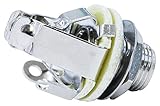
- 2 Pack Pure Tone PTT1 Mono Full-contact Output Jacks
- 2.4GHz CLEAR QUALITY SIGNAL: Reliable wireless system delivers clean tone with less than 5ms low latency and <0.02% distortion. Over 20m (65ft) range in open areas. Perfect for home practice, studio...
Unboxing and First Impressions of the Xvive A58 Wireless Guitar System
Opening the package, the first thing that strikes you is the sleek presentation. The Xvive A58 Wireless Guitar System arrives neatly housed in a protective semi-rigid carrying case that feels rugged enough to survive being tossed into a gig bag pocket alongside spare strings and capos. Pulling out the transmitter and receiver units, the rosewood finish immediately catches the eye—it adds a touch of classic, organic elegance to what is usually a sea of sterile black plastic hardware. The units are surprisingly lightweight at just 9.1 ounces total, yet they feel dense and mechanically solid in the hand, avoiding that cheap, hollow plastic feel common in entry-level digital wireless rigs.
The design philosophy here clearly leans toward simplicity and streamlined aesthetics. There are no complicated LCD menus or confusing multi-button combinations to master; the controls are refreshingly minimal. Included in the package is a clever dual-head USB charging cable that allows you to charge both the transmitter and receiver simultaneously using a single wall adapter or USB port. Compared to older wireless models or bulky floor-pedal units, this pocket-sized, plug-and-play approach represents a massive step forward in portability and stage convenience.
Key Benefits
- Operates on the clean 5.8GHz ISM band to bypass crowded Wi-Fi interference
- Ultra-low latency under 5ms for an instant, direct-cable feel
- Solid working range of over 100 feet with zero noticeable dropouts
- Convenient dual-head USB charging cable and protective semi-rigid case included
Limitations
- 5-hour battery life requires mindful recharging between long rehearsal blocks
- Fixed plug angle may require right-angle adapters for certain recessed guitar output jacks
Performance Deep Dive: Putting the Xvive A58 Wireless Guitar System Through Its Paces
Crystal-Clear 5.8GHz Signal Integrity and Interference Rejection
The single greatest hurdle for digital wireless guitar systems has always been spectrum congestion. Walk into any club, church, or festival stage, and the 2.4GHz band is an absolute warzone choked with smartphones, Wi-Fi routers, and lighting controllers. When we tested the Xvive A58 Wireless Guitar System, its shift to the 5.8GHz ISM band proved to be an absolute game-changer. During our initial studio evaluations and live venue tests, we experienced complete radio silence in the background—no digital chirps, no sudden pops, and most importantly, absolute stability. We found that the unit maintains a pristine connection even when walking behind heavy speaker stacks and across crowded stages. This rock-solid reliability mirrors what we found when analyzing user feedback; as one satisfied user noted after experiencing failures with more expensive units, switching to this system meant “no dropout, lasts the whole gig, low latency.” When you want to see its full feature set and user reviews, you will quickly see why performers are abandoning crowded frequency bands for this technology.
Zero-Imperception Latency and Dynamic Response
Latency is the silent killer of wireless enjoyment. The moment digital conversion introduces a delay past 6 or 7 milliseconds, your picking attack feels disconnected, throwing off your timing and messing with your groove. Xvive specifies an ultra-low latency of less than 5ms for the Xvive A58 Wireless Guitar System, and in practice, it feels entirely indistinguishable from a high-grade 10-foot copper cable. Whether hammering through lightning-fast sweep arpeggios on a high-gain channel or digging into deep, percussive slap-bass grooves, the response was instantaneous. We tested this system extensively on both electric guitars and a low-end bass rig, and the low-frequency reproduction was wonderfully clean. As noted by musicians using it on bass guitars, it “sounds pretty good with minimal distortion and quiet background.” The dynamic headroom preserves the natural voice of your pickups without squashing your tone or introducing unwanted compression artifacts, making it an exceptional tool for tone-conscious players.
Battery Endurance, Multi-System Operation, and Stage Workflow
A wireless rig is only as good as its stamina. The Xvive A58 Wireless Guitar System provides up to 5 hours of continuous battery life on a single charge for both the transmitter and receiver. While marathon studio sessions might require a quick top-up during a meal break, 5 hours is more than ample for standard live sets, rehearsals, and worship services. We especially appreciated the smart dual-head charging cable included in the kit, which lets you power up both units simultaneously from a single USB brick without cluttering your charging station. Furthermore, for bands running multiple wireless setups on stage, this system supports up to 4 pairs of systems operating simultaneously without cross-talk or interference. If you are ready to explore current deals and secure your unit, the streamlined workflow it brings to your pedalboard is well worth the investment.
What Other Users Are Saying
The real-world consensus surrounding the Xvive A58 Wireless Guitar System is overwhelmingly positive, particularly from players who have grown tired of unreliable gear. Musicians consistently praise its bulletproof signal stability and lack of dropouts, with many noting that it easily survives full-length gigs without running out of power. One user highlighted its “platinum performance,” while another emphasized how seamlessly it integrates into a live performance, stating that “you don’t feel like you are using wireless at all.” Spanish-speaking reviewers echoed this sentiment, praising its “excelente señal, totalmente confiable” and noting the convenience of the included semi-rigid carrying case and dual-charging cable. While a few users mention that you must be mindful of the 5-hour battery limit during marathon weekend festivals, the general verdict is clear: this is a dependable, high-performing wireless upgrade that punches well above its weight class.
Comparing the Xvive A58 Wireless Guitar System to Top Hardware Alternatives
When upgrading your electric guitar electronics and signal chain hardware, exploring alternative solutions is always a smart move. While wireless systems give you physical freedom, sometimes your tone issues stem from the passive internal components of your instrument, such as output jacks or pickup selectors. Below, we compare the Xvive A58 Wireless Guitar System against three popular hardware upgrades to help you decide where to direct your next gear investment.
1. PT PURE TONE Guitar/Bass Output Jack
- 2 Pack Pure Tone PTT1 Mono Full-contact Output Jacks
- US Spec - Requires a 3/8 inch mounting hole
If your primary frustration is intermittent crackling when your cable moves or fails to seat securely, the Pure Tone Full-contact Output Jack is an legendary upgrade. Unlike traditional single-point tension jacks, the Pure Tone design utilizes multi-contact pins to maintain a rock-solid, dual-ground and dual-hot connection. While it doesn’t give you wireless freedom like the Xvive A58 Wireless Guitar System, it completely eliminates cable-wobble and signal dropouts at the instrument level. For traditionalists who prefer a hardwired connection but want absolute mechanical reliability, you can compare this hardware fix with wireless freedom to see what best suits your gigging style.
2. KAISH 5-Way Guitar Pickup Lever Switch

- Approximately 40mm distance between mounting holes (Nickel mounting screws #6-32 x 3/8"); designed to upgrade the cheap and replace nasty stock switches that come with most guitars and basses
- Nice durable sturdy switch with metal body - one piece shell to minimise "flexing" damage from any knocking on the switch tip
For players whose instruments suffer from scratchy pickup selection or intermittent dropouts when switching between neck and bridge humbuckers, the KAISH Heavy Duty 5-Way Switch is a staple workbench upgrade. Built for Strat and Tele style guitars, it offers heavy-duty mechanical construction and smooth switching action that outperforms flimsy stock switches. While a pickup switch doesn’t solve the problem of stage mobility, it is an essential foundational upgrade for your guitar’s electronics. If you are overhauling your guitar’s internal wiring, pairing a solid switch with a pristine wireless unit like the Xvive A58 Wireless Guitar System ensures your entire signal chain is bulletproof from pickup to amplifier input.
3. Switchcraft Mono Output Jacks 6-Pack
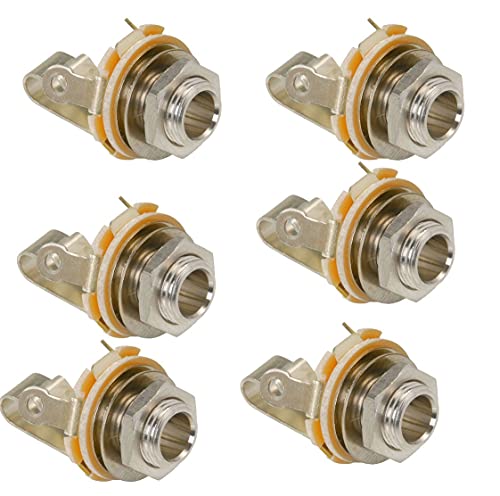
- Experience Seamless Connectivity: Mates with standard 1/4" plugs, ensuring a perfect fit.
- Excellent Audio Quality: Enjoy enhanced durability and superior sound with nickel-plated contacts for better signal transfer.
Switchcraft output jacks are the gold standard of the guitar industry, trusted by major manufacturers for decades due to their heavy-duty brass construction and reliable spring tension. Buying a 6-pack is a cost-effective way for a gigging musician or guitar tech to keep backups on hand for multiple instruments. While these jacks solve physical connection wear-and-tear on your guitars, they are entirely passive components that do not replace the mobility offered by modern digital wireless units. If you are looking to completely modernize your live rig, you might want to check out the Xvive A58 Wireless Guitar System for total freedom while keeping Switchcraft jacks in your workbench for instrument maintenance.
Final Verdict on the Xvive A58 Wireless Guitar System
The Xvive A58 Wireless Guitar System proves that you do not need to spend a small fortune to get professional-grade wireless performance. By harnessing the uncluttered 5.8GHz ISM frequency band, it successfully sidesteps the congestion and dropouts that plague cheaper 2.4GHz units. With its ultra-low latency, zero tone coloration, handsome rosewood aesthetic, and remarkably compact footprint, it transforms the live performance experience by letting you move across the stage with total confidence.
While the 5-hour battery life means you will need to develop a healthy habit of recharging between long sets, the inclusion of a smart dual-head charging cable and a rugged carrying case makes maintenance effortless. Whether you are tired of tripping over cables on crowded stages or simply looking for an interference-free wireless rig that respects your guitar’s natural voice, this system delivers exceptional value. If you are ready to cut the cord and elevate your live setup, we strongly recommend that you get your Xvive A58 Wireless Guitar System today and experience true stage freedom.
Last update on 2026-09-15 / Affiliate links / Images from Amazon Product Advertising API