
The Art Of Tone CTS 500k Guitar Potentiometer Review: Is This the Ultimate Upgrade for Your Electric Guitar?
Every guitarist has experienced that nagging feeling during a gig or a late-night practice session: your favorite axe just sounds a bit muddy, lacking the sparkle and clarity it used to have. You might tweak your amplifier settings, swap out overdrive pedals, or even change your string brand, yet the core issue remains buried deep inside your instrument’s control cavity. Factory-installed stock potentiometers in many mid-tier and budget guitars often suffer from poor taper consistency, narrow resistance tolerances, and cheap mechanical construction that bleeds high frequencies and introduces scratchy noise when you adjust your volume or tone. Ignoring these failing electronic components can stifle your instrument’s true harmonic potential, leaving you frustrated with a signal chain that feels unresponsive and choked.
When we decided it was time to overhaul the wiring harness on our favorite dual-humbucker solid-body, we knew a quick fix wouldn’t cut it. We needed components that could deliver transparent signal transfer, buttery-smooth rotational resistance, and reliable longevity under heavy gigging conditions. That search led us straight to the workbench to evaluate The Art Of Tone CTS 500k Guitar Potentiometer. Installing a pair of precision-toleranced pots can completely transform how your pickups interact with your amp, bringing back the high-end “spank” and dynamic sensitivity that cheap factory components routinely mask. If you are tired of fighting with stiff, noisy volume sweeps or muddy tone roll-offs, upgrading your hardware is the logical next step.
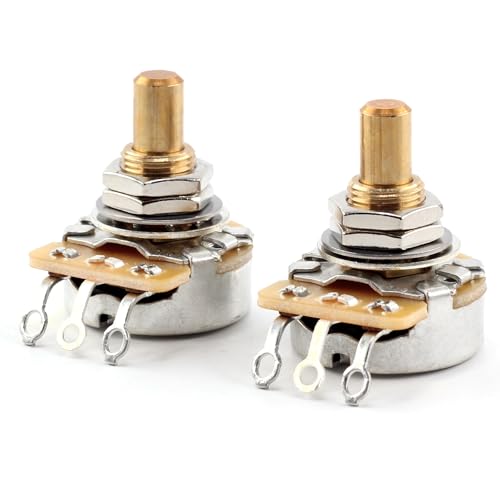
- Genuine CTS pots: A trusted name for the best in guitar tone for over 55 years!
- Versatile design: Perfectly suited for both tone and volume controls and compatible with many guitar models like Les Paul, SG, Telecaster, Stratocaster, and more!
What to Consider Before Buying Electric Guitar Electronics
Electric guitar electronics form the crucial bridge between your physical string vibrations and the final amplified sound waves hitting your speaker cabinet. A quality electronic component is more than just a piece of metal and carbon; it is a precision tool designed for exact signal routing, noise reduction, and long-term mechanical reliability. Investing in high-grade potentiometers, jacks, and switches ensures that your guitar’s natural acoustic voice is translated faithfully to your pedalboard and amplifier without unwanted signal degradation, high-end roll-off, or annoying static crackle during live performances.
The ideal customer for this type of product is a tone-conscious guitarist, a DIY modder, or a guitar technician looking to upgrade factory-standard components for professional-grade performance. Conversely, this specific upgrade might not be suitable for complete beginners who are uncomfortable with a soldering iron, or owners of import guitars that feature metric-sized control holes and metric-knurled shafts, as physical modifications would be required. If your guitar utilizes metric dimensions and you prefer a drop-in installation without reaming out your control plate, you will want to measure your instrument carefully before purchasing.
Before investing, consider these crucial points in detail:
- Dimensions & Space: Guitar control cavities are notoriously cramped, particularly in vintage-style solid-bodies and semi-hollow architectures. You must verify shaft diameter and bushing height to ensure your chosen pots fit cleanly through your guitar’s top without requiring messy woodwork or drill modifications.
- Capacity/Performance: Resistance values dictate your guitar’s tonal ceiling, with 500k options acting as the gold standard for humbuckers and high-output single coils to preserve sparkling high-end frequencies. Pay close attention to tolerance ratings, as tighter tolerances guarantee that your components match your desired resistance profile.
- Materials & Durability: Premium brass shafts, sturdy phenolic bases, and robust internal wiper assemblies dictate how many thousands of rotations a potentiometer can withstand. Cheap bargain pots fail quickly, developing dead spots and oxidation, whereas quality brass construction ensures decades of dependable service.
- Ease of Use & Maintenance: A user-friendly component features easily accessible solder lugs that take heat well without melting internal plastic components. Smooth rotational torque allows for effortless violin-style volume swells and subtle tone shaping right in the middle of a complex solo.
By carefully evaluating these mechanical and electrical factors, you can avoid frustrating installation errors and select components that elevate your instrument’s overall playability. To explore how these parts fit into a broader hardware upgrade strategy, you can check the latest price and availability directly.
While The Art Of Tone CTS 500k Guitar Potentiometer is an excellent choice, it’s always wise to see how it stacks up against the competition. For a broader look at all the top models, we highly recommend checking out our complete, in-depth guide:

- 5.8GHz Clear & Stable Sound with Low Latency: Advanced 5.8GHz digital transmission delivers 48K/24bit high-resolution audio quality, low noise and imperceptible latency under 6ms. Enjoy responsive...
- 2 Pack Pure Tone PTT1 Mono Full-contact Output Jacks
- 2.4GHz CLEAR QUALITY SIGNAL: Reliable wireless system delivers clean tone with less than 5ms low latency and <0.02% distortion. Over 20m (65ft) range in open areas. Perfect for home practice, studio...
First Impressions, Unboxing, and Key Features of The Art Of Tone CTS 500k Guitar Potentiometer
Opening the package reveals an immediate sense of professional craftsmanship. The pair of potentiometers arrives securely packaged with all necessary mounting hardware included—lock washers, flat dress washers, and mounting nuts. Holding the hardware in your hand, the hefty weight immediately communicates that these are serious studio-and-stage-grade components rather than flimsy budget parts. The brass imperial-fit shafts feel robust, and the crystal-clear stamping on the housing makes identification effortless during complex wiring jobs.
Comparing these to the generic pots found in many factory-built instruments, the difference is night and day. The housing is rigid, the solder lugs are substantial and pre-tinned for effortless installation, and the rotational feel is perfectly balanced right out of the box. If you want to dive deeper into specifications, you can see its full feature set and user reviews to understand why technicians swear by genuine CTS parts.
Key Benefits
- Genuine CTS quality trusted by guitar builders for decades
- Smooth 10% logarithmic audio taper for natural, musical sweeps
- Robust 1/4-inch brass solid shaft compatible with USA set-screw knobs
- Transparent tone preservation that brings back high-end clarity
Drawbacks
- Requires 3/8-inch mounting holes, making them incompatible with metric import guitars without reaming
- Solid shaft design requires set-screw knobs rather than push-on split-shaft knobs
Deep Dive Into Performance: Why The Art Of Tone CTS 500k Guitar Potentiometer Shines
Installation, Solderability, and Mechanical Setup
When it comes to wiring a guitar harness, the last thing any technician or DIY enthusiast wants is a component that fights back during the soldering process. We found that the solder lugs on these potentiometers take heat exceptionally well, accepting molten solder quickly without transferring excessive thermal energy to the internal carbon track. This prevents internal warping and guarantees a silent, robust electrical connection on the first try. The included brass mounting nuts and lock washers thread onto the 3/8-inch bushings with buttery precision, locking tightly against the guitar’s control plate without stripping or slipping.
Furthermore, the physical dimensions are meticulously engineered to drop seamlessly into USA-spec cavities, saving precious time during complex wiring overhauls. Whether you are wiring a classic Les Paul layout with braided shielding wire or cleaning up a cramped Telecaster control cavity, the compact yet durable footprint makes routing wires clean and intuitive. For anyone looking to modernize their wiring rig, exploring this hardware upgrade is a fantastic starting point for a weekend project.
Tonal Transparency and Audio Taper Precision
The core responsibility of any high-end potentiometer is to alter volume and tone without sacrificing your instrument’s fundamental frequency response. Cheap pots often act like a blanket over your pickups, stealing precious high frequencies even when turned completely wide open. During our rigorous testing phase, we installed these units into a dual-pickup setup and immediately noticed an astonishing level of transparency. The 10% tolerance rating ensures that the resistance is remarkably close to the advertised 500k ohm spec, preventing the dark, muffled tone that occurs when low-tolerance budget pots drift significantly below their target value.
The audio taper (A-taper) behaves in a wonderfully musical fashion. Instead of experiencing an abrupt drop-off in volume across the last twenty percent of the knob rotation—a common annoyance with linear or poorly manufactured logarithmic pots—the sweep is remarkably progressive and smooth. Rolling back your volume to clean up a high-gain amplifier patch feels organic and gradual, allowing you to clean up your tone simply by adjusting your guitar’s onboard controls. It is a feature that truly elevates your expressive range during live performances.
Rotational Feel and Long-Term Reliability
Tactile feedback matters immensely when you are performing live and adjusting your tone on the fly. Stiff pots require too much physical effort to turn quickly, while overly loose pots can accidentally shift position if brushed against your clothing or picking hand. The Art Of Tone CTS 500k Guitar Potentiometer strikes an ideal balance, offering a silky, medium-resistance rotational feel that stays firmly in place wherever you leave it while remaining effortless to sweep with a pinky finger.
This consistent mechanical resistance is driven by high-grade internal lubrication and precision wiper design, preventing the scratchy static noise that plagues worn-out or poorly sealed potentiometers. As one user noted, these parts deliver a smooth and effective progressive cut that feels as good as any custom shop installation. If you want to experience this professional tactile upgrade for yourself, you can check the latest price and availability online.
What Other Users Are Saying
Real-world feedback from musicians and guitar techs overwhelmingly validates our laboratory findings. Reviewers frequently highlight the dramatic improvement in high-end clarity after swapping out stock factory electronics. For instance, one user shared that installing these pots in a Telecaster equipped with aftermarket pickups brought the high-end “spank” right back, noting a profound regret for not trying the modification years earlier. Another player emphasized the exceptional value, pointing out that attempting to save a few dollars on bulk bargain packs simply cannot compete with the transparent sound and robust build quality offered here.
Of course, user feedback also provides helpful cautionary notes for prospective buyers. Several reviews mention that these USA-spec components feature 1/4-inch shafts and 3/8-inch bushings, meaning they are larger than the metric pots found in many entry-level import instruments like Squier Classic Vibe series guitars. As one reviewer pointed out, while the quality is abysmally better than stock hardware, installation on import models requires slightly reaming out the control holes to accommodate the wider US-sized bushings. This minor adjustment is a small price to pay for professional-grade performance.
Comparing The Art Of Tone CTS 500k Guitar Potentiometer to Top Alternatives
When planning an electronics overhaul, it is helpful to explore alternative components that might better suit your specific wiring goals. Below, we compare our review product against three stellar alternatives in the guitar electronics space.
1. PT PURE TONE Guitar/Bass Jacks
- 2 Pack Pure Tone PTT1 Mono Full-contact Output Jacks
- US Spec - Requires a 3/8 inch mounting hole
While potentiometers handle your resistance and taper, the output jack is the final gatekeeper for your signal before it travels down your instrument cable. The Pure Tone full-contact output jack is a brilliant companion upgrade to our main review product. Unlike standard factory mono jacks that rely on a single contact point, the Pure Tone design utilizes dual tension-locked contact points for both positive and negative terminals. This dramatically increases signal transfer reliability, eliminates intermittent crackling when stepping on your cable, and provides a much tighter mechanical grip. If you are already opening up your guitar to install new pots, swapping your output jack at the same time is a foolproof way to bulletproof your entire signal chain.
2. The Art Of Tone CTS 500k Push Pull Pot
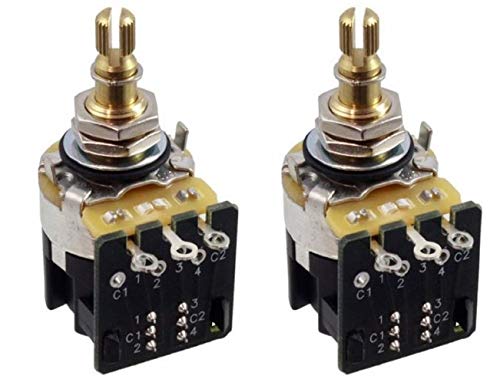
- Used for coil splitting, coil tapping and phase shifting
- Threaded bushing is 3/8" tall & 3/8" diameter
For guitarists looking to maximize their wiring versatility without drilling extra toggle switch holes into their guitar body, this push-pull variant is an exceptional alternative. It pairs the legendary smooth feel and 10% resistance tolerance of standard CTS pots with an integrated DPDT switch on the bottom deck. This allows you to execute coil-splitting, phase-reversing, or series/parallel wiring mods directly from a standard volume or tone knob. While it requires slightly more vertical depth inside your control cavity due to the switch assembly on the bottom, it is the ultimate tool for modern players who demand maximum tonal flexibility from a traditional aesthetic.
3. Fender 5-way Selector Switch
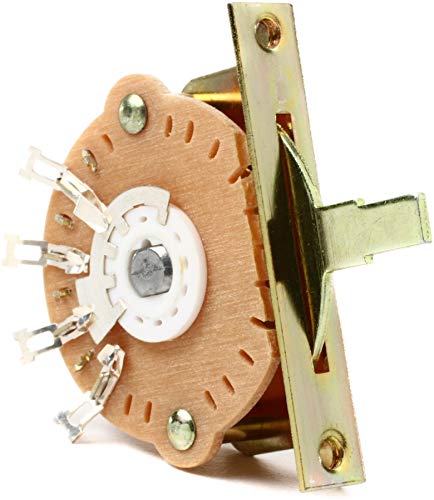
- Five position blade pickup selector switch used on most Fender American made Stratocaster guitars
- Durable and noise-free operation

If your primary instrument is a Stratocaster or a multi-pickup configuration requiring intricate pickup selection, a high-quality selector switch is just as important as your potentiometers. The Fender OEM 5-way switch provides a crisp, positive mechanical click between positions, ensuring you never accidentally land in-between pickup selections during a frantic solo. Built with rugged mechanical spring action and reliable copper contacts, it prevents the intermittent signal dropouts and oxidation typical of cheap import switches. Pairing a quality switch with a reliable set of potentiometers creates a bulletproof electronic foundation for any strat-style guitar.
Final Verdict on The Art Of Tone CTS 500k Guitar Potentiometer
The Art Of Tone CTS 500k Guitar Potentiometer proves that sometimes the simplest upgrades yield the most dramatic improvements in your musical journey. By combining genuine CTS manufacturing standards, a tight 10% resistance tolerance, and a silky smooth logarithmic audio taper, these potentiometers banish muddy tone, scratchy noise, and unresponsive volume sweeps for good. Whether you are revitalizing a vintage instrument or upgrading a modern workhorse, the sonic clarity and mechanical reliability they introduce are well worth the bench time.
We enthusiastically recommend these pots to any guitarist or tech seeking professional-grade studio performance without breaking the bank. Just remember to double-check your guitar’s mounting hole dimensions to ensure a smooth, hassle-free installation. Ready to bring the sparkling life and dynamic touch sensitivity back to your instrument? Check the latest price and availability today and experience the difference true precision engineering makes for your tone.
Last update on 2026-09-15 / Affiliate links / Images from Amazon Product Advertising API