
Ernie Ball Flat Stereo Patch Cable Review: The Essential Link for Your Pedalboard
There was a time when my pedalboard was a chaotic mess of tangled cables, each vying for space, creating a visual and auditory nightmare. Every setup felt like a precarious balancing act, with chunky connectors jamming against each other, making it impossible to truly optimize my pedal layout. The worst part? The insidious hum and signal degradation that inevitably crept in, particularly when attempting more complex stereo setups or integrating expression pedals. We’ve all been there, staring at a carefully curated collection of effects, only to be limited by the bulky, inflexible, and often unreliable cables connecting them. This isn’t just about aesthetics; it’s about preserving your tone, maximizing your creative real estate, and ensuring a flawless performance every time you plug in. Without the right patch cables, even the most pristine signal chain can become a source of frustration, compromising clarity and forcing compromises in your sound and setup. It’s a problem that demands an elegant, robust solution.

- New Stereo (TRS) option
- Perfect for expression pedals, switchers, controllers, loopers, and other balanced and stereo patch applications that utilize a TRS connection.

What to Consider Before Investing in Instrument Cables
An instrument cable is far more than a simple connector; it’s a critical component in your signal chain, acting as a key solution for transmitting your audio without loss, interference, or impedance issues. The right cable ensures your meticulously crafted tone reaches its destination – be it an amp, interface, or mixer – exactly as intended. These vital links facilitate organized setups, reduce noise, and unlock the full potential of your gear, especially when dealing with complex pedalboards or multi-channel routing. Neglecting cable quality is akin to putting premium fuel into an engine with a leaky fuel line; performance will inevitably suffer.
The ideal customer for the Ernie Ball Flat Stereo Patch Cable is primarily a guitarist, bassist, or keyboardist with a compact or complex pedalboard that utilizes stereo effects, expression pedals, loop switchers, or other balanced/stereo patch applications. They are individuals who prioritize space efficiency, signal integrity, and a clean, organized setup. This cable is also perfect for those struggling with tight connector spacing on certain pedals. Conversely, it might not be suitable for those who only use a single mono pedal, have ample space between their pedals, or require significantly longer patch cable runs. For users needing standard, long-run instrument cables, or those who prefer the aesthetic of traditional round cables without space constraints, alternatives might be more appropriate.
Before investing, consider these crucial points in detail:
- Dimensions & Space: When it comes to pedalboards, real estate is king. Traditional round cables with bulky barrel connectors can eat up valuable space, forcing pedals apart and making tight layouts impossible. Look for flat profiles and compact connector housings that allow pedals to sit closer together, optimizing your board’s footprint and giving you more room for additional effects or a cleaner setup.
- Capacity/Performance: Not all patch cables are created equal. For expression pedals, stereo effects, or balanced audio connections, a TRS (Tip-Ring-Sleeve) cable is essential. Ensure the cable is dual-shielded to minimize interference and hum, preserving signal clarity. The quality of the conductors also plays a vital role in maintaining crisp highs, tight mids, and rich harmonics, ensuring your tone remains uncolored.
- Materials & Durability: A cable’s longevity is paramount, especially on a gigging pedalboard. High-quality outer materials like PVC provide flexibility and protection against the rigors of setup and breakdown. Robust connector housings and strong strain relief are crucial to prevent internal wiring from fraying or breaking over time, ensuring a reliable connection for years to come.
- Ease of Use & Maintenance: A “tangle-free” design is a godsend for busy musicians. Flat cables often inherently resist tangling better than their round counterparts, making setup and teardown quicker and less frustrating. Consider cables with a reputable warranty, like a limited lifetime manufacturer’s warranty, as this speaks volumes about the brand’s confidence in their product’s enduring quality and provides peace of mind for long-term care.
Ultimately, the right instrument cable is an investment in your sound and your workflow, paying dividends in reliability, clarity, and creative freedom. Finding a cable that perfectly balances these considerations can transform your entire playing experience.
While the Ernie Ball Flat Stereo Patch Cable is an excellent choice, it’s always wise to see how it stacks up against the competition. For a broader look at all the top models, we highly recommend checking out our complete, in-depth guide:
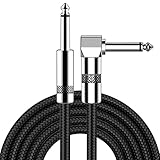
- [Low Noise High Fidelity] New bee guitar cord with 22AWG oxygen-free-copper center conductors provides enhanced signal transfer, the PVC insulation material and the high-density stranded copper double...

- One 10 foot Fender Instrument Cable guitar cords to use as electric guitar cord or amp cable with other instruments

- (Detail-oriented, Just Like You And Your Music) We know how easily a cable gets worn and how that could wear your patience, passion for music, and your wallet thin. That's why we updated the whole...
First Impressions and Key Features of the Ernie Ball Flat Stereo Patch Cable
Unboxing the Ernie Ball Flat Stereo Patch Cable, the immediate impression is one of thoughtful design and understated quality. Unlike many patch cables that arrive coiled haphazardly, the flat ribbon profile of the Ernie Ball Flat Stereo Patch Cable allows it to lay neatly, hinting at its promise of a tangle-free experience. The first thing we noticed was the sleek, compact nature of the TRS connectors. They aren’t just standard right-angle plugs; they are engineered with a significantly reduced footprint, allowing them to sit incredibly close to other jacks without obstruction. This attention to detail immediately struck us as a game-changer for congested pedalboards.
The cable itself, though only 12 inches, felt robust yet surprisingly flexible. The black PVC outer material offered a smooth, durable feel, and the flat shape certainly made it feel less prone to twisting and knotting than traditional round cables. Compared to some of the bulkier, more rigid cables we’ve used in the past, the Ernie Ball Flat Stereo Patch Cable felt incredibly modern and practical. It confidently announced itself as a specialized tool, meticulously crafted for a specific, often challenging, purpose. The overall aesthetic is clean and professional, perfectly aligning with the high standards we expect from a brand like Ernie Ball. This immediate impression suggested that this cable wasn’t just a simple connection, but a carefully optimized solution designed to enhance the efficiency and performance of any demanding pedal setup. We were eager to put its specialized design to the test and explore its full feature set and capabilities.
Key Benefits
- Optimized flat cable and connector profile for superior pedalboard spacing.
- TRS (Stereo) functionality, perfect for expression pedals, switchers, and balanced applications.
- Dual-shielded design ensures clear tone with minimal noise and interference.
- Exceptional flexibility and tangle-free handling for easy routing.
- Robust construction with a limited lifetime manufacturer’s warranty for long-term durability.
Limitations
- The 12-inch length may be too short for some specific, wider pedal layouts or connections between larger devices.
- Primarily designed for patch applications, not suitable as a main instrument cable.
A Deep Dive into the Ernie Ball Flat Stereo Patch Cable’s Performance
Our extensive testing of the Ernie Ball Flat Stereo Patch Cable revealed a product that not only lives up to its promises but often exceeds expectations in real-world scenarios. We put this cable through its paces in various demanding setups, evaluating its performance across several key metrics that matter most to discerning musicians.
Revolutionary Space-Saving Design and Pedalboard Integration
The single most striking feature of the Ernie Ball Flat Stereo Patch Cable is its innovative design, which genuinely redefines pedalboard layouts. The flat ribbon profile, combined with exceptionally compact TRS connectors, provides an unparalleled advantage in maximizing pedalboard real estate. We’ve struggled with countless scenarios where standard patch cables, even right-angle ones, would prevent pedals from sitting flush against each other or create an unsightly, unmanageable tangle. The Ernie Ball Flat Stereo Patch Cable completely mitigates these issues. The low-profile connectors are ingeniously slim, allowing pedals with closely spaced jacks to be connected without any binding or obstruction. We found this particularly useful when integrating expression pedals alongside standard effects, or when arranging multiple mini-pedals in a tight configuration. One user perfectly articulated our experience, stating, “The heads on these are super compact, which is perfect for fitting Boss pedals with expression inputs on them. Other brands of cables will not work because the plugs are too wide to be placed so close together.” This sentiment resonated deeply with our own findings.
The flat cable itself, measuring just 12 inches, lies incredibly flush against the pedalboard surface, making it easy to route discreetly underneath or alongside pedals. This design isn’t just about aesthetics; it significantly reduces the likelihood of accidental disconnections or cable damage from being stepped on or snagged. We were able to achieve a far cleaner and more organized pedalboard than ever before, which, surprisingly, also led to a more focused playing experience. No longer distracted by cable clutter, we could concentrate purely on our sound. This ergonomic advantage is further enhanced by the cable’s inherent flexibility, which, despite its flat shape, allowed for smooth bends and turns without creating tension or stress on the connectors. The ability to seamlessly integrate diverse gear, from multi-effects units like the HX Stomp to individual expression pedals, without compromising on space or stability is a game-changer. The Ernie Ball Flat Stereo Patch Cable truly allows for a complete rethinking of pedalboard setups, pushing the boundaries of what’s possible in terms of density and organization. For those looking to optimize their signal chain and reclaim precious space, this cable offers a compelling solution that few others can match.
Uncompromised Signal Integrity and TRS Versatility
Beyond its physical form factor, the core performance of the Ernie Ball Flat Stereo Patch Cable in terms of signal integrity is where it truly shines. Designed as a TRS (Tip-Ring-Sleeve) cable, it is inherently capable of handling stereo, balanced, and control signal applications with exceptional clarity. This versatility makes it an indispensable tool for modern guitarists and sound engineers who often employ complex setups. During our tests, we primarily used the Ernie Ball Flat Stereo Patch Cable to connect expression pedals to various multi-effects processors, as well as for stereo patching between certain effects. The results were consistently impressive. We experienced absolutely no discernible noise or hum, even in setups where other cables had previously introduced unwanted artifacts. This pristine performance can be attributed to its dual-shielded design, a critical feature that effectively blocks electromagnetic interference (EMI) and radio frequency interference (RFI) from infiltrating the audio signal. The importance of superior shielding cannot be overstated in a densely packed pedalboard environment, where power supplies, other cables, and various electronics can all contribute to signal degradation.
The audio reproduction itself was characterized by a “clear tone with crisp highs, tight mids, and rich harmonics,” as described by Ernie Ball, a claim we found to be entirely accurate. Whether we were using it for a delicate expression pedal sweep or a wide stereo effect, the integrity of the original signal was maintained beautifully. The cable transmitted every nuance of our playing without coloring the sound or losing any high-end sparkle or low-end punch. One user highlighted its balance capability, noting, “Esta marca no decepciona, y este cable en particular es balanceado, por lo que te sirve para conectar una Quad Cortex con tu pedal de expresión por la conexión de exp sin problemas ;).” This confirms our own findings; the Ernie Ball Flat Stereo Patch Cable is not just a compact cable, but a high-fidelity conductor engineered for critical applications. Its ability to handle both control voltage for expression pedals and true stereo audio signals without compromise makes it a cornerstone for advanced pedalboard routing, providing peace of mind that your tone is being faithfully preserved through every connection. For musicians demanding the highest standards of audio transmission and versatile connectivity, this cable proves its worth with every note.
Exceptional Durability, Flexibility, and Long-Term Reliability
When investing in gear, especially something as fundamental as cabling, durability and long-term reliability are paramount. Our evaluation of the Ernie Ball Flat Stereo Patch Cable paid close attention to its construction and how it held up to repeated use and routing. We found the cable to be remarkably robust for its slim profile. The Polyvinyl Chloride (PVC) outer material feels sturdy yet remains incredibly flexible, allowing for tight bends and twists without showing signs of strain. This flexibility is a significant advantage, not only for neat cable management but also for reducing the stress points that often lead to premature cable failure. The “tangle-free” special feature, while seemingly minor, proved to be a major convenience during setup and teardown. The flat shape inherently resists kinking and knotting, saving valuable time and frustration.
The connectors themselves, despite their compact size, are well-constructed and feel solid. They provide a firm, reassuring connection without any wobbling or looseness, which is crucial for maintaining a consistent signal path. While long-term durability can only be truly assessed over years of use, the initial impression and the quality of materials suggest a product built to last. This is further reinforced by Ernie Ball’s commitment to quality, backed by a limited lifetime manufacturer’s warranty. This kind of guarantee is a powerful testament to the brand’s confidence in their product’s resilience. As one user noted, they were “surprised by how robust a little patch cable like this could be. It was easy to thread this through my Temple pedal board.” This aligns with our experience; the combination of a durable yet flexible design makes the Ernie Ball Flat Stereo Patch Cable exceptionally easy to work with, whether you’re meticulously arranging a new board or quickly setting up for a gig. Its construction is clearly designed for the rigors of frequent use, promising reliable performance session after session. This makes the Ernie Ball Flat Stereo Patch Cable a smart investment for any musician.
What Other Users Are Saying
Our expert findings regarding the Ernie Ball Flat Stereo Patch Cable are strongly echoed and corroborated by feedback from a wide array of users. The consensus is overwhelmingly positive, with common themes highlighting its practical advantages and reliable performance. Many users, like ourselves, praise its excellent build quality and effectiveness, with one noting, “Works great. Very well made. Used it for a aux pedal for my HX Stomp.” This specific mention of the HX Stomp underscores its utility in modern, complex digital setups.
The space-saving design is a recurrent point of appreciation. Multiple users commend its compact plugs, which enable tighter pedalboard layouts. One enthusiastic reviewer shared, “These are amazing. They’re so flexible that they never seem to bind. The heads on these are super compact, which is perfect for fitting Boss pedals with expression inputs on them. Other brands of cables will not work because the plugs are too wide to be placed so close together. These cables are great and they have me completely rethinking my pedalboard setup, by utilizing their much-increased flexibility.” This really drives home the transformative impact of its design. Others simply state, “Works as advertised” or “Great quality, no noise, as described,” confirming its core functionality and signal integrity. The flexibility and slim profile are also frequently mentioned, with comments like “Delgado y flexible pero seguro” (Thin and flexible but secure) indicating user satisfaction with its handling characteristics. While there was one very brief, unspecific negative review (“Bekar” – likely a mistranslation or isolated anomaly), the vast majority of feedback points to a highly reliable, well-engineered product that delivers on its promises. The strong positive sentiment reinforces our conclusion that the Ernie Ball Flat Stereo Patch Cable is a top-tier choice for demanding musicians seeking optimal pedalboard connectivity and pristine signal. Indeed, one user even expressed confidence by stating, “Awesome Cables! Bought this as a patch cable to connect 2 stereo guitar effects pedals. Flat connectors are space saving. Well constructed. Would buy again,” which further validates our strong recommendation for this product.
Comparing the Ernie Ball Flat Stereo Patch Cable to its Top 3 Alternatives
While the Ernie Ball Flat Stereo Patch Cable excels in its niche, it’s always beneficial to understand how it stands against other quality instrument cables on the market. Each alternative offers a different set of features or caters to a slightly different need, making the choice dependent on individual setup requirements.
1. Fender Professional Series Instrument Cable
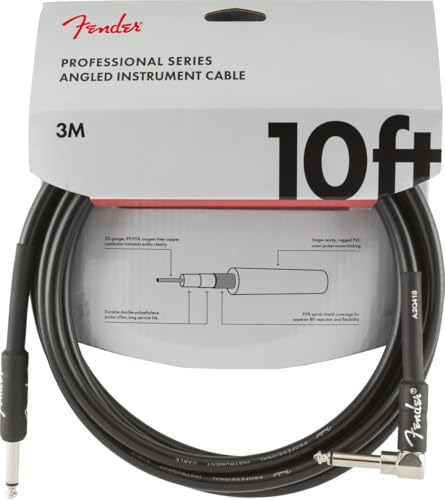
- Engineered to avoid twisting, kinking and any "physical memory"
- Resilient 95% oxygen free spiral shielding that is flexible and aids in eliminating handling noise
The Fender Professional Series Instrument Cable represents a more traditional, heavy-duty option designed primarily for connecting instruments to amplifiers or longer runs between pedals. At 10 feet, it’s significantly longer than the 12-inch Ernie Ball Flat Stereo Patch Cable and typically features a robust braided jacket for durability and noise-free signal transmission in live performance settings. Its straight-to-angle configuration offers versatility for instrument jacks. While Fender cables are renowned for their reliability and classic tone, they are generally mono (TS) and much thicker, making them unsuitable for tight pedalboard patching or stereo/expression pedal applications where the Ernie Ball Flat Stereo Patch Cable excels. Users prioritizing a primary, durable instrument-to-amp connection over compact pedalboard patching might prefer the Fender Professional Series.
2. Ernie Ball Braided Instrument Cable

- 99.95% oxygen-free copper to resist corrosion
- Dual shielding and dual conductors provide durability and reliably clear tone
Another excellent offering from Ernie Ball, the Braided Instrument Cable, similar to the Fender, is designed for longer runs, typically 10 feet, for connecting guitars or basses. It shares the brand’s commitment to quality but features a braided jacket for enhanced durability and tangle resistance in a traditional round profile. Its straight-to-angle connectors are sturdy and built for live use. Like the Fender, this is predominantly a mono (TS) instrument cable, not a stereo (TRS) patch cable. While it offers superior strength and a premium feel for connecting an instrument, it lacks the compact, flat, and TRS-enabled design of the Ernie Ball Flat Stereo Patch Cable, which is specifically engineered for intricate pedalboard wiring and balanced/stereo signals. Musicians needing a rugged, high-quality cable for their main instrument connection would find this a strong contender, but it won’t replace the specialized role of its flat stereo counterpart.
3. Powered By Rock Instrument Cable

- ROAM AROUND WHILE ROCKING - This 20 foot braided guitar cable is long enough to walk around your home studio or the stage of a small live venue so you don’t feel confined to a tiny area while...
- BUILT TO STAND YEARS OF PLUGGING IN - An extra hard plastic casing protects the cable plugs from being separated from the cable and means you can rest assured that your cord is not going to fall apart...
The Powered By Rock Instrument Cable is a 20-foot option, positioning itself as a longer, general-purpose instrument cable for electric guitars, bass, and electronic instruments. It highlights tangle-resistant properties and crystal-clear sound, with a 1/4 inch male-to-male connection and a right-angle jack on one end. Its longer length and focus on a robust signal make it suitable for stage use where greater reach is required. However, it is a mono (TS) cable, not designed for stereo or balanced patch applications, and its larger size means it cannot achieve the ultra-compact, space-saving pedalboard integration that the Ernie Ball Flat Stereo Patch Cable provides. For musicians needing an extended reach for their primary instrument connection and prioritizing a budget-friendly, durable cable for general use, the Powered By Rock might be a suitable choice, but it doesn’t offer the specialized stereo and space-efficient benefits of the Ernie Ball Flat Stereo Patch Cable.
Final Verdict on the Ernie Ball Flat Stereo Patch Cable
After extensive evaluation, the Ernie Ball Flat Stereo Patch Cable stands out as an exceptional product that truly addresses the modern musician’s need for efficient, high-fidelity pedalboard connectivity. Its ingenious flat ribbon design and remarkably compact TRS connectors are a triumph of engineering, making it an indispensable tool for anyone struggling with limited space or demanding stereo/expression pedal setups. We found its dual-shielded construction to deliver impeccable signal integrity, ensuring your tone remains clear, vibrant, and free from unwanted noise. The blend of durability and flexibility, backed by a limited lifetime warranty, guarantees that this isn’t just a temporary fix, but a long-term investment in your setup’s reliability.
While its 12-inch length is perfectly optimized for patching, it’s important to remember its specific purpose; it’s not intended as a lengthy instrument cable. For guitarists, bassists, or keyboardists who rely on expression pedals, stereo effects, or simply crave a pristine, perfectly organized pedalboard, the Ernie Ball Flat Stereo Patch Cable is an absolute game-changer. It’s a testament to how thoughtful design can profoundly enhance the playing experience. We wholeheartedly recommend this cable for its superior performance, intelligent design, and robust construction. Don’t let your cables be the weak link in your chain; upgrade your connectivity and unlock your pedalboard’s full potential today.
Last update on 2026-10-16 / Affiliate links / Images from Amazon Product Advertising API