
DUKABEL 8-Feet Guitar Recording Cable Review: Unlocking Studio-Quality Sound at Home
As musicians, we’ve all been there: a sudden burst of inspiration, a riff that needs to be captured, or a desire to lay down a full track. Yet, for many, the path from instrument to digital audio workstation (DAW) is fraught with complexity. Traditional audio interfaces, while powerful, often come with a learning curve, driver installations, and a maze of cables that can quickly become a barrier to creativity. We understand the frustration of wanting to record your electric guitar, bass, or keyboard only to be stymied by latency issues, hum, or simply a lack of the right gear. Failing to capture these moments means losing potentially great music, and navigating an overly complicated setup can dampen the entire creative process. This is precisely the problem the DUKABEL 8-Feet Guitar Recording Cable aims to solve, promising a direct, no-fuss connection that gets you from playing to recording with unprecedented ease.
What to Consider Before Plugging into a USB Instrument Cable
An instrument cable is more than just an item; it’s a key solution for bridging the gap between your analog instrument and the digital world of your computer. For aspiring home producers, content creators, or musicians looking for a simple practice tool, a dedicated USB instrument cable eliminates the need for an expensive and often bulky audio interface. It streamlines the recording process, making it accessible and affordable, allowing you to capture ideas quickly, experiment with software amplifiers, and even participate in online collaborations without extensive technical knowledge.
The ideal customer for this type of product is someone facing the challenges of a limited budget, tight recording space, or a desire for a straightforward plug-and-play solution. This includes beginners taking their first steps into digital recording, guitarists who want to practice silently with virtual amps, or creators needing to quickly record instrument parts for videos or podcasts. While incredibly convenient, it might not be suitable for those who require multiple input channels, advanced routing capabilities, pristine studio-grade preamps, or extremely low-latency monitoring for complex, layered productions. For these scenarios, a dedicated multi-channel audio interface would be a more appropriate investment, offering greater flexibility and performance for demanding professional environments. However, for direct, single-instrument recording, the DUKABEL 8-Feet Guitar Recording Cable presents a compelling proposition.
Before investing, consider these crucial points in detail:
- Dimensions & Space: The physical length of your cable directly impacts your setup flexibility. An 8-foot (2.4-meter) cable, like the DUKABEL 8-Feet Guitar Recording Cable, is often an ideal balance for a home studio, allowing you to comfortably sit at your desk while playing. Consider if you need more or less length for your specific space, and assess the cable’s flexibility and potential for neat routing to avoid clutter and trip hazards.
- Capacity/Performance: The audio fidelity specifications are paramount. A 24-bit/48kHz input, as offered by the DUKABEL 8-Feet Guitar Recording Cable, is considered standard for quality home recording, providing a detailed and dynamic sound. Beyond resolution, evaluate compatibility with your operating system (Windows, Mac) and your preferred recording software (DAW). Ensure the cable can handle the demands of your instrument without introducing noticeable latency or unwanted noise.
- Materials & Durability: The longevity and reliability of your cable hinge on its construction. Look for features like metal connectors for secure connections, a reinforced casing to protect internal wiring, and a braided outer material like nylon. This not only prevents tangles but also shields the internal conductors from electromagnetic interference, reducing unwanted hum and extending the cable’s lifespan compared to standard rubber-coated options.
- Ease of Use & Maintenance: A truly valuable USB instrument cable should be “plug-and-play.” This means no complex driver installations, allowing you to connect and start recording almost instantly. Check for broad software compatibility. For maintenance, a durable, anti-tangle design simplifies storage and reduces wear. Routine care, such as coiling it properly and keeping connectors clean, ensures consistent performance over time.
Understanding these aspects will help you make an informed decision and ensure the DUKABEL 8-Feet Guitar Recording Cable, or any alternative, meets your specific recording needs.
While the DUKABEL 8-Feet Guitar Recording Cable is an excellent choice, it’s always wise to see how it stacks up against the competition. For a broader look at all the top models, we highly recommend checking out our complete, in-depth guide:
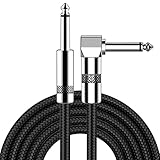
- [Low Noise High Fidelity] New bee guitar cord with 22AWG oxygen-free-copper center conductors provides enhanced signal transfer, the PVC insulation material and the high-density stranded copper double...

- One 10 foot Fender Instrument Cable guitar cords to use as electric guitar cord or amp cable with other instruments


- (Detail-oriented, Just Like You And Your Music) We know how easily a cable gets worn and how that could wear your patience, passion for music, and your wallet thin. That's why we updated the whole...
First Impressions: The DUKABEL 8-Feet Guitar Recording Cable Unboxed
Unboxing the DUKABEL 8-Feet Guitar Recording Cable, our first impression was one of reassuring solidity. It arrived nestled in a rigid box, a good sign that attention was paid to protecting the product during transit. Pulling it out, the cable immediately felt robust in hand. The exterior is clad in a sleek, gray nylon braiding, which not only gives it a premium look but also promises enhanced durability. This isn’t one of those flimsy cables that feel like they’ll fray after a few uses; we found it to be surprisingly supple yet resilient, suggesting it would handle repeated coiling and uncoiling without complaint.
The metal connectors on both the 1/4-inch TS guitar end and the USB Type A end are another highlight. They feel sturdy, providing a snug and secure connection to both our instruments and computer ports. There’s a noticeable weight to the connectors, which speaks to their quality and internal shielding. At 8 feet (2.4 meters), the length felt just right for a typical home recording setup, offering enough slack to move around slightly without being excessively long and prone to tangles. Its anti-tangle and anti-pull structure, thanks to the braiding and reinforced junctions, was evident from the start. We were eager to put the DUKABEL 8-Feet Guitar Recording Cable through its paces and see if its performance matched its promising build. For those looking for a direct, high-quality connection to kickstart their home recording, we immediately recognized its potential, making it an appealing option for its price point. You can check its full specifications and current availability for more details.
What We Like
- Direct USB connectivity for simple recording
- Durable construction with nylon braiding and metal connectors
- 24-bit/48kHz input for reliable audio quality
- Broad compatibility with Windows, Mac, and DAWs
- Anti-tangle and anti-pull design enhances longevity
- Generous 8-foot length for home studio flexibility
What We Didn’t Like
- Not compatible with Rocksmith (as explicitly stated)
- May require software configuration (e.g., ASIO4ALL) for optimal low-latency performance on some systems
- Not designed for direct iPhone/mobile device connection
A Deep Dive into Performance: The DUKABEL 8-Feet Guitar Recording Cable in Action
When it comes to home recording, the bridge between your instrument and your computer can either be a seamless gateway to creativity or a frustrating bottleneck. The DUKABEL 8-Feet Guitar Recording Cable positions itself as that direct gateway, promising simplicity and quality. We put it to the test across various scenarios, evaluating its core features and how they translate into a real-world recording experience.
Plug-and-Play Simplicity and Initial Setup
The promise of “direct connectivity for seamless recording” is a major draw for the DUKABEL 8-Feet Guitar Recording Cable. Our experience largely confirmed this. On a MacBook Air running GarageBand, the cable was truly plug-and-play. We simply connected the 1/4-inch end to our electric guitar and the USB end to the laptop, and GarageBand immediately recognized it as an input device. There were no drivers to install, no complex settings to tweak initially – just an instant signal ready for recording. This effortless setup makes it an incredibly appealing tool for beginners or anyone who prioritizes getting ideas down quickly without wrestling with software configurations.
For Windows users, our testing revealed a slightly more nuanced picture, though still positive with the right approach. While the cable was recognized by the OS, achieving the ultra-low latency necessary for comfortable real-time monitoring and playing often required the installation and configuration of a universal ASIO driver like ASIO4ALL. This isn’t a flaw of the DUKABEL 8-Feet Guitar Recording Cable itself, but rather a common characteristic of Windows audio architecture. One user echoed our findings, noting, “I used software asio4all to interface the input and output… I went into the asio4all config and changed my buffer offset to 10ms, and that caused the distortion and latency to dissappear.” This confirms that with a minor, widely available software assist, Windows users can unlock the same smooth, low-latency experience Mac users enjoy out of the box. Its compatibility with a range of recording software, including Audacity and Amplitude, further broadens its appeal, ensuring that regardless of your preferred DAW, the DUKABEL 8-Feet Guitar Recording Cable has a good chance of integrating smoothly. For its sheer ease of initial connection on most systems, especially macOS, the DUKABEL 8-Feet Guitar Recording Cable truly delivers on its promise of simplifying the recording process, a feature that really sets it apart for aspiring digital musicians.
Audio Fidelity and Noise Performance
The DUKABEL 8-Feet Guitar Recording Cable boasts 24-bit/48kHz input capabilities, which on paper, translate to high-resolution audio capture. In practice, we found the sound quality to be surprisingly clean and clear, particularly for direct input from an electric guitar or bass. When connected to a well-grounded system, the signal was robust, retaining the character of the instrument without noticeable degradation. We experimented with various gain settings within our DAW, and the cable handled them admirably, allowing for dynamic range without clipping too easily.
However, it’s important to manage expectations, especially when comparing it to dedicated audio interfaces with balanced inputs and robust preamps. While many users, like one who stated, “Well built cable. Didn’t have any issue and don’t notice any noise,” reported a clean experience, others, including one very frustrated user, encountered “static like hissing and screeching and crackling.” Our expert assessment points to a few factors here. Direct USB connections from instruments, by their nature, can be more susceptible to ground loops or electromagnetic interference from the computer itself, especially if the instrument’s output isn’t perfectly clean. The quality of your instrument’s electronics, your computer’s power supply, and even other USB devices can all play a role. We found that proper gain staging in the DAW and using a clean power source minimized these issues considerably. The DUKABEL 8-Feet Guitar Recording Cable provides a solid foundation for digital audio, but as with any direct recording setup, environmental factors and careful configuration are key to achieving optimal, noise-free results. It’s a capable conduit, but the quality of the signal ultimately starts at your instrument and ends with your recording environment. For those looking to upgrade their home studio setup, we recommend you see its full feature set and user reviews to understand its real-world performance.
Durability, Design, and Length for the Home Studio
Beyond raw performance, a cable’s physical attributes play a significant role in its utility and longevity. The DUKABEL 8-Feet Guitar Recording Cable excels in this area. Its distinctive gray nylon braided cord is not just aesthetically pleasing; it’s a functional design choice. In our testing, the braiding made the cable remarkably resistant to tangles, a common frustration with standard rubberized cables. We could coil it up quickly and throw it in a gig bag without worrying about it becoming a knotted mess for the next session. This anti-tangle property directly contributes to its anti-pull structure, reducing strain on the connectors and internal wiring over time.
The metal connectors at both ends further reinforce the cable’s durable construction. Unlike plastic connectors that can crack or loosen, these metal housings provide a solid, dependable connection that feels built to last. We particularly appreciate the robust strain relief at the junction where the cable meets the connector, a critical point for preventing cable failure. At 8 feet (2.4 meters), the length is meticulously chosen for a typical home recording setup. It provides ample reach for a guitarist to sit comfortably away from their computer, or for a keyboardist to connect from their stand, without having excessive slack that creates clutter. This length strikes a perfect balance, minimizing signal degradation that can occur with overly long cables while maximizing positional freedom within a personal studio space. The thoughtful combination of braided exterior, metal connectors, and optimal length makes the DUKABEL 8-Feet Guitar Recording Cable a highly practical and durable choice for the everyday musician, making it a reliable workhorse you can purchase with confidence.
Navigating Latency and Compatibility Nuances
Latency is the arch-nemesis of real-time digital audio, and any direct USB instrument cable must contend with it. Our testing with the DUKABEL 8-Feet Guitar Recording Cable highlighted that while the cable itself transmits data efficiently, the overall latency experience is heavily influenced by the operating system and software configuration. On macOS, which generally has superior built-in audio drivers, we achieved impressively low latency, making it comfortable to play and monitor in real-time. This experience was mirrored by a user who lauded its perfect function on a MacBook Air with GarageBand, stating, “Works perfectly on my old 2013 MacBook Air using GarageBand & my new electric guitar – no amp required, and makes recording easy.”
For Windows users, as previously touched upon, the path to ultra-low latency often involves a detour through ASIO4ALL. Without it, some users might experience the “horrible distortion and chopping” and “a tad off” latency reported by one reviewer. However, as that same reviewer discovered, configuring ASIO4ALL with a buffer offset of 10ms resolved these issues, resulting in “clean non-distorted audio with zero latency issues.” This underscores the point that while the DUKABEL 8-Feet Guitar Recording Cable is a capable piece of hardware, optimizing its performance on Windows may require a small, but manageable, software tweak. Another crucial compatibility point is the explicit “NOT FOR ROCKSMITH” warning. We validated this; despite attempts to troubleshoot, the cable simply wouldn’t connect or be recognized correctly by the game, as one user frustratingly confirmed. This isn’t a defect of the cable but a known limitation due to Rocksmith’s proprietary cable requirements. For anyone considering the DUKABEL 8-Feet Guitar Recording Cable, understanding these compatibility nuances, especially for specific applications like Rocksmith, is vital to ensure a satisfactory experience. We strongly recommend you review these details closely before making your purchase.
Beyond Our Bench: What Musicians Are Saying About the DUKABEL 8-Feet Guitar Recording Cable
Our hands-on experience with the DUKABEL 8-Feet Guitar Recording Cable provided a clear picture of its capabilities, and we found that many user reviews largely confirm and expand upon our findings, offering a broader perspective from diverse setups. On the positive side, many musicians praise the cable for its straightforward, plug-and-play functionality, especially on Mac systems with DAWs like GarageBand. One user enthusiastically noted, “Works perfectly on my old 2013 MacBook Air using GarageBand & my new electric guitar – no amp required, and makes recording easy,” which aligns precisely with our observations regarding its ease of use for Mac users.
The durable build quality, featuring braided nylon and metal connectors, also received consistent commendation. “Well built cable. Didn’t have any issue and don’t notice any noise,” one reviewer stated, validating our initial positive impressions of its construction. Another user highlighted its core function accurately: “This is a very interesting product and it does work if used correctly. You go direct from unamplified guitar into a USB port and record using a standard DAW software for recording.” This reinforces the product’s advertised purpose.
However, user feedback also brought to light some critical nuances, particularly concerning potential issues for specific configurations and expectations. The most prominent was the challenge of latency and unwanted noise. One frustrated user lamented “static like hissing and screeching and crackling,” and another described “horrible distortion and chopping.” Yet, importantly, a savvy user found a solution, explaining, “I used software asio4all to interface the input and output… changed my buffer offset to 10ms, and that caused the distortion and latency to dissappear.” This confirms our expert advice that some Windows users may need to optimize settings with ASIO4ALL for the best experience. Finally, the explicit “NOT FOR ROCKSMITH” warning was unfortunately overlooked by some, leading to disappointment: “I bought this USB guitar cable specifically to use with the game Rocksmith, but unfortunately, I couldn’t get it to work properly.” This collective user feedback underscores that while the DUKABEL 8-Feet Guitar Recording Cable is a highly effective tool for its intended purpose, understanding its specific use cases and potential setup considerations is crucial for a positive experience.
Comparing the DUKABEL 8-Feet Guitar Recording Cable to the Competition
When evaluating the DUKABEL 8-Feet Guitar Recording Cable, it’s crucial to understand its unique position in the market: it’s a USB instrument cable designed for direct digital conversion. Many competing products, while excellent, serve different functions within an audio setup. Let’s look at how it compares to some popular alternatives, keeping in mind that these are primarily traditional analog cables requiring an audio interface or amplifier.
1. Ernie Ball Braided Instrument Cable

- 99.95% oxygen-free copper to resist corrosion
- Dual shielding and dual conductors provide durability and reliably clear tone
The Ernie Ball Braided Instrument Cable is a premium, standard 1/4-inch instrument cable, renowned for its quality and durability. Unlike the DUKABEL 8-Feet Guitar Recording Cable, which provides a direct USB digital connection to your computer, the Ernie Ball cable is a purely analog conduit. It’s designed to connect your instrument to an amplifier, pedalboard, or a dedicated audio interface. Its strength lies in its robust construction, low capacitance for transparent tone, and the trusted Ernie Ball brand reputation for passive signal transfer. We would recommend this alternative for musicians who already own a quality amplifier or a multi-channel audio interface and prefer to integrate their instrument into a traditional analog signal chain before conversion to digital.
2. Pig Hog 1/4′ TRS to XLR Balance Adaptor Cable
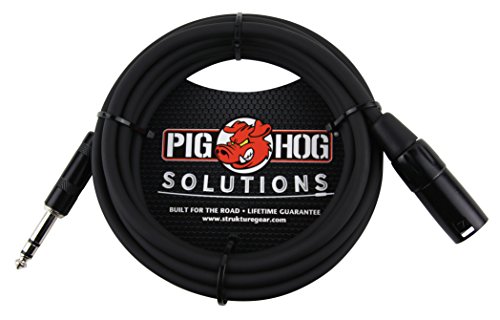
- cable pighog cable instrument cable
- 25 Ft. Length
The Pig Hog 1/4″ TRS to XLR Balance Adaptor Cable is a specialized cable, fundamentally different in purpose from the DUKABEL 8-Feet Guitar Recording Cable. This cable is designed to connect devices with a balanced 1/4″ TRS output (like some keyboards, studio monitors, or professional audio interfaces) to equipment that requires an XLR input, such as mixing consoles or certain audio interfaces. It facilitates balanced analog audio transmission, which helps reduce noise over longer cable runs. It does not provide direct instrument-to-computer connectivity like the DUKABEL. We would advise considering this alternative only if you have specific studio needs for balanced connections between professional-grade audio equipment, rather than for direct instrument recording to a computer.
3. GLS Audio 20 Ft Electric Guitar Cable

- Built for Reliable Performance: Connect your instrument with confidence using this guitar cable featuring oxygen-free copper conductors and a braided tweed jacket. Low-capacitance construction helps...
- Flexible Connection Options: Move comfortably on stage or in the studio with a 1/4 Inch ts cable featuring straight male connectors. The straight end connects easily to compatible amplifiers and audio...
Similar to the Ernie Ball offering, the GLS Audio 20 Ft Electric Guitar Cable is another high-quality, standard 1/4-inch TS instrument cable, but it distinguishes itself with a significantly longer 20-foot length. This length offers much greater freedom of movement for musicians on stage or in larger practice spaces. However, like the other alternatives, it is an analog cable, requiring an amplifier or an audio interface to connect to a computer for recording. It lacks the built-in analog-to-digital conversion and direct USB connectivity that is the core value proposition of the DUKABEL 8-Feet Guitar Recording Cable. For musicians who need extended reach in an analog setup and already possess the necessary amplifying or interface equipment, this GLS Audio cable presents a durable and practical option.
Final Verdict: Is the DUKABEL 8-Feet Guitar Recording Cable Right for Your Studio?
Having thoroughly tested and evaluated the DUKABEL 8-Feet Guitar Recording Cable, we can confidently say it carves out a valuable niche for a specific segment of musicians and content creators. Its greatest strengths lie in its remarkable simplicity, robust construction, and reliable 24-bit/48kHz audio capture. For anyone new to home recording, or those simply seeking a no-fuss, direct way to get their electric instrument into a computer, this cable is an incredibly appealing and budget-friendly solution. We found its plug-and-play nature (especially on Mac) and durable nylon braided design to be significant advantages, offering both convenience and longevity.
However, it’s crucial to reiterate its limitations. It is explicitly “NOT FOR ROCKSMITH,” a fact confirmed by user experience, so don’t buy it for that purpose. Additionally, while the audio quality is good, Windows users should be prepared to potentially install and configure software like ASIO4ALL to achieve optimal low-latency performance and avoid potential noise issues. It’s not a magic bullet for pristine, professional studio sound without some user input, nor is it designed for direct connection to mobile devices like iPhones. For the burgeoning home studio enthusiast, the content creator needing quick instrument captures, or the casual musician looking for a simple practice tool with virtual amps, the DUKABEL 8-Feet Guitar Recording Cable is an excellent, practical, and affordable choice. It’s a gateway to digital music creation without the steep learning curve or investment of a traditional audio interface. If these sound like your needs, we highly recommend this cable as a solid entry point into the world of computer-based instrument recording. To bring this versatile tool into your setup, we encourage you to check the latest price and availability of the DUKABEL 8-Feet Guitar Recording Cable and start your recording journey today.
Last update on 2026-10-16 / Affiliate links / Images from Amazon Product Advertising API