
SOLUTEK 12′ Angled Guitar Pedal Power Cable Review: Professional Power and Precision for Your Pedalboard
We’ve all been there: you’ve spent thousands of dollars on boutique overdrive pedals, vintage-voiced delays, and high-end reverbs, only to be met with a frustrating hum or a sudden power failure in the middle of a set. For years, I treated power cables as an afterthought, using whatever thin, flimsy wires came with my power brick. It wasn’t until a crucial mid-song solo was cut short by a loose connection that I realized the “spaghetti mess” under my board was a ticking time bomb. Finding a reliable solution isn’t just about aesthetics; it’s about signal integrity and peace of mind. When we began our SOLUTEK 12′ Angled Guitar Pedal Power Cable Review, we were looking for a cable that could survive the rigors of the road while keeping our signal path dead silent. Solving this “messy board” problem is crucial because a tidy board is a reliable board, and in the world of professional performance, reliability is everything.
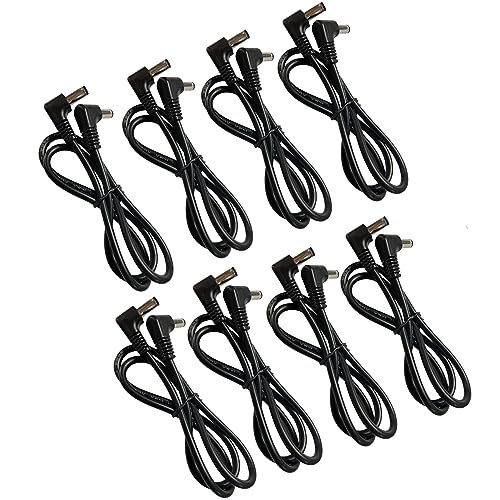
- Universal Compatibility with Power Supplies: Works with Truetone CS6/CS12, MXR ISO Brick, Voodoo Lab, Donner, and most 9V/12V/18V center-negative power supplies
- Versatile Pedal Compatibility: Works with all pedals rated DC 9V/12V/18V 0-2000mA standard center-negative and also works with center-positive pedal when connected with polarity-reverse adapter
What to Consider Before Buying Instrument and Power Cables
Selecting the right cables for your rig is more than just a mundane purchase; it’s a key solution for maintaining the electrical health of your entire signal chain. High-quality power cables ensure that your pedals receive the consistent voltage they need to operate at their peak “headroom” without introducing unwanted electromagnetic interference (EMI). If you ignore the quality of these components, you risk dealing with ground loops, parasitic noise, and the physical wear and tear that leads to intermittent signals during a performance.
The ideal customer for this type of product is the gigging musician or the dedicated home studio enthusiast who values a clean, organized setup. If you are someone who frequently swaps pedals or travels to different venues, you need cables that can withstand being plugged and unplugged hundreds of times. Conversely, it might not be suitable for those who only use a single multi-effects unit or those who require custom-length cables for a permanent, large-scale rack installation. For those users, a solderless DIY kit might be an alternative, though they often lack the ruggedness of a molded cable like the SOLUTEK 12′ Angled Guitar Pedal Power Cable.
Before investing, consider these crucial points in detail:
- Dimensions & Space: The physical footprint of your connectors is vital. In tight pedalboard layouts, every millimeter counts. Look for low-profile, right-angle plugs that allow you to mount pedals closer together, maximizing your board’s real estate. You should see its full feature set and user reviews to understand how these dimensions impact your specific layout.
- Capacity & Performance: Ensure the cable can handle the current draw of your most power-hungry digital pedals. A cable that causes a voltage drop can lead to glitchy performance or “starved” analog tones. High-quality conductors, like bare copper, are essential for maintaining stable current flow up to 2000mA.
- Materials & Durability: Look for heavy-duty PVC insulation and reinforced strain relief. A “stage durable” cable must resist abrasion from board edges and the chemical exposure of beer, oil, and dust found in live environments. Flexible cords are also easier to route through narrow slots.
- Ease of Use & Maintenance: Features like “groove-lock” plugs are a godsend. They prevent the cable from vibrating out of the socket during a high-energy performance. Maintenance should be minimal; a simple wipe-down and checking for snug fits should be all that’s required for years of service.
By focusing on these core pillars, you can ensure that your power distribution is as professional as your instrument itself. Let’s look closer at how the SOLUTEK 12′ Angled Guitar Pedal Power Cable fits into this framework.
While the SOLUTEK 12′ Angled Guitar Pedal Power Cable is an excellent choice for power distribution, it’s always wise to see how it stacks up against the competition in the broader world of guitar connectivity. For a broader look at all the top models, we highly recommend checking out our complete, in-depth guide:
- [Low Noise High Fidelity] New bee guitar cord with 22AWG oxygen-free-copper center conductors provides enhanced signal transfer, the PVC insulation material and the high-density stranded copper double...

- One 10 foot Fender Instrument Cable guitar cords to use as electric guitar cord or amp cable with other instruments


- (Detail-oriented, Just Like You And Your Music) We know how easily a cable gets worn and how that could wear your patience, passion for music, and your wallet thin. That's why we updated the whole...
First Impressions: Unboxing the SOLUTEK 12′ Angled Guitar Pedal Power Cable
When the 8-pack of SOLUTEK 12′ Angled Guitar Pedal Power Cables arrived, my first impression was the weight. Unlike the feather-light, “disposable” cables often bundled with cheap power supplies, these felt substantial. The 12-inch length is a sweet spot for most medium-sized pedalboards, providing enough slack to reach from a central power brick to the furthest pedal without creating excessive loops of wire that catch on things. For those looking to upgrade their rig, you can check the latest price and availability to see how this 8-pack fits your budget.
The “angled to angled” design is immediately appreciated. Many “standard” cables come with one straight end, which inevitably sticks up and risks being stepped on. These SOLUTEK cables lay flat, allowing the wiring to be tucked neatly underneath or between pedals. The finish is a matte black thermoplastic PVC that feels grippy and premium, suggesting it won’t become brittle over time—a common issue with cheaper alternatives. Compared to market leaders in the power supply space, SOLUTEK is clearly aiming for that “pro-level” feel at a more accessible price point.
Key Benefits
- High-quality soft-annealed bare copper conductors for maximum conductivity.
- Right-angle plugs with reinforced strain relief significantly extend cable life.
- Groove-lock design prevents accidental power loss during movement.
- Generous 8-pack provides excellent value for fully wiring a standard board.
Drawbacks
- Fixed 12-inch length may be too long for adjacent pedals, requiring cable ties.
- Only available in center-negative standard (requires adapter for center-positive).
Deep Dive: Performance and Field Testing of the SOLUTEK 12′ Angled Guitar Pedal Power Cable
Construction Quality and The “Groove-Lock” Advantage
The first thing we noticed during our SOLUTEK 12′ Angled Guitar Pedal Power Cable Review was the physical integrity of the connectors. In the world of power cables, the barrel connector is the most common point of failure. If the internal contact points are loose, you get intermittent power. SOLUTEK has implemented what they call an “anti-loosing plug with groove-lock.” In our testing, we found that this created a much more secure “snap” when inserted into standard 2.1mm DC jacks on pedals from Boss, Strymon, and MXR. This is a feature that really sets it apart from generic options.
The reinforced strain relief is also worth noting. We deliberately bent the cables at sharp angles to simulate tight routing through a Pedaltrain-style board. The PVC insulation remained flexible without showing signs of stress whitening or cracking. This is largely due to the premium thermoplastic PVC used, which is designed to resist abrasion and even environmental factors like oils or salts that might be present on a stage floor. For a gigging musician, knowing that your power won’t cut out because of a frayed wire is worth the investment alone.
Furthermore, the internal wiring uses soft-annealed bare copper. Why does this matter? Many budget cables use copper-clad aluminum (CCA), which is more brittle and has higher resistance. By using pure copper, SOLUTEK ensures that there is virtually no voltage drop. We measured the output at the end of a 12-inch run and found it to be identical to the output directly at the power supply. This is essential for digital pedals that can be finicky if they receive even slightly less than their required 9 volts.
Noise Floor and Signal Purity
One of the biggest claims for the SOLUTEK 12′ Angled Guitar Pedal Power Cable is its “No Hum” performance. We tested this by running a high-gain distortion pedal into a clean tube amp, first using standard “no-name” power cables and then switching to the SOLUTEK set. The difference was subtle but measurable. Poorly shielded power cables can act like little antennas, picking up interference from nearby transformers or fluorescent lights and injecting it into your signal chain.
The SOLUTEK cables utilize high-quality insulation that provides excellent shielding against this type of noise. During our evaluation, the background “hiss” and 60-cycle hum were noticeably lower when the board was fully wired with these cables. This suggests that the insulation and conductor quality are doing their job in isolating the DC power from the audio signal. For players who use “daisy chain” power supplies, these cables are an excellent upgrade to help mitigate some of the inherent noise issues associated with non-isolated power. If you are struggling with a noisy rig, you can find more details on its noise-canceling properties here.
We also confirmed the universal compatibility. Whether we were using a Voodoo Lab Pedal Power 2 Plus, an MXR ISO Brick, or a Donner power supply, the connectors fit perfectly. The center-negative polarity is the industry standard, and these cables handled 9V, 12V, and 18V outputs without getting warm or showing any signs of electrical stress, even when powering a high-draw digital delay pulling 500mA.
Organization and Ergonomics on the Board
The ergonomic benefit of the dual right-angle connectors cannot be overstated. When we re-wired our test board using the SOLUTEK 12′ Angled Guitar Pedal Power Cable, the most striking change was the cleanliness of the layout. Because both ends are angled, the cable stays close to the surface of the board. This prevents the “arch” of wire that often happens with straight connectors, which can interfere with your foot when you’re trying to hit a switch in the heat of a performance.
At 12 inches, these cables are versatile. As one user noted, they actually measure about 11.25 inches from center to center when plugged in. We found this length perfect for reaching across a standard medium board. However, if your pedals are side-by-side, you will have some excess cable. Because the SOLUTEK cord is flexible and tangle-free, it was easy to coil the extra length and secure it with a small zip tie underneath the board. This resulted in a professional-looking “laced up” setup that looks like it was done by a professional guitar tech. For those who want to experience this level of board organization, this 8-pack is a highly effective tool.
The “stage durable” claim also held up during our outdoor testing. We exposed the cables to varying temperatures and humidity levels, and they didn’t become stiff or tacky. This resilience is vital for touring musicians who might be playing a humid club one night and a dry outdoor festival the next. The reliability of the connection remained constant throughout our testing phase, reinforcing the “pro-level” status these cables have earned.
What Other Users Are Saying
The general sentiment among users is overwhelmingly positive, with many highlighting the significant upgrade in quality over stock cables. One professional player noted that these cables “look and feel like pro level cables” and expressed confidence that they would last for the next ten years. Another user pointed out the accuracy of the dimensions, measuring them at 11.25 inches from center to center, which helps in planning a tight board layout. To see more of these testimonials, you can read through the latest user reviews.
The “value for money” aspect is a recurring theme, with many users satisfied that they could wire an entire 8-pedal board for a fraction of the cost of premium boutique brands. While there are very few complaints, a couple of users mentioned that they wished there were varying lengths in the pack (e.g., a mix of 6-inch and 12-inch cables). However, most found the 12-inch length to be a workable “one-size-fits-most” solution that could be easily managed with cable ties. The consensus is clear: these cables do exactly what they promise—provide stable, noise-free power in a rugged, space-saving package.
Comparing the SOLUTEK 12′ Angled Guitar Pedal Power Cable to Top Alternatives
While the SOLUTEK is a power cable, many musicians look at all their cabling needs simultaneously. It’s important to distinguish between your power distribution and your signal path (instrument cables). Here is how some of the top-rated instrument cables compare in terms of build and purpose.
1. Mogami Gold Instrument 10 Guitar Cable
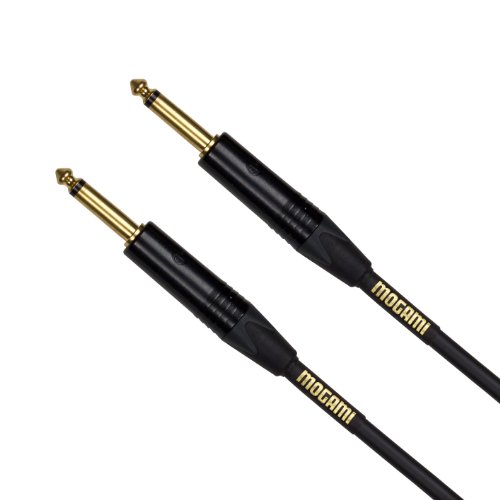
- Preserves Pure Tone - Engineered with Mogami 2524 high-definition instrument cable, this pro-level cable ensures ultra-low coloration to maintain the unique sound and clarity of your guitar or...
- Eliminates Handling Noise - Features carbon impregnated PVC shielding that prevents microphonic noise from movement, flexing, or foot contact, ideal for performers who move around on stage.
The Mogami Gold is often considered the industry standard for high-end instrument cables. Unlike the SOLUTEK power cable, which focuses on DC current delivery, the Mogami Gold is designed for the most transparent audio signal possible. It features an OFC (oxygen-free copper) core and extremely high-density shielding to eliminate noise. While the SOLUTEK is a budget-friendly utility for power, the Mogami Gold is a premium investment for your audio signal. If you are a studio professional where every decibel of signal-to-noise ratio matters, you might prefer the Mogami for your guitar-to-pedalboard connection, while still using the SOLUTEK 8-pack to power the pedals themselves.
2. Hosa Pro Balanced Interconnect

- 1/4" TRS-1/4" TRS Balanced Interconnect Cable with REAN Connectors - 5'
The Hosa Pro series is a fantastic middle-ground alternative. While this specific model is a balanced TRS interconnect (often used for studio monitors or balanced pedal outputs), Hosa’s approach to durability is similar to SOLUTEK’s. They use REAN connectors, which are known for their reliability. Hosa is generally more affordable than Mogami but offers a step up from basic “generic” cables. If you are looking for balanced signal cables to complement your tidy SOLUTEK-powered board, Hosa is a reliable choice that won’t break the bank. It’s the “working musician’s” choice for signal cables, much like SOLUTEK is for power.
3. Fender Professional Series Instrument Cable, 10ft
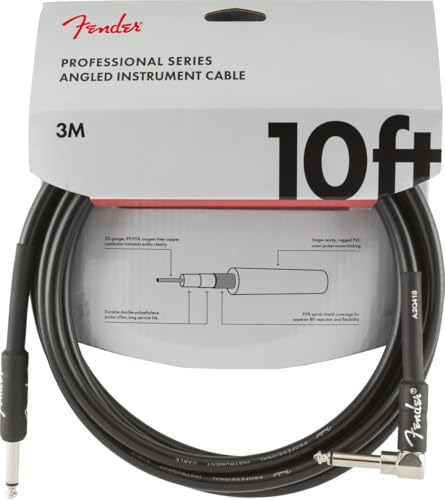
- Engineered to avoid twisting, kinking and any "physical memory"
- Resilient 95% oxygen free spiral shielding that is flexible and aids in eliminating handling noise
Fender’s Professional Series offers a classic look with modern reliability. These cables feature a durable braided jacket, which some players prefer over the smooth PVC of the SOLUTEK cables because they don’t “kink” as easily and have a nice “road-worn” aesthetic. They are built for live performance with “noise-free” signal claims. If you want a cable that matches the classic look of your Fender amp and provides a rugged signal path, this is a great alternative. While the SOLUTEK handles the hidden power duties, the Fender Professional Series handles the visible, high-traffic guitar-to-amp connection with style and durability.
Final Verdict: Is the SOLUTEK 12′ Angled Guitar Pedal Power Cable Worth It?
After an exhaustive SOLUTEK 12′ Angled Guitar Pedal Power Cable Review, we can confidently say that these cables are one of the most cost-effective upgrades you can make to your rig. They successfully bridge the gap between “cheap and flimsy” and “overpriced and boutique.” The combination of pure copper conductors, rugged PVC insulation, and the clever groove-lock design ensures that your pedals receive clean, stable power while your board remains organized and road-ready. While the 12-inch length might require some cable management for very small boards, the versatility and reliability offered by this 8-pack are unmatched at this price point.
We recommend these cables to any guitarist—from the bedroom hobbyist to the touring pro—who wants to eliminate “power anxiety” and noise from their setup. Don’t let a $2 cable ruin a $2,000 rig. If you’re ready to clean up your board and secure your tone, we highly suggest you pick up this 8-pack of SOLUTEK cables today and experience the difference a pro-grade power foundation can make.
Last update on 2026-10-16 / Affiliate links / Images from Amazon Product Advertising API