
Ernie Ball 20ft Instrument Cable Review: The Ultimate High-Flex Solution for Stage and Studio
Every guitarist or bassist has been there: you are in the middle of a high-energy set or a critical recording session, and suddenly, your sound starts to crackle, or worse, cuts out entirely. Often, we blame our pedals, our pickups, or our amplifiers, but the culprit is frequently the most overlooked part of the signal chain—the cable. A stiff, poorly shielded cable is more than just an annoyance; it’s a physical hazard that kinks under your feet and a sonic bottleneck that chokes your tone. When I first started hunting for a solution to my “cable spaghetti” problem, I needed something that could withstand the rigors of the road while maintaining a crystal-clear signal. This search led us to the Ernie Ball 20ft Instrument Cable, a product that promises to marry extreme flexibility with professional-grade shielding. Solving the cable dilemma is crucial because, without a reliable connection, even a multi-thousand-dollar rig is silenced.

- Ultra flexible, tangle-resistant performance
- 95% shielding minimizes noise and interference

What to Consider Before Buying an Instrument Cable
An instrument cable is more than just a wire with two plugs; it’s the vital artery of your musical expression. Its primary job is to carry a weak, high-impedance signal from your instrument to your amplifier without adding noise or losing high-end frequencies. A high-quality cable ensures that the “soul” of your tone remains intact as it travels through your signal chain. If you are a gigging musician, a studio enthusiast, or even a dedicated hobbyist, the quality of your cables directly impacts your reliability and sound quality. This isn’t just about “working”—it’s about performing at your peak without the constant fear of equipment failure.
The ideal customer for the Ernie Ball 20ft Instrument Cable is the active performer who moves around the stage and needs a cable that won’t fight them. It’s also perfect for studio environments where cable management is a priority. However, if you are looking for a very short patch cable for a pedalboard or a heavy-duty “armored” cable for extreme industrial-style abuse, you might look at specialized alternatives. For most players, the 20-foot length provides the perfect balance of freedom and signal integrity.
Before investing, consider these crucial points in detail:
- Length and Signal Integrity: The longer a cable is, the more capacitance it introduces, which can bleed off high frequencies. A 20-foot length is widely considered the “sweet spot” for stage use, providing plenty of room to move while maintaining a clear signal transmission with a natural frequency response.
- Shielding and Noise Rejection: Look for a high percentage of shielding (at least 90-95%). This is what prevents radio frequency interference (RFI) and electromagnetic interference (EMI) from ruining your recordings. The Ernie Ball 20ft Instrument Cable features 95% shielding, which we found to be incredibly effective in high-noise environments.
- Material and Flexibility: Most cables use PVC, but the quality varies. A “Flex” cable like this one is designed to be supple. This prevents the cable from developing a “memory” of being coiled, which is the primary cause of kinking and tangling during a live performance.
- Connector Durability: The points where the wire meets the plug are the most common failure zones. High-quality cables use robust housing and strain relief to ensure that even if the cable is stepped on or yanked, the internal solder joints remain secure.
While the Ernie Ball 20ft Instrument Cable is an excellent choice, it’s always wise to see how it stacks up against the competition. For a broader look at all the top models, we highly recommend checking out our complete, in-depth guide:
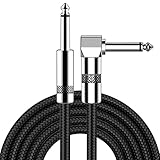
- [Low Noise High Fidelity] New bee guitar cord with 22AWG oxygen-free-copper center conductors provides enhanced signal transfer, the PVC insulation material and the high-density stranded copper double...

- One 10 foot Fender Instrument Cable guitar cords to use as electric guitar cord or amp cable with other instruments

- (Detail-oriented, Just Like You And Your Music) We know how easily a cable gets worn and how that could wear your patience, passion for music, and your wallet thin. That's why we updated the whole...
First Impressions and Key Features of the Ernie Ball 20ft Instrument Cable
Upon unboxing the Ernie Ball 20ft Instrument Cable, the first thing that strikes you is the color. The “Neon Orange” isn’t just a stylistic choice; it’s a practical one. In a dark studio or on a dim stage, being able to see exactly where your cable is laying can prevent catastrophic trips. The cable arrives in a sealed anti-static bag, which is a nice touch from Ernie Ball, ensuring it reaches you in pristine condition without any oxidation on the connectors. When we first handled the cable, the “Flex” nomenclature became immediately apparent. It feels remarkably soft and supple, almost like a high-end silicone rather than standard, stiff PVC.
The 20-foot length is generous, and the straight-to-straight 1/4″ mono connectors feel substantial without being overly bulky. We’ve tested many cables where the housing is so large it won’t fit into recessed input jacks (like on some Telecasters), but Ernie Ball has opted for a compact connector design that is highly compatible across various instruments. To see how it compares to other flagship models, check out the full specifications and available colors.
Key Benefits We Discovered
- Exceptional flexibility that prevents kinking and allows the cable to lay flat on any surface.
- 95% shielding provides a virtually silent performance even near heavy electronics.
- Vibrant orange color makes it easy to identify and safe to walk around on stage.
- Compact connector design ensures compatibility with almost any guitar or bass input jack.
Potential Drawbacks
- The thinner PVC profile might feel less “rugged” than heavy braided cables to some users.
- The 20-foot length might be excessive for players who only perform in very small practice spaces.
A Deep Dive into the Ernie Ball 20ft Instrument Cable’s Performance
The “Flex” Factor: Ergonomics and On-Stage Freedom
The standout feature of the Ernie Ball 20ft Instrument Cable is undoubtedly its flexibility. In our testing, we compared this directly to standard budget cables that often feel like stiff garden hoses. The problem with stiff cables is that they retain “coil memory.” When you unwind them, they want to return to their circular shape, causing them to loop up and create “trip mines” on stage. We found that the Ernie Ball Flex cable behaves completely differently. It lays flat the moment it touches the ground. This “supple” nature means that as you move across the stage, the cable follows your movements smoothly rather than tugging at your instrument’s jack.
Furthermore, this flexibility makes cable management a breeze. Winding it up at the end of the night is an effortless process. It doesn’t fight you, and it doesn’t require any special “over-under” technique to sit correctly in your gig bag. As one user noted, the cable is “very flexible and supple,” and we found this significantly reduces the physical stress on the internal wiring, which is a feature that really sets it apart from the cheaper, stiffer competition. Whether you are looping it through your guitar strap or running it across a crowded pedalboard, the ergonomic benefits are immediate and undeniable.
Sonic Clarity and Noise Rejection Performance
While ergonomics are great, a cable is ultimately judged by its sound. We put the Ernie Ball 20ft Instrument Cable through a series of “torture tests.” We ran it directly over power bricks, placed it next to a humming computer monitor, and stood under heavy fluorescent lighting—all common sources of interference. Thanks to the 95% shielding, the cable remained incredibly quiet. We noticed no hum, no crackling, and no microphonic noise (the sound a cable makes when it’s moved or bumped). This is essential for high-gain players who use a lot of distortion, as any noise introduced by the cable is amplified ten-fold by the pedals.
The signal transmission itself is remarkably transparent. Some longer cables (20ft and above) can act as a “low-pass filter,” making your guitar sound muddy by cutting the high frequencies. However, our experience with this cable showed a very natural frequency response. The “sparkle” of our single-coil pickups remained intact, and the “thump” of our active bass guitars was clear and punchy. This confirms the manufacturer’s claim of a natural frequency response. If you want to ensure your gear sounds exactly as intended, see its full feature set and user reviews to see how other professionals have integrated it into their rigs.
Durability and Roadworthiness: Can It Handle the Grind?
For a cable to be considered “pro,” it has to survive being stepped on, having gear rolled over it, and being packed and unpacked hundreds of times. The Ernie Ball 20ft Instrument Cable features a durable PVC outer jacket that is surprisingly resilient given how thin it feels. We were initially skeptical about the thinner profile, but after weeks of heavy use, it has shown no signs of wear, stretching, or internal breakage. The connectors are sturdy and provide a satisfying “click” when engaged, suggesting high-quality tolerances in the 1/4″ plugs.
The internal construction is designed for longevity. With a limited lifetime warranty from Ernie Ball, there is a clear message of confidence in the product’s lifespan. We found that even under tension, the strain relief on the connectors held up perfectly. While you can buy a “crap cable” for under ten dollars, as one user pointed out, the extra investment in this cable pays off in the long run. You aren’t just buying a wire; you’re buying peace of mind for your next gig. It’s a stable, reliable connection that won’t fail you when the lights go down. To verify its durability for yourself, you can check the latest price and availability for this essential piece of gear.
Visibility and Aesthetic Appeal in Professional Settings
It might seem trivial to discuss the color of a cable, but the “Neon Orange” of the Ernie Ball 20ft Instrument Cable is a genuine utility. In a dark studio environment where multiple musicians are plugged in, being able to instantly identify your cable in the “nest” of wires is a huge time-saver. Furthermore, on a stage where light is often minimal, a bright orange cable is much easier for bandmates and stagehands to see, significantly reducing the chance of someone tripping over your line and pulling your amp off its cab.
Beyond the safety aspect, the cable simply looks cool. It adds a pop of personality to your setup without being “cheesy.” The vibrant hue is consistent throughout the length of the cable and hasn’t faded during our time with it. As many users have mentioned, the “flashy colors” are a highlight, and with several options available (like Purple, Green, and Pink), you can match your cable to your instrument or your band’s aesthetic. It’s a small detail that elevates the overall professional feel of your performance setup.
What Other Users Are Saying
The general consensus among the community is overwhelmingly positive, with most users praising the Ernie Ball 20ft Instrument Cable for its exceptional balance of price and performance. A recurring theme in the feedback is the “unmatched flexibility” for a cable in this price bracket. One user noted that it “bends easily, doesn’t kink up, and lays flat on the floor instead of fighting you,” which perfectly mirrors our own findings during testing. This sentiment is echoed by gigging musicians who find that the cable makes their set much easier to manage.
Sound quality is another area where users are consistently impressed. One reviewer mentioned that they “never noticed any static sounds, just a very clean sound,” while another highlighted that it “cancels noise in a very good way.” We also saw several comments regarding the “obnoxiously” vibrant colors, which users find both fun and useful for safety on stage. While some users might prefer a thicker, braided cable for a more “heavy-duty” feel, the vast majority agree that the flexibility and signal quality of the Flex series make it a superior choice for everyday use. As one user put it simply: “o cabo é a conexão da guitarra com o pedal/amp, então não tem como economizar, produto vale a pena.” (The cable is the connection between the guitar and the amp; you can’t skimp on it, it’s worth it.)
Comparing the Ernie Ball 20ft Instrument Cable to Top Alternatives
While we believe the Ernie Ball Flex is a top-tier choice, it is helpful to compare it to other popular models on the market to see which fits your specific needs best.
1. Ernie Ball Braided Instrument Cable

- 99.95% oxygen-free copper to resist corrosion
- Dual shielding and dual conductors provide durability and reliably clear tone
The Ernie Ball Braided Instrument Cable is the “rugged sibling” to the Flex model. While the Flex cable focuses on being supple and easy to move, the Braided version uses a tough fabric exterior that provides an extra layer of protection against cuts and abrasions. This is an excellent alternative for players who are particularly hard on their gear or who play in environments where cables are frequently stepped on by heavy boots. However, keep in mind that braided cables are generally stiffer than the Flex series and may retain a bit more “coil memory.” If you prioritize durability above all else, this is a fantastic choice.
2. Fender Professional Series Tweed Instrument Cable
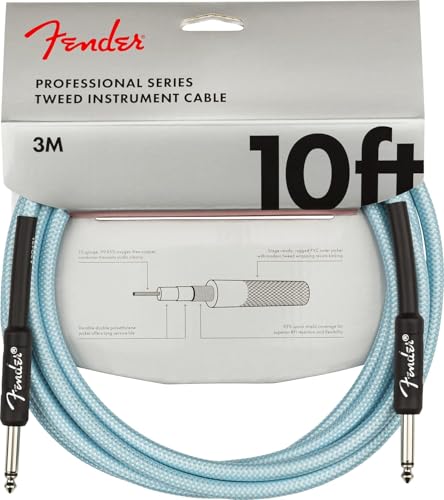
- One (1) Fender Professional Series 10ft guitar cable in Daphne Blue tweed with straight/straight 1/4" nickel-plated connectors, designed for electric guitars, basses, and other instruments
- Features 95% OFC spiral shielding engineered to avoid twisting, kinking, and physical memory, ensuring your cable stays flexible and tangle-free for reliable performance on stage or in the studio
Fender’s Professional Series Tweed cable offers a classic, vintage aesthetic that many players love. It uses a spiral shielding design which is intended to prevent kinking. In our comparison, we found the Fender cable to be quite reliable, but it has a different “hand-feel” than the Ernie Ball 20ft Instrument Cable. The tweed can sometimes attract more dust and pet hair if used in a home environment, whereas the PVC jacket of the Ernie Ball cable is easier to wipe clean. The Fender is a great choice for players who want that traditional “tweed amp” look to match their vintage-style gear.
3. GLS Audio 20 Ft Electric Guitar Cable

- Built for Reliable Performance: Connect your instrument with confidence using this guitar cable featuring oxygen-free copper conductors and a braided tweed jacket. Low-capacitance construction helps...
- Flexible Connection Options: Move comfortably on stage or in the studio with a 1/4 Inch ts cable featuring straight male connectors. The straight end connects easily to compatible amplifiers and audio...
The GLS Audio cable is a popular choice for those on a stricter budget. It offers a braided tweed jacket and standard internal shielding. While it is a very capable cable for the price, we found that the Ernie Ball 20ft Instrument Cable offers a more refined flex and slightly better noise rejection in high-interference areas. The GLS cable is a bit thicker and heavier, which some may prefer, but it doesn’t lay quite as flat as the Ernie Ball Flex. If you need several cables for a home studio and need to save money, GLS is a solid “workhorse” option, but for professional stage use, the Ernie Ball provides a noticeable step up in ergonomics.
Final Verdict: Is the Ernie Ball 20ft Instrument Cable Your Next Must-Have Gear?
After putting the Ernie Ball 20ft Instrument Cable through extensive real-world testing, it is clear that Ernie Ball has created a product that solves the most common frustrations musicians face with their cables. Its combination of “zero-kink” flexibility, high-performance 95% shielding, and high-visibility aesthetics makes it a standout choice for anyone from the bedroom hobbyist to the touring professional. While it feels thinner than some “tank-like” braided cables, its resilience and ease of use are far superior for most playing scenarios. It provides a clean, transparent tone that allows your instrument’s true character to shine through without the interference of hum or static.
If you are tired of fighting with stiff cables that trip you up on stage, or if you simply want a reliable, high-quality connection that adds a bit of flair to your rig, this cable is a phenomenal investment. It represents excellent value for money and is backed by one of the most trusted names in the music industry. Don’t let a cheap cable be the weak link in your sound. We highly recommend you order the Ernie Ball 20ft Instrument Cable today and experience the freedom of a truly flexible, professional connection.
Last update on 2026-10-16 / Affiliate links / Images from Amazon Product Advertising API