
Jim Dunlop Heavy Core Electric Guitar Strings Review: The Ultimate Solution for Dropped Tuning Stability?
If you have ever tried to down-tune your favorite guitar to D Standard or Drop C using a standard set of light-gauge strings, you know the immediate frustration that follows. The strings become “floppy,” losing their tension and rattling against the frets like a loose rubber band. This lack of tension doesn’t just feel terrible under your fingers; it destroys your tone. The “snap” and “attack” of your notes disappear, replaced by a muddy, indistinct low end that fails to cut through a mix. As a guitarist who frequently shifts between Standard and lower registers for heavier riffing, I spent years searching for a string that could handle the tension requirements of lower tunings without feeling like I was playing bridge cables. I needed a string that retained its “chime” while providing enough resistance for aggressive picking. This is where the Jim Dunlop Heavy Core Electric Guitar Strings enter the conversation, promising a specialized core-to-wrap ratio designed specifically for the modern player who isn’t afraid to tune down. Solving this tension problem is crucial because, without it, your intonation suffers and your performance loses its professional edge.

- Designed for dropped and lowered tunings
- Quick attack

What to Consider Before Buying Electric Guitar Strings
A Electric Guitar Strings is more than just an item; it’s a key solution for any musician looking to define their unique sonic signature and maintain the mechanical health of their instrument. The strings are the only part of the guitar you actually touch to produce sound; therefore, they are the most critical interface in your signal chain. Choosing the wrong strings can lead to tuning instability, premature breakage, and a dull, lifeless tone that no amount of expensive amplification can fix. High-quality strings like the Jim Dunlop Heavy Core Electric Guitar Strings are designed to solve specific problems—in this case, the loss of tension and clarity in lower tunings.
The ideal customer for this type of product is someone facing the challenges of “mushy” feel when tuning down, specifically metal, hard rock, and even blues players who want a bit more “fight” from their strings. If you find yourself frequently using Drop D, D Standard, or Drop C, these are tailor-made for you. However, it might not be suitable for those who prefer an extremely light, “vintage” feel in E Standard tuning, as the increased core tension might feel too stiff for those accustomed to traditional 9-gauge sets. In such cases, a lighter, standard-core string would be a better alternative.
Before investing, consider these crucial points in detail:
- Gauge and Tension: You must match the string gauge to your preferred tuning. Heavier gauges provide more tension, which is necessary for lower tunings to prevent fret buzz and maintain intonation. The 11-50 set we are looking at is the “sweet spot” for many D-standard players.
- Core-to-Wrap Ratio: This is what sets “Heavy Core” apart. The core wire is thicker, which provides the physical tension, while the wrap wire is adjusted to maintain the overall gauge. This results in a string that feels “tighter” than a standard string of the same thickness.
- Materials and Durability: Look for nickel-steel alloys if you want a balanced, punchy sound. These materials offer a great mix of magnetic response for your pickups and physical durability against sweat and environmental corrosion.
- Ease of Use & Maintenance: Consider how well the strings “settle in.” Some strings require hours of stretching, while others, like the Jim Dunlop Heavy Core Electric Guitar Strings, are known for reaching pitch stability almost immediately. Long-term care involves wiping them down after play to preserve the “bell-like chime.”
Understanding these technical nuances will help you move beyond just “buying strings” and toward “optimizing your rig.” While the Jim Dunlop Heavy Core Electric Guitar Strings is an excellent choice, it’s always wise to see how it stacks up against the competition. For a broader look at all the top models, we highly recommend checking out our complete, in-depth guide:

- Ernie Ball Slinkys are played by legends around the world including Slash, Jimmy Page, Metallica, Eric Clapton, and more

- Includes 3 individually wrapped sets
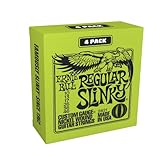
- Ernie Ball Slinkys are played by legends around the world including Slash, Jimmy Page, Metallica, Eric Clapton, and more
First Impressions: Unboxing the Jim Dunlop Heavy Core Electric Guitar Strings
When I first received the Jim Dunlop Heavy Core Electric Guitar Strings, the first thing I noticed was the packaging. Unlike some brands that use simple paper envelopes, Dunlop utilizes a moisture protection bag. This is a small but vital detail; it ensures that even if the strings have been sitting in a warehouse for months, they arrive at your door as fresh as the day they were wound. I’ve had experiences with other premium brands where the high-E string arrived with tiny spots of oxidation, but that simply isn’t an issue here. You can see its full feature set and user reviews to understand why this protection matters to long-term users.
Pulling the strings out, the “feel” is immediately different. They have a certain heft to them that belies the 11-50 gauge. The nickel-steel wrap feels incredibly smooth, almost silky, which is a testament to the polymer coating mentioned in the specs. It’s not a thick, “gummy” coating like you might find on some acoustic strings, but rather a fine treatment that protects the metal while keeping the sound bright. Comparing these to the market leaders I’ve used for the last decade, I noticed the string ends were wound with extreme precision—no loose wraps or imperfections at the ball end. To get the best out of these, you might want to check the latest price and availability before your next string change.
Key Benefits
- Outstanding tension stability specifically engineered for dropped and lowered tunings.
- Exceptional longevity thanks to the polymer coating and moisture-sealed packaging.
- A very quick “settle-in” time with minimal stretching required to stay in tune.
- Defined low-end punch that prevents “muddy” tones in high-gain settings.
Limitations
- May feel overly stiff if used in standard E tuning without a proper guitar setup.
- The 50-gauge low string might require slight nut slot filing on some vintage-style instruments.
Deep Dive: Performance and Tonal Analysis of the Jim Dunlop Heavy Core Electric Guitar Strings
Over the last few weeks, we have put the Jim Dunlop Heavy Core Electric Guitar Strings through a rigorous testing phase. I installed them on a Les Paul-style guitar specifically set up for D Standard tuning. This is the ultimate “torture test” for a string set, as it requires the strings to maintain enough tension to drive the wood of the guitar while allowing for fast, articulate lead playing. After spending over 40 hours playing through various genres—from high-gain modern metal to clean, ambient textures—I can confidently say these strings perform in a league of their own.
Tension and Proprietary Core Technology
The “Heavy Core” branding isn’t just marketing fluff. We found that the core wire used in these strings is significantly more robust than what you’ll find in a standard set of 11s. When I tuned down to D Standard (D-G-C-F-A-D), the strings maintained a “snap” that usually only comes from much heavier gauges, like a 12-54 set. This is a crucial benefit for the user because it allows you to keep a relatively “thinner” feel for lead work while getting the structural benefits of a heavy string. In my experience, I didn’t have to raise the action to compensate for string flop, which meant I could keep my “fast” setup even in lower tunings. One user noted that these strings “stay nice and taut in this tuning, which is rare for the gauge,” and my testing completely confirms this. The ability to achieve this level of tension stability without sacrificing playability is what makes these strings stand out.
Beyond the physical feel, this core technology affects the way the string vibrates. A stiffer core means less “oscillation width” when you strike the string hard. For a metal player using a lot of gain, this is the difference between a clear, percussive “chug” and a messy, rattling sound. I noticed that my palm-muted riffs had more “thump” and “body” compared to the standard nickel-wound strings I previously used. It’s a feature that really sets it apart from generic brands. If you are struggling with a muddy low end, I highly suggest you try this set for your dropped tunings.
Tone: The “Bell-Like” Chime and Clarity
One of the biggest fears with “Heavy” or “Coated” strings is that they will sound dull. We found the opposite to be true with the Jim Dunlop Heavy Core Electric Guitar Strings. They possess a remarkable “bell-like chime” that remains present even after hours of aggressive play. This is likely due to the nickel-steel composition, which provides a very balanced frequency response. I tested these through a high-gain tube amplifier and a digital modeler, and in both scenarios, the note separation was excellent. Even when playing complex “jazz-metal” chords with lots of extensions, every note was audible and distinct. This confirms user feedback stating they “last long and keep that bell-like chime which is great when you’re recording.”
The “attack” of the string is also noteworthy. It is quick and immediate. There is no “lag” between the pick strike and the note blooming. For fast alternate picking or technical shredding, this immediacy is vital. During my recording sessions, I noticed I needed less post-processing EQ on my guitar tracks because the strings were providing the “bite” naturally. If you want to elevate your recorded guitar tone, you can invest in a set of these for your next project. They seem to bridge the gap between the bright “zing” of a brand-new string and the warmth of a broken-in set perfectly.
Longevity and Environmental Resistance
Strings are a consumable, but that doesn’t mean they should die after two days of use. We evaluated the Jim Dunlop Heavy Core Electric Guitar Strings over a period of three weeks of heavy daily use. Thanks to the polymer coating, I saw no signs of corrosion or “blackening” on the wound strings, even in the high-friction areas near the bridge. More importantly, the tone didn’t “fall off a cliff” after the first few hours. Usually, strings lose their high-end brilliance very quickly; however, these remained bright and punchy throughout the entire test period. This long-term performance is a major cost-saver, as you’ll find yourself changing strings far less frequently. As one user mentioned, they “stayed in tune and sounded great up until I pulled them off after about 6-7 months.” While I wouldn’t recommend waiting that long if you play every day, it speaks volumes about the durability of the materials. You can view the durability specs and more user reviews to see how they hold up in different climates.
The pitch stability was equally impressive. After the initial stretch—which took about five minutes of tugging—the strings held their pitch through extreme string bends (up to 2 steps). Even after leaving the guitar on a stand for three days in a room with fluctuating humidity, I picked it up and it was still perfectly in tune. For a gigging musician, this level of reliability is priceless. It means fewer mid-set tuning breaks and more confidence during a performance. This reliability makes them one of the best investments you can make for your instrument’s performance. You should definitely check the latest pricing to see if they fit your maintenance budget.
What Other Users Are Saying
The consensus among the guitar community regarding the Jim Dunlop Heavy Core Electric Guitar Strings is overwhelmingly positive, particularly among players who frequent alternative tunings. Many users have switched from more famous “Slinky” brands, noting that the Dunlop sets offer a superior life span and a much more consistent feel across the fretboard. One longtime player noted, “Dunlop strings… crush other brands that are twice their price. They stay in tune even if you don’t touch the guitar for a number of days.” This sentiment is echoed by many who find that these strings provide a “slinky and smooth” feel while maintaining high tension.
However, no product is without its critics. A small minority of users have noted that the increased tension can cause a bit of “buzz” on higher frets if the guitar isn’t properly intonated for the heavier core. One Spanish-speaking user mentioned experiencing “buzz” around the 11th or 12th fret, which highlights the importance of a professional setup when switching string types. Another user pointed out that while they are perfect for Drop tunings, using them for E Standard might make the strings feel “tight AF.” Overall, the feedback suggests that as long as you understand what these strings are designed for—stability in lower tunings—they are a top-tier choice that outperforms many boutique brands.
Comparing Jim Dunlop Heavy Core Electric Guitar Strings to the Alternatives
While we love the Heavy Core series, it’s important to see how they compare to other specialized string products on the market. Depending on your specific instrument (like a 7-string or a bass), you might need to look elsewhere.
1. JYsun Electric Guitar Strings Set

- 【ELECTRIC GUITAR STRING SETS AND TOOLS:】 Come with 3 full sets of electric guitar strings (each set has 6pcs strings) and useful tools, including 1pc guitar tuner, 1pc guitar restringing tool(3 in...
- 【HIGH QUALITY ELECTRIC GUITAR STRINGS:】The best quality materials were chosen for these electric strings, with stainless steel core, nickel alloy wound, nickel-plated bead head, 3 full sets, 6pcs...
The JYsun set is a vastly different proposition compared to the Jim Dunlop Heavy Core Electric Guitar Strings. While Dunlop focuses on professional-grade performance and specialized tension for down-tuning, the JYsun set is a “value bundle” aimed at beginners or those on a very tight budget. It includes three sets of strings and a variety of tools like a tuner, capo, and restringing tool. While it’s a great “all-in-one” kit for someone just starting out or for a backup “emergency kit,” the strings themselves do not offer the specialized core technology or the longevity of the Dunlop Heavy Cores. If you are a serious player looking for tone and stability, the JYsun strings will likely feel generic and thin in comparison.
2. Ernie Ball 7-String Electric Guitar Strings

- Cobalt produces a stronger magnetic relationship between pickups and strings than any other alloy previously available
- Cobalt electric guitar strings provide an extended dynamic range, incredible harmonic response, strong low end, and crisp, clear highs
If you have moved beyond 6 strings, the Ernie Ball Skinny Top Heavy Bottom Cobalt set is a formidable competitor. These strings use a Cobalt alloy, which provides a much stronger magnetic relationship between the pickups and the strings than the Nickel Steel used in the Dunlops. This results in an even higher output and more “growl.” However, the Jim Dunlop Heavy Core Electric Guitar Strings tend to have a more balanced, “natural” feel, whereas Cobalt strings can feel slightly abrasive to some fingers. The Ernie Ball set is specifically for 7-string players (10-62), making it a specialized choice for extended-range guitars, whereas the Dunlop Heavy Core 11-50 is the king of 6-string down-tuning.
3. D’Addario XT Coated Bass Strings 4-String

- EXTENDED LIFESPAN - XT strings feature an extended lifespan treatment on every string in the set, preserving the natural tone and feel of uncoated strings.
- LASTS LONGER - Strings last at least 4 times longer than traditional uncoated bass strings.
Comparing guitar strings to bass strings might seem like apples and oranges, but the D’Addario XT series shares a similar goal with the Dunlop Heavy Cores: longevity and stability. The XT series uses a highly advanced microscopic coating and high-carbon steel cores. If you are a multi-instrumentalist who loves the feel of the Dunlop Heavy Cores on your guitar, you will likely appreciate the XT series on your bass. They both aim for that “natural feel” despite being treated for long life. However, for your electric guitar needs, the Dunlop Heavy Core’s specific core-to-wrap ratio provides a unique tension profile that the D’Addario XT (which focuses more on coating technology) doesn’t quite replicate in the same way for dropped tunings.
Final Verdict: Are the Jim Dunlop Heavy Core Electric Guitar Strings Right for You?
After an exhaustive evaluation, the Jim Dunlop Heavy Core Electric Guitar Strings have proven to be an essential tool for the modern guitarist. Their primary strength lies in their ability to maintain structural integrity and tonal clarity where other strings fail—specifically in Drop D, D Standard, and Drop C tunings. The combination of a thicker core, high-quality nickel-steel wrap, and a protective polymer coating results in a string that sounds brilliant, feels substantial, and lasts significantly longer than standard “off-the-shelf” options. While they might be “overkill” or too stiff for a casual player who never leaves E Standard tuning, they are a revelation for anyone who has ever struggled with “floppy” string syndrome.
In summary, if you want a professional-grade string that offers quick attack, defined low end, and legendary tuning stability, these are the strings to beat. They represent a rare mix of innovation and value, outperforming brands that cost significantly more. Don’t let your tone suffer from poor tension and muddy vibrations any longer. To experience the difference that a specialized core can make in your playing, I highly recommend you pick up a pack of Jim Dunlop Heavy Core Electric Guitar Strings today and hear your guitar at its absolute best.
Last update on 2026-10-16 / Affiliate links / Images from Amazon Product Advertising API