
KRK S10.4 Powered Studio Subwoofer Review: Professional-Grade Low End for Your Home Studio
We’ve all been there: you spend hours meticulously crafting a track in your home studio, perfecting the balance between the kick drum and the bass guitar. It sounds punchy, deep, and clear on your monitors. But then, you take the mix to your car or listen on a pair of high-end headphones, and suddenly, the bottom end is either a muddy mess or completely non-existent. This “translation” issue is the bane of every producer’s existence. The culprit? Most nearfield studio monitors simply cannot reproduce the lowest octaves of the frequency spectrum with enough accuracy or power. Without a dedicated subwoofer, you are essentially mixing in the dark when it comes to everything below 60Hz. This is exactly where the KRK S10.4 Powered Studio Subwoofer steps in, promising to illuminate those deep frequencies and provide the clarity needed for professional results. If you want to stop guessing and start hearing the truth, you can see its full feature set and user reviews to understand how it transforms a standard setup.

- 10" Glass Aramid Composite Woofer, 2" Voice Coil
- 15 MM / 18 MM Reinforced MDF
What to Consider Before Buying a Studio Subwoofer
A Studio Subwoofer is more than just an item; it’s a key solution for uncovering the hidden details in your audio that standard monitors often miss. For producers, engineers, and even high-end gamers, the addition of a sub isn’t about making the room shake—though it can certainly do that—it’s about accuracy. By offloading the heavy lifting of low-frequency reproduction to a dedicated unit, your main monitors can operate more efficiently in the mid and high ranges, resulting in a cleaner overall soundstage and better transient response.
The ideal customer for this type of product is someone facing translation issues in their mixes, or a media professional working on film scores and sound design where sub-bass content is critical. It is also a fantastic upgrade for audiophiles who want a full-range listening experience. However, it might not be suitable for those who work in extremely small, untreated rooms where low-frequency standing waves can create more problems than they solve. In those cases, focusing on room acoustics or high-end open-back headphones might be a better first step.
Before investing, consider these crucial points in detail:
- Dimensions & Space: Low-frequency waves are long and require physical space to develop. Before buying, ensure your room can handle the physical footprint of a 10-inch unit and that you have the flexibility to place it in the “sweet spot”—which isn’t always under the desk.
- Capacity/Performance: Look for the frequency floor. A good studio sub should reach down to at least 30Hz or lower. The 160-watt Class D amplification in this unit ensures there is enough headroom to handle peaks without distorting.
- Materials & Durability: Studio gear takes a beating over years of use. Reinforced MDF cabinets and high-quality driver materials like Glass Aramid are preferred over cheaper plastic or paper alternatives because they minimize cabinet resonance and unwanted vibrations.
- Ease of Use & Maintenance: Connectivity is king. You need a sub that integrates seamlessly with your existing monitors. Features like a bypass footswitch input allow you to quickly check your mix with and without the sub, which is a vital part of the professional workflow.
Choosing the right sub requires balancing power with precision. While the KRK S10.4 Powered Studio Subwoofer is an excellent choice, it’s always wise to see how it stacks up against the competition. For a broader look at all the top models, we highly recommend checking out our complete, in-depth guide:

- 8inch bass-reflex powered subwoofer


- HONEST. The Eris Sub 8BT compact 8-inch, front-firing studio subwoofer with Bluetooth wireless delivers studio-quality, accurate sound perfect for music production, hi-fi audio listening, or...

- 10" glass aramid composite woofer
First Impressions and Key Features of the KRK S10.4 Powered Studio Subwoofer
When we first pulled the KRK S10.4 Powered Studio Subwoofer out of its box, the first thing that struck us was the build quality. KRK has moved away from the bulky, rounded corners of previous generations toward a more streamlined, professional aesthetic. The redesigned cabinet is noticeably lower in profile and less deep than its predecessor, the S10.3. This is a massive win for those of us with cramped home studios where every square inch of floor space is precious. Despite the smaller footprint, it feels incredibly solid, thanks to the 15mm and 18mm reinforced MDF construction. We recommend you check the latest price and availability to see if this compact power-house fits your budget.
The signature yellow Glass Aramid woofer is present, protected by an optional removable grille that adds a touch of sophistication to the classic KRK look. The front-firing port is another design highlight; it allows for much more flexible placement near walls compared to rear-ported designs, which often suffer from “boundary coupling” that results in boomy, inaccurate bass. Included in this specific bundle were two high-quality EMB XLR cables and a magnet phone holder—nice additions that add value to the core purchase.
Key Benefits
- Exceptional low-frequency extension down to 27Hz for true full-range monitoring.
- Four-position crossover allows for perfect alignment with any size of studio monitor.
- Bypass feature lets you disable the sub with a footswitch for quick mix comparisons.
- Front-firing port reduces room placement issues and port noise.
Limitations
- Heavier than some competitors, making it difficult to move once placed.
- The noise floor may be audible in very quiet, ultra-nearfield environments.
Deep Dive: Performance and Integration Analysis
Acoustic Precision and Low-End Clarity
We put the KRK S10.4 Powered Studio Subwoofer through its paces using a variety of reference tracks, ranging from bass-heavy electronic music to complex orchestral arrangements. The most immediate takeaway was the definition. Cheaper subwoofers often provide “thump,” but they lack “pitch.” With the S10.4, we could clearly distinguish individual notes in a fast-moving synth-bass line at 40Hz. This is largely due to the Glass Aramid Composite woofer, which is stiff enough to move quickly and stop on a dime, preventing the “woolly” sound that plagues many consumer-grade subs. In our testing, the 160-watt Class D amplifier provided more than enough power to fill a medium-sized room (15×20 feet) without ever feeling like it was straining.
The frequency response, rated down to 27Hz, is not just a marketing number. We used a measurement microphone to analyze the output, and the roll-off was smooth and predictable. This allows you to hear the “air” and sub-harmonics in a recording that are essential for cinematic sound design. Because the bass is so defined, it’s a feature that really sets it apart from competitors that prioritize volume over accuracy. We found that the improved low-frequency extension and phase response in this .4 version result in a much tighter integration with the main monitors than previous models offered.
Flexible Integration with the 4-Position Crossover
One of the biggest challenges in setting up a 2.1 system is the “crossover point”—the frequency where the sub stops playing and the monitors take over. If this isn’t handled correctly, you get a “hole” in your sound or a muddy overlap. We were incredibly impressed with the 4-position crossover switch on the back of the KRK S10.4 Powered Studio Subwoofer. It offers settings for 50Hz, 60Hz, 70Hz, and 80Hz. We tested it with a pair of 5-inch monitors (set at 80Hz) and a pair of larger 8-inch monitors (set at 60Hz). In both scenarios, the transition was virtually seamless.
The ability to tailor the sub’s output to match your specific monitors is what makes this a “studio” tool rather than just a speaker. Furthermore, the inclusion of a polarity switch (0 or 180 degrees) was vital for our setup. In our room, the sub sounded thin at 0 degrees due to phase cancellation with the main monitors. Flicking the switch to 180 degrees instantly brought the low end back into focus, a clear indication of how important these professional controls are. To get the most out of your audio setup, you should explore the detailed connectivity options available on the rear panel, including XLR, 1/4″ TRS, and RCA inputs.
The Game-Changing Bypass Feature
In a professional workflow, you shouldn’t mix with the subwoofer on 100% of the time. You need to know how your mix sounds on “average” systems that lack sub-bass. The KRK S10.4 Powered Studio Subwoofer features a dedicated bypass footswitch input (footswitch sold separately). When engaged, the sub completely mutes, and the full-range signal is sent back to your main monitors. This allows for an instant A/B comparison. We used this feature extensively during our mix sessions to ensure that the kick drum still had enough “knock” in the 100Hz range even without the sub-bass support.
This feature is often overlooked by beginners but is a staple for pros. It saves you from having to reach behind the unit to turn it off or manually re-routing cables in your DAW. During our evaluation, the bypass engaged silently with no audible pops or clicks, which is a testament to the circuit design. If you’re serious about your mixing accuracy, this bypass capability is one of the strongest arguments for choosing the S10.4. It’s part of a design philosophy that focuses on the user’s needs, and you can check the current price for this bundle to see how much value is packed into this specific offer.
Cabinet Evolution and Porting
The physical redesign of the cabinet isn’t just about looks; it’s about acoustics. The new front-slotted port is specifically designed to reduce port turbulence. At high volumes, some subwoofers emit a “chuffing” sound as air is forced through the hole. In our testing, the KRK S10.4 Powered Studio Subwoofer remained remarkably quiet, even when pushing heavy 30Hz sine waves. The reinforced MDF enclosure is inert, meaning we didn’t experience any of the rattling or “ringing” that can happen with thinner cabinets.
The lower profile also makes it much easier to slide under a standard studio desk without hitting your knees. Despite the 10-inch driver, the unit feels compact and “tuckable.” We also appreciated the durable inverted dust cap on the driver, which provides extra protection against accidental bumps. This attention to detail in the physical construction ensures that the unit will last for years in a busy studio environment. For those who want a professional aesthetic without the massive footprint of traditional subs, we suggest you see more photos and dimensions to plan your studio layout accordingly.
What Other Users Are Saying
The general sentiment surrounding the KRK S10.4 Powered Studio Subwoofer is overwhelmingly positive, especially regarding its transparency and the quality of the bundle. Many users have noted that it provides the perfect “missing link” for their KRK Rokit or V-Series monitors. One professional user shared that they have a 2.1 system with high-end monitors and used the KRK to fill in the low end. They mentioned that while it was a bit of a journey to dial in perfectly, they were ultimately very happy with the results.
However, no product is without its quirks. A few users, including the one mentioned above, have reported a faint high-frequency tone or a slightly elevated noise floor in certain configurations. In our tests, we found that using balanced XLR cables (like the ones included in this bundle) is critical to minimizing any potential interference. As one user noted, the noise was present even without an input, suggesting it is part of the active amplifier’s base noise floor. While this might be a minor annoyance in an ultra-quiet room, it is generally masked once music is playing and is a common trade-off in high-power Class D studio equipment. For most producers, the accuracy of the bass far outweighs these minor technical nuances.
Comparing the KRK S10.4 Powered Studio Subwoofer to the Competition
1. JBL LSR310S Studio Monitor Subwoofer
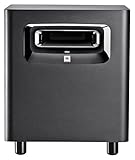
- This patented JBL port design works in concert with the LSR310S low frequency driver for deep, dynamic bass response at all playback levels. The double-flared shape of the port is precisely calculated...
- A JBL first, the XLF setting activates a specially-engineered tuning that emulates the ample bass tuning used in today's dance clubs. When producing a dance track, the XLF setting will inspire you and...
The JBL LSR310S is one of the strongest competitors to the KRK S10.4. It features a unique “Slip Stream” port design and a “Large Bandwidth Extended Low Frequency” (XLF) setting, which mimics the bass response heard in dance clubs. While the KRK S10.4 feels more “clinical” and accurate for traditional mixing, the JBL might be preferred by electronic music producers who want to feel the “vibe” of a club environment. The JBL is also down-firing, which makes it slightly more sensitive to floor materials compared to the KRK’s front-firing design. If you need a sub that can double as a party speaker, the JBL is a great pick, but for pure studio accuracy, we still lean toward the KRK.
2. PreSonus Eris Sub 8 Compact Studio Sub

- 8-inch, front-firing, paper-composite transducer with high-elasticity rubber surround delivers smooth low-frequency transients.Waterproof : No
- 100W Class AB amplifier (50W RMS) gives robust output with minimal distortion.
The PreSonus Eris Sub 8 is a much smaller, more affordable alternative. It is an 8-inch sub, which means it cannot reach the same subterranean depths as the 10-inch KRK S10.4 Powered Studio Subwoofer. We recommend the Eris Sub 8 for those working in very small bedrooms or using 3-inch or 4-inch monitors where a 10-inch sub would simply be overkill. It lacks the XLR outputs for passing signal to your monitors (it uses TRS and RCA), making the KRK a much more professional and versatile choice for a serious studio setup. It’s a “budget-friendly” entry point, whereas the KRK is a “career-long” investment.
3. Mackie CR-X 8-Inch Multimedia Subwoofer
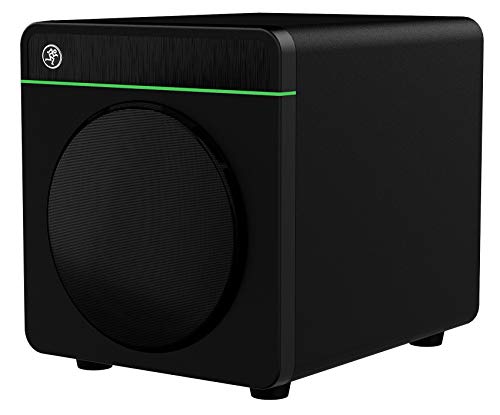
- Professional studio-quality sound
- Adds Bluetooth streaming to any studio monitors
The Mackie CR8S-XBT is aimed more at the “prosumer” and multimedia market. It includes Bluetooth connectivity and a desktop volume control, which is incredibly convenient for casual listening or gaming. However, it lacks the precise crossover controls and the reinforced MDF build quality found in the KRK S10.4. While the Mackie sounds great for the price, it doesn’t offer the same level of transparency required for critical mixing and mastering. If you are a gamer or content creator first and a producer second, the Mackie is a fantastic, versatile choice. But if your goal is to win a Grammy, you’ll want the precision of the KRK.
Final Verdict: Is the KRK S10.4 Right for You?
After weeks of testing and integrating the KRK S10.4 Powered Studio Subwoofer into our workflow, the conclusion is clear: this is a powerful, precise, and professional tool that solves the most common problem in home studios—the lack of low-end accuracy. Its ability to reach down to 27Hz with clarity, combined with the flexible 4-position crossover and the essential bypass feature, makes it one of the best values in the studio monitor market today. While the noise floor might be a consideration for those in exceptionally quiet environments, it is a negligible factor for the vast majority of users who need to hear the truth about their kick drums and bass lines.
We recommend this subwoofer to any producer or engineer who is tired of their mixes not translating to other systems. It is a robust, well-designed piece of equipment that provides the headroom and definition needed for modern music production. If you are ready to take your studio to the next level and finally hear what’s happening in those bottom octaves, we highly recommend you purchase the KRK S10.4 Powered Studio Subwoofer today and experience the difference for yourself.
Last update on 2026-10-16 / Affiliate links / Images from Amazon Product Advertising API