
Fluid Audio F8S Active Studio Subwoofer Review: Is This the Secret to Perfecting Your Bottom End?
We have all been there. You spend twelve hours meticulously crafting a mix in your home studio, adjusting every EQ shelf and compression threshold until it sounds absolutely pristine on your 5-inch nearfield monitors. You feel like a production wizard—until you take that mix to your car or a friend’s house. Suddenly, the kick drum sounds like a wet cardboard box, the synth bass is completely missing in some sections, and there is a strange, muddy rumble that you never even heard in your room. This is the “small monitor trap,” where the lack of low-frequency extension leads to guesswork, and guesswork leads to translation errors.
Solving this problem is crucial for anyone serious about professional audio. Without an accurate representation of what is happening below 60Hz, you are essentially mixing in the dark. However, simply throwing a massive club subwoofer into a small, untreated bedroom often creates more problems than it solves, leading to standing waves and acoustic chaos. This is why we sought out a solution specifically designed for the ergonomic and acoustic constraints of the modern project studio. In this Fluid Audio F8S Active Studio Subwoofer Review, we explore whether this compact 8-inch powerhouse is the missing link your monitoring chain needs.

- Powerful Class-D Amplification: 200W of class-D power with switching power supply delivers robust low-frequency performance for studio and entertainment applications
- Front-Loaded Bass-Reflex Design: Bass-reflex vent port on front baffle directs low frequency energy towards the listener and allows for ease of placement in any room configuration
Choosing the Right Foundation: What to Consider Before Buying a Studio Subwoofer
A studio subwoofer is more than just an item; it’s a key solution for bridging the gap between a “bedroom demo” and a “professional master.” Unlike consumer subwoofers designed to simply shake the floor during action movies, a studio sub is a precision tool meant to extend the frequency response of your existing monitors without coloring the sound. When we integrated the Fluid Audio F8S Active Studio Subwoofer into our workflow, we were looking for transparency, not just volume.
The ideal customer for this type of product is a producer or engineer working in a small to medium-sized room who finds their current 5-inch or 7-inch monitors lacking in bass “heft.” It is also a fantastic choice for gamers and content creators who want a more immersive experience without the footprint of a 10-inch or 12-inch unit. However, it might not be suitable for those working in massive, high-ceiling commercial rooms where an 8-inch driver simply cannot move enough air to fill the space. For those users, a larger 10-inch or dual-subwoofer setup would be the better path.
Before investing, consider these crucial points in detail:
- Dimensions & Space: In a small studio, every square inch of floor space is premium real estate. You need a unit that can sit under a desk without blocking your feet, yet still has enough cabinet volume to produce meaningful low end. The front-firing port design is particularly important here, as it allows you to place the sub closer to walls than rear-ported models.
- Capacity/Performance: Look beyond the wattage. While 200W of Class D power is impressive, the frequency response and the crossover flexibility are what truly matter. You need to ensure the sub can seamlessly “hand off” the frequencies to your satellites, typically around the 80Hz mark, to prevent frequency overlapping or “frequency holes.”
- Materials & Durability: Studio equipment takes a beating, especially floor-dwelling units. A solid MDF cabinet is the industry standard for minimizing resonance. We also look for high-quality connectivity—XLR and TRS inputs are non-negotiable for professional, low-noise signal paths.
- Ease of Use & Maintenance: Long-term care involves more than just dusting. It’s about how easily you can adjust the sub to different projects. Having controls on the front baffle, like a volume fader, is a massive ergonomic advantage compared to having to crawl under your desk every time you want to tweak the bass level.
While the Fluid Audio F8S Active Studio Subwoofer is an excellent choice for many, it’s always wise to see how it stacks up against the competition. For a broader look at all the top models, we highly recommend checking out our complete, in-depth guide:

- 8inch bass-reflex powered subwoofer


- HONEST. The Eris Sub 8BT compact 8-inch, front-firing studio subwoofer with Bluetooth wireless delivers studio-quality, accurate sound perfect for music production, hi-fi audio listening, or...

- 10" glass aramid composite woofer
First Impressions and the Fluid Audio Philosophy
Unboxing the Fluid Audio F8S Active Studio Subwoofer was a pleasant surprise. At roughly 21 pounds, it feels substantial and well-built, sporting a sleek white finish that stands out in a sea of matte black studio gear. What immediately caught our eye was the front-panel layout. Most manufacturers hide the volume controls on the back, but Fluid Audio placed a convenient fader right on the front. This design choice signals that they understand the reality of the home studio: we are constantly tweaking and A/B testing.
The assembly was non-existent—simply plug in your monitors to the outputs of the sub, connect your interface to the sub’s inputs, and you are ready to calibrate. Before you even fire it up, you can see its full feature set and user reviews to understand the flexibility offered by the dual EQ settings and the included footswitch. Compared to entry-level consumer subs, the F8S feels like a professional tool from the moment you set it on the floor.
Key Benefits
- Exceptional workflow efficiency thanks to the front-mounted volume fader and standby footswitch.
- Compact footprint with a front-firing port, making it ideal for tight spaces and placement near walls.
- Versatile connectivity options including XLR, TRS, and RCA for various studio setups.
- Two distinct EQ modes (“Flat” and “Punch”) to cater to both critical mixing and creative listening.
Limitations
- The 8-inch driver may experience port noise (chuffing) when pushed to extreme volumes with very low-frequency content.
- Does not reach the tectonic subsonic depths of a 10-inch or 12-inch subwoofer.
A Deep Dive into the Fluid Audio F8S Active Studio Subwoofer’s Performance
Workflow Revolution: The Power of the Front Fader and Footswitch
In our testing, the most impactful feature of the Fluid Audio F8S Active Studio Subwoofer wasn’t the driver or the amp, but the ergonomics. Most subwoofers are “set it and forget it” devices because they are so difficult to reach. However, low-end requirements change depending on what you are doing. If you are tracking vocals, you might want the sub off. If you are mixing a kick drum, you want it on. If you are just listening to music for pleasure, you might want it a bit louder.
The front-mounted volume fader allowed us to make micro-adjustments without leaving the “sweet spot” of our listening position. But the real star is the included footswitch. We found this to be an absolute game-changer for critical mixing. By tapping the footswitch, you can instantaneously bypass the subwoofer and the internal high-pass filter, sending the full-range signal back to your main monitors. This allows for immediate A/B testing to see if your bass is actually sitting in the mix or just creating a muddy wash. Based on our experience, this feature alone makes it one of the most functional subs in its price bracket. Before you buy, check the latest price and availability to see how this value stacks up.
Acoustic Versatility: Tuning the Sub to Your Room
One of the biggest fears when adding a subwoofer is that it will “smear” the stereo image or create a frequency build-up at the crossover point. The Fluid Audio F8S Active Studio Subwoofer addresses this with a comprehensive set of rear-panel controls. We spent a significant amount of time testing the variable low-pass filter, which ranges from 50Hz to 200Hz. When paired with 5-inch monitors, we found the sweet spot to be right around 80Hz, which is the fixed high-pass filter setting for the satellite outputs.
The variable phase adjustment (0-180°) is another professional touch that we utilized to ensure the sub was perfectly “in time” with our main monitors. In smaller rooms, phase cancellation can completely kill your bass response, and having a dial rather than a simple flip-switch allowed us to fine-tune the alignment until the low end felt tight and centered. Furthermore, the choice between “Flat” and “Punch” settings provides a unique dual-purpose utility. The “Flat” setting is what we recommend for 90% of your work—it’s honest and transparent. However, switching to “Punch” was helpful when we wanted to simulate a club environment or when we were working on mid-bass heavy Dance tracks where “feel” was more important than clinical accuracy. This level of control is a feature that really sets it apart from more basic models.
Sonic Character: Power vs. Precision in the 8-Inch Class
The heart of the Fluid Audio F8S Active Studio Subwoofer is its 200W Class D amplifier driving an 8-inch composite paper pulp woofer. In our listening sessions, the bass was notably “quick.” Because the driver is smaller than a 10-inch unit, it has less mass to move, resulting in excellent transient response. Kick drums felt snappy rather than sluggish, which is vital for genres like Rock or Jazz where timing is everything. We found that pairing this with monitors like the Yamaha HS series or Fluid’s own 5-inch tops created a very cohesive soundstage.
However, physics cannot be ignored. While the manufacturer claims response down to 30Hz, we found that at higher volumes, the front-firing port can produce some audible “chuffing” or air noise when reproducing sustained sub-bass notes (like an 808 long tail). As one user noted, while the 8-inch speaker has enough power, it may struggle to reproduce the lowest notes as cleanly as its 10-inch sibling, the FC10S. If you are a heavy EDM producer who needs to feel the earth move at 30Hz, you might find yourself wanting more. But for the average project studio looking for an accurate reference of the 40Hz to 80Hz range, the F8S provides a level of clarity that is hard to find at this price point. To see if this matches your sonic needs, you can investing in a dedicated low-frequency driver like this one.
Small Studio Ergonomics: Placement and Heat Management
We need to talk about the physical design and how it affects your daily life in the studio. Because the Fluid Audio F8S Active Studio Subwoofer features a front-firing port and a front-firing driver, it is remarkably forgiving regarding placement. We tested it tucked into a corner and placed directly under a desk against a wall. Unlike rear-ported subs, which can become “boomy” when placed near boundaries, the F8S remained relatively controlled.
Additionally, the Class D amplifier runs remarkably cool. We left the unit on for an 8-hour session, and the back plate was barely warm to the touch. This efficiency, combined with the “auto-standby” feature, makes it a set-it-and-forget-it solution for the power-conscious user. The build quality is sturdy, and the 21.6-pound weight ensures it doesn’t “walk” across the floor during heavy bass passages. For those working in a small space, detailed specifications and current deals show why this unit’s footprint is so highly valued.
What Other Users Are Saying
The general consensus among the user community for the Fluid Audio F8S Active Studio Subwoofer is overwhelmingly positive, particularly regarding its value-to-performance ratio. Many users who paired this sub with 5-inch monitors described the result as a “dream come true,” noting that it added the perfect amount of depth without becoming overwhelming. One verified purchaser mentioned, “The absolute crystal sound coming from the monitors paired with the subtle bass from the reference subwoofer is a match made in heaven.”
However, the feedback is balanced with some technical critiques. A few users pointed out the “port noise” at higher volumes, suggesting that the cabinet and port design may reach their limits when pushed to the max. One reviewer who switched to a 10-inch model noted that while the F8S is powerful, it lacks the “tight, deep” accuracy required for professional sub-bass mastering in larger rooms. Conversely, studio owners with small, treated spaces (like a 13’x16’ room) found it to be the perfect size, avoiding the “room-overpowering” issues common with 10-inch subs. Overall, it is seen as a “fabulous” entry for gamers and home producers, though some “studio purists” might find the low-frequency limit slightly restrictive.
Comparing the Fluid Audio F8S Active Studio Subwoofer to the Competition
While the F8S is a stellar performer, it exists in a crowded market. Here is how it compares to three of its top rivals.
1. JBL LSR310S Studio Monitor Subwoofer
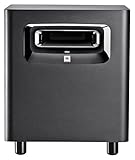
- This patented JBL port design works in concert with the LSR310S low frequency driver for deep, dynamic bass response at all playback levels. The double-flared shape of the port is precisely calculated...
- A JBL first, the XLF setting activates a specially-engineered tuning that emulates the ample bass tuning used in today's dance clubs. When producing a dance track, the XLF setting will inspire you and...
The JBL LSR310S is a 10-inch powerhouse that offers a bit more “room-shaking” capability than the Fluid Audio F8S. It features a unique “Extended Low Frequency” (XLV) setting that emulates the bass response found in dance clubs. If your primary goal is to feel the sub-bass in a larger room, the JBL is the superior choice. However, it lacks the front-panel controls and the footswitch that make the F8S so convenient for daily studio workflow. The JBL is also significantly larger, making it less ideal for cramped under-desk setups.
2. PreSonus Eris Sub 8 Compact Studio Sub

- 8-inch, front-firing, paper-composite transducer with high-elasticity rubber surround delivers smooth low-frequency transients.Waterproof : No
- 100W Class AB amplifier (50W RMS) gives robust output with minimal distortion.
The PreSonus Eris Sub 8 is perhaps the most direct competitor to the F8S in terms of size and target audience. It is often more budget-friendly and integrates perfectly with the popular Eris series monitors. While it offers a solid performance for the price, it lacks the 200W of Class D power found in the F8S (offering 100W instead) and does not include the footswitch or the variable phase dial. We would recommend the PreSonus for very tight budgets, but for those who want professional-grade control and more headroom, the Fluid Audio F8S is a step up.
3. Mackie CR-X 8-Inch Multimedia Subwoofer
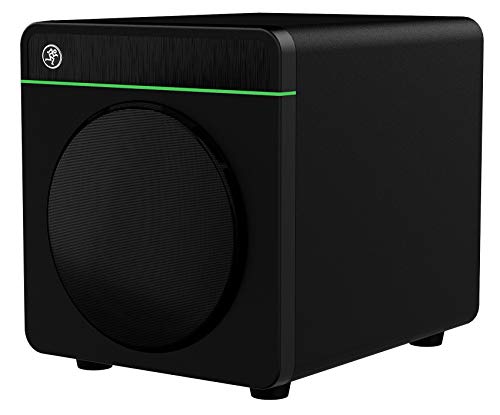
- Professional studio-quality sound
- Adds Bluetooth streaming to any studio monitors
The Mackie CR8S-XBT is aimed more at the multimedia and content creator market rather than the strict “studio reference” crowd. It includes Bluetooth connectivity and a desktop volume remote, which are fantastic for casual listening and gaming. However, for critical mixing, it doesn’t quite match the transparency of the Fluid Audio F8S Active Studio Subwoofer. The F8S’s XLR inputs and dedicated crossover management are more “pro-audio” oriented, whereas the Mackie focuses on convenience and lifestyle features.
The Final Verdict: Is the Fluid Audio F8S Right for Your Studio?
After weeks of testing and comparing, our conclusion in this Fluid Audio F8S Active Studio Subwoofer Review is clear: this is one of the most intelligently designed subwoofers for the modern home studio. It doesn’t try to be a stadium-shaking monster; instead, it focuses on being a functional, ergonomic, and accurate tool for the person sitting in the engineer’s chair. The inclusion of the footswitch and the front-panel fader solves daily workflow headaches that most other manufacturers simply ignore.
If you are working in a massive room or producing low-end-heavy genres for professional release in clubs, you might want to look at a 10-inch model to avoid port noise at high volumes. But for the vast majority of home producers, podcasters, and gamers, the F8S provides the perfect balance of size, power, and precision. It allows you to finally hear what is happening in those bottom octaves, ensuring your mixes translate everywhere from high-end headphones to car stereos. Ready to take the guesswork out of your bass? We highly recommend you enhance your monitoring setup and order yours today to experience the difference a dedicated studio sub can make.
Last update on 2026-10-16 / Affiliate links / Images from Amazon Product Advertising API