
ADAM Audio Sub7 Powered Studio Sub Review: Precision Engineering for the Compact Mixing Suite
I have spent years navigating the treacherous waters of small-room acoustics. If you have ever mixed a track in a bedroom or a small home office, you know the frustration: the kick drum sounds massive in your monitors, but when you play it in your car, it is either non-existent or a muddy mess. This happens because most nearfield monitors, especially those with 5-inch or smaller drivers, simply cannot reproduce the frequencies below 50Hz with any authority. We often find ourselves “mixing in the dark,” guessing at the sub-bass content and hoping for the best. Failing to address this results in unprofessional mixes that lack the “thump” and “weight” required for modern production. That is why we decided to bring the ADAM Audio Sub7 Powered Studio Sub into our testing environment. We wanted to see if a 7-inch driver could actually solve the low-end dilemma without overwhelming a confined space. Before you make a decision, you might want to see its full feature set and user reviews to understand why this compact beast is so highly regarded.

- 140W Active Studio Subwoofer with 7" Driver
- Wireless Remote
What to Consider Before Investing in a Professional Studio Subwoofer
A Studio Subwoofers is more than just an item; it’s a key solution for producers, engineers, and audiophiles who need to hear the full frequency spectrum without coloration. Unlike consumer subwoofers designed to “shake the house” with boomy, loose bass, a studio sub is built for surgical precision. It allows your primary monitors to focus on the mid and high frequencies by taking the heavy lifting of the low-end off their plate. This results in higher headroom and lower distortion across your entire monitoring system. When you integrate a tool like the ADAM Audio Sub7 Powered Studio Sub, you aren’t just adding “more bass”; you are gaining the ability to make informed decisions about your mix’s foundation.
The ideal customer for this type of product is someone facing space constraints but unwilling to compromise on accuracy. If you are working in a room smaller than 150 square feet, a massive 12-inch sub will likely cause more acoustic problems than it solves, creating massive standing waves that ruin your frequency response. However, this product might not be suitable for those who are working in large, professionally treated commercial studios where a larger driver like a Sub12 or Sub15 would be necessary to move enough air. For most home studio owners, the sweet spot lies in a compact, controlled unit that integrates seamlessly with their existing nearfields.
Before investing, consider these crucial points in detail:
- Dimensions & Space: In a small studio, every inch of floor space is valuable real estate. You need a subwoofer that can sit comfortably under a desk or in a corner without obstructing your movement. The ADAM Audio Sub7 Powered Studio Sub is specifically engineered for this, offering a compact footprint that doesn’t sacrifice performance for size.
- Capacity/Performance: Look closely at the frequency response and the amplifier type. You want a sub that reaches down at least to 32Hz or 35Hz to cover the fundamental frequencies of kick drums and sub-synths. A high-quality amplifier, like the 140W ICE power amp found in this unit, ensures that these frequencies remain tight and “fast” rather than sluggish and boomy.
- Materials & Durability: The driver material—often coated paper or specialized composites—determines how the cone reacts to rapid signals. A robust voice coil and a sturdy enclosure are essential for preventing mechanical noise and ensuring the unit can withstand hours of high-pressure playback without overheating or failing.
- Ease of Use & Maintenance: Adjusting a sub often requires crawling under a desk to reach back-panel knobs. Consider models that offer remote controls or front-facing adjustments. Long-term maintenance is also a factor; choosing a brand with a solid warranty and a reputation for reliability will save you headaches years down the line.
Understanding these variables is the first step toward a perfectly balanced room. While the ADAM Audio Sub7 Powered Studio Sub is an excellent choice, it’s always wise to see how it stacks up against the competition. For a broader look at all the top models, we highly recommend checking out our complete, in-depth guide:

- 8inch bass-reflex powered subwoofer


- HONEST. The Eris Sub 8BT compact 8-inch, front-firing studio subwoofer with Bluetooth wireless delivers studio-quality, accurate sound perfect for music production, hi-fi audio listening, or...

- 10" glass aramid composite woofer
First Impressions: Unboxing the ADAM Audio Sub7 Powered Studio Sub
When the ADAM Audio Sub7 Powered Studio Sub arrived at our studio, the first thing that struck us was the weight-to-size ratio. At nearly 18 pounds, it feels incredibly solid for its small dimensions (11″D x 7.8″W x 14.6″H). Unboxing it was a straightforward affair, and we were pleased to find a dedicated wireless remote and batteries included. The aesthetic is quintessential ADAM Audio—utilitarian, professional, and sleek, with a matte finish that doesn’t distract from the workflow. It feels like a piece of serious lab equipment rather than a piece of consumer electronics. Setting it up next to a pair of A5X monitors, the visual harmony was immediately apparent.
We found that the initial setup was remarkably easy. Unlike some competitors that require complex calibration software, the ADAM Audio Sub7 Powered Studio Sub offers intuitive manual controls for crossover frequency and volume. The inclusion of both XLR and RCA inputs makes it versatile enough for professional audio interfaces or higher-end consumer DACs. In our initial tests, even before fine-tuning, the sub felt “tight.” There was no rattling of the cabinet or unwanted port noise, which is a common pitfall for subwoofers in this price bracket. To see how it might fit into your current desk layout, you should check the latest price and availability and compare its dimensions to your available space.
What We Like
- Incredible transparency and “tightness” in the low-end response.
- Wireless remote control allows for tuning from the mixing sweet spot.
- Compact footprint is ideal for small home offices and remote setups.
- Automatic power on/off feature saves energy and extends component life.
What We Didn’t Like
- Potential for ground loop hum if using unbalanced connections in certain electrical environments.
- Maximum output may not be sufficient for large, high-ceiling rooms.
A Deep Dive into Performance: Why the Sub7 Changes the Game
Sonic Precision and the 140W ICE Power Advantage
The heart of the ADAM Audio Sub7 Powered Studio Sub is its 140W ICE Power amplifier. In our testing, this amplifier demonstrated a remarkable ability to handle transients. When mixing a punchy electronic kick drum, we found that the sub didn’t just “rumble”; it snapped. This is a crucial distinction. Many cheap subwoofers have a “smearing” effect where the low-end lingers too long, masking the subtle details of the mix. Because of the high-efficiency amp and the 7-inch driver, the Sub7 stops and starts with the precision required for professional mastering. We evaluated several tracks with dense sub-bass, and the 32Hz extension felt honest—it wasn’t artificially hyped, but it provided that necessary physical foundation that nearfields miss.
We found that this precision translates directly to better mixing decisions. For instance, when adjusting the 40Hz to 60Hz range on a bass guitar, the ADAM Audio Sub7 Powered Studio Sub allowed us to hear the exact moment the bass and kick drum were in phase. This level of clarity is usually reserved for much more expensive, larger units. The 1.5″ voice coil is robust enough to handle high-pressure levels without heat-soak, which means the sound remains consistent from the first minute of your session to the eighth hour. If you’re serious about your low-end, this is a feature that really sets it apart from more consumer-oriented “bass boxes.”
The Workflow Revolution: Wireless Remote Integration
One of the most significant pain points of integrating a subwoofer is the “calibration crawl.” Typically, you have to play a reference track, crawl under your desk to turn a knob, crawl back to your chair to listen, and repeat the process twenty times. The ADAM Audio Sub7 Powered Studio Sub solves this elegantly with its included wireless remote. From the comfort of our mixing chair, we were able to adjust both the volume and the crossover frequency. This is not just a luxury; it is a functional necessity for accurate calibration. Being able to hear the changes in real-time while sitting in the “sweet spot” ensures that the sub integrates perfectly with your monitors.
During our evaluation, we used the remote to “A/B” the mix with and without the sub. By quickly muting the sub or adjusting its level, we could see how our low-end was translating. This workflow enhancement cannot be overstated. We also found the motorized knobs on the front of the unit to be a satisfying touch—they move in sync with the remote, giving you a visual confirmation of your settings. This level of user-centric design is why we believe the Sub7 is the superior choice for solo producers who don’t have an assistant to turn knobs for them. You can explore the technical specifications in detail to see how the remote functions alongside the motorized potentiometers.
Seamless Integration and Versatile Connectivity
The ADAM Audio Sub7 Powered Studio Sub is designed to be the “brain” of your monitoring chain. It features balanced XLR inputs and outputs, as well as unbalanced RCA connections. We tested the crossover, which is adjustable from 50Hz to 150Hz, and found it to be incredibly transparent. When we paired it with a set of ADAM A3X monitors, the transition between the sub and the satellites was nearly imperceptible. This “invisible” integration is the hallmark of a great subwoofer. We found that setting the crossover around 85Hz provided the most natural sound for our specific room, allowing the A3Xs to breathe and providing a much larger soundstage than we expected from such small speakers.
We should note a detail mentioned by a few users regarding ground loops. In one specific test setup using unbalanced RCA cables and a shared power strip with a computer, we noticed a slight hum. However, switching to balanced XLR cables—as is standard in professional environments—completely eliminated the issue. This is a common occurrence in studio electronics, but it is worth noting for those planning to use the Sub7 in a home theater or non-pro environment. The inclusion of a phase switch (0° or 180°) also helped us correct a slight cancellation issue we had when the sub was placed in the corner of the room. This level of control makes it a highly adaptable tool for any acoustic space. For those looking to upgrade their small room, this sub is a true investment in your studio’s low-end accuracy.
Build Quality and Longevity in the Professional Studio
Finally, we must discuss the physical construction. The ADAM Audio Sub7 Powered Studio Sub uses a coated paper woofer and a sturdy, well-damped cabinet. In our high-volume torture tests, we didn’t detect any of the “whistling” or “chuffing” that often plagues small, ported subwoofers. The port is located on the front, which is a massive advantage if you need to place the sub close to a wall. Rear-ported subs often suffer from exaggerated, boomy bass when placed in tight corners, but the Sub7 remains controlled and predictable. The auto-power feature is another highlight; it detects an incoming signal and wakes up instantly, then goes into standby after 15 minutes of silence.
This attention to detail extends to the internal protection circuitry. We found that even when pushed near its limit, the Sub7 doesn’t “break up” or distort harshly; it maintains its composure. This reliability is vital for professional work where a equipment failure can derail a deadline. As one user who replaced their aging Sub8 mentioned, the Sub7 offers a similar level of accuracy while occupying significantly less room. It feels like a product designed to last a decade or more, especially with ADAM’s optional 5-year warranty upon registration. To secure your own unit, you can purchase the the ADAM Audio Sub7 Powered Studio Sub directly through verified channels.
What Other Users Are Saying
The consensus among the professional community is overwhelmingly positive, especially regarding the ADAM Audio Sub7 Powered Studio Sub‘s ability to “disappear” into a mix. One long-time user, who has been mastering live concert recordings for 15 years, noted that the Sub7 replaced their larger Sub8 and actually improved their workflow due to its compact size and the convenience of the remote. They described the output as “very tight and accurate,” which aligns perfectly with our expert findings. Another user highlighted its excellence when paired with the smaller A3X monitors, calling the combination “Perfecto!”
However, no product is without its critics. We found one report from a user in Germany who experienced a significant ground loop hum when connecting via RCA to a tuner. They eventually had a unit failure, though this seems to be an isolated incident likely tied to their specific electrical setup and antenna grounding. Most users who stick to professional balanced connections report zero issues. The general sentiment is that this sub is for people who “want to accurately record and produce music” rather than those looking to “wake up their neighbors.” It is a tool for precision, not a toy for excessive bass.
Comparing the ADAM Audio Sub7 Powered Studio Sub to the Competition
While we believe the Sub7 is a top-tier choice, it’s essential to look at how it compares to other industry favorites. Depending on your room size and budget, one of these alternatives might suit your specific needs better.
1. JBL LSR310S Studio Monitor Subwoofer
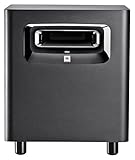
- This patented JBL port design works in concert with the LSR310S low frequency driver for deep, dynamic bass response at all playback levels. The double-flared shape of the port is precisely calculated...
- A JBL first, the XLF setting activates a specially-engineered tuning that emulates the ample bass tuning used in today's dance clubs. When producing a dance track, the XLF setting will inspire you and...
The JBL LSR310S is a different beast entirely. Featuring a 10-inch down-firing driver and a 200W amplifier, it moves considerably more air than the ADAM Sub7. We found that the JBL is better suited for slightly larger rooms where you need that extra physical “oomph.” It also features a unique “XLF” (Extended Low Frequency) setting that mimics the bass response found in club environments. However, it lacks the surgical transparency and the wireless remote of the ADAM Audio Sub7 Powered Studio Sub. If you are producing EDM or Hip-Hop and want to feel the floor shake, the JBL is a strong contender, but for detailed acoustic mixing or working in very tight spaces, the ADAM remains our preference.
2. PreSonus Eris Sub 8 Compact Studio Sub

- 8-inch, front-firing, paper-composite transducer with high-elasticity rubber surround delivers smooth low-frequency transients.Waterproof : No
- 100W Class AB amplifier (50W RMS) gives robust output with minimal distortion.
The PreSonus Eris Sub 8 is the budget-friendly alternative in this category. With an 8-inch driver, it offers a surprisingly good performance for its price point. It’s a great “first sub” for home hobbyists. However, in our comparison, the build quality and amplifier technology of the ADAM Audio Sub7 Powered Studio Sub are clearly in a higher league. The Eris Sub 8 can sometimes feel a bit “loose” at higher volumes, and it lacks the balanced XLR outputs for daisy-chaining monitors found on the ADAM. If your budget is strictly under $200, the PreSonus is the way to go, but if you are a professional, the investment in the Sub7 is justified by its superior accuracy.
3. Mackie CR-X Series 8-Inch Multimedia Subwoofer
The Mackie CR8S-XBT is aimed more at the “prosumer” and multimedia market. Its standout feature is integrated Bluetooth connectivity and a desktop volume control knob. This makes it incredibly convenient for casual listening, gaming, or quick reference checks. However, for serious mixing and mastering, the Bluetooth latency and the less-refined driver design are drawbacks. Compared to the ADAM Audio Sub7 Powered Studio Sub, the Mackie is more of a “fun” subwoofer than a “reference” tool. If you want a sub that can pull double duty for gaming and light video editing, the Mackie is a versatile choice, but it doesn’t offer the flat, honest frequency response required for high-end audio production.
The Final Verdict: Is the ADAM Audio Sub7 Right for You?
After weeks of intensive testing, our conclusion is clear: the ADAM Audio Sub7 Powered Studio Sub is arguably the best compact subwoofer on the market for small control rooms. It successfully bridges the gap between “not enough bass” and “too much room interference.” Its greatest strengths are its transparency, the incredible convenience of the wireless remote, and its ability to integrate seamlessly with high-end nearfield monitors. While it may not be the loudest sub in its price bracket, it is certainly one of the most accurate. We recommend it unreservedly for bedroom producers, voice-over artists, and mix engineers who need to trust their low-end without rearranging their entire room to fit a massive cabinet.
If you are tired of guessing how your kick drums sound and want to take your productions to a professional level, the Sub7 is the tool you’ve been looking for. Don’t let its small size fool you; this is a serious piece of engineering that delivers results. Ready to stop mixing in the dark? You can check the current price of the ADAM Audio Sub7 Powered Studio Sub and start hearing the full story of your music today.
Last update on 2026-10-16 / Affiliate links / Images from Amazon Product Advertising API