
PreSonus Eris Pro 10-inch Active Studio Sub Review: The Bottom-End Authority Your Mix Deserves
We have all been there: you spend hours crafting what you think is a world-class mix on your trusty 8-inch monitors. It sounds clear, the vocals are crisp, and the snare snaps just right. But then, you take that track to your car or a club system, and suddenly, the bottom end is either a muddy mess or completely non-existent. This “translation” issue is the bane of the home and semi-pro studio. Most nearfield monitors, even those rated down to 40Hz, simply don’t have the physical excursion or the power to represent the sub-bass frequencies accurately. We found that without a dedicated sub, you are essentially mixing in the dark when it comes to everything below 60Hz. This leads to overcompensating by boosting the bass, which results in a mix that falls apart on larger systems. To solve this, you need more than just a loud box; you need a precision tool like the PreSonus Eris Pro 10-inch Active Studio Sub to act as the foundation of your monitoring environment.
Solving the mystery of the “missing bass” is crucial because the low-end carries the energy of modern music. If you can’t hear it, you can’t control it. Before you commit to another set of expensive mains, see its full feature set and user reviews to understand how a dedicated sub can transform your workflow.

- Big sub-low end. 10-inch, front-firing, glass-composite, low-frequency transducer.
- Front-firing, bass-reflex acoustic port.
What to Consider Before Investing in a Professional Studio Subwoofer
A Studio Subwoofer is more than just an item; it’s a key solution for professional-grade audio production, providing the necessary extension to hear the full spectrum of your work. Unlike consumer subwoofers designed for “boom,” a studio sub is designed for “truth.” It needs to be fast, accurate, and capable of stopping on a dime to reveal the true transient nature of a kick drum or a synth bass. Without this accuracy, you are simply adding noise to your room rather than clarity to your mix.
The ideal customer for this type of product is someone facing translation issues in their mixes, particularly those working in electronic music, hip-hop, or film scoring where sub-harmonics are vital. It is also an essential upgrade for those using smaller 5-inch or 7-inch monitors that lack physical low-end reach. However, it might not be suitable for those who work in completely untreated, tiny rooms where standing waves will turn the added bass into an uncontrollable acoustic nightmare. In those cases, high-end open-back headphones might be a temporary alternative, but they still won’t give you the physical “feel” of the air moving.
Before investing, consider these crucial points in detail:
- Dimensions & Space: A 10-inch subwoofer like the PreSonus Eris Pro 10-inch Active Studio Sub requires a significant footprint and careful placement. You need to ensure you have at least a few feet of clearance from corners to prevent “boundary gain” from making the bass sound bloated.
- Capacity/Performance: Look for the RMS power and the frequency floor. A sub that hits 20Hz allows you to hear the rumble that most speakers miss. The crossover flexibility is also vital; you need to be able to seamlessly blend the sub with your existing mains.
- Materials & Durability: Studio environments can be demanding. Look for high-quality enclosure materials like vinyl-laminated MDF, which minimizes cabinet resonance. The driver material, such as glass-composite, is also key for maintaining stiffness and reducing distortion at high volumes.
- Ease of Use & Maintenance: Consider the I/O (Input/Output) options. Having balanced XLR and TRS connections is a must for pro gear to avoid ground loops and hum. Features like a bypass footswitch are also incredibly helpful for long-term ear fatigue management and A/B testing.
Choosing the right subwoofer is a balance of power, precision, and room integration. While the PreSonus Eris Pro 10-inch Active Studio Sub is an excellent choice, it’s always wise to see how it stacks up against the competition. For a broader look at all the top models, we highly recommend checking out our complete, in-depth guide:

- 8inch bass-reflex powered subwoofer


- HONEST. The Eris Sub 8BT compact 8-inch, front-firing studio subwoofer with Bluetooth wireless delivers studio-quality, accurate sound perfect for music production, hi-fi audio listening, or...

- 10" glass aramid composite woofer
First Impressions: Unboxing the PreSonus Eris Pro 10-inch Active Studio Sub
When the PreSonus Eris Pro 10-inch Active Studio Sub arrived at our studio, the first thing we noticed was the sheer weight and build quality. At 37 pounds, this isn’t a plastic toy; it’s a substantial piece of professional kit. The vinyl-laminated MDF cabinet feels incredibly solid, and the front-firing port design is a welcome sight for those of us who have to place our subs relatively close to walls. Unboxing was straightforward, and PreSonus includes a dedicated momentary footswitch, which is a rare and highly appreciated addition at this price point.
Initially, the black finish and industrial aesthetic blended perfectly with our existing monitors. Comparing it to previous versions of the Eris line, the “Pro” designation is clearly earned through the upgraded 170W RMS Class AB amplification and the refined 10-inch glass-composite driver. It feels more “grown-up” and ready for a serious production environment. If you’re looking for a sub that looks as good as it sounds, you might want to check the latest price and availability to see if it fits your budget.
Key Benefits We Loved
- Incredibly deep reach down to 20Hz, allowing you to hear “sub” frequencies other monitors miss.
- The included footswitch allows for instant bypass, which is essential for checking mix compatibility.
- Front-firing bass reflex port makes placement much easier in smaller, rectangular rooms.
- Comprehensive I/O options, including XLR, TRS, and RCA, ensure it fits into any setup.
Points to Consider
- The 170W power is massive; it is very easy to “over-sub” your room if not calibrated carefully.
- The unit is quite large and heavy, requiring a dedicated floor space.
A Deep Dive into the PreSonus Eris Pro 10-inch Active Studio Sub’s Performance
Acoustic Precision and the 20Hz Threshold
In our testing, the standout feature of the PreSonus Eris Pro 10-inch Active Studio Sub was its ability to accurately reproduce the lowest octave of human hearing. Most “budget” subs claim to hit 30Hz but often roll off significantly before that, or worse, they produce a “one-note” bass that lacks definition. We found that the 10-inch glass-composite transducer in this unit provides an incredibly fast transient response. When we threw heavy 808 kicks and deep synth drones at it, the sub didn’t just “boom”—it defined the pitch and the attack. This is largely due to the stiffness of the glass-composite material, which prevents the cone from warping under the high pressure of low-frequency reproduction.
We spent several days testing it with a variety of genres. In orchestral film scores, the sub revealed the low-end rumble of the room and the “weight” of the double basses that we simply hadn’t heard on our 8-inch mains alone. For electronic music, the 20Hz extension is a game-changer. You can finally hear the “air” moving at the very bottom of the frequency spectrum, which is a feature that really sets it apart from smaller 8-inch alternatives. The front-firing port also ensures that the air moves toward you, rather than bouncing off the back wall and creating phase issues that can be a nightmare to manage in smaller studios.
The Magic of the High-Pass Filter and Crossover
One of the most common mistakes we see in studio setups is simply “adding” a sub to existing monitors without filtering them. This creates a messy overlap in the 60Hz to 100Hz range. The PreSonus Eris Pro 10-inch Active Studio Sub solves this with its sophisticated internal crossover. We utilized the switchable 80Hz high-pass filter, which sends only the frequencies above 80Hz to your main monitors. This was a revelation. By removing the heavy lifting of low-end frequencies from our main monitors, they suddenly sounded clearer, with better midrange detail and more headroom.
As one user noted, using the high-pass filter helped their M-Audio monitors “be more in their element.” We found this assessment to be spot on. When your mains don’t have to struggle to reproduce 40Hz, they can focus on the critical vocal and instrument frequencies. The continuously variable low-pass filter (50Hz to 130Hz) on the sub itself allowed us to dial in the perfect “handshake” between the sub and our mains. This level of control ensures that you don’t hear “the sub” as a separate entity; instead, you just feel like your main monitors have suddenly grown to be twice their original size. For those wanting to achieve this level of integration, we recommend you explore the detailed technical specs regarding its crossover capabilities.
Connectivity and the Essential Bypass Workflow
Connectivity is often where mid-range gear cuts corners, but not here. We were impressed to find balanced XLR and 1/4-inch TRS inputs and outputs, alongside unbalanced RCA inputs. This means you can hook it up to a high-end audio interface like an SSL 2+ or a more consumer-oriented DAC without needing a bag full of adapters. We tested the XLR pass-through to our monitors and found zero added noise or coloration. The ground-lift switch also saved us during one session where a persistent hum threatened to derail our calibration—one flip of the switch and the signal was dead silent.
The real star of the show, however, is the footswitch bypass. We cannot overstate how important this is for professional mixing. By tapping the pedal, you can instantly turn the sub off and disable the high-pass filter on the mains, returning your system to full-range monitoring on the primary speakers only. We found this essential for checking if our mixes still had enough “meat” on smaller systems. It’s also a lifesaver when you’re just watching content or doing basic editing where you don’t need the walls shaking. This workflow efficiency is something we rarely see included out-of-the-box, making it a high-value proposition for any serious producer.
Power Management and Room Tuning
With 170W of RMS Class AB power, the PreSonus Eris Pro 10-inch Active Studio Sub has headroom to spare. In our 12×15 foot testing room, we never had to push the gain past the 12 o’clock position. In fact, for most calibrated mixing, we had it set slightly below unity. This extra power is crucial because it means the sub is never “straining.” It remains linear and clean even during high-transient peaks. We also appreciated the polarity invert switch, which is vital for fixing phase cancellations that occur depending on where the sub is placed relative to your monitors.
We also tested the “Auto” power mode, which puts the sub into standby when no signal is detected. Unlike some other subs we’ve tested that take too long to “wake up” or produce a loud “thump” when they turn on, the Eris Pro Sub 10 was seamless. It woke up instantly with the first note of music and stayed silent when we were done for the day. This level of refinement shows that PreSonus actually listens to the frustrations of studio owners. If you are tired of gear that pops and clicks, you can find more details on its power management here.
What Other Users Are Saying
The general consensus among the pro-audio community is one of genuine surprise at the power-to-price ratio of this unit. Users who upgraded from smaller 8-inch subwoofers frequently mention the “shock” and “goosebumps” they felt when hearing the true low-end reach of the Eris Pro 10. One user mentioned that they previously had 8-inch subs that “lacked oomph below 70Hz,” but after switching to the PreSonus Eris Pro 10-inch Active Studio Sub, they finally had a representative bass response.
The feedback regarding the footswitch is overwhelmingly positive, with many users noting that it is “useful even when watching YouTube” to cut out unnecessary low-frequency speech rumble. On the negative side, a few users noted that it is “super easy to dial in way too much bass,” which reinforces our expert finding that calibration is key. You can’t just plug this in and crank it; it requires a disciplined ear to set the levels correctly so it complements, rather than overwhelms, your monitors. Overall, the sentiment is that this is a “beast” of a subwoofer that provides “the best sound available” for its size and price bracket. To see how others are integrating it into their setups, read more real-world user experiences.
Comparing the PreSonus Eris Pro 10-inch Active Studio Sub to the Competition
1. JBL LSR310S Studio Monitor Subwoofer
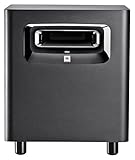
- This patented JBL port design works in concert with the LSR310S low frequency driver for deep, dynamic bass response at all playback levels. The double-flared shape of the port is precisely calculated...
- A JBL first, the XLF setting activates a specially-engineered tuning that emulates the ample bass tuning used in today's dance clubs. When producing a dance track, the XLF setting will inspire you and...
The JBL LSR310S is the most direct competitor to the PreSonus. It features a unique “Extended Low Frequency” (XLB) setting that mimics the bass response of a club system. However, we found that the JBL is a down-firing design, which can be more temperamental depending on your flooring material (carpet vs. hardwood). The PreSonus Eris Pro 10’s front-firing design and included footswitch give it a slight edge for dedicated studio accuracy and workflow, whereas the JBL might be preferred by those who want to “feel” the floor shake more intensely during playback sessions.
2. PreSonus Eris Sub 8 Compact Studio Sub

- 8-inch, front-firing, paper-composite transducer with high-elasticity rubber surround delivers smooth low-frequency transients.Waterproof : No
- 100W Class AB amplifier (50W RMS) gives robust output with minimal distortion.
If you are working in a very small bedroom or a tight “closet studio,” the Eris Sub 8 is the younger sibling of our main review subject. While it shares the same design philosophy, it lacks the 20Hz reach and the sheer physical presence of the 10-inch version. It is an excellent choice for those using 3-inch or 4-inch monitors who just need a little more “body,” but for anyone serious about professional mixing and sub-bass translation, the Pro 10 is a significant and necessary step up in performance and features.
3. Mackie CR-X 8-Inch Multimedia Subwoofer
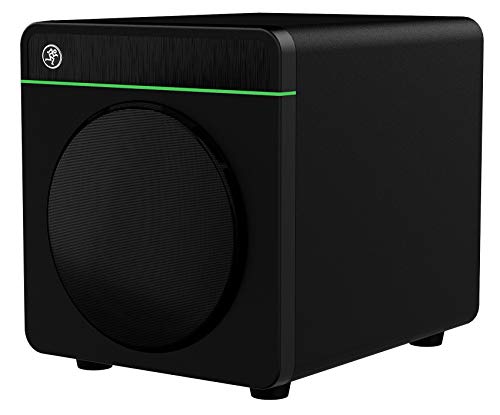
- Professional studio-quality sound
- Adds Bluetooth streaming to any studio monitors
The Mackie CR8S-XBT is aimed more at the “prosumer” and content creator market. It includes Bluetooth connectivity, which the PreSonus lacks, making it great for casual listening or quickly checking a mix from a phone. However, in terms of pure audio fidelity and “truth,” the PreSonus Eris Pro 10-inch Active Studio Sub is in a different league. The Mackie is great for a desktop setup where convenience is king, but it lacks the sophisticated crossover and high-pass filtering necessary for a professional mixing environment.
The Final Verdict: Is the PreSonus Eris Pro 10-inch Active Studio Sub Worth It?
After weeks of testing and integrating the PreSonus Eris Pro 10-inch Active Studio Sub into our daily workflow, the verdict is clear: this is one of the most cost-effective ways to truly professionalize your studio’s monitoring. Its ability to reach down to 20Hz with clarity and transient speed is something usually reserved for subwoofers twice its price. The addition of the bypass footswitch and the comprehensive high-pass filtering makes it not just a speaker, but a management system for your entire monitoring setup.
While it is powerful enough to overwhelm a small room if not handled with care, its flexibility allows it to be dialed in for almost any environment. We recommend it to any producer who is tired of their mixes sounding “thin” or “surprising” when played on other systems. This sub provides the honesty you need to make confident decisions in the low-end. If you are ready to stop guessing and start hearing your full mix, we highly suggest you get the PreSonus Eris Pro 10-inch Active Studio Sub today and give your studio the foundation it deserves.
Last update on 2026-10-16 / Affiliate links / Images from Amazon Product Advertising API