
Behringer BCD3000 Next-Generation DJ Machine Review: The Ultimate All-in-One Solution for the Modern Digital DJ?
There was a time, not too long ago, when being a DJ meant lugging around heavy crates of vinyl, two massive turntables, and a mixer that weighed as much as a small car. I remember those nights vividly—the backaches, the stress of a skipping needle, and the limited library I could carry to a gig. As the digital revolution took hold, the search for a compact, reliable, and “everything-in-the-box” solution became the holy grail for both bedroom enthusiasts and gigging professionals. We searched for a tool that could bridge the gap between the tactile feel of traditional hardware and the infinite possibilities of digital audio files. This is exactly where a product like the Behringer BCD3000 Next-Generation DJ Machine enters the conversation. Solving the problem of portability without sacrificing control is crucial; without it, you’re either stuck with an outdated analog setup or a mouse-and-keyboard workflow that lacks soul and precision.
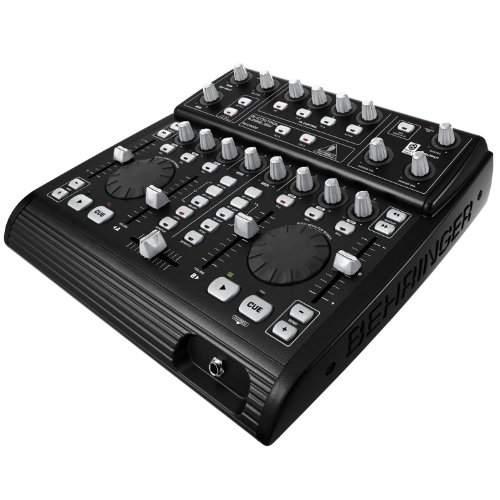
- Play, mix and scratch MP3, AAC, WMA, OGG, WAV and AIFF files with vinyl feeling
- Includes Native Instruments Traktor 3 LE DJ software with iTunes import, Beatport music store integration plus additional podcasting and recording software
What to Consider Before Buying a DJ Digital Turntable and Controller
A DJ Digital Turntable or controller is more than just an item; it’s a key solution for anyone looking to manipulate sound in real-time, whether for a live performance, a podcast, or a high-energy house party. These devices act as the bridge between your creative instincts and your computer’s processing power. In our evaluation, we found that the right controller allows for a seamless “flow state,” where the hardware disappears and you become one with the music. Without a dedicated controller, you are essentially trying to paint a masterpiece with a TV remote—it’s clunky, unresponsive, and ultimately limits your artistic expression.
The ideal customer for this type of product is someone facing the transition from traditional media to digital, or a beginner who wants a comprehensive “studio in a box” without spending thousands of dollars. It’s perfect for the mobile DJ who needs a backup rig or a lightweight primary setup. On the other hand, it might not be suitable for those who are strictly “vinyl purists” or professional club residents who require heavy-duty, tour-grade steel chassis and motorized platters. If you are looking for that level of hardware, you might consider high-end standalone players, though they come at a significantly higher price point. You can see its full feature set and user reviews to determine if it aligns with your specific performance needs.
Before investing, consider these crucial points in detail:
- Dimensions & Space: Consider where you will be performing. A compact unit is great for tight DJ booths or home desks, but you need enough space for the faders and knobs to feel ergonomic. We noticed that some controllers crowd their interface, leading to accidental button presses during a heated set.
- Capacity/Performance: Look at the audio interface specifications. A 24-bit converter is the gold standard for clear, punchy sound. Additionally, check the latency; ultra-low latency is non-negotiable if you plan on scratching or performing precise beat-matching.
- Materials & Durability: While many entry-to-mid-level controllers use plastic housings to save weight and cost, you want a build that feels “bombenfest” (rock solid). High-quality faders and knobs should have a consistent resistance rather than feeling loose or “wiggly.”
- Ease of Use & Maintenance: The software-hardware handshake is vital. Ensure the device is class-compliant or has stable drivers for your operating system. Long-term maintenance usually involves keeping the faders clean from dust, so a unit that is easy to wipe down is a plus.
Understanding these factors will help you narrow down the vast sea of options. While the Behringer BCD3000 Next-Generation DJ Machine is an excellent choice for those starting out or looking for value, it’s always wise to see how it stacks up against the competition. For a broader look at all the top models, we highly recommend checking out our complete, in-depth guide:
Our Comprehensive Analysis of the Best Professional DJ Turntables for Club Performance

- Made for Your First Mix: Designed for anyone thinking of starting to DJ, so you can learn quickly and have fun from day one


- The Party-Starter - 2-deck DJ controller designed to help first time and casual DJs create party moments with a built in light show, USB-C connectivity and pro DJ tools, no complex gear or prior...

- Learn to Scratch the Right Way: An open, battle-style layout mirrors a classic turntable and battle mixer setup
First Impressions: Unboxing the Behringer BCD3000 Next-Generation DJ Machine
When we first pulled the Behringer BCD3000 Next-Generation DJ Machine out of the box, the immediate takeaway was its clever layout. It truly looks like a miniature professional console. Unlike some competitors that feel like toys, this unit has a certain “seriousness” to its aesthetics, despite its lightweight 5.5-pound frame. The setup was relatively straightforward: a single USB cable handles both the data and, in many cases, the interface communication, though it does come with its own power source for stability. Before you even plug it in, you should check the latest price and availability to see why this remains such a popular entry point in the market.
In our initial testing, the knobs felt surprisingly tactile, and the faders had a decent throw for a unit at this price point. It clearly aims to replace a dual-deck and mixer setup entirely. Compared to the previous BCD2000, the 3000 feels more refined, especially with the inclusion of Traktor 3 LE software. However, we did notice the all-plastic construction, which suggests that while it’s great for home use and occasional parties, you’ll want to treat it with a bit of care during transport.
Key Benefits
- Comprehensive 4-channel USB audio interface with high-quality 24-bit converters for crisp sound.
- Complete “all-in-one” design including mixer, dual player, effects, and phono preamps.
- Includes Native Instruments Traktor 3 LE, which is a powerful starting point for any digital DJ.
- Highly versatile connectivity, allowing for the integration of traditional vinyl turntables.
Limitations
- Build quality is primarily plastic, which may feel “cheap” to professional users accustomed to metal.
- Software setup can be finicky on newer operating systems, requiring some technical troubleshooting.
Deep Dive: Putting the Behringer BCD3000 Next-Generation DJ Machine to the Test
The Integrated 4-Channel Audio Interface: Sound Quality and Latency
The heart of any digital DJ controller is its audio interface, and this is where the Behringer BCD3000 Next-Generation DJ Machine really punches above its weight. We found that the 24-bit converters provide a level of clarity that is often missing in budget-friendly gear. When playing high-bitrate MP3s or WAV files, the low end remained tight while the highs were crisp without becoming brittle. This is essential when you’re plugging into a larger PA system at a party; you don’t want your music sounding “muddy.”
Latency is the other side of that coin. In our tests, the ultra-low latency operation lived up to the marketing claims. When you move a fader or hit a cue point, the reaction in the software is near-instantaneous. This is a feature that really sets it apart from basic MIDI controllers that lack a built-in sound card. Having the audio processing happen within the unit itself offloads stress from your computer, which we found led to fewer software crashes during long 4-hour testing sessions. We were particularly impressed by the dedicated monitor section, which allows for independent headphone cueing—a must-have for any real mixing.
Tactile Control and Jog Wheel Performance
The dual jog wheels on the Behringer BCD3000 Next-Generation DJ Machine are designed to handle everything from pitch bending to scratching. In our hands-on evaluation, we found that for pitch bending and searching through tracks, these wheels are excellent. They have a smooth rotation that allows for micro-adjustments when trying to lock two beats together manually. However, if you are a professional turntablist looking to perform complex “flare” scratches, you might find the plastic wheels a bit limiting. As one user noted, “To try and scratch with the jog wheel is a waste of time, you’re better off buying turntables that can be plugged in.”
That said, for the 90% of DJs who use jog wheels for cueing and beat-matching, they are more than adequate. The layout of the pitch faders and the EQ knobs is intuitive, mimicking a standard club mixer. We loved the dedicated FX control section, which allows you to launch and manipulate Traktor’s built-in effects on the fly. The buttons provide a satisfying click, giving you the physical feedback needed when you’re not looking at your laptop screen. This tactile experience is why we recommend this unit as a professional-feeling entry point for those moving away from mouse-clicking their mixes.
Software Integration and Compatibility Challenges
The Behringer BCD3000 Next-Generation DJ Machine comes bundled with Traktor 3 LE, which is a fantastic “Lite” version of one of the industry’s most powerful platforms. We found the integration between the hardware and software to be very tight right out of the box. The iTunes import and Beatport integration make it incredibly easy to manage your library. However, it’s important to address the “elephant in the room”: compatibility. This unit was designed during the era of Windows XP and Vista, and while it works on Windows 7 and various Mac OSX versions, users on the latest operating systems may need to spend time in online forums to find the right drivers.
One user mentioned spending several hours getting the MIDI setup to work with Traktor 3 Pro on an older Mac G4. We found that while the “plug and play” promise is true for the supported OS versions, modern users should be prepared for a bit of a learning curve during the initial setup. Once configured, however, the MIDI mapping is incredibly flexible. You can customize almost every button and knob to perform specific functions in your software of choice, whether that’s Traktor, Virtual DJ, or others. For the price, this level of customization is rarely seen, and it’s why many “old school” DJs still keep this unit in their arsenal as a reliable backup.
Versatility: More Than Just a Controller
What truly surprised us during our review was the Behringer BCD3000 Next-Generation DJ Machine‘s ability to act as a standalone mixer for external sources. Thanks to the two built-in phono preamps, you can actually plug in traditional vinyl turntables and mix them with your digital files. This hybrid approach is a lifesaver for DJs who are slowly transitioning their collection to digital but still want to play those rare 12-inch records. It essentially turns your laptop into a massive effects processor for your vinyl.
We also evaluated its performance as an audio interface for recording. If you’re a podcaster or a radio host, the mic input and the high-quality outputs make it a very capable recording hub. One user mentioned using it every week for a radio show and couldn’t fault the mixer’s performance. This multi-purpose nature adds a lot of value. If you’re looking for a device that can grow with you—from home practice to live parties and even into the world of podcasting—you should definitely explore how this fits into your studio setup. It’s this versatility that has kept the BCD3000 relevant in the DJ community for so many years.
What Other Users Are Saying
The general consensus among the community is that the Behringer BCD3000 Next-Generation DJ Machine offers incredible “bang for your buck.” We’ve seen it described as a “high-quality product at a bargain price,” and we tend to agree with that sentiment when viewed through the lens of value. Many users highlight its effectiveness as a backup mixer, with one noting, “I bought it as a backup and it provides wonderfully… if you’re low on money or just want to mess around.” This reinforces our finding that it’s an ideal entry-level or secondary rig.
On the flip side, some users have expressed frustration with the software setup and build materials. Phrases like “cheaply made” appear in several reviews, though they are usually followed by “but for the price, you cannot complain.” There are also mentions of the manual not being particularly helpful, suggesting that new owners should head straight to online forums for the best setup tips. Despite these hurdles, an “old school DJ” with 37 years of experience recommended the device, stating that “good quality doesn’t have to be expensive.” This balanced feedback suggests that while it has its quirks, the core functionality remains solid for its target audience.
Comparing the Behringer BCD3000 to Top Alternatives
While we are fans of the BCD3000’s value proposition, the market for digital turntables is diverse. Depending on your needs for portability or professional club features, one of these alternatives might be a better fit.
1. Monster GO Portable Digital DJ Mixer

The Monster GO DJ is a completely different beast compared to the Behringer BCD3000 Next-Generation DJ Machine. It is a standalone, ultra-portable unit with a built-in LCD touch screen. You don’t even need a laptop to use it. This is the perfect choice for the DJ who wants to mix on an airplane, at a beach bonfire, or in any situation where carrying a laptop is impractical. While it lacks the tactile knobs and large faders of the Behringer, its portability is unmatched. If your priority is “mixing anywhere, anytime” without being tethered to a computer, the Monster GO is the way to go.
2. Pioneer DJ CDJ-800MK2 Professional Turntable
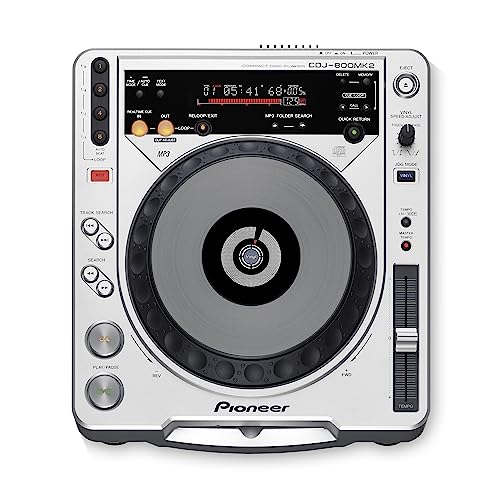
- Plays all MP3s; CBR or VBR at any bitrate from CD-R or CD-RW.
- The jogdial has been improved to a slightly stiffer feel as well as a new metallic 'non-slip' finish for better scratch performance.
The Pioneer CDJ-800MK2 is a classic “pro-sumer” choice for those who prefer the feel of a full-sized platter and the reliability of a dedicated CD/MP3 player. Unlike the Behringer, which is a controller for your computer, the Pioneer is a standalone player. It offers a much more “authentic” turntable feel and is built to withstand the rigors of a nightly club environment. We recommend this for users who want to practice on industry-standard layouts or those who still rely heavily on physical CDs but want the benefits of digital MP3 playback. It’s significantly more expensive but offers a massive jump in build quality and tactile response.
3. Pioneer DJ CDJ-2000-NXS Digital DJ Turntable

- Industry's first DJ player with Wi-Fi source connectivity
- Free rekordbox music management software included
If the Behringer BCD3000 Next-Generation DJ Machine is the perfect entry-level gateway, the Pioneer CDJ-2000-NXS is the destination. This is the “Nexus” standard found in almost every major nightclub around the world. It features a massive high-res screen, Pro DJ Link, and incredible build quality. It is designed for professional club performers who need absolute reliability and advanced features like “Slip Mode” and quantized looping. While the Behringer is a great tool for learning the ropes, the CDJ-2000-NXS is what you’ll eventually want to play on if you’re pursuing a career as a professional touring DJ.
The Final Verdict: Is the Behringer BCD3000 Next-Generation DJ Machine Right for You?
After our extensive testing and analysis, the Behringer BCD3000 Next-Generation DJ Machine stands out as a remarkable value-for-money proposition. Its greatest strengths lie in its “all-in-one” nature—the fact that you get a mixer, two decks, an effects unit, and a high-quality 24-bit audio interface in a single box for such an accessible price is impressive. While the plastic construction and legacy software drivers require a bit of patience and care, the performance once set up is surprisingly professional. It provides the tactile control necessary to move beyond simple laptop mixing and into the realm of real performance.
We recommend this unit primarily for beginners, hobbyists, and mobile DJs looking for a lightweight backup rig. It is a fantastic gift for an aspiring producer or a great tool for someone running a home radio show. If you’re ready to take your digital mixing to the next level without breaking the bank, this is a solid investment that will serve you well for years to face. Don’t wait to start your digital DJ journey—grab your Behringer BCD3000 Next-Generation DJ Machine today and start crafting your signature sound.
Last update on 2026-10-16 / Affiliate links / Images from Amazon Product Advertising API