
OnStage XCG4 Single Guitar Stand Review: Why This Iconic Tripod Remains a Studio Essential
We have all been there. You finish a long practice session, your fingers are slightly sore, and you are ready to take a break. You look around the room, and without thinking, you lean your prized Fender Stratocaster or your vintage Gibson against the sofa or, worse, directly against the wall. It feels secure for a moment. But then, an hour later, you hear it: that heart-stopping “thud” followed by the metallic ring of strings vibrating against the floor. Whether it is a cracked headstock, a bent tuning peg, or just a nasty chip in the finish, the damage is done. Protecting your investment is not just about keeping it in a case; it is about having a reliable spot to set it down during active use. This is exactly where the OnStage XCG4 Single Guitar Stand enters the frame, offering a blend of stability and affordability that seeks to solve the “leaning guitar” dilemma once and for all. Before you risk another gravity-induced tragedy, you can check the latest price and availability of this protective gear online.

- Trusted. On-Stage’s most popular, best-selling guitar stand as seen in countless venues, studios, and homes, known for dependably and safely keeping guitars and basses at the ready.
- Secure. Nonslip yoke padding provides soft contact points that protect the instrument finish from scratches while increasing traction to ensure instruments are stable.

What to Consider Before Buying a Stand for Single Guitars & Basses
A stand for single guitars and basses is more than just an item; it’s a key solution for both the performing musician and the home hobbyist. It serves as the primary line of defense against accidental falls and provides a dedicated stage for your instrument to be displayed and accessed instantly. When your guitar is on a stand rather than tucked away in a case, you are significantly more likely to pick it up and play. However, not all stands are created equal. The wrong choice can lead to chemical reactions with your guitar’s finish or a structural failure that results in the very damage you were trying to avoid.
The ideal customer for this type of product is someone facing limited storage space or someone who wants their instrument “at the ready” in a studio or living room. It is perfect for gigging musicians who need a lightweight, portable solution for the stage. However, it might not be suitable for those who own extremely heavy, non-standard instruments that require a wall-mounted solution for maximum floor-space efficiency, or for those with nitrocellulose finishes who are hyper-cautious about any contact with rubberized padding.
Before investing, consider these crucial points in detail:
- Dimensions & Space: The footprint of a tripod stand is often larger than an A-frame. You need to ensure that the area where you plan to place the stand can accommodate the leg spread. A wider base usually equates to better stability, but it can be a tripping hazard in cramped spaces.
- Capacity & Performance: Consider the weight of your instrument. While most stands handle standard electrics and acoustics (around 7-10 lbs) with ease, heavy mahogany basses or double-neck guitars require a stand with a higher load-bearing capacity and a lower center of gravity.
- Materials & Durability: Look for heavy-duty steel construction rather than thin plastics. The quality of the “velveteen” or rubber padding is also vital. Lower-quality plastics can “outgas” and eat through delicate finishes over time, so high-quality, non-slip materials are a must.
- Ease of Use & Maintenance: A good stand should be “set it and forget it.” Look for intuitive height adjustment locks and swiveling yokes that accommodate different body shapes. Periodically check the tightness of the screws and the integrity of the foam padding to ensure long-term reliability.
While the OnStage XCG4 Single Guitar Stand is an excellent choice for those seeking a classic tripod design, it’s always wise to see how it stacks up against the competition. For a broader look at all the top models, including ultra-portable options, we highly recommend checking out our complete, in-depth guide:

- Extended Chassis More Stable Guitar Stand:🎵Compared with other guitar stands we extended chassis feet making more stability hold electric guitar ,continual improvement lightweight and durable steel...

- Lightweight & Portable for Everyday Use: Designed as a foldable, lightweight guitar stand for easy transport and storage. Ideal for home use, practice sessions, and temporary setups rather than...
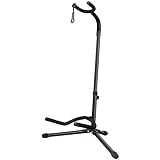
- Traditional Guitar Stand Design: Featuring the most classic style, it is ideal for displaying and storing guitars. Suitable for use at home, in studios and recording rooms, as well as in music stores...
First Impressions: Unboxing the OnStage XCG4 Single Guitar Stand
When we first got our hands on the OnStage XCG4 Single Guitar Stand, the first thing we noticed was the simplicity of the design. This is a “classic” for a reason. Out of the box, it comes in just a few pieces that are incredibly intuitive to put together. You have the heavy-duty tripod base, the adjustable center shaft, and the lower yoke. We found the assembly to be a breeze, taking less than two minutes without even glancing at a manual. To see exactly what comes in the box and how it looks once assembled, you can see its full feature set and user reviews here.
The black powder-coated finish gives it a professional, “road-ready” look that blends into the background of a stage or a home studio. It feels surprisingly substantial for its 900-gram weight. While some premium boutique stands use wood or elaborate locking mechanisms, the OnStage XCG4 Single Guitar Stand relies on tried-and-true friction locks and gravity. Compared to previous versions we have tested, the machining on the latest XCG4 seems more consistent, though we did note the tight tolerances on the folding legs that some users have mentioned. Overall, the initial feel is one of utilitarian reliability.
Key Benefits
- Exceptional value-to-price ratio for a heavy-duty steel stand.
- Self-adjusting lower yoke accommodates offset body shapes like Jazzmasters.
- Height-adjustable shaft works for both full-scale basses and smaller acoustics.
- Security strap on the upper yoke provides peace of mind against forward tipping.
Limitations
- Tripod legs have a wide footprint that can take up significant floor space.
- The rear leg can be stiff to deploy initially, occasionally requiring a firm hand.
A Deep Dive into the Performance of the OnStage XCG4 Single Guitar Stand
Structural Stability and the Tripod Advantage
In our rigorous testing, the primary concern is always stability. A stand can have all the features in the world, but if it tips over when a cat walks by, it is useless. We found that the OnStage XCG4 Single Guitar Stand utilizes its tripod base to great effect. By creating a wide triangular footprint, it creates a low center of gravity that is difficult to disrupt. Even when we placed a heavy 5-string bass on the stand, the weight was distributed evenly across the three legs. Some users have noted that the “long bottom” of the legs takes up room, but we consider this a fair trade-off for the security it provides. We found that the stand resists side-to-side wobbling significantly better than many budget A-frame models.
We specifically tested the stand with a variety of floor surfaces. On hardwood, the rubber feet provided excellent traction, preventing the stand from sliding when we reached for the guitar. On carpet, the legs dug in just enough to remain stable without feeling flimsy. This stability is a feature that really sets it apart from the lighter, plastic alternatives that often feel top-heavy once an instrument is loaded. If you are worried about your guitar’s safety in a busy household, this level of structural integrity is exactly what you should be looking for.
The Versatility of the Height-Adjustable Shaft
One of the most impressive aspects of our time with the OnStage XCG4 Single Guitar Stand was its adaptability. Not every instrument is the same length, and a “one size fits all” approach often leaves shorter instruments dangling or longer instruments touching the floor. The friction-lock height adjustment on the center shaft is smooth and holds firm. We were able to quickly transition the stand from holding a standard electric guitar to a long-scale acoustic bass simply by loosening the knob and sliding the shaft up. This makes it an ideal choice for multi-instrumentalists who need a single stand that can “do it all.”
During our evaluation, we found that the adjustment range is generous enough to keep even the largest dreadnought acoustics safely off the ground. The security strap on the upper yoke is another thoughtful touch. While we found the yoke itself to be deep enough to hold most necks securely, the rubber strap provides that extra “fail-safe” layer. If someone accidentally bumps the stand from behind, the strap prevents the guitar from sliding forward out of the yoke. It is a simple, low-tech solution that works perfectly in practice.
Finish Protection and Yoke Design
For many guitarists, the finish of their instrument is sacrosanct. We took a close look at the “velveteen” rubber padding on the OnStage XCG4 Single Guitar Stand. The padding is thick and has a matte texture that provides excellent grip, ensuring the guitar doesn’t “shuffle” or slide around once placed. More importantly, we found the padding to be gentle on modern poly finishes. While we always recommend caution with vintage nitrocellulose finishes (as they can react with almost any rubber), for the vast majority of players, this stand offers a safe resting place that won’t leave marks or scratches. For more details on the material specs, you can check the manufacturer’s finish-safety ratings through online retail listings.
The swiveling lower yoke is a particular highlight. Unlike rigid stands that force the guitar into a specific angle, the lower yoke on the XCG4 pivots to match the contour of the instrument’s body. We tested this with a symmetrical Stratocaster and an offset Jazzmaster, and in both cases, the yoke rotated to provide two points of contact on the bottom of the guitar. This prevents the instrument from leaning awkwardly to one side, which is a common problem with cheaper stands. This self-adjusting feature ensures that the weight of the guitar is always centered over the tripod base, further enhancing the overall stability of the setup.
Portability and Long-Term Durability
While the OnStage XCG4 Single Guitar Stand is built from stainless steel and feels permanent, it is surprisingly portable. The tripod legs fold up against the center shaft, and the lower yoke can be removed or turned flat. This allows the stand to collapse into a relatively slim profile that fits easily into a gear bag or the trunk of a car. We found that for gigging musicians, this balance of “heavy-duty feel” and “collapsible design” is the sweet spot. You don’t want to carry a heavy, bulky stand, but you also don’t want something so light that it feels like a toy. The XCG4 strikes this balance perfectly.
In terms of longevity, the painted finish is thick enough to resist most chips and scratches from regular use. The knobs for the height adjustment are made of a durable plastic that doesn’t feel like it will crack under pressure. We have used these stands in professional environments for years, and they tend to hold up exceptionally well, only requiring an occasional tightening of the base bolt. Considering the price point, the durability you get is outstanding. It is the kind of gear that you buy once and use for a decade without thinking twice. To see how other long-term users have fared, browsing the latest user feedback can give you even more confidence in its lasting power.
What Other Users Are Saying
The general sentiment surrounding the OnStage XCG4 Single Guitar Stand is overwhelmingly positive, especially regarding its value for money. Many users echo our findings, with one reviewer stating, “These are great guitar stands… they hold the guitars well and do well for the price.” Another user highlighted the convenience of the design, noting that you can “pick the whole thing up easily by the neck and move it around,” making it a favorite for those who frequently rearrange their practice space. The stand’s ability to encourage more playing time was also a common theme, with one owner mentioning that having the stands in the living room “makes me pick them up and play them more rather than them sitting in the closet.”
However, no product is perfect, and some users have pointed out minor frustrations. A few owners mentioned that the rear leg can be “a little tough getting it folded out,” with one even needing to “tap one with a hammer” to loosen it initially. This suggests some variability in the factory tolerances. Additionally, a small number of users found that certain guitar models, like a Stratocaster, might “shuffle a bit from side to side” if not placed carefully, though they noted the security lock prevents any actual slippage. Despite these minor gripes, the vast majority of feedback confirms that for an affordable, basic stand, the XCG4 is a top-tier contender.
Comparing the OnStage XCG4 Single Guitar Stand to Top Alternatives
While we highly recommend the OnStage XCG4 Single Guitar Stand, the market offers several other options that might better suit your specific aesthetic or functional needs. Below, we compare the XCG4 to three popular alternatives.
1. GUITTO Heavy Duty Guitar Stand
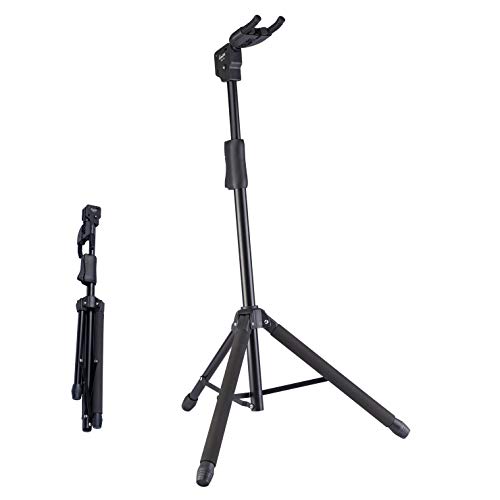
- 【Quality Material】Made of polyamide, with high-intensity bolts and metal bar, enhancing its bearing capacity greatly
- 【Auto Gravity Lock】Lock your guitar automatically when putting guitar neck on the arm and released when lifting your guitar
The GUITTO Heavy Duty Guitar Stand is a significant step up in terms of technology and price. Unlike the manual security strap on the OnStage XCG4, the GUITTO features an auto-locking yoke that closes as soon as the weight of the guitar neck is placed in it. This is a fantastic feature for stage use where you might be moving quickly and want instant security. It also boasts a 33lb capacity, making it slightly more “overbuilt” than the OnStage model. If you are someone who frequently plays in high-traffic environments or has a particularly heavy instrument, the GUITTO’s automated locking system might be worth the extra investment.
2. Donner Acoustic Guitar Stand
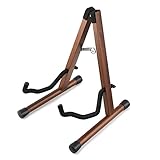
- [High-Grade Solid Wood] Made of solid acacia wood with unique wood grain, perfect match for your guitar and home.
- [Solid Steady] Compared to other materials, real wood is slightly heavier, which provides better stability and minimizes shaking. The A-frame design offers superior stability.
If the industrial look of the OnStage XCG4 Single Guitar Stand doesn’t fit your home decor, the Donner Acoustic Guitar Stand is an excellent aesthetic alternative. This is an A-frame stand made of wood, giving it a much more “furniture-like” appearance that looks great in a living room. However, what you gain in looks, you lose in height adjustability. Unlike the XCG4, the Donner stand has a fixed height and lacks neck support. It is perfect for those who want a low-profile, beautiful display for an acoustic guitar, but it offers less protection against forward-tipping than a tripod stand with a neck yoke.
3. CAHAYA Wooden Guitar Stand
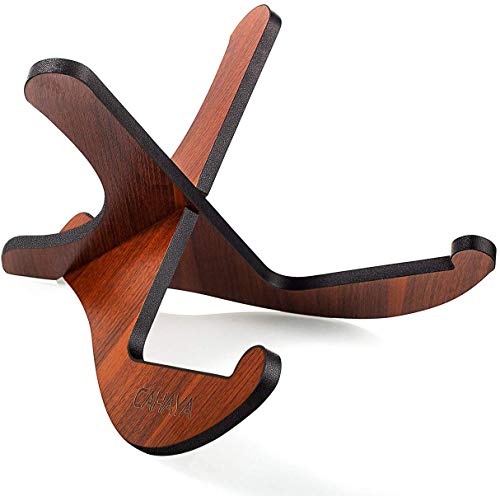
- Elegant – Patent to: US D888,472 S. Featuring classy curves, this guitar stand is as functional as it is decorative. You can jazz up any room with this piece of music furniture. The patented design...
- Reinforced – In the newest version, plywood board is used, making the stand more sturdy. Easy maintenance with simple wiping, and with regular upkeep, it will last as long as your guitar.
The CAHAYA Wooden Guitar Stand is a unique, ultra-portable X-frame design made from thickened plywood with soft leather edges. It is incredibly easy to assemble—essentially two pieces that slot together. Compared to the OnStage XCG4 Single Guitar Stand, the CAHAYA is much more compact and is primarily designed for display. It lacks the tripod stability and neck support of the OnStage model, making it less ideal for heavy basses or high-traffic areas. However, for a classical guitar or a light electric that you want to display elegantly on a shelf or a small corner, it’s a stylish and budget-friendly choice.
Final Verdict: Is the OnStage XCG4 Single Guitar Stand Worth It?
After putting the OnStage XCG4 Single Guitar Stand through its paces, we can confidently say it remains one of the best values in the music accessory world. It isn’t flashy, and it doesn’t have the high-tech bells and whistles of some modern locking stands, but it does exactly what it is supposed to do: it keeps your guitar safe, stable, and ready to play. Its strength lies in its simplicity, its heavy-duty steel construction, and its ability to adapt to almost any guitar or bass body shape. While the tripod footprint is a bit large, the peace of mind it offers is well worth the floor space.
We recommend the OnStage XCG4 Single Guitar Stand to anyone from the beginning student to the seasoned pro who needs a reliable, affordable, and portable stand for their primary instrument. It is a workhorse that outclasses almost everything in its price bracket. If you are ready to stop leaning your guitar against the wall and give it the stable home it deserves, we suggest you pick up the OnStage XCG4 today and experience the difference that a truly dependable stand makes to your workflow and instrument safety.
Last update on 2026-10-16 / Affiliate links / Images from Amazon Product Advertising API