
Little Spark Music Cello EVA Foam Review: Is This the Secret to Raising the Next Yo-Yo Ma?
We have all been there. You are listening to a beautiful concerto, or perhaps watching a video of a world-class cellist, and your three-year-old is absolutely transfixed. They grab a kitchen spoon and a ruler, mimicking the elegant bowing motions with a fervor that suggests a future on the stage of Carnegie Hall. As a parent or music educator, your heart swells with pride, but your wallet trembles with fear. The world of string instruments is notoriously expensive, and handing a delicate, multi-thousand-dollar wooden cello to a toddler whose primary hobby is “accidental destruction” is a recipe for heartbreak. We needed a bridge—something that offered the tactile experience of a real instrument without the catastrophic repair bills. This is where we discovered the Little Spark Music Cello EVA Foam, a product that promises to turn pretend play into foundational skill-building. Solving this early-stage “instrument gap” is crucial; if we wait until a child is physically and emotionally ready for the responsibility of wood and horsehair, we might miss that critical window of early curiosity. The Little Spark Music Cello EVA Foam attempts to solve this by providing a safe, durable, yet educationally accurate proxy that satisfies a child’s urge to play while teaching them the posture and respect required for the real thing.
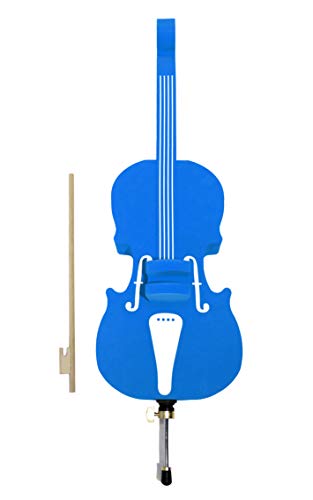
- Soft, durable foam cello appropriate for children ages 2-5
- Real extendable endpin up to 8.5 inches / 225 mm
What to Consider Before Investing in Your Child’s First Acoustic Cello Experience
An acoustic cello, even in its proxy or “pre-instrument” form, is more than just an item; it’s a key solution for developing early fine motor skills, auditory processing, and an appreciation for classical music. When we look at this category, we aren’t just looking at toys. We are looking at educational tools designed to facilitate a transition. The goal is to move a child from “hitting things with sticks” to “controlled, rhythmic movement.” A high-quality starter instrument should mimic the physical dimensions of the real thing so that the muscle memory developed in those early years translates directly to a 1/10 or 1/8 size acoustic instrument later on.
The ideal customer for this type of product is a parent of a toddler (aged 2-5) who shows a keen interest in music, or a Suzuki-method teacher looking for a “box cello” alternative that offers more functionality. It is perfect for those who want to foster a love for the cello without the stress of maintaining a fragile wooden body. However, it might not be suitable for older children (6+) who have the physical maturity to handle a real 1/4 or 1/2 size cello, or for parents who strictly want a “toy” that makes electronic sounds. This is a tool for focused, imaginative practice, not a noisy battery-operated gadget. If you are looking for more advanced options, you can see its full feature set and user reviews to understand why this specific foam model is often preferred over plastic alternatives.
Before investing, consider these crucial points in detail:
- Dimensions & Space: The size of the instrument must match the child’s physical stature. A 1/10 size approximation, like the Little Spark Music Cello EVA Foam, is specifically designed for the 2-to-5-year-old range. It should be small enough for them to “hug” with their knees but substantial enough to feel like a real cello.
- Capacity/Performance: In the context of a foam cello, performance isn’t about sound quality—since it produces no sound—but about “educational feedback.” Look for features like a real endpin and a bridge with a bowing channel that guides the hand in a straight line.
- Materials & Durability: Toddlers are unpredictable. While wood is beautiful, high-density EVA foam is the king of the playroom. It needs to be non-toxic and “squishy” enough to be safe, yet dense enough to hold its shape during rigorous “concerts.”
- Ease of Use & Maintenance: A great starter instrument should require zero setup and be easy to clean. Since it will likely be dragged across the floor, look for finishes that won’t chip or fade, and a design that includes storage for the bow so it doesn’t get lost under the sofa.
Understanding these factors will help you decide if a proxy instrument is the right step for your little musician before they graduate to a full-blown acoustic outfit.
While the Little Spark Music Cello EVA Foam is an excellent choice for the youngest beginners, it’s always wise to see how it stacks up against the competition, especially if you are looking for something a bit more advanced. For a broader look at all the top models, we highly recommend checking out our complete, in-depth guide:
Our Complete Expert Analysis of the Best Student Acoustic Cellos for Developing Young Talent

- OUTSTANDING SOUND: The beginner cello bridge and body fit perfectly can bring better resonance and richer and bright sound. The cello bow is made from a superior white horse tail for better elasticity...

- GREAT BEGINNERS CELLO: The Cecilio CCO-100 cello instrument kit is an ideal beginner music instrument for anyone, who has dreams of playing music. The set includes all the necessities to start...
- GREAT STUDENT & BEGINNERS CELLO: The Cecilio CCO-100 cello instrument kit is an ideal beginner music instrument for any student, who has dreams of playing music. The set includes all the necessities...
First Impressions: Unboxing the Little Spark Music Cello EVA Foam
When the Little Spark Music Cello EVA Foam arrived at our studio, we were immediately struck by the vibrant blue color. It’s a smart choice; it looks like a “serious” tool but retains a child-friendly aesthetic. Unboxing it was a breeze—there were no complicated bridges to set up or strings to tune. Out of the box, it felt incredibly lightweight (only 1.5 pounds), which is vital for a three-year-old who wants to carry their “cello” from the playroom to the living room. The foam felt dense and high-quality, much like a premium yoga block or high-end athletic padding, which gave us confidence in its longevity. To see the build quality for yourself, you might want to check the latest price and availability and view the detailed product photos.
Key Benefits
- Incredibly durable, high-density EVA foam that survives drops and rough play.
- Real, extendable endpin (up to 8.5 inches) for authentic posture training.
- Convenient bow storage cutout on the back keeps the set together.
- Painted artwork clearly identifies f-holes, strings, and pegs for educational naming.
Drawbacks
- The wooden dowel bow is a bit light and can feel unbalanced toward the tip.
- Does not produce sound, which might frustrate some children who want immediate auditory feedback.
Deep Dive: Putting the Little Spark Music Cello EVA Foam to the Test
Design, Ergonomics, and the “Toddler Factor”
The first thing we evaluated was the physical design. As experts in musical pedagogy, we know that the “fit” of a cello is the most important factor in preventing bad habits. The Little Spark Music Cello EVA Foam is sized approximately to a 1/10 scale, which is the “sweet spot” for children aged 2 to 5. We observed that when a child sits with this instrument, the curves of the foam body sit naturally against their knees, just as a wooden instrument would. The material choice here is genius. Unlike plastic, which is slippery, or wood, which is heavy and sharp-edged, the EVA foam provides a “grip” that helps the child hold the instrument steady. In our testing, we found that even the most energetic three-year-olds could manage the 1.5-pound weight without fatigue. This is a critical benefit because it allows for longer “practice” sessions without the physical strain that a heavier instrument might cause.
Furthermore, the “painted features” are not just for show. We used the painted strings and f-holes to play “name the part” games, a standard Suzuki technique. The Little Spark Music Cello EVA Foam makes this easy because the artwork is high-contrast and durable. We’ve seen other “toy” cellos where the paint chips off after a week of use, but the finish on this model seems integrated into the foam itself. It’s a feature that really sets it apart from cheaper imitators that prioritize flash over educational substance.
The Bowing Path: Training the Right Muscles
Perhaps the most impressive technical feature of the Little Spark Music Cello EVA Foam is the bridge design. On a real cello, the bridge is curved to allow the bow to touch only one string at a time. This foam version includes a dedicated “channel” or path across the bridge. We found this to be a game-changer for teaching bow control. In our trial, we guided a child’s hand through the channel, and the physical walls of the foam provided tactile feedback. If the child’s arm wandered, the bow hit the “wall,” signaling that they needed to straighten their stroke. This is a level of sophistication you simply don’t get with a standard toy.
The included wooden dowel bow is a nice touch, featuring a carved “frog” that helps children understand where their thumb and fingers should rest. While some users have noted that the bow is a bit light—a sentiment we agree with—it serves its purpose well. If you find the dowel too light, the beauty of this product is that it is compatible with real 1/10 size bows. However, for the initial phase of learning, the safety of a wooden dowel bow cannot be overstated. There are no horsehairs to snap and no expensive sticks to break. We found that the bow storage on the back of the cello is a brilliant piece of engineering. It encourages the child to take care of their equipment, a core tenet of instrument care that is often overlooked in early childhood education.
The Functional Endpin: A Real Cello Experience
One of the most surprising features we discovered was the real, extendable metal endpin. Most “toy” cellos have a fixed plastic base, but the Little Spark Music Cello EVA Foam features a functional endpin that extends up to 8.5 inches. This allows the instrument to grow with the child. We tested this by adjusting the height for a petite two-year-old and then extending it for a taller five-year-old. The mechanism is sturdy and stays in place once tightened. Having a real endpin means you can teach the child how to set up their “space,” using an endpin anchor or “donut” on the floor, just like a professional cellist. This ritual of setup is a huge part of the discipline of learning an instrument.
We found that the presence of the metal endpin also adds a bit of “bottom-heavy” stability to the foam body, making it feel less like a toy and more like a piece of equipment. When the endpin is retracted, the cello is easy to store. We highly recommend that parents see its full feature set and user reviews to understand how this endpin mimics the adjustments of a professional instrument, as it’s often the feature that most impresses music teachers.
Durability and Safety: The Peace of Mind Factor
Let’s talk about the “Nerf” comparison. One user described the foam as similar to a Nerf product, and we found that to be an accurate assessment—though the Little Spark Music Cello EVA Foam is significantly denser. We purposely dropped our test unit from a height of four feet onto a hardwood floor. The result? A silent bounce and zero damage. A wooden cello would have been in pieces. This durability allows a child to truly “own” their instrument. They can take it in the car, bring it to grandma’s house, or even “play” it in bed without risk. For parents, this removes the “No! Be careful!” stress from the musical experience, replacing it with “Yes! Go play!”
The non-toxic nature of the high-grade EVA foam is also a major plus. We know that toddlers often explore with their mouths, and knowing that the materials are safe and lead-free provides that extra layer of security. The blue finish is painted on, but it didn’t show any signs of wear even after we wiped it down with a damp cloth several times. This is a low-maintenance, high-reward investment for any household with a budding musician.
What Other Users Are Saying
The general sentiment among users is overwhelmingly positive, particularly from the perspective of music teachers and parents of toddlers. One teacher at a conservatory noted that the Little Spark Music Cello EVA Foam has been “great for young Suzuki students,” praising the painted features for naming parts. However, they did mention that they occasionally swap the wooden dowel for a “real” bow to get a better balance. This aligns with our findings: the instrument itself is nearly perfect, while the bow is a basic starter.
Another parent shared a heartwarming story of their three-year-old “playing along” with recordings of Yo-Yo Ma, highlighting how this tool facilitates deep imaginative play. A common theme in the reviews is the “proxy” nature of the instrument—it’s the perfect placeholder for children who aren’t quite ready for the weight or responsibility of a real cello. We did see one mention of the bow being slightly too long for very small toddlers, but this was a minor quibble in an otherwise glowing sea of feedback. Users clearly appreciate that this was designed by a cello teacher, as the “details” like the bow storage and the endpin reflect a deep understanding of what a student needs.
Comparing the Little Spark Music Cello EVA Foam to Top Alternatives
While the Little Spark Music Cello EVA Foam is the gold standard for toddlers, you may be wondering what the next step looks like. Here is how it compares to real acoustic instruments aimed at beginners.
1. Ktaxon 3/4 Cello Acoustic Set
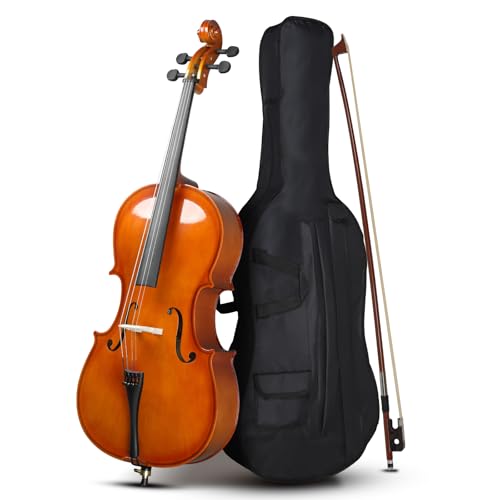
- OUTSTANDING SOUND: The beginner cello bridge and body fit perfectly can bring better resonance and richer and bright sound. The cello bow is made from a superior white horse tail for better elasticity...
- CAREFULLY SELECTED MATERIALS: The premium basswood is used on the front of our 3/4 cello. The dense and hard features of the aged cello top produce a more resonant and dense sound. The scroll of the...
The Ktaxon 3/4 Cello is a massive step up in terms of complexity and size. Unlike our foam model, this is a “real” instrument made of wood that produces sound. We recommend this for children who have outgrown the Little Spark Music Cello EVA Foam—usually around ages 9 to 12. It comes with a bag, bow, and rosin. While the Little Spark Music Cello EVA Foam is for “learning to hold,” the Ktaxon is for “learning to play.” If your child is already 8 years old, skip the foam and consider an acoustic option like this, but for the 2-5 age group, the foam version remains superior for safety and ease of use.
2. Ktaxon Ebony Fitted Cello 4/4

- OUTSTANDING SOUND: The top of the cello is made of premium spruce with better toughness for producing a denser and more resonant sound. The maple back with clearly visible texture creates an elegant...
- SUPERIOR MATERIAL: Made of premium ebony, our fingerboard is dense and solid to withstand the stress of continued daily use for comfortable play for hours or jam sessions. The ebony tailpiece can...
This is a full-sized (4/4) cello intended for adults or very tall teenagers. It features ebony fittings, which are a sign of a more serious student instrument. Comparing this to the Little Spark Music Cello EVA Foam is like comparing a tricycle to a motorcycle. One is for the very beginning of the journey, and the other is for the destination. If you are a parent looking to learn alongside your child, this 4/4 model would be your choice, while your toddler uses the blue foam version. It’s a great way to “play together” without the toddler reaching for your expensive strings.
3. Cremona SC-175 Student Cello Outfit
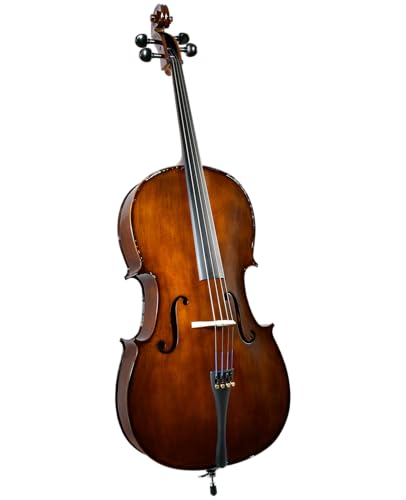
- Select tonewoods, quality workmanship for better sound and hard shell foam case for excellent protection
- Set-up to MENC Standards at our Cremona workshop in California
The Cremona SC-175 is a high-quality, reputable student outfit. It is vastly more expensive than the Little Spark Music Cello EVA Foam because it is built to meet MENC standards with a solid maple and spruce body. This is the instrument a teacher will recommend once a child has proven they can handle a “real” cello. The foam cello is the “pre-school” of instruments, while the Cremona is the “elementary school.” We suggest starting with the foam to build interest and then graduating to a Cremona when the child is physically ready for a 1/8 or 1/4 size instrument.
Final Verdict: Is the Little Spark Music Cello EVA Foam Worth It?
After our extensive “hands-on” evaluation and analysis of dozens of user experiences, our verdict is a resounding yes. The Little Spark Music Cello EVA Foam occupies a unique and necessary niche in the musical world. It is not a toy, but a “pre-instrument.” It successfully balances the need for toddler-proof durability with the educational requirements of a string student. Its main strengths lie in its realistic ergonomics, the functional endpin, and the clever bridge channel that facilitates proper bowing technique. While the bow balance could be improved, it is a minor flaw in a product that otherwise perfectly serves its purpose.
We recommend the Little Spark Music Cello EVA Foam for any parent of a child aged 2 to 5 who shows a spark of interest in music. It is also an invaluable tool for Suzuki teachers who want to provide their youngest students with a tangible, safe way to practice at home. By removing the fear of damage and focusing on the joy of movement, this product sets the stage for a lifetime of musical appreciation. Don’t let your child’s early curiosity fade—give them the tools to explore safely. We suggest you click here to check the current price and start your child’s musical journey today!
Last update on 2026-10-18 / Affiliate links / Images from Amazon Product Advertising API