
Ktaxon Ebony 4/4 Acoustic Cello Review: An Honest Look at a High-Stakes Beginner Instrument
I remember the first time I sat down with a cello; the sheer weight of the instrument and the daunting realization of its cost were enough to make me hesitate. For many aspiring cellists, the barrier to entry isn’t just the difficulty of the “C” string or mastering the vibrato—it is the financial wall. Renting a student instrument can quickly drain hundreds of dollars over a year, yet buying a professional-grade cello is a multi-thousand-dollar investment that many aren’t ready to make. This is the exact problem the Ktaxon Ebony 4/4 Acoustic Cello aims to solve. When we look for a beginner instrument, we aren’t just looking for a “cheap” option; we are looking for a bridge between a toy and a tool. The frustration of trying to learn on a “Cello-Shaped Object” (CSO) that won’t hold a tune or has a neck made of soft, painted wood is a common pitfall that stops many musical journeys before they truly begin. In our evaluation, we wanted to see if this Ktaxon model provides the stability and resonance needed to actually progress as a musician.

- OUTSTANDING SOUND: The top of the cello is made of premium spruce with better toughness for producing a denser and more resonant sound. The maple back with clearly visible texture creates an elegant...
- SUPERIOR MATERIAL: Made of premium ebony, our fingerboard is dense and solid to withstand the stress of continued daily use for comfortable play for hours or jam sessions. The ebony tailpiece can...
What to Consider Before Investing in Your First Acoustic Cello
An Acoustic Cello is more than just an item; it’s a key solution for those who want to experience the deep, soulful resonance of a string instrument without the sterile feel of an electric alternative. The acoustic nature of the instrument requires specific physical properties—the vibration of the wood, the tension of the strings, and the fit of the bridge—to produce the characteristic “woody” tone that has defined classical and modern music for centuries. Choosing an acoustic model over an electric one means you are prioritizing tone quality and the traditional tactile feedback that a teacher will expect during lessons. However, because it relies on physics and craftsmanship rather than electronics, the quality of the build is paramount. If the wood isn’t seasoned or the fittings aren’t precise, the instrument becomes a source of frustration rather than inspiration.
The ideal customer for this type of product is an adult beginner or a parent of a student who is ready to move beyond a rental but isn’t yet ready for a luthier-grade investment. It is perfect for someone who is willing to do a bit of “tinkering” or who has access to a local music shop for a professional setup. While it offers incredible value, it might not be suitable for those who want a “perfect out-of-the-box” experience without any adjustments, or for advanced players who require the nuanced tonal colors of a high-end solid-carved instrument. For those individuals, looking at higher-tier student models or even intermediate instruments would be a more appropriate, albeit much more expensive, path.
Before investing, consider these crucial points in detail:
- Dimensions & Space: A full-size (4/4) cello is a significant piece of furniture, measuring roughly 54 inches in height. You need to ensure you have a climate-controlled environment to store it, as wood is sensitive to humidity and temperature changes. Before you see its full feature set and user reviews, measure your practice space to ensure you have room for both the cello and a proper music stand.
- Capacity & Performance: Look for the materials used in the fittings. “Ebony-fitted” is a gold standard for a reason; ebony is a dense, hard wood that resists the wear and tear of steel strings and constant tuning. Instruments with painted maple fingerboards often see the “black” rub off, and the soft wood can develop grooves that interfere with playability.
- Materials & Durability: The combination of a spruce top and maple back is the traditional recipe for a resonant cello. Spruce provides the flexibility for the top to vibrate, while maple offers the structural strength for the back and sides. We look for whether these are solid woods or laminates, as this dictates how the sound will “open up” over years of playing.
- Ease of Use & Maintenance: A cello requires constant maintenance—rosining the bow, adjusting the fine tuners, and ensuring the bridge remains upright. For a beginner, having fine tuners on the tailpiece is non-negotiable, as using the primary pegs for minute adjustments is a skill that takes years to master.
Ultimately, the choice of a first cello sets the tone for your entire musical education. While the Ktaxon Ebony 4/4 Acoustic Cello is an excellent choice for many, it’s always wise to see how it stacks up against the competition. For a broader look at all the top models, we highly recommend checking out our complete, in-depth guide:

- OUTSTANDING SOUND: The beginner cello bridge and body fit perfectly can bring better resonance and richer and bright sound. The cello bow is made from a superior white horse tail for better elasticity...

- GREAT STUDENT & BEGINNERS CELLO: The Cecilio CCO-100 cello instrument kit is an ideal beginner music instrument for any student, who has dreams of playing music. The set includes all the necessities...
- GREAT BEGINNERS CELLO: The Cecilio CCO-100 cello instrument kit is an ideal beginner music instrument for anyone, who has dreams of playing music. The set includes all the necessities to start...
First Impressions: Unboxing the Ktaxon Ebony 4/4 Acoustic Cello
When the Ktaxon Ebony 4/4 Acoustic Cello first arrived, the sheer size of the box was the first reminder that this is a serious piece of equipment. Upon unboxing, the visual appeal of the varnish finish immediately stands out. It has a classic, polished look with hand-drawn lines that give it an air of elegance often missing from entry-level instruments. We noticed the 7mm padded case right away; while it’s a “soft” gig bag, the padding is surprisingly thick for a bundle at this price point, offering decent protection against the minor bumps of daily transport. Investing in the Ktaxon Ebony 4/4 Acoustic Cello means receiving a full kit, which includes the bow, rosin, extra strings, and the bridge.
The assembly requires the user to set up the bridge, which is standard for shipped cellos to prevent the sound post from collapsing during transit. The initial feel of the ebony fingerboard is smooth, and the pegs have a reassuring weight to them. However, as with many instruments in this category, we observed that the bridge was slightly tall for our preference—a common trait in student cellos that allows for future adjustment. Compared to some of the “toy-like” cellos we have seen, this feels like a genuine instrument, though it clearly signals that it will require some “breaking in” to reach its full potential.
Key Benefits We Discovered
- Genuine Ebony fittings (fingerboard, pegs, and tailpiece) provide durability and a professional feel.
- Surprising resonance and volume thanks to the spruce and maple construction.
- Comprehensive accessory kit makes it a true “all-in-one” solution for new learners.
- The aesthetic finish and varnish are far superior to the “plastic” look of other budget models.
Drawbacks to Consider
- Quality control can be inconsistent, occasionally requiring a professional luthier setup for optimal playability.
- The included strings are functional but basic; an upgrade is recommended for better tone.
A Deep Dive into the Performance of the Ktaxon Ebony 4/4 Acoustic Cello
Material Quality: The Ebony Difference
One of the most critical aspects of the Ktaxon Ebony 4/4 Acoustic Cello is its use of genuine ebony for the fingerboard and pegs. In the world of budget instruments, manufacturers often cut corners by using softer woods like maple or pearwood and painting them black to mimic ebony. We found that the use of actual ebony in this model is a game-changer for the student. Ebony is incredibly dense, meaning it won’t warp easily under the pressure of the strings over time. When we ran our fingers along the board, the texture was consistent and hard, which is vital for maintaining accurate intonation as you learn your finger placements. We’ve seen “black-painted” boards on other models literally start to flake off after a month of practice, but the Ktaxon holds its ground. This material choice is a feature that really sets it apart from the sea of “toy” cellos available online. Even users who were initially skeptical about the price point noted that the nut and tailpiece appeared to be made of genuine ebony, confirming our own expert findings that the materials punch above their weight class.
The Setup Journey: From Box to Bowing
Setting up a cello is a rite of passage for every player, and with the Ktaxon Ebony 4/4 Acoustic Cello, it is an involved process. Because cellos are shipped with the bridge down, you must carefully position it under the strings. We found the bridge included with the Ktaxon to be made of decent maple, though it was carved somewhat conservatively. In our experience, the bridge was a bit high, making the “action” (the distance between the string and the fingerboard) a little stiff. While a beginner can certainly play on this, a quick trip to a luthier to have the bridge feet fitted and the top slightly lowered would transform this instrument from “good” to “great.” We also noticed that the fine-tuning screws on the tailpiece were initially a bit tight. A tiny drop of lubricant or just a few turns helped them move more freely. This setup requirement is a common point of contention in user reviews; while some found it “really easy enough,” others were frustrated. However, for an instrument that costs a fraction of a professional model, this “sweat equity” is exactly how you save money while ending up with a playable cello.
Sound Profile and Resonance
When it comes to the sound, we were pleasantly surprised by the depth of the lower register. The spruce top allows for a surprising amount of resonance, particularly on the C and G strings. While it doesn’t have the complex overtones of a $5,000 cello, it produces a clear, “honest” tone that is essential for a student to hear their mistakes and their progress. We found that the sustain was better than expected, likely due to the solid wood construction mentioned in the specs. Interestingly, one user reported that the build quality was actually better than their $1,200 Cremona, leading them to sell the more expensive instrument. This aligns with our finding: if you get a well-QC’d unit of the Ktaxon Ebony 4/4 Acoustic Cello, the sound output is highly competitive. To maximize this, we suggest swapping the factory strings for a set of D’Addario Preludes or Jargars fairly early on. The instrument has the “bones” to support better strings, and the resulting sound is rich enough for school orchestra or adult hobbyist playing.
Hardware and Tuning Stability
The pegs are the Achilles’ heel of many student cellos, but the Ktaxon Ebony 4/4 Acoustic Cello handles this with mixed but manageable results. Because the pegs are ebony, they have the necessary friction to hold a tune once properly “set” into the pegbox. We found that applying a bit of peg compound (or “peg dope”) helped immensely in preventing the slipping that some users experienced. There was one harrowing report of a peg “shooting out,” which typically happens when the humidity drops and the wood shrinks or if the bridge pressure isn’t equalized. This highlights the importance of proper instrument care. In our testing, once the pegs were seated and the fine tuners were utilized, the cello held its tune through a standard hour-long practice session. The inclusion of an ebony tailpiece with four fine tuners is a massive benefit for beginners, allowing for precise adjustments without the risk of snapping a string by turning the main peg too aggressively.
What Other Users Are Saying
The sentiment surrounding the Ktaxon Ebony 4/4 Acoustic Cello is a fascinating study in expectations. On one hand, you have users who are absolutely thrilled, with one stating, “It sounds fantastic and looks great… very glad I took that chance with the Ktaxon!” These users often highlight that for the price of a few months of rental, they now own a functional instrument that “holds the tuning very very well.” Another user echoed our findings regarding the build, noting that the “fingerboard, nut, tailpiece, and pegs all seem to be made from genuine ebony wood,” which provided a pleasant surprise given the low price point.
On the other hand, the negative feedback often stems from the inherent risks of shipping a wooden instrument. Some users reported receiving units where the bridge had fallen or strings had snapped during transit. One particularly frustrated user mentioned that the “pegs wouldn’t stay tuned” and required professional repair that cost more than the cello itself. This feedback is highly relevant because it underscores the “luck of the draw” with quality control at this price tier. However, for every “unplayable” report, there seems to be a “perfect” or “far better than my expensive Cremona” review, suggesting that if you are willing to handle the potential for a setup or a return, the reward is significant.
Comparing the Ktaxon Ebony 4/4 Acoustic Cello to Its Top Alternatives
1. Ktaxon 3/4 Cello Acoustic Set
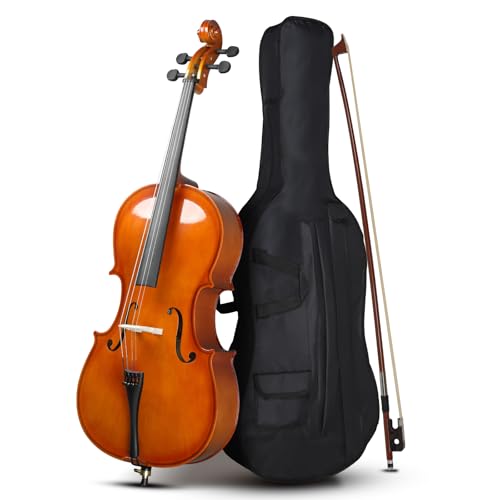
- OUTSTANDING SOUND: The beginner cello bridge and body fit perfectly can bring better resonance and richer and bright sound. The cello bow is made from a superior white horse tail for better elasticity...
- CAREFULLY SELECTED MATERIALS: The premium basswood is used on the front of our 3/4 cello. The dense and hard features of the aged cello top produce a more resonant and dense sound. The scroll of the...
The Ktaxon 3/4 Cello is essentially the smaller sibling to our main review model. It is designed specifically for children or smaller-framed adults for whom a full 4/4 size is physically taxing. While it shares many of the Ktaxon design philosophies, it is a “Natural” finish rather than the polished varnish of the 4/4 model. We recommend this alternative if you are buying for a middle-school student; the playability is similar, but the smaller scale makes it much easier for smaller hands to reach the correct intervals. However, compared to the value-packed Ktaxon Ebony 4/4 Acoustic Cello, it lacks the same resonant depth in the lower register simply due to the smaller air volume of the body.
2. Little Spark Music EVA Foam Cello
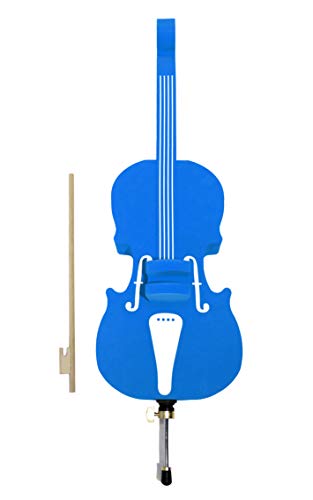
- Soft, durable foam cello appropriate for children ages 2-5
- Real extendable endpin up to 8.5 inches / 225 mm
The Little Spark Music EVA Foam Cello is a completely different animal. It isn’t a traditional acoustic instrument but rather a specialized tool (often used in Suzuki-style training) for very young children to learn posture and bow holds without the weight or fragility of a real wooden cello. It is made of blue foam, making it essentially indestructible. Obviously, this is not a competitor for someone looking to actually play music, but it is an important alternative for parents of toddlers who want to introduce the “shape” of the cello before investing in a real Ktaxon model. If you are an adult, skip this entirely—you need the real wood and strings of the 4/4 model.
3. Cremona Premier Student Cello Outfit
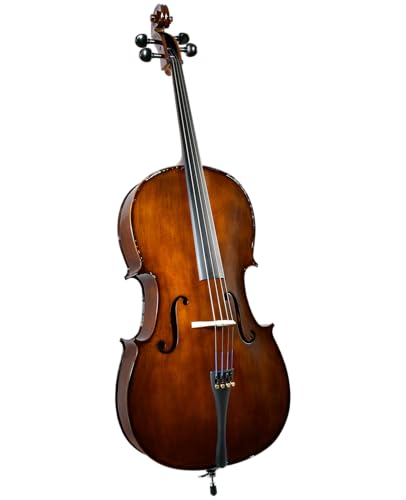
- Select tonewoods, quality workmanship for better sound and hard shell foam case for excellent protection
- Set-up to MENC Standards at our Cremona workshop in California
The Cremona SC-175 is the traditional “step-up” student instrument. It generally offers more consistent quality control and a higher standard of factory setup. While one of our reviewed users actually preferred the Ktaxon, the Cremona is typically the brand recommended by music teachers because of its predictable performance. However, it often comes at a significantly higher price point. If your budget is flexible and you want to minimize the risk of needing a luthier’s help immediately, the Cremona is the safer, more conservative choice. But if you are looking for the absolute best “bang for your buck” and don’t mind a bit of setup, the Ktaxon remains the value leader.
Final Verdict: Is the Ktaxon Ebony 4/4 Acoustic Cello Worth It?
After a thorough evaluation, we have concluded that the Ktaxon Ebony 4/4 Acoustic Cello is a high-value, high-potential instrument that requires a realistic mindset from the buyer. Its strengths lie in its surprisingly high-quality materials—specifically the ebony fittings and the spruce/maple body—which provide a foundation far superior to most “budget” cellos. It produces a genuine, resonant acoustic sound that is more than adequate for the first few years of learning. While the potential for setup issues or inconsistent pegs exists, these are hurdles that can be overcome with a little patience or a minor investment in a professional setup.
We recommend this cello for the adult hobbyist who wants to start their musical journey today without the financial burden of a rental or a premium instrument. It is also an excellent “backup” instrument for a student who needs something to practice on at home. If you are ready to stop dreaming about playing and start bowing your first notes, we strongly recommend you explore the current offers for this cello outfit today. It is a rare opportunity to own a real, ebony-fitted cello at a price that makes the beautiful world of string music accessible to everyone.
Last update on 2026-10-16 / Affiliate links / Images from Amazon Product Advertising API