
Ampeg SVT-410HLF Bass Amp Cabinet Review: The Gold Standard for Modern Low-End Definition?
If you have ever stood on a stage and felt like your bass notes were more of a polite suggestion than a physical force, you know the frustration of a subpar cabinet. For years, I struggled with the “muddy middle” syndrome—that frustrating sonic space where your low notes lose their definition and your high-end snap sounds like it’s coming through a thick wool blanket. Finding a cabinet that can handle the sheer power of a modern bass head while maintaining clarity across the entire frequency spectrum is the “holy grail” for gigging musicians. Whether you are playing a five-string with a punishing low B or a vintage four-string that needs that classic growl, the speaker cabinet is the final gatekeeper of your sound. Without a high-performance solution like the Ampeg SVT-410HLF Bass Amp Cabinet, even the most expensive bass guitar will sound thin and uninspired. Solving this isn’t just about volume; it’s about the moving air and the harmonic richness that defines a professional performance.
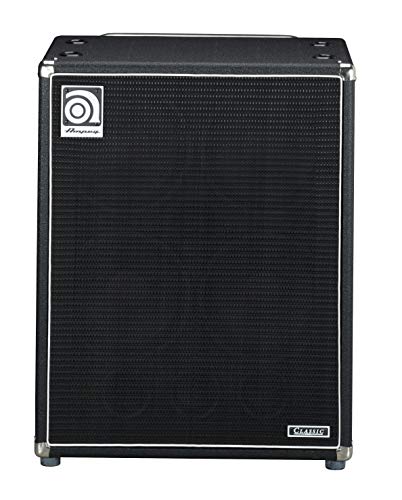
- Ported Cab Design Provides Extended Low Range
- HF Horn Driver with 1" Voice Coil for Punch and Clarity
What to Consider Before Investing in Professional Bass Guitar Amplifier Cabinets
A Bass Guitar Amplifier Cabinets is more than just a wooden box with speakers; it’s a key solution for translating electrical signals into physical energy that moves an audience. Unlike guitar cabinets, which often focus on mid-range “honk,” a bass cabinet must manage massive excursions of the woofer cones while preventing internal vibration from coloring the sound. When you invest in a professional-grade cab, you are essentially buying the “voice” of your rig. It determines whether you will cut through a dense mix of distorted guitars and heavy drums or get buried in a wash of indistinct noise. The right cabinet ensures that every nuance of your playing—from the subtle ghost notes to the aggressive slaps—is heard with precision and authority.
The ideal customer for this type of product is a serious gigging bassist or studio professional who needs consistent, high-fidelity performance that can handle 500 watts of power or more. It is perfect for those who find a 1×15 cabinet too slow and “woolly” and an 8×10 “fridge” too cumbersome for standard transport. However, it might not be suitable for those who primarily practice at low volumes in small apartments or musicians who need an ultra-lightweight, portable solution for subway commutes. For those players, a smaller 1×10 or 2×10 might be a better fit, though they will sacrifice the devastating low-end that a ported 4×10 provides.
Before investing, consider these crucial points in detail:
- Dimensions & Space: Professional cabinets are rarely “small.” You need to measure your vehicle’s trunk or backseat and ensure you have the physical strength (or a reliable bandmate) to move it. While the Ampeg SVT-410HLF Bass Amp Cabinet includes wheels and a handle, its footprint is substantial enough to require dedicated storage space and a clear path to the stage.
- Capacity/Performance: Look closely at the wattage and impedance. A 4-ohm cabinet like this one allows most modern heads to output their maximum power, but it also means you generally can’t chain it with another 4-ohm cab without risking your amp. The 500-watt rating is a “real world” number that provides plenty of headroom for loud rock or funk sets.
- Materials & Durability: Not all wood is created equal. High-end cabinets often use void-free Baltic birch or, in this case, heavy-duty Poplar ply. These materials are chosen because they don’t rattle or flex under the intense pressure of low frequencies, ensuring that the only thing vibrating is the speaker cone itself.
- Ease of Use & Maintenance: Consider the hardware. Are the corners protected by metal or plastic? Are the handles ergonomic? For long-term care, look for cabinets with accessible grilles so you can clean the dust off the speakers, and check the warranty—Ampeg offers a generous 5-year electronics and 2-year speaker warranty, which is vital for professional gear.
By understanding these technical nuances, you can move away from “good enough” gear and toward a setup that truly represents your musical voice. Transitioning to a high-caliber cabinet is often the single most significant upgrade a bassist can make to their live sound.
While the Ampeg SVT-410HLF Bass Amp Cabinet is an excellent choice, it’s always wise to see how it stacks up against the competition. For a broader look at all the top models, we highly recommend checking out our complete, in-depth guide:
Our Comprehensive Analysis of the Best Portable Bass Cabinets for Today’s Gigging Musician
- Revoiced cabinet for superior level of sonic detail and low-frequency translation

- Fire the roadie due to the featherweight portability of a the plywood ported enclosure and inset durable handles


First Impressions: Unboxing the Heavyweight Champion of 4x10s
When the Ampeg SVT-410HLF Bass Amp Cabinet arrived at our studio, the first thing that struck us was its sheer presence. It doesn’t just sit in the room; it commands it. Dressed in the classic Ampeg “black check” Tolex with the iconic silver grille cloth, it looks exactly like a piece of rock history should. After unboxing, we were immediately impressed by the industrial build quality. This isn’t a “budget” cabinet that feels hollow; it feels like a solid block of musical utility. The “towel bar” handle on the back and the built-in recessed wheels are not just accessories—they are necessities, as this cabinet has some significant heft to it. Before you even plug it in, you can see its full feature set and user reviews and realize this is a tool built for the rigors of the road.
Comparing it to other market leaders, many 4×10 cabinets are “sealed,” meaning the back is completely closed. The Ampeg SVT-410HLF Bass Amp Cabinet, however, is ported. This design choice is immediately apparent in its depth; it’s deeper than your average 4×10, which allows for those extended low frequencies. This design philosophy bridges the gap between the punchy response of 10-inch speakers and the deep, floor-shaking rumble typically associated with 15-inch or 18-inch drivers. It feels like a premium evolution of the classic SVT lineage, updated for the modern player who needs more than just mid-range “grunt.”
Advantages
- Incredible low-end extension due to the ported design, reaching down to 48Hz.
- Variable HF horn allows for precise control over top-end “clack” and clarity.
- Pro-grade construction with rugged Poplar ply and protective skid rails.
- Highly compatible 4-ohm impedance draws maximum power from most bass heads.
Drawbacks
- At 85 pounds, it is significantly heavier than modern “lightweight” neodymium cabinets.
- The 4-ohm rating means you cannot easily add a second cabinet to most standard amplifiers.
Deep Dive: The Sonic Architecture of the Ampeg SVT-410HLF Bass Amp Cabinet
The Magic of the Ported Enclosure and Low-End Extension
When we first plugged a Fender Precision Bass into the Ampeg SVT-410HLF Bass Amp Cabinet, the immediate reaction was one of physical shock. Most 4×10 cabinets tend to roll off the low frequencies around 60Hz or 70Hz, focusing instead on the punchy “low-mid” area. This cabinet, however, is a different beast entirely. Because it is a ported (or vented) design, it moves a staggering amount of air. We found that even at moderate volumes, the low-end felt “massive” without becoming “woolly.” It reaches down to 48Hz, which is lower than many 1×15 cabinets on the market. This is a crucial benefit for five-string players; that low B string finally has the room it needs to breathe and resonate.
In our testing, we pushed the volume to see if the porting would create any “chuffing” or unwanted air noise. The design held firm. The internal bracing of the Poplar ply enclosure ensures that the energy is directed out of the front ports, resulting in a bass response that you feel in your chest as much as you hear with your ears. This makes it a feature that really sets it apart from the standard sealed cabinets used by many competitors. Whether you are laying down a reggae groove or a heavy metal foundation, the low-end authority here is unmatched in the 4×10 category.
High-Frequency Clarity and the 1″ Horn Driver
One of the most common complaints about vintage bass stacks is the lack of “air” or top-end definition. The Ampeg SVT-410HLF Bass Amp Cabinet solves this with its integrated high-frequency horn driver featuring a 1″ voice coil. What we loved most during our evaluation was the L-pad control located on the back of the cabinet. This allows you to dial in the exact amount of high-end you want. If you are playing a vintage Motown set, you can turn the horn all the way down for a warm, rounded thump. If you are a slap-and-pop funk player, you can crank it up to 4kHz to get that crystalline snap that cuts through the loudest drummer.
We found that the crossover is exceptionally smooth. There isn’t a jarring “gap” between the 10-inch woofers and the high-frequency driver. Instead, the frequencies blend seamlessly. This clarity is likely why professional bassists like Meshell Ndegeocello and John McVie rely on this specific model. It provides a “hi-fi” edge to a traditionally “lo-fi” brand, making it versatile enough for almost any genre. If you want to hear your finger noise, your pick attack, or the bright zing of new strings, this cabinet delivers it with surgical precision. You can check the latest price and availability to see how this fits into your current gear budget.
Road-Ready Durability and Ergonomic Design
Let’s talk about the physical reality of being a working musician. Gear gets banged around in vans, dragged across gravel parking lots, and shoved into tight stage corners. We put the Ampeg SVT-410HLF Bass Amp Cabinet through its paces in terms of mobility. The inclusion of rear-mounted “skid rails” is a brilliant touch. It allows you to lean the cabinet back and slide it into a van or up a flight of stairs without shredding the Tolex. The “towel bar” handle is perfectly positioned to provide leverage when using the built-in wheels, making the 85-pound weight feel much more manageable.
The construction material—Poplar ply—is a standout choice. While some manufacturers have moved to lighter but more fragile composites, Ampeg stuck with a wood that offers a perfect balance between weight and sonic density. It feels “dead” in the best way possible—it doesn’t add its own resonance to your tone, allowing the speakers to do their job. We also appreciated the heavy-duty metal corners and the thick silver grille cloth, which felt like they could take a direct hit from a stray drumstick without flinching. This is a “buy it once, own it for life” kind of cabinet, and we strongly suggest you read more about its long-term durability through other professional testimonials.
Wattage, Impedance, and Amp Matching
The Ampeg SVT-410HLF Bass Amp Cabinet is rated at 500 watts RMS at 4 ohms. This is a critical specification for the modern bassist. Most modern Class D and solid-state amplifiers (like the Ampeg SVT-7PRO or various Markbass and Aguilar heads) are rated to provide their full power into a 4-ohm load. By using this cabinet, you are actually getting the most out of your amplifier investment. During our testing with a 500-watt head, we found that the cabinet had massive headroom; we could not get the speakers to distort or “fart out,” even at volume levels that were frankly uncomfortable for a small rehearsal room.
However, it is important to note the trade-off. If you have an amplifier that only supports a minimum 4-ohm load, you cannot add another cabinet to this rig without risking damage to your amp. But honestly, with the amount of air this 4×10 moves, you likely won’t need another one. It effectively does the work of two 2×10 cabinets or a 4×10 and a 1×15 combined. The efficiency of this setup is a huge win for those who want a massive sound without the “wall of speakers” footprint. This efficiency makes it an essential component for any professional-level rig.
What Other Users Are Saying
The general sentiment among owners of the Ampeg SVT-410HLF Bass Amp Cabinet is one of extreme satisfaction, often bordering on relief that they finally found “that sound.” One user mentioned that it is “exactly what you thought it would be,” referring to that legendary Ampeg thump that has defined rock bass for decades. We found this to be a recurring theme: people know what to expect from the brand, and this cabinet delivers on that promise without compromise. Another user, who moved from a different brand, noted “Me encantó, supero mis espectativas” (I loved it, it exceeded my expectations), highlighting the cabinet’s ability to surprise even seasoned players with its power and clarity.
Interestingly, some users compare it to its larger sibling, the SVT-610HLF. One reviewer noted that while they “love the extra height with the 6x speakers and the higher frequency ranges” of the 610, the 410HLF remains the sweet spot for portability versus performance. The only consistent “negative” feedback we encountered across the community was the weight, with some users wishing for a lighter neodymium version. However, most agree that the tone provided by the traditional ceramic magnets and heavy-duty ply is worth the extra effort to move. This feedback confirms our own findings: if you prioritize tone above all else, this is the cabinet for you. You can see more user experiences and detailed ratings to see how it performs in different musical genres.
The Competition: How Does It Stack Up?
1. Positive Grid Spark CAB Powered FRFR Cabinet

- Spark CAB is an FRFR powered guitar amp speaker cabinet optimized to work seamlessly with Spark, Spark MINI and Spark GO amps, as well as other modelers, intruments or amps.
- Get gig-level sound anywhere with 140-Watts (RMS) / 400-Watts (Peak) of clear and accurate dynamic sound reproduction powered by a 10-inch woofer and 2 high-frequency dome tweeters – perfect for...
The Positive Grid Spark CAB is a completely different animal, designed primarily for those using digital modelers and the Spark series of amps. While the Ampeg SVT-410HLF Bass Amp Cabinet is a passive cabinet that requires an external bass head, the Spark CAB is a 140W powered FRFR (Full Range Flat Response) system. It is much smaller and lighter, making it ideal for home practice or small acoustic-style gigs. However, it cannot compete with the Ampeg in terms of raw volume or low-end “thump.” If you are a traditionalist who wants that “air-moving” feel of a real bass rig, the Spark CAB will feel like a toy. But for the digital-age musician who needs a flat response for their software-based tones, it’s a smart, modern alternative.
2. Palmer CAB M Passive Guitar Speaker Simulator
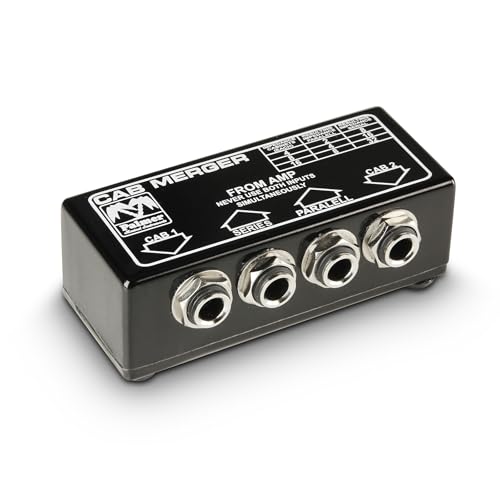
- Inputs: 2
- Input connectors: 6.3 mm jack
The Palmer CAB M isn’t actually a speaker cabinet at all, but rather a speaker simulator in a stompbox format. This is a tool for the bassist who wants to go “silent” or “ampless.” It provides the sound of a cabinet through an XLR output to a PA system or recording interface. While it is incredibly useful for fly-dates or churches where stage volume must be zero, it provides none of the physical feedback or stage monitoring that the Ampeg SVT-410HLF Bass Amp Cabinet offers. We recommend the Palmer for studio work or as a backup, but it shouldn’t be your primary choice if you actually need to hear yourself on stage without relying on in-ear monitors.
3. Peavey Headliner 410 Bass Enclosure

- Get more bass for less with 4 x 10" speakers
- Four custom designed 10" ceramic magnet woofers-8 ohms impedance-18mm ply cabinet with internal bracing and steel corners
The Peavey Headliner 410 is the budget-conscious rival to the Ampeg. It offers a similar 4×10 configuration and high power handling at a significantly lower price point. While the Headliner is a “workhorse” that gets the job done, it lacks the sophisticated porting and high-frequency horn control of the Ampeg. In our experience, the Peavey sounds a bit “flatter” and doesn’t have the same low-end depth or the signature Ampeg “growl.” If you are just starting out or on a strict budget, the Peavey is a solid choice, but for the professional who wants the absolute best in tone and build quality, the Ampeg SVT-410HLF remains the superior investment.
The Final Verdict: Is the Ampeg SVT-410HLF the Ultimate Gigging Cab?
After weeks of testing and comparing, our conclusion is clear: the Ampeg SVT-410HLF Bass Amp Cabinet is arguably the most versatile and best-sounding 4×10 on the market today. Its unique combination of a ported enclosure for massive low-end and a variable high-frequency horn for crystalline clarity makes it a “chameleon” that can handle everything from jazz to djent. While the 85-pound weight is a factor to consider, the ergonomic design and built-in wheels mitigate the struggle, leaving you with a tone that is simply world-class. It provides the “big rig” sound in a package that fits in the back of a standard hatchback, which is a massive win for the working musician.
If you are tired of your bass sound being lost in the mix and you want a cabinet that will last you for decades of touring and recording, this is the one. It’s an investment in your career and your craft. We recommend this cabinet to any bassist who refuses to compromise on their low-end definition. Stop settling for “okay” tone and step up to a professional standard. You can purchase the Ampeg SVT-410HLF Bass Amp Cabinet today and transform your live sound—your audience (and your ears) will thank you.
Last update on 2026-09-26 / Affiliate links / Images from Amazon Product Advertising API