
Tomsline AEB-3 5-Band Analog Bass EQ Pedal Review: Small Footprint, Massive Tone Control
As bass players, we have all been there. You show up to a gig, plug into the house amp, and suddenly your carefully crafted tone sounds like a muddy mess, or worse, it disappears completely in the mix. The struggle to find that “sweet spot” where your low end is punchy but your clarity remains intact is a never-ending battle. Without the right tools, you are at the mercy of the room’s acoustics and the limitations of your amplifier’s built-in tone knobs. This is where the Tomsline AEB-3 5-Band Analog Bass EQ Pedal enters the conversation. Solving the problem of a “lost” bass signal isn’t just about volume; it is about frequency management. If you cannot carve out your space in the sonic spectrum, you end up fighting with the kick drum for the lows and the guitars for the mids. Failing to address this results in a flat, uninspiring performance that leaves the audience—and the band—feeling underwhelmed. We spent weeks putting this pedal through its paces to see if it truly offers the surgical precision needed to save your sound.

- 5-band equalizer for bass
- 62.5Hz, 125Hz, 500Hz, 1KHz and 4KHz with +/- 18db control
What to Consider Before Buying an Electric Guitar or Bass Equalization Pedal
An Electric Guitar Equalization Effects pedal is more than just another stompbox; it’s a key solution for players who want absolute authority over their instrument’s voice. Whether you are trying to compensate for a “dark” sounding bass, add a mid-frequency growl for a solo, or scoop out the harshness of a brand-new set of strings, an EQ pedal acts as a secondary preamp. It allows you to fix tonal deficiencies before the signal even reaches your amplifier. For many of us, it is the most important “utility” pedal on the board, acting as a corrective tool or a creative boost.
The ideal customer for this type of product is someone facing inconsistent stage sound or someone who uses multiple basses with different output levels and wants a consistent tone. It is also perfect for the experimentalist who wants to push their drive pedals into specific frequency ranges. However, it might not be suitable for those who prefer a “set and forget” approach with a high-end active bass that already features a powerful onboard preamp. If your bass already has a 3-band EQ with sweepable mids, a 5-band pedal might feel redundant unless you use it specifically as a lead boost.
Before investing, consider these crucial points in detail:
- Dimensions & Space: In the world of modern pedalboards, real estate is at a premium. You need to consider whether you want a full-sized unit with more sliders or a “nano” style pedal like the Tomsline AEB-3 5-Band Analog Bass EQ Pedal. Smaller pedals are easier to fit into crowded boards but often require more precision when adjusting the tiny knobs during a live set.
- Frequency Band Selection: Not all EQ pedals are created equal. For bass, you need bands that target the specific low-mid and sub-bass frequencies. Look for pedals that cover the range from at least 60Hz up to 4KHz. The ability to cut or boost by a significant margin (like +/- 18db) gives you much more headroom for drastic tone shifts.
- Materials & Durability: Since this is a “utility” pedal that might stay on for the duration of a show, it needs to be built like a tank. Aluminum alloy housings are the industry standard for a reason—they are lightweight but can withstand the weight of a heavy foot. Check the quality of the footswitch and ensure it offers true bypass to keep your signal clean when the pedal is off.
- Ease of Use & Maintenance: Long-term care involves keeping the sliders or knobs clean of dust and debris, which can cause “scratchy” audio. A pedal with a simple layout is often better for quick on-stage adjustments. Also, consider the power requirements; most standard boards use 9V DC, so compatibility is key to avoiding bulky extra power supplies.
While the Tomsline AEB-3 5-Band Analog Bass EQ Pedal is an excellent choice for those seeking a compact solution, it’s always wise to see how it stacks up against the competition. For a broader look at all the top models, we highly recommend checking out our complete, in-depth guide:
sculpting the ultimate heavy tone with our guide to the best 10-band EQ pedals for metal
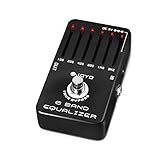
- PRECISE ±18dB TONE SCULPTING – 6 GUITAR-OPTIMIZED BANDS: Shape your sound with surgical precision across six carefully selected frequencies (100Hz, 200Hz, 400Hz, 800Hz, 1.6kHz, 3.2kHz). Each slider...

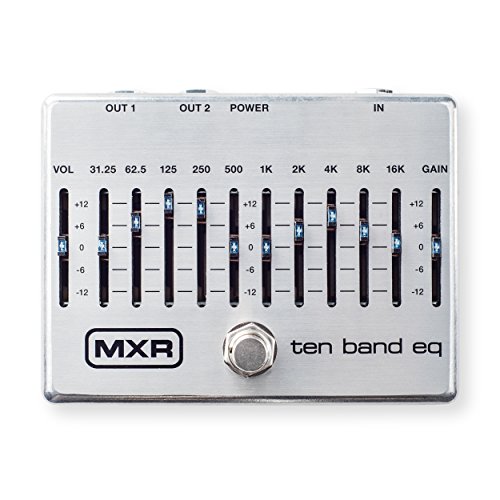
- Cut or boost 10 different frequencies up to ±12dB

- ♫【Precision 7-Band EQ Control】Precisely shape your sound with 7 adjustable frequency bands (63Hz–5kHz) and ±15dB boost/cut control. Eliminate muddy lows, enhance sparkling highs, or dial in...
First Impressions: Unboxing the Tomsline AEB-3 5-Band Analog Bass EQ Pedal
When we first pulled the Tomsline AEB-3 5-Band Analog Bass EQ Pedal out of its packaging, the first thing that struck us was the size. This is a true “mini” pedal, measuring just 4 x 2 x 2 inches. It feels incredibly sturdy in the hand, thanks to its aluminum alloy construction. Many budget pedals feel like toys, but this feels like a professional-grade tool. The matte finish is sleek, and the sliders—while small—have a satisfying resistance to them, ensuring you don’t accidentally bump your settings mid-song. Before you buy, you might want to see its full feature set and user reviews to get a sense of its physical scale.
Compared to market leaders like the Boss GEB-7, the Tomsline is significantly smaller and much more affordable. It doesn’t feel like a compromise, though. The inclusion of a dedicated level control is a massive plus, allowing you to use the pedal as a clean boost. We found that the true bypass footswitch is clicky and responsive, and there was no noticeable “pop” when engaging the effect—a common issue with cheaper analog pedals. It’s a no-frills, high-performance approach to equalization.
Key Benefits
- Ultra-compact footprint saves valuable space on crowded pedalboards.
- +/- 18dB of range provides extreme flexibility for cutting or boosting.
- Dedicated Level control allows for use as a clean boost or to compensate for heavy EQ cuts.
- True bypass circuitry ensures zero signal degradation when the pedal is disengaged.
Limitations
- The 5-band layout offers less precision than 7-band or 10-band alternatives.
- Tiny knobs and sliders can be difficult to adjust precisely in dark stage environments.
Deep Dive: Performance Analysis of the Tomsline AEB-3 5-Band Analog Bass EQ Pedal
Frequency Sculpting and Precision
The heart of any EQ pedal is its frequency selection, and we found the Tomsline AEB-3 5-Band Analog Bass EQ Pedal to be exceptionally well-tuned for the modern bassist. The five bands are set at 62.5Hz, 125Hz, 500Hz, 1KHz, and 4KHz. In our testing, we found that these specific points hit the most critical areas of the bass guitar’s voice. The 62.5Hz slider is your “thump” control; boosting this adds a massive, room-shaking foundation without becoming “woofy.” Conversely, if you’re playing in a boomy room, a slight cut here instantly cleans up the bottom end. To understand how these frequencies interact with different amp setups, you should check the latest price and availability for this versatile tool.
The 500Hz band is where the “honk” lives. For fingerstyle players, a slight boost here adds that classic Jaco-style punch that helps notes pop. The 1KHz and 4KHz bands are essential for slap players or those using distortion. We used the 4KHz slider to add “snap” to our high-end, which made the bass cut through a dense mix of two guitars and a loud drummer. Because each band offers a massive +/- 18dB range, the degree of control is staggering. You aren’t just making subtle tweaks; you can completely transform the character of your instrument. We were particularly impressed by the analog nature of the circuit, which felt “warm” and musical rather than the clinical or harsh sound sometimes found in digital EQ units.
The Nano Form Factor and Integration
Integrating the Tomsline AEB-3 5-Band Analog Bass EQ Pedal into a professional rig is a breeze due to its diminutive size. We tested this on a variety of boards, and it fits into those awkward gaps that a standard-sized pedal simply couldn’t occupy. For the touring musician, this is a godsend. It allows you to add a powerful tone-shaping tool without having to upgrade to a larger, heavier pedalboard. The build quality suggests it can handle the rigors of the road. The aluminum shell feels indestructible, and the hardware interface (1/4-inch audio signal) is standard and reliable. This is a feature that really sets it apart for those of us who travel light.
However, the small size does come with a learning curve. If you have larger fingers, adjusting the sliders requires a bit of finesse. We found that once we dialed in our “core” sound, we rarely had to touch them again, so the small size was mostly a benefit. The level control is particularly useful when you are cutting multiple frequencies; by boosting the level, you can keep your overall volume consistent even with a heavily “scooped” EQ setting. This makes it a perfect companion for other effects, as it can “fix” the volume drop-off sometimes caused by heavy modulation or old-school fuzz pedals.
Noise Floor and Signal Integrity
One of the biggest concerns with budget analog pedals is the introduction of hiss or hum, especially when boosting high frequencies. We were pleasantly surprised to find that the Tomsline AEB-3 5-Band Analog Bass EQ Pedal is remarkably quiet. Even when we pushed the 1KHz and 4KHz bands significantly, the noise floor remained impressively low. This is crucial for recording environments where every bit of hiss is magnified. The “pretty quiet” nature of the pedal—as noted by several long-term users—held true in our studio evaluations. You can read more about its technical specs to see why its 300mA draw helps maintain such a clean signal path.
The True Bypass feature is another highlight. When the pedal is off, your signal passes through completely untouched. We A/B tested the signal with the pedal in and out of the chain (while disengaged) and could detect zero loss in high-end sparkle or low-end heft. This ensures that the pedal only affects your tone when you want it to. For bassists who pride themselves on their “straight-into-the-amp” tone but need an occasional EQ shift, this transparency is a non-negotiable requirement that the Tomsline meets with ease.
Versatility in Effects Loops and Signal Chains
We didn’t just test this as a standalone pedal; we also explored its utility in complex signal chains. One of the most interesting applications we found—and one supported by user feedback—is using the Tomsline AEB-3 5-Band Analog Bass EQ Pedal in the effects loop of a drive pedal. Specifically, for fans of the Billy Sheehan-style dual-output setup, this pedal is a game-changer. By placing it in the loop of a distortion pedal, we were able to sculpt the mid-level distortion frequencies independently from the clean low end. This allowed for a “mild tube-driven” sound that could be kicked into high gear without losing the foundational “thump.”
This level of versatility makes the AEB-3 more than just a corrective EQ; it’s a creative sound-design tool. Whether you are using it to “tame” a wild fuzz pedal or to add a bit of “air” to a dull-sounding cabinet, the analog 5-band interface is intuitive and effective. For many players, this might be the “missing link” that finally makes their drive section sound professional. To see how others are using it in their unique rigs, you might want to explore the community feedback and images from real-world setups.
What Other Users Are Saying
The general sentiment among users is one of pleasant surprise, primarily regarding the value-to-performance ratio. One user highlighted its utility in a specialized setup, noting they used it to “control the mid-level distortion frequencies” in a drive pedal’s loop, allowing for a gritty sound while maintaining a solid low end. This aligns perfectly with our finding that the AEB-3 is a versatile tool for frequency management, not just a simple volume boost. Another user succinctly described it as a “Nice EQ!” that “worked like a charm,” reflecting the pedal’s reliability and ease of use.
While most feedback is overwhelmingly positive, some users have noted that you need the “proper setting of the level control” to ensure it remains quiet. This is a common characteristic of analog EQs—if you boost everything to the max, you will eventually hit the noise floor. However, when used judiciously, it remains one of the quietest mini-EQs on the market. The feedback confirms that for gigging musicians, the Tomsline AEB-3 5-Band Analog Bass EQ Pedal is a dependable workhorse that delivers on its promises. You can see more user perspectives here to help make your decision.
Comparing the Tomsline AEB-3 5-Band Analog Bass EQ Pedal to Its Top 3 Alternatives
1. MXR Ten Band EQ Guitar Pedal
- Cut or boost 10 different frequencies up to ±12dB
- LEDs provide high visibility, even in direct sunlight
The MXR Ten Band EQ is widely considered the industry standard for those who need surgical precision. Unlike the 5-band layout of the Tomsline, the MXR offers ten sliders, allowing you to target very specific frequencies with much tighter “Q” values. It also features dual outputs, making it ideal for stereo rigs or splitting your signal between an amp and a DI. However, the MXR is significantly larger, heavier, and more expensive. It also requires an 18V power supply to achieve its high headroom. If you are a professional who needs absolute control over every micro-frequency and has plenty of board space, the MXR is the better choice. But for the average gigging bassist, the Tomsline AEB-3 5-Band Analog Bass EQ Pedal offers 90% of the utility for a fraction of the cost and size.
2. Behringer Eq700 7-Band Graphic Equalizer

- Shape your sound and eliminate feedback with 7 bands of equalization
- Wide frequency range from 100 Hz to 6.4 kHz with a powerful 15dB boost/cut per band
The Behringer EQ700 is the go-to alternative for players on a strict budget. It offers seven bands of equalization, providing more granularity than the Tomsline’s five bands. It is incredibly affordable and does a decent job of shaping tone. However, the main drawback here is build quality. The Behringer is housed in a plastic casing, which may not hold up as well as the Tomsline’s aluminum alloy under heavy gigging conditions. Additionally, some users find the Behringer’s bypass to be less transparent. If you are a bedroom player or just starting to experiment with EQ, the Behringer is a solid entry point. But if you need something that can survive a tour and stay clean in your signal path, the Tomsline AEB-3 is a superior investment.
3. Caline CP-24 10-Band EQ Guitar Effects Pedal

- Sturdy aluminum alloy case;True bypass design minimizes tone loss
- True Bypass
The Caline CP-24 offers a middle ground between the budget Behringer and the premium MXR. Like the MXR, it features 10 bands of EQ, but it comes in at a price point much closer to the Tomsline. It is built with a sturdy metal chassis and offers a wide range of control. The primary difference is the footprint; the Caline is a much larger pedal. While it provides more frequency bands, it lacks the “nano” convenience that makes the Tomsline AEB-3 5-Band Analog Bass EQ Pedal so appealing for small boards. If you have the space and want those extra sliders without breaking the bank, the Caline is a fantastic option. However, for those prioritizing board real estate and simplicity, the Tomsline remains the winner in the compact category.
Final Verdict: Is the Tomsline AEB-3 5-Band Analog Bass EQ Pedal Worth It?
After extensive testing and comparison, the Tomsline AEB-3 5-Band Analog Bass EQ Pedal stands out as an exceptional value for any bass player. Its main strengths lie in its incredibly small footprint, robust aluminum construction, and the musicality of its analog circuit. While it may only have five bands, the frequencies selected are perfectly tuned for the bass guitar, offering exactly what you need to cut through a mix or fix a muddy room. The addition of a level control and true bypass makes it a professional-grade tool despite its “budget” price tag. We recommend this pedal to any bassist who needs a reliable, space-saving EQ for gigging or recording.
Whether you are looking to add a bit of slap-style “ping” to your top end or you need to tame a difficult effects loop, this pedal handles the job with ease. It’s quiet, transparent, and built to last. If you’re ready to take full control of your low-end presence without sacrificing board space, we highly recommend that you check out the Tomsline AEB-3 and see how it can transform your sound today.
Last update on 2026-09-24 / Affiliate links / Images from Amazon Product Advertising API