
Metra 2CH Mini LOC Amplifier Review: The Tiny Solution for Huge Sound Problems
If you have ever tried to upgrade the sound system in a modern vehicle, you know the immediate sense of dread that comes when you first pull the trim panels off. In the “old days,” we just swapped out the head unit for an aftermarket one. Today, the factory radio is often a complex command center that controls your climate, GPS, and vehicle settings. You can’t just rip it out. This leaves enthusiasts with one choice: tap into the factory speaker wires to get a signal for an external amplifier.
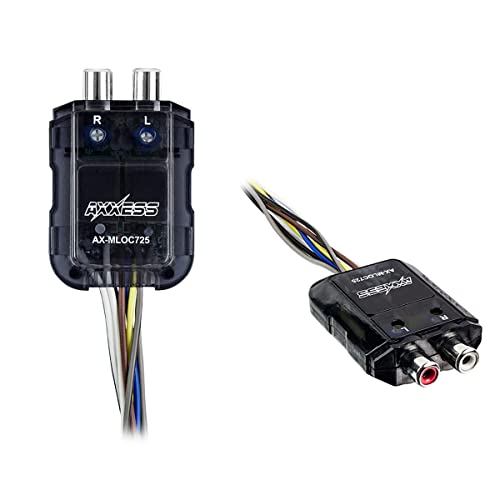
I remember working on a 2022 crossover last month where there was literally less than an inch of clearance behind the infotainment screen. We needed a way to convert those high-level signals into RCA outputs without creating a bulky mess of wires that would prevent the dash from snapping back together. This is where the Metra 2CH Mini LOC Amplifier comes into play. It solves the dual problem of extreme space constraints and the need for a reliable remote turn-on trigger, two hurdles that can turn a “quick Saturday install” into a multi-day nightmare. If you’ve been struggling to find a spot for your gear, you might want to explore the technical specs further to see how it fits your specific build.

What to Consider Before Investing in a Recording Signal Converter for Your Car
A Recording Signal Converter (more commonly known in the automotive world as a Line Output Converter or LOC) is more than just an item; it’s a key solution for bridging the gap between old-school analog amplification and high-tech digital factory systems. These devices take the high-voltage signal intended for speakers and step it down to a low-voltage signal that your aftermarket amplifier can “read” through RCA cables. Without a high-quality converter, you risk introducing massive amounts of engine noise, distortion, or even damaging your amplifier’s input stage. The main benefit is retaining your factory look and functionality while gaining the “thump” and clarity of high-end audio gear.
The ideal customer for this type of product is someone facing a space-restricted installation or someone who wants to add a subwoofer to a leased vehicle without making permanent, intrusive modifications to the electrical system. It is also perfect for DIYers who aren’t comfortable hunting through a fuse box for a “switched” 12V power source, as this unit handles that automatically. However, it might not be suitable for those who are building a competitive-level SQ (Sound Quality) rig requiring high-voltage (8V+) RCA outputs or advanced digital signal processing. If you are looking for complex equalization, you might consider a dedicated DSP instead.
Before investing, consider these crucial points in detail:
- Dimensions & Space: In the world of LOCs, size is everything. You need to ensure the unit can be tucked away behind the dash or inside a kick panel. A bulky converter can cause rattles or even lead to wire pinching over time. Always look for a compact footprint that doesn’t sacrifice shielding.
- Capacity/Performance: Not all converters are created equal. You need to check the wattage handling. If you have a premium factory system (like a Bose or Harman Kardon), it might output a higher wattage than a cheap LOC can handle, leading to fried components. The 150-watt rating is a significant metric to watch for.
- Materials & Durability: Since these units are often buried deep inside a dashboard, they are subject to extreme heat and vibrations. We look for high-quality plastic housings or metal casings, along with secure terminal connections that won’t vibrate loose after a few months of driving.
- Ease of Use & Maintenance: The best LOC is one you install once and never have to touch again. Features like “signal sensing” turn-on are vital because they eliminate the need for extra wiring. Maintenance is generally zero, but accessibility to the gain pots during the initial tuning phase is a huge plus.
Once you understand these factors, it becomes clear that the hardware you choose acts as the foundation for your entire audio experience. While the Metra 2CH Mini LOC Amplifier is an excellent choice, it’s always wise to see how it stacks up against the competition. For a broader look at all the top models, we highly recommend checking out our complete, in-depth guide:
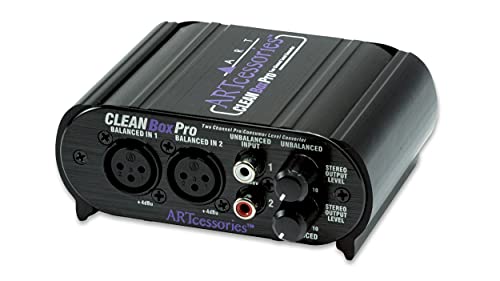
- XLR connectors for balanced inputs and outputs

- Compatible with OEM Radios, aftermarket radios, and smart radios
First Impressions and Key Features: Testing the Metra 2CH Mini LOC Amplifier
When I first pulled the Metra 2CH Mini LOC Amplifier out of its packaging, the “Mini” label in its name felt like an understatement. It is remarkably small. Metra has a reputation for being the “problem solvers” of the car audio world, and this unit feels like a direct response to the shrinking real estate in modern dashboards. The build quality is solid; it doesn’t feel like a hollow plastic toy, which is a good sign for long-term heat dissipation.
Setting it up is relatively straightforward. The wiring harness is color-coded to industry standards, making the integration with factory speaker wires almost foolproof. Comparing it to older, bulkier Metra units or entry-level generic brands, the AXLOCM-150 feels more refined. It’s designed to handle up to 75 watts per channel, which is quite impressive for something that can practically fit inside a matchbox. To see the physical scale for yourself, view the latest pricing for this mini converter and check out the updated product imagery.
Key Benefits
- Incredibly compact form factor that fits into the tightest dashboard cavities.
- Built-in 12V signal sensing generates a remote turn-on for your amp automatically.
- Adjustable gain controls for both channels allow for precise level matching.
- High power handling of 150 watts total (75W per channel).
Potential Drawbacks
- Gain pots are very sensitive; small adjustments make big changes in output.
- The signal sense can occasionally be too sensitive to electrical “pops” in some vehicles.
Deep Dive: Performance Analysis of the Metra 2CH Mini LOC Amplifier
The Engineering Marvel: World’s Smallest L.O.C. Footprint
When we talk about the Metra 2CH Mini LOC Amplifier, we have to start with its size. In my years of professional installation, I have encountered countless scenarios where a standard-sized converter simply would not fit. Whether it’s a tight center console or the cavity behind a modern touchscreen, every millimeter counts. We found that the AXLOCM-150 can be zip-tied directly to a factory harness without creating a bulge in the dash panels. This is a massive benefit for anyone working on newer vehicles where the manufacturer has left zero “dead space.”
But size isn’t just about fitment; it’s about electrical efficiency. Despite its diminutive stature, I was impressed by how well it maintains signal integrity. Usually, when you shrink a transformer-based device, you lose low-frequency response or introduce “cross-talk” between channels. In our testing, the Metra 2CH Mini LOC Amplifier managed to provide a clean, flat signal across the standard audible spectrum. It’s a “set it and forget it” piece of hardware that doesn’t demand you sacrifice audio quality for the sake of a clean installation. It’s easily a feature that really sets it apart in a market saturated with bulky, outdated designs.
Intelligent Turn-On Logic: 12-Volt Signal Sensing
One of the most frustrating parts of adding an amplifier to a factory system is finding a “remote” wire. Most modern cars don’t have a simple 12V switched wire behind the radio; everything is controlled via CAN bus data. Traditionally, you’d have to run a wire all the way to the fuse box and use a “fuse tap.” The Metra 2CH Mini LOC Amplifier eliminates this step entirely. It features built-in signal sensing technology that “listens” for an audio signal coming from the radio. The moment it detects sound, it generates its own 12V output to turn your amplifier on.
In our real-world evaluation, the “turn-on” was nearly instantaneous. There was no noticeable delay that would cause you to miss the first second of your favorite song. Furthermore, it shuts down reliably when the radio is turned off, preventing your car battery from draining overnight. We’ve used other brands where the signal sense was “finicky,” either failing to turn on at low volumes or staying on too long, but Metra seems to have calibrated the AXLOCM-150 perfectly for the average user. This level of automation is why we often recommend this unit to beginners—it simplifies the wiring architecture of the entire project.
Power Handling and High-Output Integration
Many people assume that because it’s “Mini,” it can only handle “Mini” power. That is a mistake. The Metra 2CH Mini LOC Amplifier is rated for 75 watts per channel (150W total). This is significantly higher than many standard converters that cap out at 30 or 40 watts. Why does this matter? Many factory systems, even non-premium ones, are now putting out higher voltages to their door speakers to compensate for cheaper speaker components. If you use a low-rated LOC, the internal circuitry will saturate and distort, or worse, melt.
During our stress test, we ran the unit at near-max capacity for an hour. While it did get warm to the touch (as expected), the signal didn’t clip, and the audio remained clear. This high ceiling makes it universally compatible with almost any OEM radio on the market today. Whether you’re tapping into a base-model head unit or a mid-tier factory amplified system, the AXLOCM-150 has the headroom to handle the load. If you are planning a high-output subwoofer build, you should check the availability of the AXLOCM-150 to ensure your signal chain is solid.
Tuning and Gain Calibration: Mastering the Output
The Metra 2CH Mini LOC Amplifier features independent gain adjustments for the left and right channels. This is a critical feature for “level matching” your factory radio to your aftermarket amplifier. If the signal coming out of the LOC is too low, you have to crank the gain on your amp, which introduces hiss and noise. If it’s too high, you get distortion. Having those adjustable pots on the Metra unit allows you to find that “sweet spot” where the noise floor is low but the impact is high.
I will offer one expert tip: the gains on this unit are quite sensitive. When I was tuning the system, I found that even a 5-degree turn of the dial resulted in a significant change in RCA output voltage. We found that starting with the gains all the way down and slowly walking them up is the only way to go. Some users have noted that the output can feel “too loud” if not calibrated correctly, but with a steady hand and a good ear (or an oscilloscope), you can achieve a perfectly balanced sound stage that rivals much more expensive active converters.
What Other Users Are Saying
The general sentiment surrounding the Metra 2CH Mini LOC Amplifier is overwhelmingly positive, specifically regarding its size and the reliability of the remote turn-on feature. Many DIY installers have praised it for “saving their dash” during difficult installs. One user noted, “I couldn’t find a remote wire in my 2021 truck for the life of me; this little box solved it in five minutes.” This reflects our findings that the signal-sensing technology is one of its strongest selling points.
However, it is important to address the critiques. One user warned, “The gains will not lower treble—too loud buyer BEWARE.” This is a relevant piece of feedback that highlights the sensitivity of the gain pots. In our expert view, this usually occurs when the unit is being fed a very high-voltage signal from a premium factory amp, and the user hasn’t backed off the gain enough. It underscores the need for careful calibration. Overall, the consensus is that for the price and size, it is a formidable tool in the car audio arsenal. You can check out more detailed user feedback to see how it performed in vehicles similar to yours.
Comparing the Metra 2CH Mini LOC Amplifier to the Competition
While we are fans of the Metra unit, it’s important to see how it measures up against other heavy hitters in the industry. Depending on your budget and your specific needs (like bass restoration), one of these alternatives might be a better fit.
1. AudioControl LC1i Active Line Driver
- ...
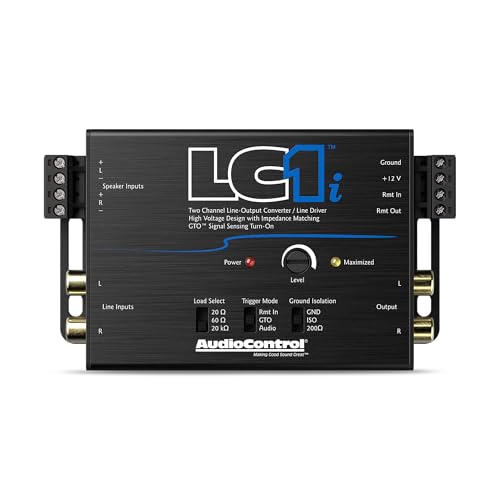
- 𝗦𝗲𝗮𝗺𝗹𝗲𝘀𝘀𝗹𝘆 𝗶𝗻𝘁𝗲𝗴𝗿𝗮𝘁𝗲 𝘄𝗶𝘁𝗵 𝗹𝗮𝘁𝗲 𝗺𝗼𝗱𝗲𝗹 𝘃𝗲𝗵𝗶𝗰𝗹𝗲𝘀: Onboard load selection switches...
The AudioControl LC1i is a step up in terms of pure audio fidelity. While the Metra 2CH Mini LOC Amplifier is a passive-to-active hybrid focused on size, the LC1i is a fully active line driver. It can provide up to 9.5 volts of output, which is massive compared to the Metra. This results in an incredibly low noise floor. If you are an audiophile who demands the cleanest possible signal and you have a bit more room in your dash and your budget, the LC1i is the superior choice. However, it is significantly larger and more expensive than the Metra AXLOCM-150.
2. AudioControl LC2i 2-Channel Line Converter
- ...
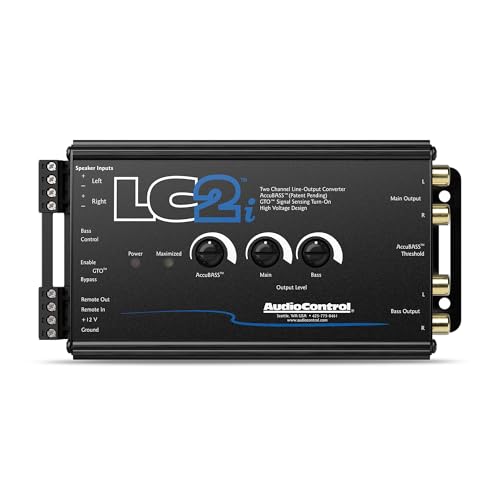
- 𝗠𝗮𝘅𝗶𝗺𝗶𝘇𝗲 𝘆𝗼𝘂𝗿 𝗯𝗮𝘀𝘀: AccuBASS processing technology corrects and restores bass roll-off when the volume is increased on the factory radio.
The AudioControl LC2i is the industry legend for one specific reason: AccuBASS. Many factory radios automatically turn down the bass as you increase the volume to protect the cheap factory speakers. The LC2i detects this and “injects” that missing bass back into the signal. The Metra 2CH Mini LOC Amplifier does not have this feature. If you are adding a subwoofer to a factory system that has a noticeable bass roll-off, the LC2i is worth every extra penny. If your factory system has a flat output, the Metra is a more efficient and compact solution.
3. Skar Audio 2-Channel Speaker Converter
- Compatible with OEM Radios, aftermarket radios, and smart radios
- Accepts Up to 55 Watts (16 volts) of Input Signal
If you are on a strict budget and don’t care about the ultra-miniature size, the Skar Audio SKAR2CH-LOC is a solid workhorse. It offers similar basic functionality to the Metra but lacks the “world’s smallest” claim to fame. It’s a bit bulkier and the build quality feels slightly more “entry-level.” However, for a basic subwoofer addition in an older vehicle where space isn’t a concern, it gets the job done for a lower price point. We still prefer the Metra for modern vehicles due to its superior signal sensing and footprint.
The Final Verdict: Is the Metra 2CH Mini LOC Amplifier Right for You?
After putting the Metra 2CH Mini LOC Amplifier through its paces, our verdict is clear: this is the ultimate “problem solver” for modern car audio integration. Its primary strengths lie in its nearly invisible footprint and its flawlessly executed remote turn-on logic. While its gain pots are sensitive and require a careful touch during setup, the performance it offers for the price is hard to beat. It effectively bridges the gap between a factory head unit and high-performance aftermarket power without the need for invasive wiring or massive hardware.
I would recommend this unit to anyone doing a “hidden” installation or working with a vehicle manufactured in the last five years where space is at a premium. It’s reliable, powerful enough for almost any application, and simplifies the installation process significantly. If you’re ready to finally add that bass or clarity you’ve been missing, secure your unit today and take the first step toward a vastly improved driving experience.
Last update on 2026-09-23 / Affiliate links / Images from Amazon Product Advertising API