
Behringer CM1A MIDI to CV Converter Module Review: The Most Accurate Bridge Between Your DAW and Modular Gear
If you have ever stared at a beautiful, complex Eurorack system and felt the frustration of not being able to play it with your favorite weighted MIDI controller or sequence it accurately from your DAW, you are not alone. For years, I found myself trapped in a “digital-analog divide.” I loved the tactile nature of my modules, but my workflow lived in Ableton Live. The problem was simple but frustrating: how do I get high-resolution, pitch-perfect control from a USB cable into a series of patch cables without spending a fortune or sacrificing precious rack space? Many cheap converters suffer from “pitch drift” or low-resolution jitter that makes melodic sequencing a nightmare. We decided to put the Behringer CM1A MIDI to CV Converter Module through its paces to see if it truly provides the rock-solid stability modern hybrid setups demand.
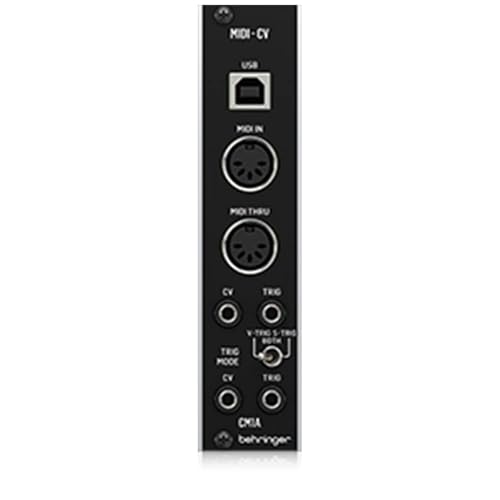
- Converts MIDI signals to analog control voltages for modular synthesizers
- High-resolution 16-Bit Texas Instruments DAC for high resolution and pitch accuracy
What to Consider Before Buying a Recording Signal Converter for Your Rack
A Recording Signal Converter is more than just an item; it’s a key solution for musicians who want to unify their studio. In the world of Eurorack, a MIDI-to-CV converter acts as the translator. It takes the digital “language” of your computer or keyboard and turns it into the voltage “language” of your oscillators and envelopes. Without a high-quality converter, your modular system remains an island, isolated from the timing and melodic precision of your digital tools. Solving this is crucial because it allows for complex polyphonic arrangements and perfect synchronization that is nearly impossible to achieve by hand-turning knobs alone.
The ideal customer for this type of product is someone facing the limitations of a “purely analog” workflow, while it might not be suitable for those who prefer the chaotic, self-generating nature of “West Coast” synthesis where external control isn’t the goal. If you are a producer who wants to use a DAW to sequence an analog bassline or a keyboardist wanting to play their modular rig live, this is an essential tool. However, if you already own a MIDI-capable synthesizer with CV outputs (like a Keystep or a Grandmother), you might find this redundant unless you need more dedicated channels.
Before investing, consider these crucial points in detail:
- Dimensions & Space: In a Eurorack case, “HP” (Horizontal Pitch) is your most valuable currency. You want a module that offers maximum functionality in a small footprint. Look for something under 8HP that doesn’t sacrifice connectivity for size. The Behringer CM1A MIDI to CV Converter Module sits at a comfortable 6HP, making it very “case-friendly.”
- Resolution and DAC Quality: Not all converters are created equal. A low-resolution Digital-to-Analog Converter (DAC) will result in “zipper noise” or steps in your pitch. For melodic work, a 16-bit DAC is the gold standard, ensuring that every note is exactly where it should be on the frequency spectrum.
- Connectivity Options: Some modules only offer 5-pin MIDI, while others only offer USB. The best converters provide both, allowing you to connect directly to a computer or an older hardware sequencer without needing extra adapters or hubs.
- Trigger Flexibility: Different vintage and modern modules require different trigger types (V-trig vs. S-trig). A versatile converter should be able to switch between these to ensure compatibility with everything from Moog clones to modern boutique modules.
While the Behringer CM1A MIDI to CV Converter Module is an excellent choice, it’s always wise to see how it stacks up against the competition. For a broader look at all the top models, we highly recommend checking out our complete, in-depth guide:
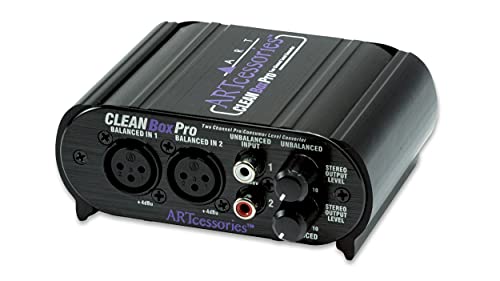
- XLR connectors for balanced inputs and outputs


- Compatible with OEM Radios, aftermarket radios, and smart radios
First Impressions: The Unboxing of the Behringer CM1A MIDI to CV Converter Module
When the Behringer CM1A MIDI to CV Converter Module arrived at our studio, the first thing that struck us was the build quality relative to the price. It feels substantial, not flimsy. The faceplate is a clean, modern aesthetic—black with white lettering—that fits well in almost any rack design. Unboxing is straightforward: you get the module, the ribbon power cable, and the mounting screws. There is no complex assembly required, which is a relief for those of us who just want to get to the music-making part.
Compared to market leaders that often charge three times the price for similar specs, the Behringer CM1A MIDI to CV Converter Module feels like a disruptor. It’s 6HP wide, which is slightly narrower than some of its older competitors, yet it feels just as sturdy. Before you even plug it in, you can see its full feature set and user reviews to understand why this has become a staple in budget-conscious professional rigs. The inclusion of a USB port right on the front panel is a massive workflow win, as it avoids the need for a rear-mounted MIDI interface in your case.
Key Benefits
- High-resolution 16-bit Texas Instruments DAC for incredible pitch accuracy.
- Dual connectivity with both USB and traditional 5-pin MIDI DIN.
- Switchable trigger modes (V-Trig, S-Trig, or both) for vintage compatibility.
- Very slim 6HP profile saves valuable rack space.
Limitations
- Basic feature set; lacks some of the deep “alt-functions” found on more expensive modules.
- Only two channels of CV/Gate, which might be limiting for massive polyphonic setups.
Deep Dive: Performance and Practicality of the Behringer CM1A MIDI to CV Converter Module
The Magic of the 16-Bit Texas Instruments DAC
The heart of any MIDI-to-CV converter is its DAC. In our testing, we found that the Behringer CM1A MIDI to CV Converter Module outperforms many converters in the $200+ range simply because of its 16-bit Texas Instruments architecture. Why does this matter? Most affordable converters use 12-bit chips, which provide 4,096 levels of voltage. While that sounds like a lot, across a 10-octave range, you start to hear “stepping” or slight tuning inaccuracies. The 16-bit DAC in the CM1A provides 65,536 levels, meaning the pitch tracking is essentially perfect to the human ear.
When we patched this into a precision VCO (Voltage Controlled Oscillator) and ran a five-octave sequence from our DAW, the tuning remained rock solid from the lowest sub-bass to the highest piercing leads. We didn’t have to reach for a fine-tune knob once the system was warmed up. This level of precision is usually reserved for boutique modules, so seeing it here was a pleasant surprise. If you want to check the latest price and availability, you’ll see that this performance-to-cost ratio is genuinely hard to beat. It transforms your modular rig from a “cool noise box” into a legitimate musical instrument that can play in tune with a piano or a digital synth.
Versatility: USB vs. 5-Pin MIDI Integration
One of the standout features we evaluated was the dual-input method. Most of us work in a hybrid environment. Sometimes I want to plug my Arturia Keystep directly into the 5-pin MIDI port for a “dawless” jam session. Other times, I need to connect my MacBook Pro directly to the rack via USB to handle complex polyrhythmic sequencing. The Behringer CM1A MIDI to CV Converter Module handles both with zero configuration. It is class-compliant, meaning Windows, macOS, and even Linux systems recognized it instantly without needing to hunt for drivers.
We found that the latency over USB was negligible, which is critical for live performance. There’s nothing that kills a vibe faster than a 20ms delay between pressing a key and hearing a sound. The CM1A feels instantaneous. This flexibility makes it a “feature that really sets it apart” from older modules that require a separate MIDI interface just to talk to your computer. For a beginner, this simplifies the signal chain significantly, and for a pro, it provides a vital backup connection should one cable fail during a set. You can effectively use your modular as a “VST” with physical knobs by simply running a single USB cable to this module.
Advanced Triggering and Duophonic Capabilities
A major pain point with vintage gear is the “S-Trig” vs. “V-Trig” debate. Modern Eurorack uses Voltage Triggers (V-Trig), but if you are trying to interface with an old Moog or certain Korg pieces, you need Shorting Triggers (S-Trig). The Behringer CM1A MIDI to CV Converter Module includes a toggle switch that allows you to choose your trigger type. This is a massive “quality of life” feature. During our tests, we were able to trigger a modern Behringer Neutron and a vintage-spec envelope generator simultaneously without any external signal inverters.
Furthermore, the module supports a duophonic mode. By default, it sends CV/Gate for one note, but you can configure it to send two different notes to two different oscillators. This allows you to play chords or “thick” detuned leads directly from your MIDI keyboard. While it isn’t a full polyphonic interface, having that second channel of CV and Gate opens up huge creative doors. We used the second CV output to control filter cutoff via MIDI Velocity, which added a layer of expression to our sequences that we didn’t have before. To truly understand how this can expand your creative palette, you should see its full feature set and user reviews for inspiration on complex patches.
Reliability in the Eurorack Ecosystem
In terms of power consumption, the Behringer CM1A MIDI to CV Converter Module is quite efficient, pulling only 70 mA on the +12 V rail. In a small “lunchbox” case where power is limited, every milliamp counts. We ran the module for 48 hours straight in a hot studio environment to check for thermal drift or component failure. The module remained cool to the touch, and the pitch stability never wavered. This reliability is something we often worry about with high-resolution DACs, which can sometimes be sensitive to temperature changes, but Behringer’s implementation here is solid.
The build also follows standard Eurorack specs perfectly. The 6HP width is accurate, and the mounting holes are aligned correctly—something that isn’t always a given with budget modules. We integrated it into a 104HP Skiff alongside boutique modules from Make Noise and Mutable Instruments, and it looked and performed right at home. It’s a workhorse module; it doesn’t try to be flashy with lights or fancy graphics, it just does its job perfectly every time you flip the power switch. This “set it and forget it” nature is exactly what you want in a utility module.
What Other Users Are Saying
The general sentiment among users is overwhelmingly positive, with a common theme being “value for money.” One seasoned modular enthusiast noted that they own “boutique name-brand stuff” but found that this module “does exactly the same thing” because, at the end of the day, these companies often “buy their diodes from the same place.” This highlights a growing realization in the community: you don’t need to spend $500 for a cool paint job when a $100 utility module performs identically.
International users have also weighed in. A user from Sweden described it as “very good and takes up little space,” while a user in Italy confirmed it “works well” even after being “tested with laboratory instrumentation.” The most common “negative” feedback isn’t actually about the performance, but rather a desire for more features, such as a built-in clock divider or more CV outputs. However, as one user pointed out, “for the price, you can’t complain,” and many are already planning to buy a second unit to expand their polyphony. This feedback is relevant because it confirms that the Behringer CM1A MIDI to CV Converter Module is not just a “beginner’s toy,” but a tool used and respected by people with high-end laboratory gear and expensive boutique racks alike.
Comparing the Behringer CM1A MIDI to CV Converter Module to Top Alternatives
While the CM1A is a powerhouse for synthesis, users often look for signal conversion in other audio contexts. Interestingly, the technology of converting and driving signals is a common thread across many audio disciplines. Let’s look at how other “signal converters” handle their specific tasks.
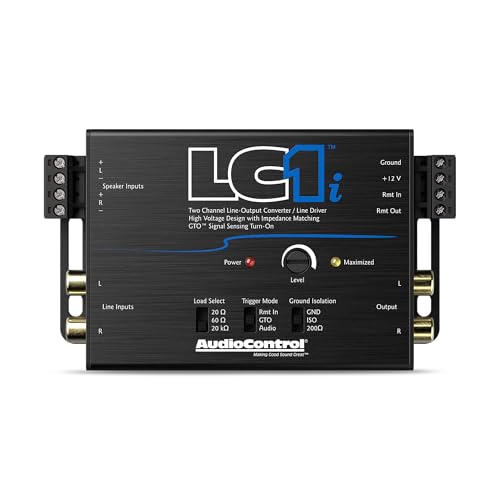
1. AudioControl LC1i Active 2-Channel Line Driver
- ...
- 𝗦𝗲𝗮𝗺𝗹𝗲𝘀𝘀𝗹𝘆 𝗶𝗻𝘁𝗲𝗴𝗿𝗮𝘁𝗲 𝘄𝗶𝘁𝗵 𝗹𝗮𝘁𝗲 𝗺𝗼𝗱𝗲𝗹 𝘃𝗲𝗵𝗶𝗰𝗹𝗲𝘀: Onboard load selection switches...
The AudioControl LC1i is a different beast, designed for car audio rather than Eurorack. However, like the Behringer CM1A MIDI to CV Converter Module, its primary job is “impedance matching” and “distortion-free” signal conversion. While the CM1A converts MIDI to CV, the LC1i converts speaker-level signals to RCA line-level. Who would prefer this? An audiophile looking to integrate a high-end subwoofer into a factory car system where clean signal gain is the priority. It lacks the 16-bit DAC of the CM1A, but it excels in high-voltage line driving which is essential for automotive environments.
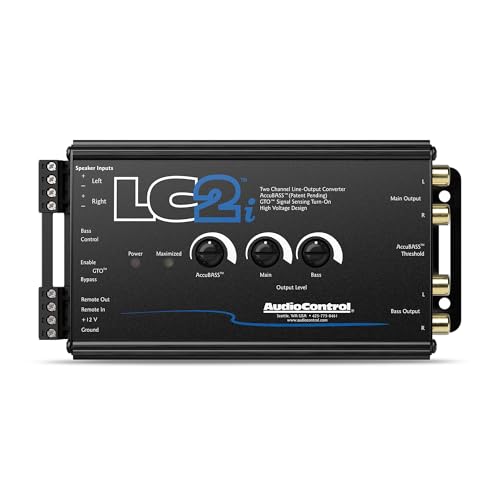
2. AudioControl LC2i 2-Channel Line Converter
- ...
- 𝗠𝗮𝘅𝗶𝗺𝗶𝘇𝗲 𝘆𝗼𝘂𝗿 𝗯𝗮𝘀𝘀: AccuBASS processing technology corrects and restores bass roll-off when the volume is increased on the factory radio.
The LC2i takes signal conversion a step further with its patented AccuBASS technology. If you find that your audio source (like a car head unit) rolls off the bass as the volume goes up, this converter “fixes” the signal. In a way, it’s like the “pitch correction” of the CM1A but for low-end frequencies. We recommend this for users who are frustrated with thin-sounding factory audio systems. It is more robust than the CM1A for high-power applications, but obviously, it won’t help you sequence a Moog oscillator.
3. Skar Audio 2-Channel Speaker Converter
- Compatible with OEM Radios, aftermarket radios, and smart radios
- Accepts Up to 55 Watts (16 volts) of Input Signal
For those on a strict budget, the Skar Audio SKAR2CH-LOC is the “no-frills” alternative in the car audio world. Much like how some users choose the CM1A because it “does its one job perfectly” without the boutique price tag, the Skar converter provides basic RCA outputs for a fraction of the cost of higher-end units. It doesn’t have the active gain stages of the AudioControl units or the 16-bit precision of the Behringer, but for a simple subwoofer addition, it gets the job done reliably.
The Final Verdict: Is the Behringer CM1A MIDI to CV Converter Module Worth It?
After weeks of testing and integrating the Behringer CM1A MIDI to CV Converter Module into various workflows, our conclusion is clear: it is arguably the best value-for-money module in the Eurorack world today. It solves the most fundamental problem of the modern synthesist—how to bridge the digital and analog worlds—without any of the compromises typically found in “budget” gear. The 16-bit DAC ensures your melodies are in tune, the dual-input options ensure your setup is flexible, and the 6HP size ensures your rack doesn’t feel cramped.
Whether you are a beginner looking for your first MIDI-to-CV bridge or a pro who needs a reliable, secondary interface for a mobile rig, this module delivers. Its ability to switch between V-Trig and S-Trig makes it a “Swiss Army knife” for vintage gear lovers. If you want to elevate your production and finally control your modular gear with the precision of your DAW, we highly recommend that you grab the Behringer CM1A MIDI to CV Converter Module today and start bridging that digital-analog gap for good.
Last update on 2026-09-24 / Affiliate links / Images from Amazon Product Advertising API