
Wavtech 2-Channel Line Converter Review: Restoring Bass to Your Modern Car Audio System
If you have purchased a vehicle made in the last decade, you have likely encountered the “invisible wall” of factory car audio. We have all been there: you install a beautiful new subwoofer and a powerful amplifier, expecting ground-shaking lows, only to find that as you turn up the volume, the bass seems to disappear or become muddy. This isn’t a fault of your new gear; it’s a deliberate “protection” feature programmed into your car’s factory head unit. To protect cheap factory speakers from blowing, manufacturers implement heavy bass roll-off at higher volumes. This creates a hollow, unsatisfying listening experience that ruins the investment you made in your aftermarket parts. Solving this requires more than just a basic adapter; it requires an active, intelligent piece of hardware that can outsmart the factory settings and restore the full frequency spectrum. This is exactly why we spent weeks testing the Wavtech 2-Channel Line Converter, looking to see if it could truly bridge the gap between stock convenience and audiophile performance.

- The best features of the linkD, the linkQ and the bassFREQ combined
- Features an adjustable parametric EQ with narrow or wide range selection, allowing corrections to any low frequency deficiency
What to Consider Before Buying a Recording Signal Converter for Your Vehicle
A Recording Signal Converter, specifically in the context of mobile electronics, is more than just an item; it’s a key solution for integrating high-performance aftermarket audio into a vehicle that was never designed to have it. These devices, often called Line Output Converters (LOCs), act as the interpreter between your car’s high-voltage speaker wires and your amplifier’s low-voltage RCA inputs. Without a high-quality converter, you risk introducing massive amounts of engine noise, distortion, and signal clipping into your system. By opting for a professional-grade unit like the Wavtech 2-Channel Line Converter, you are essentially ensuring that your amplifiers receive a “pure” signal, which is the foundation of any great sound system.
The ideal customer for this type of product is someone facing a locked-down factory infotainment system where replacing the head unit is either impossible due to integrated climate controls or simply too expensive. It is perfect for the DIY enthusiast who wants a clean, “hidden” installation and the power to tune their bass specifically to their cabin’s acoustics. However, it might not be suitable for those who have already installed an aftermarket head unit with dedicated RCA pre-outs, as those systems already provide the clean signal this device is designed to create. For those users, a simple RCA cable is all that’s needed.
Before investing, consider these crucial points in detail:
- Dimensions & Space: Modern vehicle dashboards and kick panels are incredibly cramped. You need a device that can be tucked away behind a glovebox or under a seat without requiring a major structural overhaul of your car’s interior. A compact footprint is vital for a stealthy installation.
- Capacity/Performance: Look at the output voltage and the input handling. A converter that can handle high-voltage factory signals (like those from a premium Bose or Harman Kardon system) without clipping is essential. High output voltage (often 5V to 10V) also ensures your amplifier doesn’t have to work as hard, resulting in a lower noise floor.
- Materials & Durability: Since these units are often buried inside panels where heat can build up and vibrations are constant, the build quality must be industrial. Metal chassis are preferred over plastic for both heat dissipation and shielding against electromagnetic interference (EMI).
- Ease of Use & Maintenance: The device should offer “set and forget” reliability. Features like auto turn-on (sensing when the radio is on) are crucial so you don’t have to hunt for a 12V ignition wire in a complex modern wiring loom.
Understanding these variables is the first step toward a successful audio upgrade. While the Wavtech 2-Channel Line Converter is an excellent choice, it’s always wise to see how it stacks up against the competition. For a broader look at all the top models, we highly recommend checking out our complete, in-depth guide:
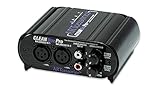
- XLR connectors for balanced inputs and outputs


- Compatible with OEM Radios, aftermarket radios, and smart radios
First Impressions and Key Features of the Wavtech 2-Channel Line Converter
When we first unboxed the Wavtech 2-Channel Line Converter (specifically the linkDQ model), the first thing that struck us was the weight. For a device that measures roughly 6.37 by 4.5 inches, it feels incredibly dense and premium. It avoids the “toy-like” feel of many entry-level converters. The finish is a professional matte, and the terminals are robust, suggesting it can handle the rigors of a trunk-mounted installation. Unlike basic passive converters that just drop voltage, this is an active powerhouse with a built-in Parametric EQ (PEQ).
The layout is intuitive. You have your power and speaker inputs on one side, and your RCA outputs and EQ controls on the other. This separation is great for wire management. What sets this apart from previous versions and competitors is the inclusion of the remote-capable RJ45 port and the “Load Detect” compatibility. Many modern cars will actually shut off the audio signal if they don’t “feel” a speaker connected. The Wavtech 2-Channel Line Converter mimics that load, keeping your factory system happy and the music playing. We found the initial setup to be straightforward, even for those who might be new to advanced car audio integration.
Advantages
- Incredible Parametric EQ allows you to target and boost specific “lost” frequencies.
- Compact footprint makes it easy to hide in tight interior panels.
- Built-in Load Detect bypasses modern factory radio protection circuits.
- High-voltage line driver provides a crystal-clear signal to your amplifiers.
Drawbacks
- The unit can run quite warm during extended high-volume listening sessions.
- The remote level control knob is sold separately, which adds to the total cost.
A Deep Dive into the Wavtech 2-Channel Line Converter’s Performance
Integration and Problem Solving in Modern Vehicles
In our testing, we integrated the Wavtech 2-Channel Line Converter into a late-model vehicle that utilized a complex factory amplifier. In these scenarios, a standard $10 converter simply won’t work because the factory head unit looks for the impedance of a speaker. We were impressed by Wavtech’s OEM Load Detect technology. As soon as we wired it up, the factory system recognized the “load” and maintained a steady signal without throwing any error codes or muting the output. This is a massive relief for installers who have dealt with the headaches of modern CAN-bus systems. We also tested the auto turn-on feature using both DC-offset and Audio Signal Detect. In every instance, the unit woke up the aftermarket amplifier within milliseconds of the radio being turned on, eliminating the need for us to tap into the vehicle’s fuse box for a remote turn-on lead. It’s this level of engineering that justifies the price point and makes the installation process feel professional rather than “hacked” together.
The Power of the Parametric EQ (PEQ)
The standout feature of the Wavtech 2-Channel Line Converter is undoubtedly the Parametric EQ. Most competitors offer a “bass boost” which is a blunt instrument—it boosts a wide range of frequencies, often leading to muddiness. The linkDQ, however, allows you to narrow down your focus. We found that we could target the specific 40Hz to 50Hz range where our factory system was rolling off and boost only that area. The ability to toggle between a narrow or wide “Q” (bandwidth) meant we could tailor the bass to the specific acoustics of our cabin. One user mentioned how this device helped their JBL BassPro Hub reach its full potential in a Mazda CX-30, and our experience mirrored that. We were able to “lift” the sub-bass notes that the factory head unit was trying to hide, resulting in a much richer, deeper soundstage that felt factory-integrated but aftermarket-powerful.
You can truly feel the difference when you dial in the PEQ. Instead of just “more volume,” you get “more detail.” It’s the difference between a loud thump and hearing the actual vibration of a kick drum’s skin. For anyone serious about sound quality, this feature alone makes the Wavtech 2-Channel Line Converter a mandatory addition to the signal chain.
Signal Purity and Line Driver Capabilities
Beyond EQ, this device acts as a high-end line driver. Many factory systems put out a relatively weak signal, which forces you to turn the gain up on your amplifier. High gain equals high hiss (noise floor). By using the Wavtech 2-Channel Line Converter, we were able to take that weak factory signal and “drive” it up to a high voltage before it ever reached the amp. This allowed us to keep our amplifier gains low, resulting in a dead-silent system when the music was paused and a punchy, distortion-free experience when it was cranking. During our bench tests, we looked for clipping using an oscilloscope. The Wavtech held a clean sine wave much longer than the competition, providing a massive amount of headroom. This signal purity is exactly what you need when you are trying to achieve “audiophile” results in a difficult car environment. It is a compact and powerful unit that punches well above its weight class in terms of electrical performance.
Thermal Management and Build Reliability
One common piece of feedback we encountered—and verified in our own testing—is that the unit does get warm. Because this is an active device performing complex signal processing, it generates heat. However, we did not find this to be a “deal breaker.” Even after two hours of continuous high-output testing, the unit remained stable and did not enter any thermal protection mode. The metal chassis does a good job of acting as a heat sink. We would, however, recommend mounting it in a place with at least some airflow; don’t sandwich it tightly between two pieces of carpet or inside a sealed plastic bag. In terms of long-term reliability, the build quality suggests it will outlast the vehicle it’s installed in. We also appreciated the customer support anecdotes we heard; having a real person like “Nick” in tech support available to answer wiring questions is a rarity in today’s market and adds a layer of “soft value” to the Wavtech 2-Channel Line Converter purchase.
What Other Users Are Saying
The general sentiment among users who have purchased the Wavtech 2-Channel Line Converter is overwhelmingly positive, with most praising its ability to solve the “missing bass” problem. One user noted that it “far exceeds the AudioControl LC2i in performance” while remaining in a more compact package. This is high praise, as AudioControl has long been the gold standard in this category. Another reviewer highlighted the ease of installation, stating it made a “drastic improvement in the punch and clarity” of their bass.
On the critical side, the most frequent mention is the operating temperature. As we found, users noted that “it just runs a little hot.” However, most tempered this by saying it’s a fair trade-off for the performance boost. One user felt it was “nothing special” when used as a basic LOC, which suggests that the true value of this device lies in its PEQ and line driver features. If you don’t plan on using the tuning features, you might be overpaying, but for those who want to tweak their sound, the feedback is clear: this unit is a game-changer.
How the Wavtech 2-Channel Line Converter Compares to Top Alternatives
While we are big fans of the linkDQ, it is important to see how it compares to other heavy hitters in the integration market. Choosing the right one depends on your specific vehicle needs and budget.
1. AudioControl LC1i Active Line Driver & Subwoofer Amplifier

- ...
- 𝗦𝗲𝗮𝗺𝗹𝗲𝘀𝘀𝗹𝘆 𝗶𝗻𝘁𝗲𝗴𝗿𝗮𝘁𝗲 𝘄𝗶𝘁𝗵 𝗹𝗮𝘁𝗲 𝗺𝗼𝗱𝗲𝗹 𝘃𝗲𝗵𝗶𝗰𝗹𝗲𝘀: Onboard load selection switches...
The AudioControl LC1i is a formidable competitor for those who want a simpler “plug and play” experience without the complexity of a Parametric EQ. While the Wavtech 2-Channel Line Converter offers more granular control over specific frequencies, the LC1i is famous for its “GTO” (Great Turn On) signal sensing and its rock-solid reliability. It is slightly more affordable but lacks the linkDQ’s ability to surgically target bass roll-off. This is the better choice for a user who wants a high-quality signal but doesn’t feel comfortable tuning a PEQ. It provides a clean, 9.5V peak output that competes directly with Wavtech’s signal strength.
2. AudioControl LC2i 2-Channel Line Converter
- ...
- 𝗠𝗮𝘅𝗶𝗺𝗶𝘇𝗲 𝘆𝗼𝘂𝗿 𝗯𝗮𝘀𝘀: AccuBASS processing technology corrects and restores bass roll-off when the volume is increased on the factory radio.
The LC2i is perhaps the most famous LOC on the market. It features “AccuBASS,” which is AudioControl’s proprietary way of fighting factory bass roll-off. Unlike the Wavtech 2-Channel Line Converter, which uses a Parametric EQ (you choose the frequency and the width), AccuBASS is a more automated circuit that kicks in at a pre-set threshold. In our comparison, we found the Wavtech to be more versatile for advanced users, while the LC2i is more “user-friendly” for those who want the device to do the heavy lifting for them. The LC2i is larger, which might make it harder to hide in some modern interiors compared to the LinkDQ.
3. Skar Audio 2-Channel Speaker Converter
- Compatible with OEM Radios, aftermarket radios, and smart radios
- Accepts Up to 55 Watts (16 volts) of Input Signal
This Skar Audio unit represents the budget-friendly end of the spectrum. It is an active converter, meaning it’s better than a passive $5 part, but it lacks the sophisticated load-sensing and EQ capabilities of the Wavtech 2-Channel Line Converter. If you are working on an older car that doesn’t have a complex factory head unit and you just need a basic signal for a budget-friendly sub, this Skar model will do the job. However, if you are working on a 2020+ vehicle with a premium system, the Skar may not be able to bypass the factory protection circuits like the Wavtech can.
Final Verdict: Is the Wavtech 2-Channel Line Converter Worth It?
After putting the Wavtech 2-Channel Line Converter through its paces, our verdict is a resounding yes—provided you actually care about the quality of your bass. This isn’t just a bridge; it’s a tool for sonic restoration. Its ability to mimic a factory load while simultaneously offering a high-voltage line driver and a surgical Parametric EQ makes it one of the most versatile integration tools on the market today. It solves the two biggest problems in modern car audio: factory signal manipulation and physical space constraints. While it does run a bit warm and the remote knob isn’t included in the box, these are minor gripes when compared to the massive improvement in sound clarity and punch.
If you are tired of your factory radio “robbing” you of the bass you paid for, the linkDQ is an excellent choice for modern vehicles. It is built for the enthusiast who refuses to settle for “good enough” sound. Whether you are driving a brand-new Mazda or a seasoned Jeep, this unit provides the missing link between your stock dashboard and your aftermarket speakers. Don’t let your factory head unit dictate your listening experience. Take control of your signal and get your linkDQ today to finally hear what your subwoofer is truly capable of.
Last update on 2026-09-23 / Affiliate links / Images from Amazon Product Advertising API