
QooMute Trumpet Practice Mute Review: The Most Innovative Silencer We’ve Ever Tested
As a trumpet player, I have spent a significant portion of my life worrying about my neighbors. There is a specific kind of anxiety that comes with wanting to shed technical exercises at 10 PM while knowing that only a thin sheet of drywall stands between my high C and the person trying to sleep next door. For years, I’ve cycled through various “solutions”: practice mutes that felt like blowing into a brick wall, stuffed socks that ruined my intonation, and bulky electronic systems that required a tangle of wires. We’ve all been there—the frustration of a muted practice session that feels nothing like real playing is often enough to make us put the horn away entirely. When I first encountered the QooMute Trumpet Practice Mute, I was skeptical. Could a 3D-printed device really solve the age-old conflict between volume reduction and playing feel? After putting it through its paces, I can confidently say that this isn’t just another plastic cone; it’s a sophisticated tool that changes the rules of engagement for indoor practice. To see how it might change your routine, you can see its full feature set and user reviews and decide for yourself.
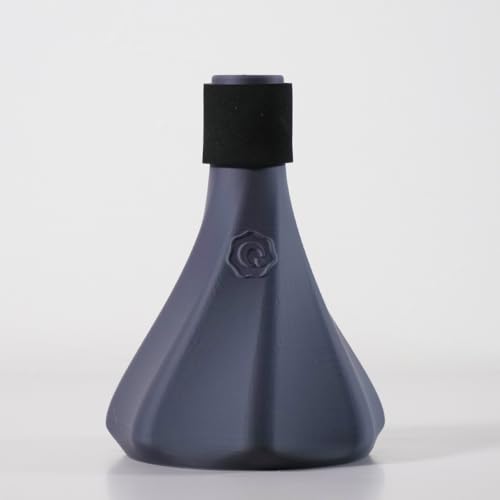
- Industry First! Equipped with a Silencer Capsule System — 1 Mute, 3 Functions! Switch between 3 types of silencer capsules(Silencer, Blowing, Capsule)— to practice comfortably with adjustable...
- Silencer Capsule – A capsule designed for high noise reduction, making it as quiet as a normal conversation. Although it creates some resistance when playing, the noise reduction is so effective...
What to Consider Before Buying a Trumpet Practice Mute
A Trumpet Practice Mute is more than just an item; it’s a key solution for maintaining your technical proficiency without sacrificing your relationships with those around you. The primary problem any practice mute must solve is noise, but the “how” matters just as much as the “how much.” A poor mute can actually harm your playing by creating excessive backpressure that messes with your embouchure or by shifting your intonation so drastically that you’re essentially practicing in the wrong key. When we look for a high-quality mute, we aren’t just looking for silence; we are looking for a device that preserves the “bloom” of the note and the response of the leadpipe as closely as possible to an open horn.
The ideal customer for this type of product is someone facing strict noise constraints—students in dorms, professionals in hotels, or parents with sleeping children—while it might not be suitable for those who strictly need a “performance” mute, like a standard straight or cup mute for orchestral use. If you are looking for a mute to use on stage, you might consider a traditional aluminum straight mute instead. However, for those of us who need to grind out three hours of Arban’s at midnight, a specialized practice mute is non-negotiable.
Before investing, consider these crucial points in detail:
- Dimensions & Space: A practice mute needs to be portable. If it’s too bulky to fit in your trumpet case’s accessory compartment, you likely won’t bring it to rehearsals or on trips. Look for a design that is compact enough to store inside the bell or in a standard side pocket.
- Capacity/Performance: This is measured in decibel reduction. A standard trumpet can hit 110dB easily. You want a mute that brings that down to a conversational level (around 60-70dB) without making the instrument feel “stuffed.”
- Materials & Durability: Traditional mutes use aluminum or copper, which can dent. Modern mutes use polymers or resins. Lightweight materials are essential because a heavy mute changes the balance of the trumpet, putting unnecessary strain on your left wrist during long sessions.
- Ease of Use & Maintenance: Consider how the mute stays in the bell. Natural cork is traditional and reliable, but it requires moisture or “huffing” to grip. Some modern mutes use neoprene or specialized foam which can be more stable but may wear differently over time.
Understanding these factors is the first step toward finding a mute that won’t just sit in your drawer. While the QooMute Trumpet Practice Mute is an excellent choice, it’s always wise to see how it stacks up against the competition. For a broader look at all the top models, we highly recommend checking out our complete, in-depth guide:
- Material--EastRock Aluminum Straight trumpet mute is made of high-purity spun aluminum with superb drawing and polishing,workmanship,Great for jazz and concert band


- Material--EastRock Aluminum Straight trumpet mute is made of high-purity spun aluminum with superb drawing and polishing,workmanship,Great for jazz and concert band
First Impressions: Japanese Innovation Meets 3D Precision
When the QooMute Trumpet Practice Mute arrived, my first impression was dominated by its weight—or rather, the lack of it. At approximately 65 grams, it feels almost ethereal in your hand. The “Midnight Gray” finish is sleek and modern, a far cry from the utilitarian look of older practice mutes. What immediately caught our eye was the 3D-printed construction. Often, 3D printing can look “cheap” or “prototype-ish,” but the layer lines here are incredibly tight and uniform, suggesting a high-end industrial process rather than a hobbyist’s basement project. This Japanese-made mute feels deliberate and well-engineered. Before you even put it in the bell, you can check the latest price and availability to see why it has become a favorite among the “gear-head” community of brass players.
The unboxing experience was surprisingly premium. Included with the main capsule-shaped body are three distinct inserts—the Silencer, Blowing, and Tone capsules. This modularity is a feature that really sets it apart from the “one-size-fits-all” approach of most competitors. Setting it up is a matter of seconds; you simply slide the desired capsule into the core of the mute. It feels secure, stable, and ready for work.
Pros
- Revolutionary 3-in-1 modular capsule system for customized resistance and volume.
- Incredibly lightweight (65g) construction that prevents wrist and neck fatigue.
- Exceptional build quality using high-strength, plant-based Japanese resin.
- Superior intonation compared to standard practice mutes, keeping the pitch centered.
Cons
- Significant backpressure on the “Silencer” setting requires some embouchure adjustment.
- The multiple capsules are small and could be easily misplaced if not kept in a dedicated bag.
A Deep Dive into the QooMute Trumpet Practice Mute’s Performance
To truly understand why the QooMute Trumpet Practice Mute is generating so much buzz, we have to look past its aesthetics and into how it actually interacts with the physics of the trumpet. Over several weeks of testing, I used this mute in various environments: a tiled bathroom, a carpeted bedroom, and a large rehearsal hall. Here is the breakdown of its performance across key metrics.
The Capsule System: A Masterclass in Versatility
The standout feature of the QooMute Trumpet Practice Mute is undeniably its interchangeable capsule system. We found that most mutes force you into a compromise: you either get total silence with terrible backpressure, or a decent feel with too much volume. QooMute bypasses this by offering three distinct “modes.” The “Silencer” capsule is your midnight savior. It brings the trumpet’s natural 100dB+ roar down to about 66-87dB. In my testing, this was quiet enough to practice in a room while my spouse watched TV in the next room without complaint. You can explore the innovative capsule system further to see how the different internal geometries work.
The “Blowing” capsule is where things get interesting for technical development. It offers a bit more airflow and is designed to help with embouchure control. We noticed that while the volume is slightly higher (70-91dB), the resistance feels “meaningful” rather than “obstructive.” It forces you to support your air properly, which is exactly what a good practice tool should do. Finally, the “Tone” capsule acts as a hybrid. It’s perfect for when you want a bit more resonance to hear your articulations clearly but still need to keep the overall volume under control. This modularity means this one purchase essentially replaces three different mutes.
Weight and Ergonomics: The 65g Advantage
We often underestimate the impact of mute weight on our technique. When you put a heavy metal mute in the bell, the center of gravity shifts forward. Over a 60-minute practice session, your left arm starts to compensate, your neck gets tense, and suddenly you’re practicing with bad posture. One of the most significant benefits we discovered with the QooMute Trumpet Practice Mute is how it preserves the balance of the instrument. At 2.3 ounces (roughly 65 grams), it is one of the lightest mutes on the market.
During our long-form testing sessions, the “weightlessness” of the QooMute Trumpet Practice Mute allowed me to focus entirely on my fingerings and air support. I didn’t find myself constantly readjusting my grip or shaking out my left hand. This is a critical point for younger players or those with smaller hands who might find traditional practice mutes cumbersome. To appreciate the craftsmanship, you should view the sleek Midnight Gray design and its compact dimensions, which allow it to sit snugly in the bell without creating a heavy “lever” effect.
Intonation and Acoustic Fidelity
The Achilles’ heel of the practice mute has always been the “pitch shift.” Usually, when you shove a large object into the bell, the instrument goes sharp, especially in the lower register. However, the internal geometry of the QooMute Trumpet Practice Mute has clearly been optimized through rigorous testing. We found that while it isn’t “perfect”—no practice mute is—it is remarkably consistent. Low F# stayed relatively stable, and the upper register didn’t compress as much as we expected. This is likely due to the “3-in-1” internal chamber design that manages the air columns differently than a hollow plastic cone.
One user noted that the airflow remains controlled, and intonation stays more consistent than with many basic practice mutes that tend to feel overly restrictive. We agree with this assessment. The QooMute Trumpet Practice Mute allows you to practice your scales and intervals without having to “lip” every note into tune. This is essential for muscle memory; you don’t want to learn how to play your trumpet “in tune with the mute” only to find you’re out of tune when you take the mute out. If you’re serious about maintaining your pitch center, you should check the latest reviews to see how other professionals have rated its acoustic accuracy.
Build Quality and Material Innovation
The decision to use plant-based resin and 3D printing is a bold one, and it pays off. The QooMute Trumpet Practice Mute feels rugged. It doesn’t have that “brittle” feel that some early 3D-printed products had. Instead, the material feels thick and rigid. Because it’s not made of metal, there is no “clanging” sound if you accidentally bump it against your music stand—a small but appreciated detail when you’re trying to be quiet. The “Midnight Gray” color is deep and professional, fitting perfectly with the aesthetic of a high-end brass instrument.
We were also impressed by the “Made in Japan” pedigree. The attention to detail is evident in the inclusion of a thoughtful English translation for the user guide. It feels like a product designed by musicians, for musicians. The fit in the bell is secure; we tested it on several different trumpets, including a vintage Olds Recording and a standard Bach Stradivarius, and it stayed put without any wobbling. If you’re tired of mutes that fall out of your horn at the slightest movement, the stability of the QooMute Trumpet Practice Mute will be a breath of fresh air.
What Other Users Are Saying
The general consensus among the brass community is that the QooMute Trumpet Practice Mute is a game-changer for versatility. Users frequently highlight the innovation of the capsule system. One reviewer mentioned, “This is actually quite a nice practice mute. It’s made well, it fits into the trumpet nicely, it’s small and portable.” This mirrors our experience with its physical footprint and ease of use. Another user emphasized the quality of the 3D printing, stating that “The material feels thick, rigid, and durable, and it does not feel flimsy or brittle.” This is a crucial point for anyone hesitant about non-traditional manufacturing methods.
On the more critical side, some users pointed out the inherent trade-offs in tone. One experienced player noted that it “lacks some of the warmth of a thick rubber plunger and the metallic shimmer of a classic aluminum mute.” We find this to be a fair assessment; this is a practice mute designed for silence and resistance control, not for tonal beauty in a performance setting. Additionally, while the “Silencer” capsule is highly effective, users mentioned it creates an “impressive amount of back pressure,” which we also noted. It’s a tool for development, and that resistance is part of the “workout.” Overall, the feedback is overwhelmingly positive, with most agreeing that the high price point is justified by the innovation and 3-in-1 functionality.
How the QooMute Trumpet Practice Mute Compares to the Competition
Before you make your final decision, it’s important to see how the QooMute Trumpet Practice Mute stands against the industry titans. Each of these alternatives offers a different approach to silencing your horn.
1. Denis Wick Straight Trumpet Mute

- Your Art Is Our Craft - Trusted by generations, this original Denis Wick Straight Mute for Trumpet or Cornet delivers clear projection, accurate tuning, and even tone and response in every register...
- Compatible and Ready to Play - Designed to fit most trumpets and cornets right out of the box, this performance mute is ideal for all musicians, student to professional.
The Denis Wick is the industry standard for “straight” mutes. It is made of hand-spun aluminum and features natural cork. While it is a “performance” mute and not a dedicated “practice” mute, many players use it for light practice. Compared to the QooMute, the Denis Wick offers a much brighter, more metallic tone and significantly less resistance. However, it is much louder than the QooMute’s silencer capsule. If you need a mute for a concert, get the Denis Wick. If you need a mute to keep from getting evicted, the QooMute is the better choice.
2. Libretto Trumpet Practice Mute

- Quiet Practice Anywhere – Significantly reduces volume for effective practice without disturbing others, ideal for apartments, late-night sessions, or shared spaces
- Fits Standard Bb Trumpets – With an inlet diameter of 1.06", outlet diameter of 2.52", and height of 3.65", it fits snugly and securely on most standard trumpets
The Libretto is a budget-friendly, all-aluminum practice mute. It is designed solely for volume reduction. While it is effective at lowering decibels, it lacks the modularity of the QooMute. It is a “fixed” system, meaning you can’t adjust the blowing feel or the tone. We also found that the Libretto is heavier and can feel a bit “stuffy” compared to the QooMute’s Blowing capsule. It’s a great “my first practice mute” for students on a budget, but it doesn’t offer the technical benefits of the QooMute system.
3. Yamaha SILENT Brass Trumpet Mute System

- Practice anywhere, any time! Other people hear practically nothing, but you can hear yourself playing at full volume. Note : Model number SB7X-2 or SB7X is same item.
- The pickup mute combines a high-performance mute with an internal microphone to pickup sound.
The Yamaha Silent Brass is the “Gold Standard” for electronic practice. It includes a mute and a “Personal Studio” belt pack that allows you to hear yourself through headphones with digital reverb. In terms of sheer volume reduction, the Yamaha is king. However, it is much more expensive and requires batteries and wires. The QooMute offers a “middle ground”—it gives you some of the resistance and volume control of the Yamaha system but in a purely acoustic, lightweight, and wire-free package. For those who hate being tethered to a headphone amp, the QooMute is the superior “analog” alternative.
The Final Verdict: Is the QooMute the Future of Practice?
After weeks of testing, the QooMute Trumpet Practice Mute has earned a permanent spot in my gear bag. Its biggest strength is its versatility; having three different capsules means I can tailor my practice session to my specific needs—whether that’s “stealth mode” silencer practice at midnight or high-resistance embouchure training in the afternoon. While the backpressure on the silencer setting is notable, it is a small price to pay for the ability to play anywhere, anytime. The lightweight Japanese resin construction and excellent intonation make it a joy to use, even during long, grueling practice sessions. It is a premium product with a premium price, but the innovation it brings to the table is undeniable.
If you are a serious trumpeter looking for a way to maximize your practice time without compromising your technique or your neighbors’ sanity, this is a must-have accessory. It bridges the gap between traditional mutes and expensive electronic systems perfectly. We highly recommend that you pick up this versatile practice tool today and experience the difference that 3-in-1 modularity can make in your daily routine.
Last update on 2026-09-20 / Affiliate links / Images from Amazon Product Advertising API