
Mod Kits MOD102+ Guitar Amp Review: The DIY Journey to Boutique Tube Tone
As guitarists, we are often caught in a perpetual cycle of “tone chasing.” I remember the frustration of plugging into sterile, digital practice amps that promised the world but delivered thin, uninspiring sounds. The problem is that true, hand-wired tube tone usually comes with a price tag that makes your wallet weep. We search for that warmth, that specific “sag” and harmonic richness that only glass valves can provide, yet the market is flooded with mass-produced circuit boards. If you have ever felt like your gear was holding back your playing, or if you’ve looked at a boutique amp and thought, “I wish I understood how that worked,” you are exactly where I was. Failing to bridge the gap between a hobbyist and a technician often means settling for mediocre sound. That is why we decided to roll up our sleeves and dive into this Mod Kits MOD102+ Guitar Amp Review, evaluating whether building your own tone is better than buying it off the shelf.

- DIY pedal kit - assembly and soldering required.
- 8W output power into 8 Ω
What to Consider Before Buying Electric Guitar Amplifier Heads
Electric Guitar Amplifier Heads are more than just an item; they are the literal heart of your signal chain, acting as the key solution for converting your guitar’s quiet signal into a powerful, character-filled roar. Choosing a head over a combo amp offers modularity, allowing you to pair different speaker cabinets to suit your environment. However, when you step into the world of DIY kits like this one, you aren’t just buying a product; you are buying a project. It’s about the marriage of electronics and art.
The ideal customer for this type of product is someone facing a plateau in their tonal journey—someone who enjoys “tinkering” and wants to understand the “why” behind their sound. It is perfect for the studio musician or the bedroom player who demands high-quality, low-wattage tube break-up. Conversely, it might not be suitable for those who need a “plug-and-play” solution for a gig tonight, or for individuals who have never held a soldering iron and have no interest in learning. If you need 100 watts of stage volume immediately, you might consider a pre-built high-gain head instead.
Before investing, consider these crucial points in detail:
- Dimensions & Space: Consider where this amp will live. At 7 pounds and housed in a compact metal enclosure, this is a desktop-friendly unit. However, remember that you will also need space for an 8-ohm speaker cabinet, as this is a head-only kit.
- Capacity & Performance: Look at the wattage. 8 watts may sound small, but in the tube world, this is plenty for home recording and small rehearsals. It provides that coveted “cranked” sound at volumes that won’t result in an eviction notice.
- Materials & Durability: DIY kits vary wildly. We look for heavy-duty metal chassis and high-quality point-to-point wiring components. A metal enclosure is vital for shielding and protecting the delicate vacuum tubes from external interference.
- Ease of Use & Maintenance: Since you are building it, maintenance becomes easier because you know exactly where every resistor and capacitor lives. However, consider the “assembly tax”—are you prepared to spend 8 to 10 hours on the initial build?
Choosing the right amp head involves balancing your technical skill with your sonic needs. While the Mod Kits MOD102+ Guitar Amp is an excellent choice for those seeking a vintage, hands-on experience, it’s always wise to see how it stacks up against the competition. For a broader look at all the top models, especially if you lean toward heavier genres, we highly recommend checking out our complete, in-depth guide:
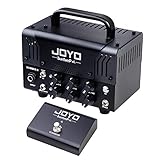
- Channel Switching & Independent Control: The BanTamp XL series features a dedicated footswitch for channel switching and six knobs. This allows you to independently control both the CLEAN and...

First Impressions: Unboxing the Mod Kits MOD102+ Guitar Amp
When we first received the Mod Kits MOD102+ Guitar Amp, the first thing that struck us was the weight of the components. For a small 8-watt unit, the transformers felt substantial. The kit comes in a professional-looking package with every nut, bolt, and wire accounted for. The enclosure is a rugged grey metal that feels like it could survive a few tumbles in a gig bag, though we recommend being careful with the tubes.
The initial look is “industrial-vintage.” It doesn’t have the flashy tolex of a Marshall or the boutique wood of a Mesa, but it has a “mad scientist” charm that we truly appreciated. Unlike modern PCB-based (Printed Circuit Board) amps, the MOD102+ uses point-to-point wiring. This is a significant feature; it’s the way amps were made in the 1950s and 60s, and many purists believe it contributes to a purer signal path. Comparing it to market leaders in the low-wattage category, it feels much more “real” and less like a consumer electronic toy.
Pros: Why We Love It
- Exceptional tonal quality that outperforms many pre-built amps in the same price bracket.
- Highly educational DIY experience that teaches the fundamentals of tube amplification.
- Point-to-point wiring allows for easier modifications and repairs down the road.
- Versatile vintage controls including mid-boost and bright switches for tone shaping.
Cons: Things to Consider
- Significant assembly time required (expect 8+ hours for a careful build).
- Technical support from the manufacturer can be limited if you run into complex wiring issues.
Deep Dive: Putting the Mod Kits MOD102+ Guitar Amp to the Test
The Build Experience: Patience is a Virtue
Writing this Mod Kits MOD102+ Guitar Amp Review would be incomplete without discussing the actual labor involved. We spent roughly 8 to 9 hours on the assembly, spread over a weekend. The instructions are remarkably clear; they aren’t just a list of steps but a visual guide that walks you through the layout. We found that paying close attention to the orientation of the tube sockets and the grounding points is the difference between a silent amp and one that hums like a beehive.
During our test build, we were impressed by the quality of the components. The resistors and capacitors aren’t the cheap, miniature versions you find in modern smartphones; they are robust and easy to handle with a standard soldering iron. One user mentioned that the step-by-step instructions were “clearly drawn and easy to understand,” and we have to agree. However, this is not a project to rush. If you are a novice, take your time. We have seen some users struggle with voltage drops when they skip a step. The satisfaction of flipping the power switch for the first time and seeing that vintage pilot lamp glow is a feeling no “off-the-shelf” purchase can replicate. You can see its full feature set and user reviews to gauge if you’re ready for the challenge.
Sonic Performance: 8 Watts of Pure Tube Magic
Once the last solder joint cooled, we plugged the Mod Kits MOD102+ Guitar Amp into an 8-ohm 1×12 cabinet loaded with a Celestion Vintage 30. The results were, quite frankly, staggering. At lower volume settings, the amp delivers a “glassy” clean tone that rivals classic American-style amplifiers. It is sensitive to your picking dynamics; pluck softly, and it’s sweet and bell-like; dig in, and it starts to growl.
As we pushed the volume past noon, the 8-watt output began to compress in that beautiful, organic way only tubes can. It doesn’t just get “louder”; it gets “thicker.” We found that the overdrive is rich and harmonic, perfect for blues, classic rock, and indie tones. One user compared it to their Bugera V5 and Blackstar HT-5R, noting that this kit “blows both of them away in tonal quality.” We found this to be true because the MOD102+ lacks the “fizzy” high-end often associated with small-wattage solid-state or hybrid amps. It’s a pure, honest signal that lets the character of your guitar shine through. To see if this matches your tonal goals, check the latest price and availability for the kit components.
Precision Tone Shaping: Mid-Boost and Bright Switches
A feature that really sets the Mod Kits MOD102+ Guitar Amp apart is its control layout. While many small amps give you a single “Tone” knob, this kit provides Bass, Mid-Boost, Treble, Bright, and Volume. The “Bright” switch is particularly effective when playing at lower volumes or using humbucker-equipped guitars that might otherwise sound muddy. It adds a shimmer to the top end that helps you cut through a mix.
The “Mid-Boost” was our favorite discovery. Engaging it pushes the frequencies right where the guitar lives, giving solos a “vocal” quality that makes them stand out. This level of control is rare in a simple single-channel amp. Whether we were looking for a “scooped” clean sound for funk or a mid-heavy punch for classic rock riffs, the MOD102+ delivered. It makes the amp feel much more professional than its “kit” status might suggest. You can explore more about these vintage controls here to understand how they can transform your sound.
Reliability and the “DIY” Factor
In our long-term testing, the Mod Kits MOD102+ Guitar Amp proved to be a sturdy companion. Because the enclosure is metal and the components are chassis-mounted (rather than soldered to a flimsy PCB), the amp is surprisingly resilient. However, we must address the “support” issue. If you are a novice and something goes wrong, you are largely on your own or reliant on community forums. We encountered a report from a user who had a “50 volt drop” and felt the manufacturer support was lacking.
This highlights the importance of the build phase. If you treat this as a learning experience and double-check your work with a multimeter, you likely won’t need support. But it is a point of consideration: you are the quality control department. For the price, however, the “sweat equity” you put in results in an amp that sounds like it should cost three times as much. For those who enjoy the process of creation, this is a feature that really sets it apart from the sea of plastic-clad competitors.
What Other Users Are Saying
The general sentiment surrounding the Mod Kits MOD102+ Guitar Amp is overwhelmingly positive, particularly regarding its sound quality. Most users are shocked that a DIY kit can sound so “boutique.” One satisfied builder noted, “Very nice kit, good quality components, sounds awesome—you can get clean or you can get dirty.” This echoes our findings that the versatility is the amp’s greatest strength.
Another user highlighted the value proposition, stating that it took them about 8 hours over a weekend to finish but the “quality of sound/tone for the money is outstanding!” They specifically noted it outclassed popular practice amps from Bugera and Blackstar. However, it’s not all sunshine. A novice reviewer mentioned they “didn’t work first time around” and expressed frustration with the lack of direct manufacturer guidance. This is a vital reminder: this is a technical project. If you are comfortable following a diagram and using a soldering iron, the consensus is that you will end up with an incredible-sounding piece of gear. You can read more user testimonials here to see if your skill level matches the requirements.
Comparing the Mod Kits MOD102+ Guitar Amp to the Competition
1. Orange Micro Dark Terror Mini Guitar Amp Head

- Power: 20Watt (hybrid)
- Tube: one 12AX7 (preamp)
The Orange Micro Dark is a beast of a different nature. While the Mod Kits MOD102+ is a pure tube DIY kit, the Micro Dark is a hybrid head, featuring a 12AX7 tube preamp and a 20-watt solid-state power section. If you need high-gain, “chuggy” metal tones right out of the box, the Orange is the better choice. It’s also much smaller and requires zero assembly. However, it lacks the organic “bloom” and the clean headroom of the MOD102+. We recommend the Micro Dark for metal players who want portability and instant gratification, whereas the MOD102+ is for the tone purist who wants to build a vintage blues/rock machine.
2. JOYO Zombie-II Mini Tube Guitar Amp
- Channel Switching & Independent Control: The BanTamp XL series features a dedicated footswitch for channel switching and six knobs. This allows you to independently control both the CLEAN and...
- Versatile High-Gain Platform & Clean Pedal Foundation: The ZOMBIE-II excels at lower gain settings and responds brilliantly to your favorite overdrive pedals, letting you push into higher gain with...
The JOYO Zombie-II is part of the BanTamp XL series and is famous for mimicking the high-gain sound of a Mesa Boogie Rectifier. Like the Orange, it’s a hybrid (tube preamp/solid-state power). It includes modern features like Bluetooth connectivity and two channels (Clean/Od), which the Mod Kits MOD102+ lacks. The Zombie-II is incredibly convenient for practice. However, the MOD102+ offers a more “authentic” tube experience through its power section and point-to-point wiring. If you want a modern, feature-rich amp for hard rock, go with the JOYO. If you want a hand-wired treasure that sounds “expensive,” stick with the Mod Kit.
3. Orange Micro Terror Guitar Amp Head

- Power: 20 watt (hybrid)
- Tube: 1 12AX7 tube preamp with solid state power amp
The original Orange Micro Terror is a classic. It’s simple, rugged, and delivers 20 watts of hybrid power. It is significantly cheaper than the MOD102+ when you factor in the value of your time. It’s great for those who want a simple “Plug and Play” amp for a small cabinet. However, the Micro Terror can be a bit of a “one-trick pony” with its limited EQ. The MOD102+ offers much deeper tone-shaping capabilities and a far superior clean channel. We found the MOD102+ to be a more “grown-up” amplifier, while the Micro Terror is a fun, loud toy for quick practice sessions.
Final Verdict: Is the Mod Kits MOD102+ Guitar Amp Right for You?
After our extensive time with the Mod Kits MOD102+ Guitar Amp, our conclusion is clear: this is a “player’s project.” It rewards the patient guitarist with a level of tonal purity that is almost impossible to find in the sub-$500 pre-built market. The 8 watts of power are punchy, the vintage controls are highly responsive, and the sense of accomplishment you get from playing through an amp you built yourself is priceless. Its main weakness is the lack of a safety net; if you aren’t prepared to troubleshoot your own wiring, the lack of manufacturer support could be a hurdle.
We recommend this kit to anyone who wants to graduate from “beginner” gear to a “pro-level” sound without spending thousands. It is an ideal studio tool and a fantastic way to learn the inner workings of your instrument. If you are ready to take control of your tone and embark on a rewarding DIY journey, we highly suggest you grab the Mod Kits MOD102+ Guitar Amp today and start your build.
Last update on 2026-09-18 / Affiliate links / Images from Amazon Product Advertising API