
CYMBALS Quiet China Cymbal Review: A Real-World Test of the Low-Volume Experiment
As drummers, we live a life of constant negotiation. We negotiate with our neighbors over practice hours, we negotiate with our roommates over gear storage, and we negotiate with our own ears regarding the long-term effects of high-decibel crashes. For years, my practice routine was a compromise of rubber pads and mesh heads that felt nothing like the real thing. When the “low volume” cymbal revolution hit, it promised a world where we could maintain our muscle memory and stick feel without the local police being called. However, finding a “trashy” effects cymbal that doesn’t scream at 110 decibels has been notoriously difficult. This brings us to the CYMBALS Quiet China Cymbal. I recently integrated this 16-inch matte silver beast into my practice rig to see if it could actually bridge the gap between silence and the satisfying “china” bark we all crave.
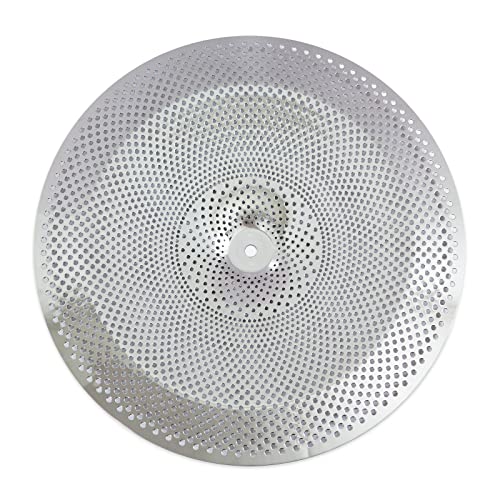
- 🎶CHINA CYMBAL — The 16" low volume china cymbal to round out your low volume cymbal set is perfect. China cymbal features an upward facing lip around the edge that gives it a unique gong-like...
- 🎶LOWER VOLUME & REAL SOUND — The 16 inch china cymbal sounds low, bright and crispy, and feels like real cymbals when played, but it is up to 60%-70% quieter than traditional cymbals without...
What You Need to Know Before Adding a China to Your Practice Setup
A China cymbal is more than just an item; it’s a key solution for drummers looking to add explosive, short-decay accents to their playing without the overwhelming wash of a standard crash. In a practice environment, the China cymbal serves as a vital tool for developing coordination and precision on your “secondary” side. However, traditional Chinas are often the loudest cymbals in a drummer’s arsenal. Finding a low-volume version means you can finally practice those heavy metal breakdown patterns or intricate jazz accents at 2:00 AM without waking the building. The benefit of a metal low-volume cymbal over a rubber pad is the authentic vibration that travels up the stick, which is crucial for developing proper hand technique.
The ideal customer for this type of product is someone facing strict noise constraints, such as apartment dwellers or parents of young children, who still wants the tactile response of stainless steel. It is also a fantastic choice for drummers who build their own electronic kits and need a metal “slug” to trigger. Conversely, it might not be suitable for those who are looking for a professional-grade recording sound. If you expect a low-volume cymbal to sound like a hand-hammered B20 bronze cymbal, you will be disappointed. These are tools designed for technical development and noise reduction, not for headlining a stadium tour. If tone is your absolute priority over volume, you might consider smaller splashes or “stackers” as an alternative.
Before investing, consider these crucial points in detail:
- Dimensions & Space: At 16 inches, this China requires a standard cymbal stand and a fair amount of horizontal clearance. Because of the upward-facing lip, it sits differently on a stand than a standard crash. Ensure your practice room has the “swing room” to accommodate the unique physical profile of a China cymbal.
- Capacity & Performance: Look for the percentage of volume reduction. Most low-volume cymbals claim 60% to 80% reduction. Performance isn’t just about decibels; it’s about the “feel.” A cymbal that is too light will feel like a toy, while one that is too heavy might be louder than advertised.
- Materials & Durability: Most budget low-volume options use stainless steel or brass. Stainless steel, used in the CYMBALS Quiet China Cymbal, tends to be more durable and resistant to warping compared to cheaper alloys. This is especially important for Chinas, which are often struck with more force during practice.
- Ease of Use & Maintenance: Consider the finish. A matte or polished finish like this one helps prevent fingerprinting and oxidation. Maintenance usually involves a simple wipe-down, but the “hole” pattern typical of low-volume gear can collect dust, so a soft brush is a handy tool to have nearby.
While the CYMBALS Quiet China Cymbal is an excellent choice for those on a budget, it’s always wise to see how it stacks up against the competition. For a broader look at all the top models, we highly recommend checking out our complete, in-depth guide:

- Thinner weights that deliver washier and more emotive sounds

First Impressions: Unboxing the CYMBALS Quiet China Cymbal
Opening the box, the first thing I noticed about the CYMBALS Quiet China Cymbal was the weight. It feels significantly sturdier than many of the “entry-level” low-volume sets I’ve played in the past. The matte silver finish is sleek and professional, lacking that “cheap metal” look that often plagues budget gear. The edges are surprisingly smooth and polished; I’ve had my fair share of “finger nicks” from poorly finished practice cymbals, but this one passed the touch test immediately. Before even putting it on a stand, I gave it a quick “finger flick,” and it produced a high-pitched, metallic “ping” that suggested it would be bright and articulate. You can see its full feature set and user reviews to get a sense of why it’s becoming a popular choice for home studios.
Key Benefits
- Exceptional durability due to the 10%-20% thicker stainless steel construction.
- Smooth, polished edges prevent stick damage and injury during fast play.
- Authentic “real metal” feel that translates perfectly to full-volume gear.
- Excellent value for drummers looking to expand a low-volume set on a budget.
Limitations
- The sound is more “clanky” than “trashy,” resembling a high-pitched bell more than a traditional China.
- At the higher end of the “low volume” spectrum; it might be too loud for very thin walls.
Deep Dive: Performance Analysis of the CYMBALS Quiet China Cymbal
Construction and Physical Integrity
When I first mounted the CYMBALS Quiet China Cymbal, the physical presence was the standout feature. The manufacturer states this cymbal is 10%-20% thicker than other China options in this category, and we found this to be immediately apparent. In the world of low-volume cymbals, thinness is often equated with silence, but it also leads to a “flimsy” feel and a high risk of cracking near the holes. This 16-inch model feels robust. When you lay into a heavy breakdown, the cymbal doesn’t flop around like a piece of tin; it reacts with a sturdy, predictable swing. This thickness is a double-edged sword, which we will discuss regarding volume, but for durability, it’s a massive win. For any drummer who has a heavy hand, you can check the latest price and availability to see how this durable option fits into your budget.
The hole pattern is consistent and well-drilled. I’ve tested lower-quality cymbals where the holes were jagged, which acts like a saw on your expensive drumsticks. The CYMBALS Quiet China Cymbal features clean perforations that allow for the necessary air movement to reduce volume while maintaining the structural integrity of the stainless steel. After three weeks of daily, high-intensity use, there are no signs of “keyholing” at the center or hairline fractures around the edges. This is a practice tool built to last years, not months.
The Acoustic Reality: Volume and Noise Reduction
We need to talk about the “Low Volume” claim. The marketing suggests a 60%-70% reduction in volume. In our testing, compared to a standard 16″ bronze China, that reduction is certainly there, but the CYMBALS Quiet China Cymbal is definitely on the louder side of the “quiet” spectrum. Because of that extra thickness we mentioned earlier, it moves more air than a paper-thin Zildjian L80. When I struck it with a 5B wood tip stick, the decibel meter peaked significantly higher than my low-volume hi-hats. It isn’t “loud” in the sense that it will hurt your ears, but if you are practicing in a room adjacent to someone watching TV, they are going to hear it. This is a feature that really sets it apart for those who want a bit more feedback from their practice gear, but it’s a warning for those seeking “library quiet” performance.
The sound itself is bright and “crispy,” as the manufacturer describes. It lacks the deep, dark “wash” of a traditional China. Instead, you get a very focused, metallic “quang” sound. One of the best ways I found to manage the volume and improve the tone was the “sticky pad” trick. By adding a small gel dampener near the bell, I was able to cut the overtones and bring the volume down another 10%, making it much more neighbor-friendly. If you are looking for a cymbal that feels exactly like a real one and you have a bit of wiggle room with your noise floor, this is a fantastic middle ground.
Tone and “Trashiness”: Managing Expectations
As an expert reviewer, I have to be honest: if you are looking for that classic, dirty, “trashy” China sound that sounds like a dumpster being hit with a sledgehammer, you won’t find it here. The CYMBALS Quiet China Cymbal sounds very metallic—some users have compared it to a “frying pan” or “tin,” and we found that assessment to be somewhat accurate when the cymbal is played in isolation. It has a high-pitched fundamental note that is more reminiscent of a heavy splash or a small gong. However, when integrated into a full kit of low-volume cymbals, it fits the “frequency slot” of a China perfectly. It provides that sharp, sudden accent that cuts through the mix of your kick and snare practice pads.
Interestingly, the “tinny” nature of the sound actually helps with articulation. When practicing fast “linear” patterns where the China is part of a 16th-note run, the notes don’t bleed into each other. You hear every single stroke. This makes the CYMBALS Quiet China Cymbal an excellent pedagogical tool. It doesn’t hide your mistakes behind a wall of noise. To see how other drummers have reacted to this unique tonal profile, you should see its full feature set and user reviews before making your final decision.
Creative Versatility: Beyond Just Practice
One of the most exciting aspects of the CYMBALS Quiet China Cymbal is its potential for DIY projects. During my testing, I found that its thickness and stainless steel material make it an ideal candidate for an e-drum conversion. Because it doesn’t vibrate as wildly as thinner cymbals, mounting a piezo trigger to the underside is remarkably easy and results in very low “crosstalk.” I was able to turn this into a functional electronic China for my MIDI setup in about twenty minutes. For drummers who find rubber e-cymbals uninspiring, this is a game-changer.
Additionally, this cymbal works wonders as a “stacker.” I placed it on top of a deadened 14″ crash, and the result was a fantastic, short-decay “clap” sound that I would actually use in a low-volume live setting or a garage jam session. The matte silver look also adds a nice aesthetic pop to a kit. If you’re creative with your gear, you might want to view more detailed product specifications to see how the dimensions might work for your own custom stack or e-kit build.
What Other Users Are Saying
The general consensus among the drumming community is that the CYMBALS Quiet China Cymbal is a specialized tool that excels in durability but divides opinion on tone. Many users praised the build quality, with one drummer of 28 years noting that while it doesn’t have the “complex tone” of high-end low-volume brands, it is “thick and durable,” making it perfect for e-drum conversions. Another user mentioned that for their needs, it was “perfect” for converting to a trigger cymbal because it matched their existing set’s aesthetics and feel.
On the flip side, some users were disappointed by the volume level. One reviewer noted it sounds “exactly as it looks: like stamped metal with holes,” and found it to be only slightly quieter than a regular China. Another mentioned it sounds like “hitting a piece of tin.” This feedback is crucial because it highlights the importance of managing expectations. If you need a “musical” China for a quiet jazz gig, this isn’t it. But if you need a “physical” China for a practice kit that can take a beating, the users agree it’s a solid choice. We found that the polarized reviews usually stem from what the drummer was expecting: a practice tool or a professional instrument. As a practice tool, the feedback is overwhelmingly positive regarding its longevity.
Comparing the CYMBALS Quiet China Cymbal to the Competition
1. Meinl 12″ Traditional Finish China Cymbal

- UPGRADE FROM STOCK CYMBALS: replaces the flimsy cymbals most entry-level kits include—Meinl HCS sounds real and feels solid
- WHY IT MATTERS: better sound makes practice more fun—and durable brass stands up to regular playing
The Meinl 12″ HCS China is a different beast entirely. Unlike the CYMBALS Quiet China Cymbal, this is a full-volume, brass alloy cymbal. It is much smaller at 12 inches, which gives it a much higher, “barkier” sound. We would recommend the Meinl for beginners who are playing at full volume and want a musical, branded entry-point into effects cymbals. However, for the apartment drummer, the Meinl will be significantly louder and more “obtrusive” than our review subject. Choose the Meinl if you don’t have noise complaints to worry about and want a recognized name-brand sound.
2. Zildjian 18 inch Planet Z China Cymbal
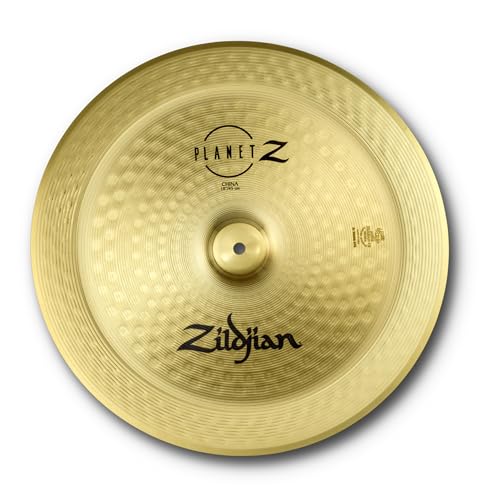
- Bright and focused sound of brass is great for the developing ear
- Updated hammering and lathing pattern provide a refreshed look and sound
The Zildjian Planet Z is an 18-inch “standard” cymbal. It is much larger and produces a much deeper, more traditional China “wash.” Compared to the CYMBALS Quiet China Cymbal, the Planet Z is a “real” instrument meant for loud rehearsals and budget-conscious live performances. It lacks the perforations for noise reduction. If your goal is strictly practice without disturbing others, the Planet Z is the wrong choice. However, if you need a large, imposing China sound for a rock band on a budget, Zildjian’s entry-level bronze is hard to beat.
3. ULUOBO 16-Inch Gold Practice China Cymbal
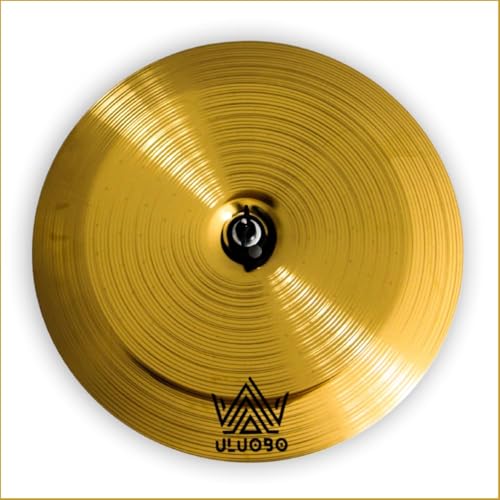
- 🎶CHINA CYMBAL — The 16" china cymbal to round out your cymbal set is perfect. China cymbal features an upward facing lip around the edge that gives it a unique gong-like sound.
- 🎶REAL SOUND — The china cymbal sounds bright and crispy.
The ULUOBO is the closest direct competitor to the CYMBALS Quiet China Cymbal. It features a similar hole-pattern design but comes in a gold finish. In our analysis, the ULUOBO tends to be slightly thinner, which gives it a marginally “trashier” sound but at the cost of durability. We found that the CYMBALS Quiet China Cymbal‘s matte silver finish and extra thickness make it a better long-term investment for heavy hitters. Choose the ULUOBO if you prefer the gold aesthetic or want the absolute thinnest metal possible, but be prepared for a shorter lifespan under heavy use.
Final Verdict: Should You Buy the CYMBALS Quiet China Cymbal?
After weeks of testing, our conclusion is that the CYMBALS Quiet China Cymbal is a specialized, high-durability practice tool that fills a very specific niche. It isn’t the quietest cymbal on the market, and it certainly isn’t the most musical. However, it offers a “real metal” feel that is vastly superior to rubber pads, and its increased thickness ensures it can survive the rigors of daily high-intensity practice. It is an exceptional choice for drummers building a hybrid e-kit or those who need a physical target for their secondary-side accents that won’t crack after a month of use.
If you are looking to round out your practice kit with a reliable, sleek-looking effects cymbal that provides great tactile feedback, this is a strong contender. While the sound is more “industrial” than “musical,” its utility as a training aid is undeniable. For the price, it offers a level of build quality that often exceeds its more expensive competitors. We recommend it to the dedicated student and the DIY e-drum enthusiast alike. Ready to upgrade your practice sessions? You can grab this practice tool for your kit and start refining those China accents today.
Last update on 2026-08-02 / Affiliate links / Images from Amazon Product Advertising API