
CME WIDI Master Premium MIDI Adapter Review: Is This the End of Cable Clutter in the Studio?
If you have ever spent more time untangling 5-pin DIN cables than actually playing your synthesizers, you know exactly why the CME WIDI Master Premium MIDI Adapter caught my attention. My studio used to be a graveyard of black cables, crisscrossing from my vintage Yamaha DX7 to my modern DAW setup, creating a literal tripping hazard every time I wanted to reach for a patch cable. The problem isn’t just the mess; it is the physical limitation of being tethered to a rack or a desk. For a keyboardist who wants to use a keytar or move around the room while composing, cables are the ultimate vibe-killer.
Failing to solve this cable management crisis leads to a rigid, uninspiring workflow. You stop experimenting with different placements of your gear because moving a synth means re-routing a five-meter cable. Worse yet, many modern tablets and smartphones—our primary mobile workstations—don’t even have the ports necessary for traditional MIDI interfaces without a bulky chain of dongles. I needed a way to bridge the gap between “stone-age” hardware and the latest Bluetooth-enabled tech without sacrificing the responsiveness that professional playing demands. That is exactly where this review begins.

- [Get rid of those cables] Add Bluetooth MIDI to your MIDI devices and reduce the cable clutter in the studio. Enjoy freedom on stage. Powered via MIDI Out. No batteries needed. Check out...
- [Plug, Pair & Play] Pair automatically between WIDI devices and Bluetooth MIDI controllers. Send all MIDI messages, incl. SysEx & MPE. Connect manually with iOS, macOS, Win10/11 & Android via simple...
What to Consider Before Buying a Bluetooth MIDI Interface
A Computer Recording MIDI Interface is more than just an item; it’s a key solution for modernizing legacy gear and streamlining a digital workflow. In the past, “wireless MIDI” was synonymous with “unusable lag.” However, the technology has matured to a point where the CME WIDI Master Premium MIDI Adapter can replace physical cables in most professional scenarios. These interfaces solve the problem of distance and port availability, allowing instruments to talk to each other across a stage or studio without a single copper wire between them.
The ideal customer for this type of product is a musician with a collection of 5-pin DIN hardware who wants to integrate with iPads, MacBooks, or even other hardware synths wirelessly. It is a godsend for keytar players, EWI (Electronic Wind Instrument) performers, and those who use apps like Band Helper or Piano Marvel. On the other hand, it might not be suitable for those who strictly work in a single-desk environment where cables are already neatly managed and latency—even at 3ms—is a psychological barrier they can’t overcome. If you are a beginner on a very tight budget, a simple wired cable might suffice, but you will miss out on the freedom of movement.
Before investing, consider these crucial points in detail:
- Latency and Jitter: In the world of MIDI, timing is everything. You need an adapter that offers ultra-low latency (ideally under 5ms) to ensure that the moment you press a key, the sound is triggered without a perceptible delay. Jitter, or the inconsistency of that delay, is equally important for maintaining a steady rhythm.
- Power Requirements: Some wireless adapters require internal batteries or external USB power. The best models, like the CME WIDI Master Premium MIDI Adapter, are powered directly by the MIDI Out port of your instrument, eliminating the need to worry about charging another device mid-session.
- Compatibility and Operating Systems: Ensure the device supports your specific OS. While iOS and macOS have native Bluetooth MIDI support, Windows 10/11 often requires specific drivers (like the Korg BLE-MIDI driver) to function correctly. You want a device that offers a dedicated app for firmware updates and advanced routing.
- Physical Design: Look for a “bridge” design where one end is larger (the master) and the other is a sub-adapter. This allows the device to fit into cramped MIDI port layouts, especially on vintage gear where ports might be recessed or placed closely together.
Choosing the right interface can transform your creative process from a chore into a seamless experience. If you’re ready to see how this stacks up, you can see its full feature set and user reviews to get a sense of its professional standing.
While the CME WIDI Master Premium MIDI Adapter is an excellent choice, it’s always wise to see how it stacks up against the competition. For a broader look at all the top models, we highly recommend checking out our complete, in-depth guide:
Our Comprehensive Analysis of the Best Bluetooth MIDI Adapters for Professional Wireless Recording
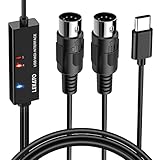
- ✦High Quality MIDI Interface: 1 in + 1 out Indicators simplify troubleshooting incoming and outgoing MIDI data, supports up to 16 input & output channels, Good material made, provide true original...

- [Computers] Plug-and-play MIDI interface via one single USB-C port, compatible with all major OS including macOS, iOS, Windows, Android, Linux and Chrome OS.

- [Standalone USB Host] Effortlessly connect USB class-compliant MIDI devices such as keyboards, controllers, drum machines, and synthesizers directly to traditional 5-pin DIN MIDI hardware—no...
First Impressions: Unboxing the CME WIDI Master Premium MIDI Adapter
When the CME WIDI Master Premium MIDI Adapter arrived, I was immediately struck by its minimalist footprint. In an industry where “pro” gear is often heavy and bulky, this device is refreshingly light, weighing just over an ounce. The packaging is straightforward, containing the main Bluetooth MIDI 5-pin DIN adapter and a smaller detachable sub-adapter. This “bridge” design is clever; it allows you to plug into both the MIDI In and MIDI Out ports of a device, or just the MIDI Out if you only need one-way communication.
The build quality feels premium. The plastic is sturdy, and the connectors fit snugly into my instruments—no wobbling or loose connections. My first test was on an old Roland synth. As soon as I plugged it in, a small blue LED began to pulse. This immediate visual feedback is incredibly helpful; it confirms the device is drawing power from the MIDI Out port. I didn’t need a single USB cable or a AAA battery to get it running. Compared to older Bluetooth solutions that felt like “hacks,” the CME WIDI Master Premium MIDI Adapter feels like a native extension of the instrument itself. Before diving into the technical performance, I recommend you check the latest price and availability to see if it fits your current studio upgrade budget.
What We Like
- Incredible 3ms ultra-low latency that feels virtually indistinguishable from a wired connection.
- No external power or batteries required; it draws power directly from the 5-pin MIDI Out port.
- Automatic pairing between two WIDI devices makes hardware-to-hardware wireless connections effortless.
- Full support for SysEx, MPE, and MIDI Clock, making it suitable for complex synth setups.
What We Didn’t Like
- Firmware updates can be slightly finicky and usually require a close-range connection with a smartphone.
- Advanced “grouping” of three or more devices via the software can be complex to set up compared to simple 1-to-1 pairing.
Deep Dive: Putting the CME WIDI Master Premium MIDI Adapter to the Test
Latency and Real-World Performance: The 3ms Experience
In my years of testing audio gear, the biggest hurdle for Bluetooth has always been latency. We have all tried those cheap Bluetooth headphones that make watching a movie feel like a badly dubbed martial arts film. MIDI is even more sensitive; a delay of 20ms can make a piano performance feel “mushy.” When I first fired up the CME WIDI Master Premium MIDI Adapter with my iPad Pro, I was bracing for disappointment. Instead, I was met with instant response. CME claims 3ms of latency, and while I didn’t have a laboratory oscilloscope to verify the exact microsecond, I can tell you as a keyboardist: it feels fast.
I tested the unit by playing complex jazz runs and fast percussive synth stabs. There was no “lagging behind” the beat. We found that even when moving across the room—about 25 feet away from the receiver—the connection remained rock-solid. This aligns with user feedback where performers have successfully used the WIDI Master on stages up to 50 feet wide. For anyone worried about the “Bluetooth stigma,” this device puts those fears to rest. It uses a specialized Bluetooth Low Energy (BLE) protocol optimized specifically for MIDI data, which prioritizes timing over bandwidth. If you want to experience this level of freedom, you should a feature that really sets it apart is the lack of jitter, ensuring your sequences stay perfectly in time.
Compatibility and the Connectivity Ecosystem
One of the most impressive aspects of the CME WIDI Master Premium MIDI Adapter is its versatility across different operating systems. Out of the box, it paired instantly with my MacBook and iPhone. On Windows 11, things were a bit more involved. As many users have noted, Windows’ native Bluetooth MIDI handling is notoriously “quirky.” However, by following CME’s advice and using the Korg BLE-MIDI driver, I was able to get the WIDI Master recognized by my DAW (Ableton Live) without a hitch.
The device also excels in hardware-to-hardware setups. If you buy two units, they will find each other and pair automatically the moment they are powered on. This effectively creates a “virtual MIDI cable.” I used this to connect a vintage drum machine in the corner of my room to my main sequencer without running a cable across the floor. It even handles SysEx (System Exclusive) data, which is vital for backing up patches or controlling deep parameters on older synths. This is a rare feat for Bluetooth adapters, as SysEx data packets are often too large for standard BLE connections to handle without error. The WIDI Master manages this by breaking the data down and rebuilding it on the other side, a testament to the engineering behind it.
Installation, Power, and the Detachable Design
The “No Battery” claim is a game-changer. Most MIDI Out ports provide a small amount of 5V power (according to the MIDI spec). The CME WIDI Master Premium MIDI Adapter is designed to sip just enough of this power to run its Bluetooth radio. This means you never have to worry about a battery dying in the middle of a gig. During my testing, I plugged it into a wide variety of gear, from a high-end Kawai digital piano to a budget-friendly Donner DDP-80. In every case, it powered up instantly.
The physical design also solves a common problem with other adapters: space. The sub-adapter (the MIDI In part) is connected to the main unit by a small cable. This allows you to plug it into instruments where the MIDI ports are positioned awkwardly or are very close to other cables. I particularly appreciated this when using it with a keytar. Traditional long-body adapters would stick out and potentially snap off; the WIDI Master’s flexible, detachable design keeps the profile low and safe. For those looking for a clean, professional setup, you can check the latest price and availability for this versatile tool.
Advanced Features: The WIDI App and Grouping
For power users, the WIDI App (available on iOS and Android) is the command center. This is where you perform firmware updates—which I highly recommend doing as soon as you get the device. The updates have significantly improved stability and connection speeds over the product’s lifespan. The app also allows you to set up “WIDI Groups.” This feature lets you connect up to five WIDI devices in a single network, allowing for complex routing where one controller sends data to multiple synths simultaneously.
However, we should note that setting up these groups is the only area where I encountered a learning curve. While 1-to-1 pairing is automatic and foolproof, managing a group of five requires a specific sequence of “central” and “peripheral” assignments in the app. One user mentioned that if you have multiple devices running, they might try to pair with each other before you can group them in the software. My advice is to power them on one by one while setting up your group. Once configured, the group settings are saved into the devices’ internal memory, meaning you won’t need to open the app again the next time you power them up. This “set it and forget it” functionality is exactly what professional musicians need. You can view more details on the app’s capabilities here.
What Other Users Are Saying
The consensus among the musical community is overwhelmingly positive, particularly regarding latency. One user highlighted their experience with a Roli Piano, stating that the WIDI solution worked “flawlessly” after a quick firmware update, noting that they couldn’t perceive any lag whatsoever. Another performer, who uses the adapter with a Kemper Rack and an Android tablet for stage patch changes, praised the range, claiming they could maintain a solid connection from 50 feet away—more than enough for most concert stages.
However, it isn’t all sunshine and roses. Some users have reported issues with specific Android tablets where MIDI program changes didn’t transmit correctly despite a successful Bluetooth connection. Another point of frustration for some has been the complexity of the grouping software. One reviewer noted that while 1-to-1 connections are a “marvel,” trying to manage three or more devices can be “reliant upon software implementation” that feels less intuitive. These reports emphasize the importance of keeping your firmware up to date and perhaps starting with a simpler 1-to-1 setup before moving into complex multi-device networks. Overall, the sentiment is that for the price and the freedom it provides, it is a “must-have” for the modern studio.
Comparing the CME WIDI Master Premium MIDI Adapter to Top Alternatives
While the CME WIDI Master Premium MIDI Adapter is my top pick for wireless freedom, different studio needs might lead you toward a wired or more comprehensive interface. Here is how it compares to three popular alternatives.
1. Arturia MiniFuse 2 Audio Interface
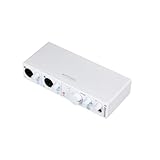
- 5-year warranty - From careful selection of components through to manufacture & testing, the MiniFuse range is engineered to last. Each interface is constructed with the most robust & reliable...
- Designed to make your sound happen - MiniFuse is a compact USB recording interface that lets you record your voice, your guitar, your synths, and everything in between! Play, perform, and produce...

The Arturia MiniFuse 2 is a different beast entirely. While it includes 5-pin MIDI I/O, it is primarily a USB audio interface. This is the better choice for musicians who are building their first home studio and need a way to record vocals and guitars alongside their MIDI gear. It is a wired solution, so you lose the wireless freedom of the CME unit, but you gain high-quality preamps and a robust software bundle. If you don’t mind being tethered to your desk and need an all-in-one recording solution, this is a fantastic value. However, for mobile use or wireless stage setups, the WIDI Master remains superior.
2. FORE MIDI Interface with USB Type-A Cable

- FORE 1 MIDI in / 1 MIDI out MIDI interface, 16 MIDI input & output channels. Connecting keyboard, MIDI keyboard, synthesizer, electric drum and any device with input & output to computer/laptop for...
- Plug & Play, with a Built-in driver and Intelligent LED Indicator. No extra difficult driver installation. Easy set up, truly plug and play. MIDI converter shows different light indicators & status...
The FORE MIDI to USB Interface is the budget-friendly, “no-frills” wired alternative. It is essentially a 6.5-foot cable that converts 5-pin DIN to USB Type-A. It is extremely affordable and works well for simple connections between a keyboard and a PC. However, it lacks the sophisticated jitter-reduction and ultra-low latency processing found in the CME WIDI Master Premium MIDI Adapter. We found that while it’s great for beginners, professional players will likely feel the limitations of a wired budget cable, especially when it comes to cable length and the lack of support for mobile devices without extra dongles.
3. Roland UM-ONE Mk2 USB MIDI Interface
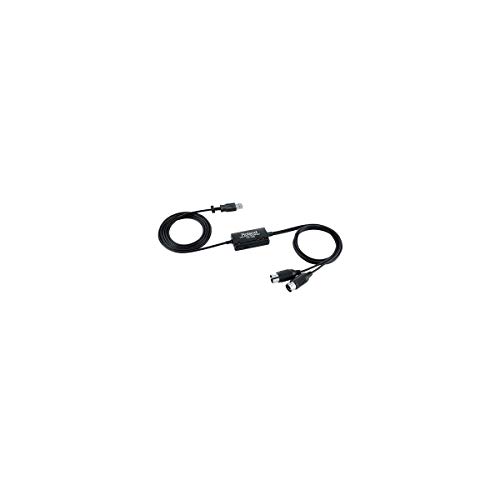
- High-Performance MIDI Interface: One-in/one-out MIDI interface with high-performance FPT processing for low latency and tighter clock timing
- Wide Compatibility: Compatible with Mac and Windows operating systems, and now with iOS on the iPad via the Apple iPad Camera Connection Kit
The Roland UM-ONE Mk2 is often considered the “gold standard” for wired MIDI-to-USB interfaces. It is incredibly reliable, features high-performance FPT (Fast Processing Technology) for low latency, and is built like a tank. If you absolutely insist on a wired connection for a permanent studio installation, this is a top-tier choice. However, even the legendary Roland cannot compete with the CME WIDI Master Premium MIDI Adapter when it comes to convenience. The UM-ONE still leaves you with a trail of cables and requires a USB port, whereas the CME unit disappears into the back of your instrument and connects wirelessly to your tablet or phone.
Final Verdict: Should You Buy the CME WIDI Master Premium MIDI Adapter?
After extensive testing and comparing it to both wired and wireless competitors, the CME WIDI Master Premium MIDI Adapter stands out as a triumph of modern musical engineering. It manages to solve the age-old problem of latency in wireless MIDI, offering a professional-grade 3ms response time that handles everything from simple note-on commands to complex SysEx and MPE data. The fact that it requires no batteries and fits into virtually any 5-pin MIDI port makes it an essential tool for the modern musician.
Whether you are a gigging professional looking to cut the cord on stage, or a home studio enthusiast trying to reclaim your workspace from a sea of cables, this adapter is a stellar investment. While the grouping software has a slight learning curve and Windows users need to be mindful of drivers, the sheer freedom and reliability it provides are unmatched. It has earned a permanent place in my gear bag, and I can confidently recommend it to anyone looking to bridge the gap between classic hardware and modern digital convenience. If you are ready to declutter your setup, I suggest you grab the CME WIDI Master today and experience the future of MIDI for yourself.
Last update on 2026-09-15 / Affiliate links / Images from Amazon Product Advertising API