
Ibanez JEMJR Steve Vai – White Review: Is This Entry-Level Shredder a True Professional Tool?
For decades, the silhouette of Steve Vai’s signature guitar—with its distinctive “monkey grip” handle and elegant vine inlay—has been the holy grail for guitarists obsessed with technical proficiency and flamboyant style. However, for many of us, the price tag of a premium Japanese-made JEM777 is often out of reach, costing several thousand dollars. This leaves many aspiring virtuosos stuck in a dilemma: do you settle for a generic super-strat, or do you find a way to capture that Vai magic without emptying your savings account? This is exactly why we set out to test the Ibanez JEMJR Steve Vai – White. We wanted to see if this more affordable version could truly provide the high-performance feel and legendary aesthetics that the JEM line is famous for, or if it was merely a visual replica. Solving this “entry-level vs. professional feel” gap is crucial because a guitar that looks fast but plays poorly can stifle a developing player’s progress and enthusiasm.

- Solidbody Electric Guitar with Meranti Body
- 2 Humbucking Pickups - White
What to Consider Before Buying a Solid Body Electric Guitar
A Solid Body Electric Guitar is more than just an item; it’s a key solution for expressing musical creativity, mastering technical passages, and achieving specific tonal textures that acoustic or hollow-body instruments simply cannot replicate. For those of us who grew up watching guitar heroes of the 80s and 90s, the solid body represents the ultimate platform for high-gain experimentation and stage reliability. The Ibanez JEMJR Steve Vai – White sits in a unique sub-category often called the “Super-Strat,” designed specifically for players who need more than what a traditional vintage-style guitar can offer. To fully appreciate what this instrument brings to the table, you should first check the latest price and availability to understand its position in the current market.
The ideal customer for this type of product is an intermediate player looking to transition into lead-heavy genres like metal, fusion, or progressive rock, or a beginner who wants an inspiring instrument that they won’t outgrow in six months. It’s also a fantastic “modding platform” for experienced players who love the JEM body shape but want to install their own custom electronics. Conversely, it might not be suitable for those who prefer the thick, rounded necks of vintage blues guitars or those who find the maintenance of a locking tremolo system too cumbersome for their playing style.
Before investing, consider these crucial points in detail:
- Dimensions & Space: Consider the weight and balance of the guitar. An 8-pound guitar like the Ibanez JEMJR Steve Vai – White is standard, but the double-cutaway design and slim body profile make it feel more compact and ergonomic during long practice sessions. You need to ensure the instrument fits your physical stature and that you have a high-quality stand or case to accommodate the pointed headstock and tremolo arm.
- Capacity/Performance (Pickups & Switching): Look for versatile pickup configurations. The HSH (Humbucker-Single-Humbucker) layout is widely considered the most flexible setup in the guitar world. It allows you to move from thick, creamy lead tones to “quacky” Strat-like clean tones with a simple flick of a 5-way switch, which is essential for players who don’t want to switch guitars mid-set.
- Materials & Durability: Not all “budget” woods are created equal. While many high-end Ibanez models use Basswood or Alder, this model utilizes Meranti. It’s important to understand how these materials affect the weight and resonance of the instrument. Additionally, look for a Maple neck, which provides the structural stability needed to withstand the tension of light-gauge strings and aggressive vibrato.
- Ease of Use & Maintenance: If you are new to double-locking tremolos, be prepared for a learning curve. These systems offer unparalleled tuning stability once set up, but changing strings and adjusting intonation requires specific tools and patience. Maintenance involves more than just wiping down the strings; you’ll need to occasionally lubricate the bridge’s pivot points and adjust the spring tension in the back cavity.
Transitioning from a basic beginner guitar to a specialized instrument like this requires an understanding of what makes a guitar “fast” and “versatile.” While the Ibanez JEMJR Steve Vai – White is an excellent choice, it’s always wise to see how it stacks up against the competition. For a broader look at all the top models, we highly recommend checking out our complete, in-depth guide:
FULL ANALYSIS
Check out our comprehensive guide to the best electric guitars for jazz music and performance

- One Squier Debut Series Stratocaster electric guitar, Frontman 10G amp, a padded gig bag, a strap, a cable, picks, a guitar stand, and an extra set of strings


- One Squier Debut Series Stratocaster electric guitar – a perfect beginner guitar for all ages

First Impressions: Unboxing the Ibanez JEMJR Steve Vai – White
When we first pulled the Ibanez JEMJR Steve Vai – White out of its packaging, the visual impact was immediate. The stark white finish, complemented by the intricate “Tree of Life” acrylic vine inlay, gives the guitar a premium look that punches far above its price point. We’ve handled dozens of Ibanez models over the years, and while this version uses more affordable materials than the Prestige line, the craftsmanship is surprisingly tight. The “monkey grip” handle is neatly routed, and the finish is smooth without the visible flaws often found on budget-tier instruments. Before you even plug it in, you can see its full feature set and user reviews to realize just how much “cool factor” Ibanez packed into this frame.
The guitar feels light but substantial. At 8 pounds, it sits comfortably on the shoulder. The Wizard III neck felt familiar immediately—thin, flat, and built for speed. Comparing it to previous iterations of the JEMJR, the current Meranti body provides a decent amount of natural resonance, though it lacks some of the mid-range “pop” found in the higher-end American Basswood models. However, for a guitar in this price bracket, the initial setup was better than expected, with a reasonably low action and a bridge that sat level right out of the box.
What We Like
- The iconic “Tree of Life” inlay and Monkey Grip provide a legendary aesthetic.
- The Wizard III Maple neck is incredibly fast and comfortable for technical playing.
- Highly versatile HSH pickup configuration covers everything from metal to blues.
- Exceptional value for money, making a signature-style guitar accessible to all.
What We Didn’t Like
- The stock bridge humbucker can sound a bit “muddy” under high gain.
- The double-locking tremolo can be intimidating for beginners to set up correctly.
Deep Dive: Performance and Playability of the Ibanez JEMJR Steve Vai – White
The Wizard III Neck: A Highway for Your Fingers
We spent several hours putting the Wizard III neck through its paces, and it truly is a feature that really sets it apart from other guitars in this price range. If you’ve never played an Ibanez “Wizard” neck, the first thing you’ll notice is how thin it is from front to back. This profile is specifically designed to reduce the distance your thumb has to travel, allowing your fingers to arch more naturally over the fretboard. This is a massive benefit for complex chords and rapid-fire alternate picking. During our testing, we found that moving from the 1st fret to the 24th was effortless, thanks to the deep cutaways and the smooth satin finish on the back of the neck. We noted that the frets were well-leveled, with no significant sharp edges—a common complaint with lower-priced guitars. Our experience aligns with many users who claim this is one of the most playable necks on the market for shredders.
Mastering the Double-Locking Tremolo System
The bridge on the Ibanez JEMJR Steve Vai – White is a double-locking system, which means the strings are clamped at both the bridge and the nut. We found that after a proper “break-in” period—stretching the strings and balancing the spring tension—the guitar held its tune remarkably well, even after aggressive dive bombs and squeals. However, we must emphasize that this system requires a bit of technical know-how. As one user mentioned in their feedback, the bridge can be difficult to tune if you lack experience. During our evaluation, we found that the fine-tuners on the bridge are responsive and smooth, allowing for micro-adjustments without having to unlock the nut. For players who want to emulate Steve Vai’s expressive “whammy bar” antics, this bridge provides the necessary range of motion, though we recommend a professional setup if you’ve never handled a floating bridge before.
Tonal Versatility: From Clean Chime to High-Gain Roar
The HSH pickup configuration is the heart of the Ibanez JEMJR Steve Vai – White‘s sonic identity. We tested the guitar through both a high-gain tube amp and a digital modeler to see how the pickups responded. The neck humbucker provides a warm, fluid tone that is perfect for liquid lead lines, while the bridge pickup offers the bite needed for heavy rhythms. We found that the middle single-coil pickup, especially when used in positions 2 and 4 of the 5-way switch, delivers a surprisingly crisp and “glassy” tone that works beautifully for funk and clean passages. While some expert players might find the stock pickups a bit lacking in definition compared to DiMarzios, for the majority of users, they are more than capable. In fact, many owners choose to explore the current deals on this signature model specifically to use it as a foundation for later pickup upgrades, turning a great guitar into a world-class beast.
Aesthetics and the “Modder’s Dream” Philosophy
There is no denying that the Ibanez JEMJR Steve Vai – White is a showstopper. The combination of the white body and the intricate inlay work makes it look like it belongs on a stadium stage. But beyond the looks, we found that the internal routing and construction make it a “modder’s dream.” During our research, we saw numerous users who had replaced the stock pickups with Steve Vai’s signature DiMarzio Evolution or Dark Matter II sets. We evaluated the electronics cavity and found it to be neatly wired with plenty of room for upgrades like coil-tapping or high-quality capacitors. This adaptability is a huge benefit because it allows the guitar to grow with you. You can start with the stock version as an intermediate player and, over the years, customize it into a professional-grade instrument that rivals models three times the price.
What Other Users Are Saying
The general sentiment surrounding the Ibanez JEMJR Steve Vai – White is overwhelmingly positive, especially regarding its value-to-performance ratio. Many long-time guitarists, some of whom have been playing since the 1980s and own high-end American-made gear, have noted that this guitar holds its own surprisingly well. One user mentioned that after a proper setup, it became their “main squeeze” for daily practice, praising the lightweight Meranti body. Another user, who purchased the guitar as a gift, was impressed that it “played well out of the box,” though they admitted to being a bit of a “guitar snob.” This product is highly recommended for those starting their journey as well as seasoned pros looking for a reliable backup.
On the critical side, some users pointed out that the volume knob is positioned quite close to the bridge, which can lead to accidental volume changes during aggressive strumming. We confirmed this during our playtest; it takes a bit of time to adjust your hand technique to avoid knocking the knob. Additionally, some users found the bridge pickup to be slightly “muddy” and chose to swap it for a Seymour Duncan or DiMarzio for better clarity. However, most agreed that for under $500, these are minor trade-offs that don’t detract from the overall quality of the instrument.
How It Compares: Ibanez JEMJR Steve Vai – White vs. The Competition
When looking for a high-performance electric guitar, it’s vital to see how the Ibanez JEMJR Steve Vai – White compares to other popular options in similar price brackets or styles. Here is our breakdown of three alternatives you might consider.
1. WestCreek Revenge Solid Body Electric Guitar
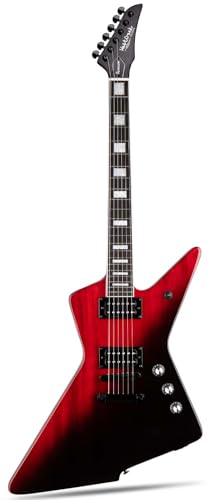
- WestCreek Revenge Introduction: This WestCreek Revenge electric guitar is easy to access the upper frets.
- Musical Style: Revenge model electric guitar is heavy metal guitar.
The WestCreek Revenge is a drastically different beast compared to the JEMJR. While the Ibanez focuses on sleek shredding and versatility, the WestCreek Revenge is unashamedly built for Heavy Metal. Featuring a striking “Gradient Red” finish and a mahogany body, it offers a thicker, darker tone than the Meranti-bodied Ibanez. It features rounded-end jumbo frets which are a nice touch for comfort, but it lacks the iconic locking tremolo and the ultra-thin Wizard neck of the Ibanez. If you are looking for a straightforward metal machine without the complexity of a floating bridge, the WestCreek is a solid alternative, though it lacks the legendary heritage and versatility that the Vai signature model provides.
2. Ibanez Gio GRG7221QA 7-String Guitar

- Quilted Maple Art Grain top
- High output Infinity R pickups
For players who want to explore even lower tunings, the Ibanez Gio GRG7221QA is a compelling choice. This is a 7-string model, meaning it adds a low B string for that massive, modern metal sound. While it shares the Ibanez DNA of fast necks and ergonomic bodies, it doesn’t have the “Monkey Grip” or the “Tree of Life” inlay that makes the JEMJR so special. The Gio series is Ibanez’s entry-level line, so the hardware and finish quality are a step below the JEMJR. However, if your primary goal is to play “djent” or low-tuned riffs and you don’t care about the Vai aesthetics, this 7-string is a more specialized tool for that specific job.
3. Squier Mini Strat Electric Guitar Bundle
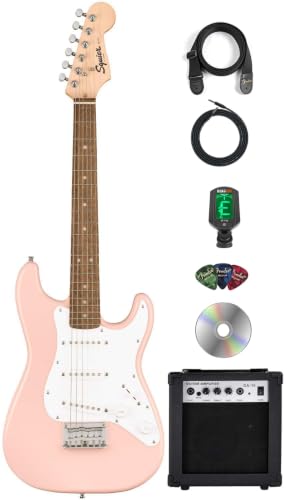
- COMPACT 3/4-SIZE DESIGN FOR YOUNG PLAYERS: Designed with a 22.75" scale length and smaller body, making it easy to handle and play for kids with smaller hands
- PERFECT STARTER GUITAR FOR AGES 6–12: Ideal size and playability tailored specifically for children, helping young beginners learn comfortably
The Squier Mini Strat is designed for a completely different demographic. This is a 3/4-size guitar, making it the perfect choice for children or as a travel guitar for adults. While the Ibanez JEMJR Steve Vai – White is a full-sized, professional-feeling instrument, the Mini Strat is a simplified version of the classic Fender design. It has a hardtail bridge (no tremolo), making it much easier for beginners to tune. It obviously cannot compete with the JEMJR in terms of performance, tone, or features, but if you are buying for a young child who isn’t ready for a full-scale neck, this bundle is the most practical starting point.
The Final Verdict: Is the Ibanez JEMJR Steve Vai – White Worth It?
After putting the Ibanez JEMJR Steve Vai – White through extensive testing, our conclusion is clear: this is arguably the best “bang-for-your-buck” signature guitar on the market. It successfully captures the spirit, look, and speed of Steve Vai’s legendary instruments while keeping the price accessible. While the stock pickups and the complexity of the bridge might require a bit of extra attention, the foundation of the guitar—the Wizard III neck and the solid construction—is top-notch. It’s an instrument that rewards technical practice and inspires you to pick it up every time you see it hanging on your wall.
In summary, if you are an intermediate player looking to shred, a fan of Steve Vai, or a modder looking for a gorgeous white canvas, this guitar is a phenomenal investment. It offers a level of playability that is rare in this price category and provides a clear path for future upgrades. Don’t wait to elevate your playing style; grab your own Ibanez JEMJR here and start your journey toward technical mastery today!
Last update on 2026-10-17 / Affiliate links / Images from Amazon Product Advertising API