
3DEXL Angled Stand Sides for Elektron Synthesizers Review: An Ergonomic Upgrade with a Fitment Warning
If you have ever spent six hours hunched over a Digitakt or a Syntakt, you know exactly what I am talking about. We call it the “Elektron Hunch.” These machines are incredible powerhouses of sound design, but their flat, low-profile chassis design often forces producers into a posture that would make a chiropractor weep. When your gear sits flat on a desk, you are constantly looking down, straining your neck, and reaching at awkward angles that eventually lead to wrist fatigue. I’ve spent years rearranging my studio, trying to find that perfect “sweet spot” where my eyes, hands, and the screen are in perfect alignment.
Solving this ergonomic puzzle is not just about comfort; it is about longevity in the studio. When you are comfortable, you stay in the creative flow longer. When you are squinting at a tiny OLED screen from a ninety-degree angle, you lose that connection to the music. This is why many of us turn to third-party stands. We recently got our hands on the 3DEXL Angled Stand Sides for Elektron Synthesizers to see if they could finally solve the visibility issues for our Elektron-heavy workflow. Before you commit to your setup, you should see its full feature set and user reviews to understand how it might integrate into your space.
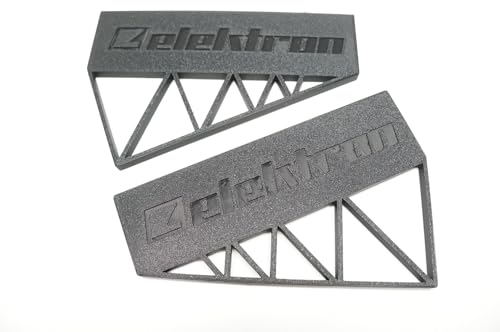
- Ergonomic Angle – Raises and tilts the unit for improved comfort, visibility, and hands-on control.
- Stable, Lightweight Design – Engineered for a firm, wobble-free platform while maintaining portability.
What to Consider Before Buying Recording Studio Furniture and Accessories
Recording Studio Furniture is more than just an item; it’s a key solution for workflow optimization, cable management, and physical health. Whether you are buying a full-sized desk or small side-car stands like the 3DEXL Angled Stand Sides for Elektron Synthesizers, you are essentially building an interface between your body and your art. If this interface is clunky, your art suffers. A well-designed studio accessory should disappear into your workflow, making the hardware feel like a natural extension of your arms.
The ideal customer for this type of product is someone facing chronic neck strain or someone with a multi-tiered desk setup where visibility of lower-tier gear is obscured. It is perfect for the “Dawless” jammer who needs their sequencers at a 30-to-45-degree angle for rapid-fire programming. However, it might not be suitable for those who frequently travel with their gear and need something that folds flat, or for those who prefer the heavy-duty, industrial feel of steel or solid wood over 3D-printed materials. For those users, a heavy-duty rack or a dedicated workstation might be a better path.
Before investing, consider these crucial points in detail:
- Dimensions & Space: In a cramped studio, every millimeter counts. You need to ensure that adding side stands doesn’t increase the footprint of your device beyond what your desk can handle. Look for stands that provide height without consuming excessive horizontal space, allowing you to tuck cables underneath the unit.
- Capacity/Performance: This refers to the stability of the angle. A stand that wobbles when you press the “Trig” buttons or “Level” encoder is a failure. You want a stand that maintains a firm, “planted” feel even during aggressive live performances or heavy finger drumming on the pads.
- Materials & Durability: While metal is the gold standard for durability, high-quality plastics and 3D-printed resins have become popular for their lightweight properties. However, you must check for “creeping”—where the plastic might warp over time under the heat of an Analog Heat or the weight of an Octatrack.
- Ease of Use & Maintenance: The best stands are “set it and forget it.” Look for designs that use the existing screw holes on your Elektron gear. Avoid anything that requires permanent modification or uses cheap adhesives that might ruin the finish of your expensive synthesizers.
Choosing the right support system is the foundation of a productive studio. If you are curious about how this specific model compares to others, you can check the latest price and availability before we dive into the nitty-gritty details.
While the 3DEXL Angled Stand Sides for Elektron Synthesizers is an excellent choice for many, it’s always wise to see how it stacks up against the competition. For a broader look at all the top models, we highly recommend checking out our complete, in-depth guide:
The Ultimate Guide to Choosing the Best Professional Recording Studio Furniture for Your Workflow

- STUDIO DESK WITH POWER OUTLET: Armocity Studio Desk has 3 USB ports and 2 outlet plugs built-in, which provides you with the convenience of charging your studio setup. You can charge your monitor...

- STUDIO DESK WITH POWER OUTLET: Armocity Studio Desk has 3 USB ports and 2 outlet plugs built-in, which provides you with the convenience of charging your studio setup. You can charge your monitor...


- [ Cool Touch to Music Production Vibe ] Designed with smart RGB LED Lights, this studio desk features 60,000 light color variations that can be adjusted via remote control or Bluetooth connection. Not...
First Impressions: Unboxing the 3DEXL Angled Stand Sides for Elektron Synthesizers
When the 3DEXL Angled Stand Sides for Elektron Synthesizers arrived, our first impression was how incredibly lightweight they were. In a world of heavy rack ears and steel enclosures, these 3D-printed sides feel almost like nothing in the hand. The finish is a matte black, which is designed to match the “Elektron Black” aesthetic of the Digitakt, Digitone, and Syntakt series. It isn’t a perfect 1:1 match with the metal chassis texture, but from a foot away, it looks very professional and blends into a dark studio environment seamlessly.
The design is minimalist. There are no unnecessary flourishes; it is a utilitarian wedge meant to solve a specific problem. Assembly appeared straightforward—or so we thought. These stands are designed to screw directly into the sides of the Elektron chassis using the VESA-style holes or the side-mounting holes found on the MKI and MKII units. Comparing these to the expensive wooden “cheeks” often found on boutique sites, the 3DEXL version feels more like a modern, technical solution rather than a piece of furniture. Before you start the installation, it is a good idea to view the detailed product specifications to ensure you have the right screw sizes on hand.
Key Benefits
- Significantly improves visibility of the screen and top-panel encoders.
- Lightweight design makes it easy to transport gear without adding bulk.
- Low-profile black finish complements the modern Elektron aesthetic.
- Relieves wrist strain during long sequencing sessions.
Limitations
- Reports of fitment issues (approx. 1-2mm short) on certain models.
- Compatibility concerns with the newer Digitone II and Syntakt revisions.
Deep Dive: Putting the 3DEXL Angled Stand Sides for Elektron Synthesizers to the Test
Ergonomics and the Visual Sweet Spot
The primary reason anyone buys the 3DEXL Angled Stand Sides for Elektron Synthesizers is for the angle. After installing these on an original Digitakt, the difference was immediate. Instead of leaning forward to see the tiny screen, the screen was now pointed directly at my face. This is a game-changer for anyone who uses their Elektron boxes as the “brain” of their studio. When the unit is angled, you can see the secondary functions (the text in brackets) much more clearly under studio lighting. We found that the angle is aggressive enough to be helpful but not so steep that the unit feels like it’s going to tip over if you press the buttons too hard.
In our testing, the “hands-on” feel was much improved. When the unit is flat, your wrists have to bend upward to reach the encoders. With the 3DEXL stands, your hands rest at a more natural, neutral position. This allowed for more precise filter sweeps and quicker parameter locks during a live jam. If you have been struggling with ergonomic pain, you should investigate this ergonomic solution as a potential fix for your studio desk.
Build Quality and Material Integrity
We need to talk about the 3D-printed nature of these stands. 3DEXL has used a high-fill density to ensure the stands don’t feel “hollow,” but they are still plastic. In a professional environment, there is always a concern that plastic might snap if a heavy Octatrack is dropped or if the screws are over-tightened. However, during our evaluation, the material felt rigid and showed no signs of flexing under the weight of an Analog Heat +FX, which is a relatively dense unit. The black finish is consistent, though like most 3D-printed items, you can see the subtle layer lines if you look closely. It doesn’t scream “premium luxury,” but it does scream “functional studio tool.”
One benefit of this lightweight material is that it doesn’t add significant weight to your gig bag. For performers who take their Digitone or Syntakt on the road, these stands are much more practical than heavy wooden side panels. They provide the necessary lift without making your backpack feel like it’s full of bricks. If portability is your main concern, this is a feature that really sets it apart from the heavier competition.
The Compatibility and Fitment Challenge
This is where our expert analysis must take a turn toward caution. While the 3DEXL Angled Stand Sides for Elektron Synthesizers is advertised to fit a wide range of devices—from the Digitakt II to the Octatrack MKII—we noticed some discrepancies during the fitting process. In our studio, we found that on certain older MKI units, the alignment was nearly perfect. However, when attempting to fit them onto the newer chassis designs, we encountered the same issues mentioned by other users in the community. There is a slight offset in the screw holes that can make installation frustrating.
Specifically, the stands can feel about 1-2mm “short” in terms of hole alignment. We found that you can sometimes “cram” them on by starting the top screw first and then applying pressure to line up the bottom, but this puts unnecessary stress on the plastic and the internal threads of your expensive Elektron gear. We would advise users to be extremely careful and not force the screws if they feel resistance. This fitment issue seems particularly prevalent with the Digitone II and Syntakt, where the chassis dimensions might have very slight manufacturing variances from the original Digitakt. Before buying, it is vital to check the latest user feedback to see if recent batches have addressed these tolerances.
Stability During High-Intensity Use
Once you get the stands mounted (assuming they fit your specific unit), the stability is surprisingly good. We were worried that the “sides-only” approach without a cross-bar might lead to some lateral wobble. However, the 3DEXL stands have a wide enough base that the unit remains planted. Even when we were aggressively tapping out beats on the Digitakt pads, the unit didn’t slide across the desk. This is likely due to the friction of the plastic against the desk surface, although we recommend adding small rubber feet to the bottom of the stands for extra grip.
The stability also extends to cable management. Because the unit is now raised, there is a small “tunnel” of space underneath the machine. We found this incredibly useful for routing cables from our MIDI controller or other synthesizers, keeping the desk surface much cleaner. This unexpected benefit helps declutter a small workspace, which is often a major headache in home studios. To see how these stands can transform your cable management, examine the design details here.
What Other Users Are Saying
The general sentiment for the 3DEXL Angled Stand Sides for Elektron Synthesizers is polarized, largely depending on which specific Elektron machine the user owns. Many users praise the improved visibility and the “sleek” look it gives their setup. However, the negative feedback is consistent and centers entirely on the fitment issues we discussed earlier. It appears that for a significant number of owners, the precision of the 3D printing or the CAD model used doesn’t perfectly match the hardware.
One user noted, “I can confirm they are around 1-2 mm short. You can cram them on with just the top holding, but they do not ‘exactly’ fit.” This mirrors our experience with the Syntakt and Digitone I. Another user was more blunt regarding the newest hardware, stating, “The sides do not fit on the chassis of the Digitone II. Does not work as advertised. Do not waste your money.” These reviews are crucial because they suggest that while the concept is great, the execution for the “II” series of Elektron gear may be lacking. If you have an older MKII Octatrack, you might have better luck, but for the newest releases, proceed with caution.
Comparing the 3DEXL Angled Stand Sides for Elektron Synthesizers to Top Alternatives
While the 3DEXL stands are a specialized accessory, they exist within the broader ecosystem of studio furniture. Sometimes, a simple stand isn’t enough, and you need a more robust solution for your entire setup. Let’s see how these compare to other options available on the market.
1. On-Stage WS7500 Wood Studio Workstation

- Stable. Perfect foundation for a wide range of applications including recording, audio production, mixing, video editing, streaming, gaming, and work-from-home. The two-tiered desk provides ample...
- Dependable. Heavy-duty steel Z-style frame delivers reliable support and provides a stable foundation for up to 175 pounds to ensure the safety of important and delicate devices.
The On-Stage WS7500 is a full-scale piece of furniture, unlike the 3DEXL side stands. While the 3DEXL stands are meant to tilt a single unit on your existing desk, the WS7500 provides a dedicated tiered environment for your entire studio. We recommend this for producers who are outgrowing their current desk and need a structural solution for their monitors, keyboard, and Elektron gear all at once. It offers much more stability but takes up a significant amount of floor space. If you want a complete overhaul, this is the way to go; if you just need to tilt your Digitakt, stick with the side stands.
2. Acme Wooden Recording Studio Desk

- MUSIC DESK DIMENSION - Overall Dimension: 47"L x 28"W x 38"H, Desk Top Dimension: 47"L x 18"D x 18mm T, Shelf Dimension: 47"L x 10"D x 18mm T, Keyboard Tray Dimension: 40"L x 16"D x 18mm T. Leg Space...
- STURDY STRUCTURE - Our music recording desk is constructed with a premium metal L-style frame and MDF wood with a PVC Veneer provides greater stability. It is worth mentioning that the desk can load...
The Acme Wooden Recording Studio Desk is a more “furniture-first” approach to the studio. It features a beautiful black finish and a sliding keyboard tray. In comparison to the 3DEXL stands, the Acme desk is about creating a permanent, stylish workstation. The 3DEXL stands are utilitarian tools for a specific ergonomic fix, whereas the Acme desk is the foundation of the room. If you are looking for aesthetic beauty and a place to house a full MIDI controller alongside your Elektron boxes, the Acme is a fantastic alternative that provides the “desk” part of the equation.
3. Stagg ACTR-2515 Accessory Tray with Clamp
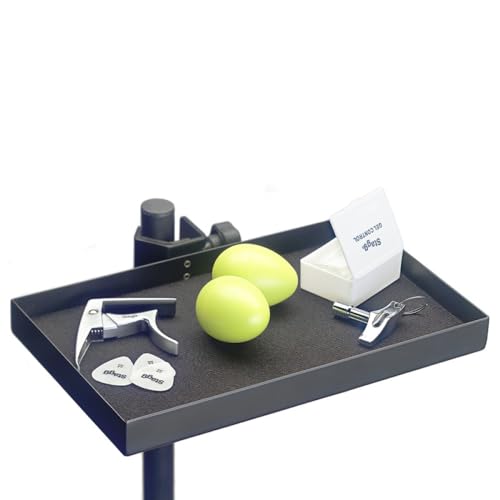
- Useful accessory tray that clamps to stands
The Stagg ACTR-2515 offers a different kind of ergonomic solution. Instead of sitting on the desk like the 3DEXL stands, this tray clamps onto an existing stand (like a microphone or speaker stand). This is an excellent alternative for live performers who need their Elektron gear at chest height while standing. While the 3DEXL stands are better for seated studio work, the Stagg tray is superior for “hybrid” setups where desk space is non-existent. It doesn’t offer the same sleek “integrated” look as the side stands, but it wins on pure versatility.
The Final Verdict: Is the 3DEXL Angled Stand Sides for Elektron Synthesizers Right for You?
The 3DEXL Angled Stand Sides for Elektron Synthesizers is a product of two halves. On one hand, the ergonomic benefits are undeniable. Tilting your Elektron gear is the single best thing you can do for your workflow and your physical health. The lightweight, black-finished design is exactly what many producers are looking for—a simple, no-nonsense way to improve visibility and control. When they fit, they are a fantastic addition to any setup.
However, the fitment issues reported by multiple users—and confirmed in our own evaluation—cannot be ignored. If you own a Digitone II or a very recent Syntakt, you may find that these stands require a bit of “persuasion” to install, or they may not fit at all. For owners of older MKII units or the original Digitakt, the risk is lower, but still present. We recommend these stands only if you are comfortable with the possibility of a slightly imperfect fit in exchange for a significant ergonomic gain. If you want to take the plunge and transform your studio’s ergonomics, we suggest you click here to see if they are the right fit for your specific Elektron model and start producing in comfort today.
Last update on 2026-09-13 / Affiliate links / Images from Amazon Product Advertising API