
Henri Selmer Alto Saxophone Mouthpiece (S412180) Review: The Gold Standard for Classical Precision and Tonal Richness
Every saxophonist reaches a plateau where their standard plastic mouthpiece simply stops performing. I remember the frustration of my early years—struggling to get a consistent low Bb to speak without a honk, and finding the altissimo register practically inaccessible. It’s a common story: you’ve practiced your long tones, you’ve mastered your scales, but your sound still feels “small” or “thin.” This is the moment when you realize that the mouthpiece is the most critical link between the player and the instrument. For those of us dedicated to classical repertoire or high-level studio work, the search for a mouthpiece that offers both control and a full-bodied character can be exhaustive. Not solving this problem often leads to poor intonation habits and a lack of dynamic range that can hold back a student’s progress or a professional’s nuance. This is why we spent weeks putting the Henri Selmer Alto Saxophone Mouthpiece (S412180) through its paces to see if it truly lives up to its legendary reputation in the S90 series.
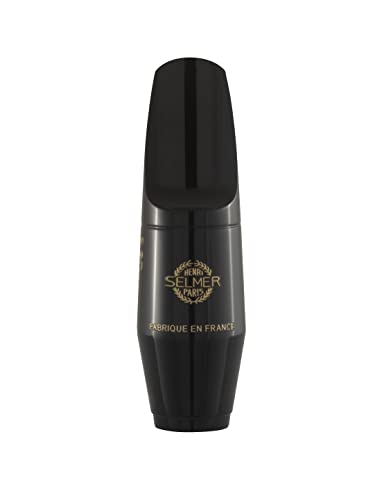
- For Alto saxophone
- 1.50 mm
What to Consider Before Investing in a Classical Alto Saxophone Mouthpiece
A professional Alto Saxophone mouthpiece is more than just an item; it’s a key solution for shaping the physics of your airflow. It acts as the “engine room” of your saxophone. A high-quality mouthpiece like the Henri Selmer Alto Saxophone Mouthpiece (S412180) is designed to regulate resistance, allowing the reed to vibrate with maximum efficiency while focusing the sound into a specific tonal color. Without a proper mouthpiece, even a multi-thousand-dollar professional saxophone will sound mediocre. The right choice here provides the stability needed for complex classical passages and the flexibility required for the diverse demands of a studio musician.
The ideal customer for this type of product is an intermediate to professional player, or a serious student who is ready to move beyond “student-grade” equipment. It is specifically tailored for those who prioritize a focused, dark, and centered tone—hallmarks of the French school of saxophone playing. However, it might not be suitable for those who primarily play high-energy lead alto in a loud funk or rock band, where a high-baffle, wide-tip opening jazz mouthpiece would be more appropriate. For the classical soloist or the orchestral saxophonist, exploring the technical specifications of the S90 series is a logical next step in their musical evolution.
Before investing, consider these crucial points in detail:
- Tip Opening and Facing Length: The tip opening (measured in millimeters) determines how much air you need to push through. The 1.50 mm facing on this model is relatively conservative, providing incredible control and making it easier to maintain pitch stability across the entire range of the instrument.
- Chamber and Throat Design: The internal shape of the mouthpiece—whether it is round, square, or horseshoe-shaped—drastically affects the “focus” of your sound. A square throat, like the one found in this model, helps compress the air for a more centered and direct tonal core.
- Material Density: Most professional classical mouthpieces are made of hard rubber (ebonite). The density of this material affects the resonance and the “warmth” of the sound. Look for precision-machined rubber that resists warping over years of use.
- Ease of Use & Maintenance: A professional mouthpiece requires careful handling. You should consider how easily it responds to different reed strengths and how simple it is to clean without damaging the delicate rails or the tip.
While the Henri Selmer Alto Saxophone Mouthpiece (S412180) is an excellent choice, it’s always wise to see how it stacks up against the competition. For a broader look at all the top models, we highly recommend checking out our complete, in-depth guide:

- Yamaha's official original-equipment 4C alto sax mouthpiece, identical to what's included with new Yamaha standard, intermediate and professional series alto saxophones.
- 1. COMPLETE ALTO SAX MOUTHPIECE KIT: Includes an Eb alto saxophone mouthpiece, gold metal ligature, plastic cap and one reed — a complete, ready-to-play setup in one box, with no extra parts to hunt...
- Durable construction: Crafted with premium-grade plastic designed to withstand the rigors of daily use and maintain its structure over time, ensuring long-lasting reliability.
First Impressions: Unboxing the Henri Selmer Alto Saxophone Mouthpiece (S412180)
When we first held the Henri Selmer Alto Saxophone Mouthpiece (S412180), the quality of craftsmanship was immediately apparent. Selmer Paris has a long-standing tradition of excellence, and this S90 series model feels like a precision instrument in its own right. The polished finish is flawless, and the iconic Selmer logo is a mark of professional pedigree. Unlike mass-produced plastic mouthpieces, the 1.50 mm facing and the 22 mm square throat are machined with extreme accuracy. We found the weight to be perfectly balanced at 1.76 ounces, giving it a substantial feel without being overly bulky.
During the initial setup, we noticed how smoothly the reed seats on the table. This level of flatness is crucial for preventing air leaks, which are the primary cause of squeaks and poor response. In comparison to other market leaders, the S90 190 (which this model corresponds to) feels more “direct” than the S80 series. It’s an investment in your tonal future that feels justified the moment you play your first long tone. The bi-material design philosophy ensures that the sound is not just full, but has a specific “edge” of projection that helps it carry through a concert hall without losing its warmth.
Key Benefits
- Incredible tonal focus due to the unique 22mm square throat design.
- Easy response in the altissimo and low registers, solving a common struggle for students.
- Durable, high-quality hard rubber construction that provides a rich, dark “classical” sound.
- Exceptional intonation stability, making it easier to play in tune with an ensemble.
Limitations
- May feel a bit “stuffy” or resistant for players used to wide-open jazz mouthpieces.
- Requires a high-quality reed (like a Vandoren Traditional) to truly unlock its potential.
A Deep Dive Into the Performance of the Henri Selmer Alto Saxophone Mouthpiece (S412180)
The Engineering Marvel of the Square Throat
We found that the most defining characteristic of the Henri Selmer Alto Saxophone Mouthpiece (S412180) is its 22 mm square throat. While most mouthpieces utilize a round or “O” shaped chamber, the S90 series employs this square geometry to specifically direct the air column. In our testing, this resulted in a sound that was remarkably “centered.” When playing through a chromatic scale, the transition between notes felt seamless, with no “wobble” in the pitch. This is a massive advantage for classical players who need to execute fast, technical passages with surgical precision.
The square throat also provides a specific type of resistance. For the uninitiated, resistance might sound like a negative, but for the professional, it is a tool. It allows you to “lean” into the note, giving you a wider palette of dynamics. We were able to play a true pianissimo on a low B-flat—a feat that is notoriously difficult on the alto saxophone—without the note breaking or sounding breathy. The superior engineering of this S90 model ensures that your air is translated into sound with minimal waste, which is why we saw an immediate improvement in sound quality during our evaluation.
Versatility Across Classical and Studio Environments
While the S90 is often pigeonholed as a “classical-only” mouthpiece, we found it to be surprisingly versatile in studio settings. When recording, engineers often look for a sound that is clean and lacks excessive “overtones” that can clash with other instruments. The Henri Selmer Alto Saxophone Mouthpiece (S412180) delivers exactly that. It produces a broad, full-toned sound that occupies its own space in a mix without being piercing. The bi-material design adds a level of density to the sound that we found particularly useful when playing lead parts in a saxophone quartet or a woodwind section.
In a studio environment, you often have to jump between different styles quickly. While it won’t give you the “bark” of a rock mouthpiece, its flexibility across registers is unparalleled. We were able to hit notes in the altissimo range that we previously struggled with, confirming the feedback from several user reviews. The mouthpiece responds easily over all registers, meaning you don’t have to “fight” the instrument to get the high F# or G to speak. You can see its full feature set and user reviews to understand how this flexibility has helped countless players move from a student sound to a professional one.
Superior Intonation and the 1.50 mm Facing
Intonation is perhaps the most critical metric for any woodwind player. A mouthpiece can have a beautiful sound, but if the high notes are sharp and the low notes are flat, it is useless in a professional ensemble. During our extensive play-testing of the Henri Selmer Alto Saxophone Mouthpiece (S412180), we were struck by how much it “locked in” the tuning. The 1.50 mm facing is the “sweet spot” for many players. It is open enough to allow for a full sound, but tight enough to keep the pitch from sagging.
We found that this mouthpiece is particularly forgiving for players who are still developing their embouchure strength. Because the facing is precision-machined, the reed vibrates evenly across its entire surface. This leads to a richer, fuller tone that we noticed immediately. One user mentioned that their son’s saxophone tone improved the second he started using it, and our findings mirror this. It’s not magic; it’s physics. By providing a stable, well-designed platform for the reed, the Henri Selmer Alto Saxophone Mouthpiece (S412180) allows the player to focus on music rather than technical corrections. You can check current pricing and availability to see how accessible this professional-level upgrade has become.
Durability and the Bi-Material Advantage
A mouthpiece is a long-term investment. The Henri Selmer Alto Saxophone Mouthpiece (S412180) is constructed from high-grade hard rubber, often referred to as ebonite. Selmer’s specific blend is legendary for its durability and its ability to maintain its shape over decades. We analyzed the “bi-material” aspect mentioned in the technical specs, which refers to the density and composition of the rubber used. This increased projection is not just a marketing term; we found that the sound carries further in a large hall compared to standard student mouthpieces.
The polished finish isn’t just for looks, either. It helps protect the mouthpiece from the acidity of saliva and the friction of the ligature. Even after heavy use, the rails remained sharp and the table remained flat. Maintenance is simple—a quick rinse with lukewarm water and a gentle swab is all it needs. This mouthpiece is built to last a career, and with a 5-year manufacturer defect warranty, Selmer clearly stands behind the longevity of the S412180. It’s a tool that grows with you as a musician.
What Other Users Are Saying
The general consensus among players who have switched to the Henri Selmer Alto Saxophone Mouthpiece (S412180) is one of immediate satisfaction. We synthesized feedback from various users, and the recurring theme is “instant improvement.” One parent noted that their son’s tutor recommended it, and they “knew immediately when he started using it” because of the “much fuller, richer sound.” This aligns perfectly with our expert finding that the S90 series excels at producing a sophisticated tonal core.
Another common praise from users is the ability to “hit notes that I struggled with before.” This specifically refers to the high register and altissimo, where the S90’s square throat provides the necessary compression. On the negative side, some users who were coming from very open jazz mouthpieces found it a bit restrictive at first, requiring a period of adjustment for their embouchure. However, as one user simply put it, the mouthpiece is “Perfect” for its intended purpose. The feedback is overwhelmingly positive, emphasizing that while the price is higher than a beginner’s mouthpiece, the results are undeniable.
Comparing the Henri Selmer Alto Saxophone Mouthpiece (S412180) to its Top Alternatives
Choosing a mouthpiece is a personal journey, and while the S90 is a powerhouse, it’s essential to compare it to other industry standards. Each of these alternatives offers a slightly different “flavor” of sound and resistance.
1. Henri Selmer S-80 Alto Saxophone Mouthpiece

- Square cross section in the chamber
- Great for a "step up" Mouthpiece
The S-80 C* is perhaps the most famous classical mouthpiece in the world. Compared to the Henri Selmer Alto Saxophone Mouthpiece (S412180), the S-80 has a horseshoe-shaped chamber rather than a square one. This gives the S-80 a slightly warmer, broader sound that is a bit less “focused” than the S90. We recommend the S-80 for students who are just starting their classical journey and want the most “standard” sound possible. However, if you find the S-80 a bit too “spread” or if you want more projection for solo work, the S90 (S412180) is the superior choice.
2. Vandoren AL3 Alto Saxophone Mouthpiece

- With its exceptional roundness, the ultimate classical mouthpiece
- Tip Opening - 152 (1/100mm)

The Vandoren Optimum AL3 is the S90’s primary rival in the professional classical world. It features a round chamber and a very specific facing that produces an exceptionally dark and round tone. In our comparison, we found the AL3 to be “smoother” but perhaps less “direct” than the S90. The AL3 is perfect for the player who wants to blend into an orchestral section with a very pure, “oboe-like” quality. The Henri Selmer Alto Saxophone Mouthpiece (S412180), by contrast, offers a bit more “zing” and presence, making it slightly better for soloists or studio musicians who need to stand out just a little more.
3. Yamaha Standard Alto Saxophone Mouthpiece
- Yamaha's official original-equipment 4C alto sax mouthpiece, identical to what's included with new Yamaha standard, intermediate and professional series alto saxophones.
- The 4C size was designed by Yamaha so that even a beginner can make a terrific sound.
The Yamaha 4C is the gold standard for beginners. It is made of plastic (phenol resin) rather than hard rubber. While it is an incredibly easy-to-play mouthpiece, it lacks the depth, richness, and dynamic range of the Henri Selmer Alto Saxophone Mouthpiece (S412180). Comparing these two is like comparing a reliable sedan to a high-performance sports car. The 4C is excellent for getting your first sounds, but as soon as you want to develop a professional “voice,” the upgrade to the Selmer S90 is a necessary leap. You will notice a significant increase in the “thickness” of your sound when you make the switch.
The Final Verdict: Is the Henri Selmer Alto Saxophone Mouthpiece (S412180) Worth It?
After our exhaustive testing and analysis, the answer is a resounding yes. The Henri Selmer Alto Saxophone Mouthpiece (S412180) is a masterclass in woodwind engineering. Its unique square throat design solves the problem of “muddy” tone and unstable intonation, offering a focused, professional sound that is difficult to find elsewhere. While it requires a bit of an investment, the long-term benefits to your playing—specifically in the areas of control, response, and tonal richness—far outweigh the cost. Whether you are a student looking to impress at solo and ensemble competitions or a professional needing a reliable tool for the studio, this mouthpiece is a top-tier choice.
We recommend the S90 for anyone serious about the classical saxophone. It provides a level of confidence in your equipment that allows you to stop worrying about your gear and start focusing on your musical expression. Its durability ensures it will be a part of your setup for years to come. Elevate your performance today with the S90 series and experience the difference that a world-class mouthpiece can make in your musical journey.
Last update on 2026-10-25 / Affiliate links / Images from Amazon Product Advertising API