
D’Addario Rico Metalite Alto Sax Mouthpiece M7 Review: The High-Baffle Powerhouse That Punches Way Above Its Weight
We’ve all been there: you’re standing in the middle of a horn section, the drummer is playing like he’s trying to break the floorboards, the guitarists have their amps cranked to eleven, and you are blowing your lungs out just to hear a faint echo of your own alto. For years, the solution to this problem was simple but expensive—buy a metal mouthpiece. However, not everyone has five hundred dollars to drop on a boutique hand-finished piece, and many players find the cold, hard feel of metal against their teeth uncomfortable. This is exactly where the D’Addario Rico Metalite Alto Sax Mouthpiece M7 enters the conversation. It promises the projection and “zing” of a metal mouthpiece with the price tag of a few boxes of reeds. But can a piece made of polycarbonate truly stand up to the legendary designs it mimics? I took this piece into the studio and the practice room to find out if it’s a genuine giant-killer or just a budget compromise.

The M7 Metalite Alto Saxophone mouthpiece features the medium M chamber for moderate brilliance, a .090" tip opening, and a 21.5mm facing length. Pitched at A=440, each Metalite mouthpiece is made...
- M7 model for Alto Saxophone

What to Consider Before Buying an Alto Saxophone Mouthpiece
An Alto Saxophone Mouthpiece is more than just an item; it’s a key solution for shaping your fundamental tone, controlling your pitch, and determining how much effort it takes to speak through your instrument. While the saxophone itself is the body, the mouthpiece is the soul and the engine. Selecting the wrong one can lead to “stuffy” sounds, poor intonation, and physical fatigue. A high-quality mouthpiece should offer a balance between resistance and free-blowing characteristics, allowing you to express your musical ideas without fighting the equipment.
The ideal customer for this type of product is someone facing the need for increased projection, specifically jazz, blues, rock, or street band musicians who need to cut through a loud ensemble. It is also an excellent choice for players transitioning from a beginner setup who want to experiment with a larger tip opening without a massive financial risk. Conversely, it might not be suitable for those who primarily play in concert bands, classical quartets, or orchestral settings where a “dark,” blending tone is required. For those players, a hard rubber mouthpiece with a round chamber would be a better alternative.
Before investing, consider these crucial points in detail:
- Tip Opening & Facing: The tip opening determines how much air you can push through the horn and how much resistance you’ll feel. A wider opening like the .090″ on the M7 requires more embouchure strength but offers greater volume and flexibility.
- Chamber and Baffle Shape: The internal “architecture” of the mouthpiece dictates the EQ of your sound. High baffles (like the one found in the Metalite) create a bright, piercing tone with lots of overtones, while a low baffle creates a warmer, darker sound.
- Materials & Durability: Mouthpieces are usually made of plastic, hard rubber (ebonite), or metal. The D’Addario Rico Metalite Alto Sax Mouthpiece M7 uses a unique polycarbonate, which is incredibly durable and resistant to chips or warping compared to traditional materials.
- Ease of Use & Maintenance: High-baffle mouthpieces can be “chirpy” or difficult to control for beginners. You should consider whether your current reed setup will work or if you’ll need to drop a half-strength in reeds to compensate for the larger tip opening.
Choosing the right mouthpiece is a deeply personal journey, but understanding these technical specifications is the first step toward finding your signature sound.
While the D’Addario Rico Metalite Alto Sax Mouthpiece M7 is an excellent choice, it’s always wise to see how it stacks up against the competition. For a broader look at all the top models, we highly recommend checking out our complete, in-depth guide:

- Yamaha's official original-equipment 4C alto sax mouthpiece, identical to what's included with new Yamaha standard, intermediate and professional series alto saxophones.
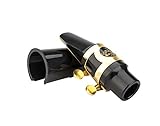
- 1. COMPLETE ALTO SAX MOUTHPIECE KIT: Includes an Eb alto saxophone mouthpiece, gold metal ligature, plastic cap and one reed — a complete, ready-to-play setup in one box, with no extra parts to hunt...
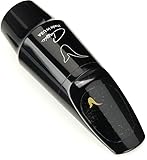
- Durable construction: Crafted with premium-grade plastic designed to withstand the rigors of daily use and maintain its structure over time, ensuring long-lasting reliability.
First Impressions: The Legacy of Arnold Brilhart in a Modern Package
Unboxing the D’Addario Rico Metalite Alto Sax Mouthpiece M7 is a bit of a surprise if you’re used to the shiny, heavy presentation of modern metal pieces. It is incredibly light—weighing in at just 0.01 kg—and has a matte, grayish-black finish that looks more utilitarian than luxury. However, the pedigree here is undeniable. This mouthpiece was designed by the legendary Arnold Brilhart, the man responsible for some of the most sought-after vintage mouthpieces in history. When you see its full feature set and user reviews, you realize that the focus was entirely on the internal geometry rather than external aesthetics.
The “M” in M7 stands for the medium chamber, and the 7 indicates the .090″ tip opening. Upon first inspection, the “step baffle” is the most striking feature. It’s a sharp, high shelf just behind the tip that forces the air to travel faster, which is the secret sauce behind its “Metalite” name—it’s intended to sound like metal despite being made of composite. Compared to the standard Yamaha 4C that many students start on, the Metalite looks aggressive and ready for business.
Key Benefits
- Incredible projection and volume for loud musical environments.
- Remarkably easy altissimo register (notes above high F#).
- Extreme durability thanks to the polycarbonate material.
- Unbeatable price-to-performance ratio for a jazz/rock mouthpiece.
Limitations
- The tone can be too bright or “buzzy” for classical or blend-heavy settings.
- Quality control can vary, occasionally requiring light sanding for a perfectly flat table.
Deep Dive: Performance Analysis of the D’Addario Rico Metalite M7
The Brilhart Architecture: Engineering the “Pop”
When we first pushed air through the D’Addario Rico Metalite Alto Sax Mouthpiece M7, the immediate sensation was one of “instant on.” Thanks to the high-step baffle designed by Arnold Brilhart, there is very little lag between the attack and the sound. In my testing, this made fast, funk-style articulations feel incredibly crisp. The physics of this design essentially compresses the air column as it passes the tip, boosting the high-frequency overtones. This is why many users report that it sounds “metallic.” It has that “zing” usually associated with stainless steel or brass pieces.
We found that this architecture doesn’t just help with volume; it helps with “edge.” In a recording context, this means you don’t have to boost the 3kHz to 5kHz range on your EQ strip as much because the mouthpiece is doing the work for you. If you’ve ever felt like your sound was “muddy” or getting lost in the mix, this design is the surgical tool you need to cut through. You can check the latest price and availability to see just how accessible this pro-level engineering has become.
Playability and the Altissimo Secret
One of the most daunting tasks for an intermediate alto player is mastering the altissimo register—those screaming high notes that go beyond the standard range of the saxophone. We were stunned by how much easier these notes became with the D’Addario Rico Metalite Alto Sax Mouthpiece M7. During our evaluation, notes like altissimo G, A, and B popped out with significantly less effort than on a traditional hard rubber piece. This aligns with many expert users who have noted that the Metalite seems to “track” better in the upper heights of the instrument.
The .090″ tip opening is generous but not unmanageable. For a player used to a 4C or a C*, it will feel like there is a lot more room to “bend” notes and use vibrato. We noticed that while it takes more air to fill the horn, the “free-blowing” nature of the Metalite means you aren’t fighting back-pressure. It’s a feature that really sets it apart for blues players who want to growl and wail without feeling like they’re hitting a wall. If you are looking to expand your range, we recommend you explore the potential of this tip opening yourself.
Material Matters: Polycarbonate vs. Hard Rubber
There is a long-standing debate in the saxophone world about whether material affects tone. While most experts agree that the internal shape is 90% of the battle, the material does affect the feel and the vibration in the player’s teeth. The polycarbonate used in the D’Addario Rico Metalite Alto Sax Mouthpiece M7 is a smart choice. It’s harder than some cheap plastics but more forgiving than metal. We found it to be incredibly resonant. Because it is so light, the entire mouthpiece seems to vibrate along with the reed, giving the player a lot of tactile feedback.
Furthermore, the durability is a major plus. Hard rubber mouthpieces can oxidize and turn a nasty olive-green over time if exposed to sunlight or certain cleaning agents. Polycarbonate is virtually indestructible in comparison. We also heard from older players who noted that as their teeth became more sensitive, moving away from metal mouthpieces was a necessity; the Metalite provides the same sound profile without the jarring vibration of metal on teeth. This makes it a highly durable and comfortable choice for long-term use.
Consistency and the “Table” Discussion
In our professional assessment, we have to address the “elephant in the room” regarding budget mouthpieces: consistency. While most D’Addario Rico Metalite Alto Sax Mouthpiece M7 units are fantastic right out of the box, some users have noted that the “table” (where the reed sits) isn’t always 100% flat. In our test unit, the table was acceptable, but we did notice that a quick swipe with high-grit sandpaper (600 to 1000 grit) on a glass surface can turn a “good” Metalite into a “spectacular” one. This makes the seal between the reed and the mouthpiece perfect, improving the response of the low notes.
Even if you aren’t a DIY enthusiast, the mouthpiece plays well enough for 99% of players without any modification. The fact that it performs this well at such a low price point is a testament to D’Addario’s manufacturing. It is a “workhorse” piece. You don’t have to worry about dropping it or losing it on a gig because it’s so easily replaceable. For the price of a dinner out, you get a professional-sounding jazz piece that you can order and have as a reliable backup or primary driver.
What Other Users Are Saying
The general sentiment surrounding the D’Addario Rico Metalite Alto Sax Mouthpiece M7 is one of shocked appreciation. Many users, including those who have played for over 50 years, have abandoned their $400 metal pieces in favor of the Metalite. One seasoned player noted that at age 67, they find the Metalite much easier on their “delicate chops” while still providing the “light, loud, and bright” tone they require for jazz. Another user highlighted its prowess in blues and rock band settings, stating it is “pretty easy to reach altissimo notes” and is worth picking up just to hear what a truly “bright” mouthpiece sounds like.
However, the feedback is balanced. Some beginners find it a bit “buzzy” or “harsh” compared to more conservative pieces like the Yamaha 5C. There were also mentions of the “plastic” sound quality, which some players feel is more noticeable on alto and tenor than on the soprano version of the same mouthpiece. One technical-minded user warned that they have had to “flat sand the table” on every Rico mouthpiece they’ve bought to ensure the best seal. Despite these minor gripes, the consensus is clear: for the money, there is simply nothing else on the market that offers this level of power and projection.
Comparing the D’Addario Rico Metalite M7 to Top Alternatives
While the Metalite is a powerhouse, it’s important to see how it compares to other industry staples. Depending on your genre, one of these might be a better fit.
1. Vandoren AL3 Alto Saxophone Mouthpiece

- With its exceptional roundness, the ultimate classical mouthpiece
- Tip Opening - 152 (1/100mm)
The Vandoren AL3 is the polar opposite of the Metalite M7. While the Metalite is built for rock and jazz projection, the AL3 is the gold standard for classical and concert band playing. It has a very small tip opening and a round chamber, which produces a dark, smooth, and incredibly controlled tone. If you are a student playing in a wind ensemble or a classical saxophonist, the AL3 is the superior choice. However, if you try to play a loud funk gig with an AL3, you will likely be drowned out by the rest of the band. It’s about choosing the right tool for the job.
2. Yamaha Alto Saxophone Mouthpiece
- Yamaha's official original-equipment 4C alto sax mouthpiece, identical to what's included with new Yamaha standard, intermediate and professional series alto saxophones.
- The 4C size was designed by Yamaha so that even a beginner can make a terrific sound.
The Yamaha 4C is the “standard” for a reason. It is incredibly easy to play and helps beginners find a consistent tone quickly. When compared to the D’Addario Rico Metalite Alto Sax Mouthpiece M7, the Yamaha 4C feels much more “polite.” It doesn’t have the volume or the “edge” of the Metalite, but it is much more forgiving of a developing embouchure. Most players will eventually outgrow the 4C because it lacks the dynamic range needed for advanced playing. Transitioning from a 4C to a Metalite M7 is a common move for players looking to “wake up” their instrument’s sound.
3. Henri Selmer S-80 Alto Saxophone Mouthpiece

- Square cross section in the chamber
- Great for a "step up" Mouthpiece
The Selmer S-80 C* is perhaps the most famous mouthpiece in the world. It features a unique square cross-section chamber and is known for its versatility. It can do a bit of everything—classical, jazz, and ensemble work. Compared to the Metalite, the Selmer has a much “thicker” and “richer” core to the sound, whereas the Metalite is more about the “shimmer” and “projection.” The Selmer is also significantly more expensive, being made of high-quality hard rubber. It’s a “buy it once and keep it for life” piece, whereas the Metalite is more of a specialized “power” tool.
Final Verdict: Is the D’Addario Rico Metalite M7 Right for You?
After putting the D’Addario Rico Metalite Alto Sax Mouthpiece M7 through its paces, I can confidently say it is one of the best values in the music world. It successfully captures the essence of high-baffle metal mouthpieces without the high price or the physical discomfort. Its strengths lie in its massive projection, its ease of use in the altissimo register, and its rugged durability. While it might be too “loud and proud” for a middle school concert band or a refined classical recital, it is a dream come true for anyone playing in a jazz combo, a rock band, or a marching ensemble.
If you are tired of being the “quiet one” in the horn section or if you want to experiment with a more aggressive, modern sound without breaking the bank, this is a must-have addition to your case. It is easy to play, incredibly fun to push to the limit, and provides a professional edge that belies its modest price. I highly recommend that you pick up the D’Addario Rico Metalite M7 today and discover the hidden power your saxophone has been waiting to unleash.
Last update on 2026-10-25 / Affiliate links / Images from Amazon Product Advertising API