
Peterson Strobe Clip-On Tuner Review: Why This Is the Last Tuner You Will Ever Need to Buy
We have all been there: you are mid-set or in the middle of a critical recording session, and something just feels “off.” You look at your standard clip-on tuner, and the little green light says you are perfectly in tune. Yet, when you strike a G-major chord, the third of the chord beats against the root in a way that makes your skin crawl. This is the fundamental frustration of the modern musician. Most tuners on the market are “close enough” tuners, operating with a margin of error that is audible to the human ear, even if the LED display claims otherwise. The search for a solution leads many of us to the world of strobe tuning, a technology once reserved for high-end piano technicians and guitar tech workstations. Finding a portable, durable, and hyper-accurate solution to this problem is why we spent weeks testing the Peterson Strobe Clip-On Tuner. Failing to address these micro-intonation issues doesn’t just hurt your sound; it erodes your confidence as a performer.
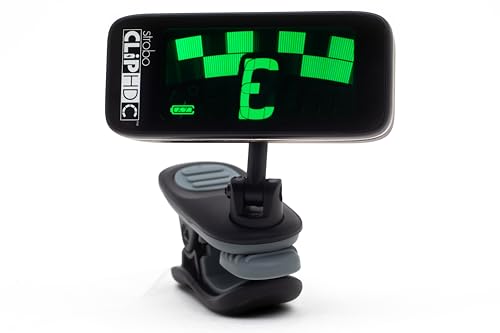
- LED Color Display with Assignable Colors per Tuning
- TRUE STROBE 0.1 CENT ACCURACY - Accurate to 1/1000th of a Semitone or 1/1000th of a Fret
What to Consider Before Investing in High-End Music Tuning Accessories
A Music Tuning Accessories is more than just an item; it’s a key solution for ensuring your musical expression is never hampered by technical inaccuracy. When you step beyond the twenty-dollar “trinket” tuners, you are moving into the realm of precision engineering. The main benefit of a high-end tuner is the ability to achieve “Sweetened” tunings—offsets that compensate for the physical limitations of stringed instruments. For instance, a guitar is never naturally in tune across the entire fretboard due to string tension and bridge physics. A professional-grade tuner solves this by providing specialized algorithms that make the instrument sound more harmonious to the human ear than a standard chromatic scale ever could.
The ideal customer for this type of product is someone facing the demands of professional recording, orchestral performance, or serious gigging where “near enough” isn’t acceptable. If you are a studio musician, a luthier, or a dedicated hobbyist who can hear the slight warble of a flat string, this is a mandatory upgrade. However, it might not be suitable for those who just want a quick, “ballpark” tune-up for a campfire singalong and don’t want to learn how to read a strobe display. For those users, a simpler chromatic needle-style tuner might be less intimidating, though far less accurate.
Before investing, consider these crucial points in detail:
- Dimensions & Space: When looking at a clip-on tuner, you must consider the footprint on your headstock. A tuner that is too bulky can interfere with your tuning pegs or look unsightly on a vintage instrument. You want a low-profile design that offers a wide enough jaw to fit everything from a thin electric headstock to a thick orchestral scroll.
- Capacity & Performance: In the world of tuners, “capacity” refers to accuracy and frequency range. Look for a device that offers at least 0.1 cent accuracy. Standard tuners often only offer 1 to 2 cent accuracy, which is a massive difference when you are trying to set your instrument’s intonation or tune a low B-string on a bass.
- Materials & Durability: Since these devices live on your instrument, the materials matter. High-quality stainless steel and impact-resistant plastics are a must. Most importantly, ensure the “jaws” of the clip are lined with high-grade rubber to protect your instrument’s finish from scratches or chemical reactions with the nitrocellulose lacquer.
- Ease of Use & Maintenance: Long-term care involves battery management. While disposable coin cells are common, they are environmentally wasteful and often die at the worst moments. A rechargeable internal battery is the modern standard, allowing you to top off your power via USB-C between sets or sessions.
Understanding these variables is the first step toward professional-grade sound. While the Peterson Strobe Clip-On Tuner is an excellent choice, it’s always wise to see how it stacks up against the competition. For a broader look at all the top models, we highly recommend checking out our complete, in-depth guide:
Mastering Your Sound: Our Complete Guide to the Best Compact Tuners for Every Instrument

- Full Color Display


- RELIABLE TUNING, NO MATTER WHERE YOU PLAY: By sensing vibrations directly from the instrument, tuning stays accurate in loud venues, quiet practice rooms, and everything in between, so you can focus...

- QUICK TUNING: Tune your guitar or bass with ease with the Eclipse Guitar Tuner. Featuring quick and accurate tuning, large screen, and strong clamp that is adjustable for a variety of viewing angles
First Impressions: The Gold Standard of Headstock Tuning
Opening the box of the Peterson Strobe Clip-On Tuner (the StroboClip HDC model), you immediately notice a significant jump in build quality compared to the “plastic-heavy” alternatives. The chassis feels substantial, and the stainless steel clip has a tension that feels secure without being destructive. It doesn’t feel like a toy; it feels like a piece of lab equipment adapted for the stage. We were particularly impressed with the high-definition color screen. Unlike previous generations that used monochrome or low-resolution LCDs, the HDC display is crisp, vibrant, and incredibly responsive. Even before we plucked a string, we could tell that we were looking at a professional tool designed for high-stakes environments. The unboxing experience is straightforward, and because it comes with a USB-C charging cable, you are ready to go within minutes of plugging it in. It sits comfortably on the headstock, and the adjustable arm allows for a variety of viewing angles, which is a major plus for multi-instrumentalists.
What We Like
- Incredible 0.1 cent accuracy that truly makes “sweetened” tunings possible.
- The USB-C rechargeable battery lasts for many tuning cycles, ending the “dead coin cell” nightmare.
- Over 50 Sweetened tunings for everything from 7-string guitars to banjos and violins.
- The bright, assignable multi-color display is visible even in direct, midday sunlight.
What We Didn’t Like
- The strobe display has a slight learning curve for those used to simple needle tuners.
- The premium price point is significantly higher than entry-level clip-ons.
Deep Dive: Putting the Peterson Strobe Clip-On Tuner to the Test
The Science of Strobe: Accuracy Beyond the Human Ear
When we talk about the Peterson Strobe Clip-On Tuner, the headline feature is the 0.1 cent accuracy. To put that into perspective, a “cent” is 1/100th of a semitone. Most popular clip-on tuners are accurate to within 1 or 2 cents. While that sounds small, the human ear can easily detect the “beats” caused by a 2-cent deviation when playing chords. During our testing, the difference was immediately apparent. When using the strobe display, you aren’t looking for a needle to sit in the middle; you are looking for a rotating pattern to stop moving. This real-time tracking of the input signal is incredibly fluid on the HDC model.
We found that this level of precision is particularly vital for checking intonation. If you’ve ever wondered why your guitar sounds in tune at the 2nd fret but sour at the 12th, this tuner will tell you exactly why. By checking the open string against the 12th-fret harmonic and the fretted note, you can evaluate your instrument’s setup with surgical precision. One user noted that even when they lock in an open string, the harmonics are perfectly in tune as well—a feat that cheaper tuners rarely achieve. This isn’t just about being “in tune”; it’s about being “harmonically aligned.”
Sweetened Tunings: The Secret to a Harmonious Sound
One of the most revolutionary aspects of the Peterson Strobe Clip-On Tuner is the library of over 50 “Sweetened” tunings. As experts in the field, we know that equal temperament is a compromise. For example, a standard guitar has inherent tuning issues due to string gauge and fret placement. Peterson’s Sweetened tunings are proprietary offsets that subtly adjust each string to compensate for these physical realities. We tested the “GTR” (Electric Guitar) and “ACU” (Acoustic Guitar) settings and found that the chords sounded remarkably more “consonant” and “musical” compared to standard chromatic tuning.
This versatility extends far beyond the guitar. We evaluated the presets for bass, violin, and even harp. For orchestral players, the ability to adjust the Concert A reference from 390Hz to 490Hz is a godsend. We also took a cue from a user who utilized this for a pedal harp; while the clamp is designed for thinner surfaces, it can be positioned on the soundboard or box to get a clear vibration read. This adaptability makes it a feature that really sets it apart from the “one-size-fits-all” approach of cheaper brands. Whether you are drop-tuning a metal axe or refining the temperament of a banjo, the offsets are expertly curated.
Visibility and Ergonomics: Built for the Real-World Stage
A tuner is useless if you can’t read it under stage lights or in the glare of an outdoor festival. The Peterson Strobe Clip-On Tuner addresses this with a high-definition, backlit color display that is specifically designed to be visible in direct sunlight. During our outdoor “stress test,” the display remained crisp and easy to read, whereas many LCD-based tuners simply wash out. Furthermore, the ability to assign different colors to different presets is a stroke of genius for performers who switch instruments or tunings mid-show. You can set your standard tuning to blue, your Open D to red, and your DADGAD to green, providing an instant visual confirmation of your settings.
The ergonomics of the new HDC model are a significant improvement over the older “HD” version. The clamp jaw is wider, lined with protective rubber, and features a stainless steel frame that feels like it can withstand years of being tossed into a gig bag. We found that the swivel mechanism allows for a 360-degree rotation, ensuring that no matter how you clip it on, the screen is facing you. For those with fading eyesight, the “big, bright display” mentioned by several users is a major quality-of-life improvement. You don’t need your reading glasses to see if that strobe is still spinning.
Modern Power Management: The USB-C Advantage
We cannot overstate how much we appreciate the move to a rechargeable internal battery. The Peterson Strobe Clip-On Tuner eliminates the need for CR2032 button cells, which are not only expensive over time but often fail without warning. The USB-C charging is fast and efficient. In our evaluation, a single charge lasted for dozens of tuning cycles over several weeks. This reliability is critical for touring musicians who may not have easy access to a battery shop in the middle of a run.
Beyond just power, the “Auto Transposition” and “Capo Settings” features reflect a deep understanding of what musicians actually need. If you are playing with a capo on the 3rd fret, you can tell the tuner, and it will display the notes as if you were playing in open position. This mental shortcut is invaluable during high-pressure rehearsals. It’s this attention to detail that makes us say you should check the latest price and availability for this device; it is an investment in your peace of mind and your professional sound.
What Other Users Are Saying
The general sentiment among professionals and serious enthusiasts is that this isn’t just “another tuner”—it is in a category of its own. One long-time guitarist noted that after 60 years of playing, the strobe technology was a revelation, stating it “really does zero into super duper in tune.” We agree with the user who claimed this is “not the best clip-on tuner, it is the only good clip-on tuner,” highlighting the reliability and consistency that brands like Snark or D’Addario sometimes lack in high-precision scenarios.
However, the feedback isn’t without its nuances. One orchestral player noted that while it was “absolutely perfect” for violin, they had to slightly modify their mounting technique because the jaw didn’t initially fit their specific peg orientation comfortably. Another user mentioned that they missed the “cents display” found on the Peterson mobile app, though they admitted the sound isolation provided by the clip-on’s vibration sensor was a more than fair trade-off for use in noisy environments. These reviews confirm our findings: it is a high-performance tool that may require a brief adjustment period but delivers unmatched results in real-world conditions.
Comparing the Peterson Strobe Clip-On Tuner to the Competition
While the Peterson is our top pick for precision, it’s helpful to see how it compares to other popular models on the market.
1. SNARK SN1X Clip-On Tuner

- With stay put clip, display rotates 360 degrees for easy viewing
- Pitch Calibration (415-466 Hz)
The SNARK SN1X is the “everyman” of the tuning world. It is significantly more affordable than the Peterson and offers a very simple, intuitive interface that most beginners will find easier to navigate. However, it lacks the 0.1 cent accuracy and the “Sweetened” tuning offsets that make the Peterson so special. While the SN1X is great for casual practice or a quick check, it doesn’t provide the level of detail needed for professional intonation work or studio recording. If you are on a tight budget and just need to be “mostly in tune,” the Snark is a solid, albeit less durable, choice.
2. SNARK SN5X Clip-On Tuner
- Full Color Display
- Features frequency range tailored to guitar and bass
The SNARK SN5X is specifically marketed for guitar, bass, and violin. Like its sibling, it is incredibly lightweight and easy to use. It relies on a standard chromatic needle display, which is fast but lacks the fluid, real-time feedback of a true strobe. During our comparison, we found the SN5X’s build quality to be much more fragile; the plastic joints are prone to snapping if handled roughly. It’s a decent “emergency” tuner to keep in your case, but for anyone serious about their instrument’s harmonic resonance, it simply cannot compete with the Peterson Strobe Clip-On Tuner.
3. D’Addario Eclipse Guitar Tuner
- QUICK TUNING: Tune your guitar or bass with ease with the Eclipse Guitar Tuner. Featuring quick and accurate tuning, large screen, and strong clamp that is adjustable for a variety of viewing angles
- RECHARGEABLE: Enjoy 24 hours of guitar tuning time per charge without changing or buying batteries. Simply plug the supplied USB cable into any USB power device as needed
The D’Addario Eclipse is the closest competitor in terms of modern features, as it also offers USB-C rechargeability at a more mid-range price point. It has a sleek, low-profile design that many guitarists prefer. However, where it falls short is the actual tuning engine. The Eclipse is a standard chromatic tuner, meaning it doesn’t offer the strobe precision or the instrument-specific “Sweetened” offsets that Peterson is famous for. If you want the convenience of a rechargeable battery without the “strobe price tag,” the Eclipse is an excellent middle-ground option, but it won’t satisfy the perfectionist’s ear the way a Peterson will.
The Final Verdict: Is the Peterson Strobe Clip-On Tuner Worth It?
After extensive testing and comparison, our conclusion is clear: the Peterson Strobe Clip-On Tuner is the gold standard for headstock tuning. Its combination of 0.1 cent accuracy, over 50 specialized tuning offsets, and a robust, rechargeable design makes it an essential tool for any serious musician. While the price is higher than the “trinket” tuners you’ll find in most shops, the value it provides in terms of harmonic clarity and professional confidence is immeasurable. It solves the problem of “sour chords” and provides a reliable way to maintain your instrument’s intonation without needing a trip to the luthier.
If you have spent hundreds or thousands of dollars on your instrument and your amplifier, it makes little sense to bottleneck your sound with a twenty-dollar tuner. Whether you are a studio pro, a touring musician, or a dedicated hobbyist, this is one of the few pieces of gear that will genuinely make you sound better every time you use it. To experience the difference that true strobe accuracy can make for your own performance, we highly recommend that you see its full feature set and user reviews today and make the switch to Peterson.
Last update on 2026-10-25 / Affiliate links / Images from Amazon Product Advertising API