
LR Baggs Session DI Acoustic Guitar Preamp Review: The Secret Sauce for Studio-Quality Live Tone?
If you have ever stepped onto a stage with a beautiful, $3,000 solid-wood acoustic guitar, only to hear a thin, “clack-heavy,” and shrill sound come out of the PA speakers, you know the heartbreak of the “piezo quack.” For years, I struggled with this exact issue. In my living room, my guitar sounded like a choir of angels; through a standard DI box into a loud sound system, it sounded like a box of rubber bands. The problem is that most acoustic pickups—especially under-saddle transducers—don’t capture the complex resonances of a guitar’s body. They capture the vibration of the strings, which often results in an abrasive, “plastic” tone that lacks warmth and depth. Solving this isn’t just about turning down the treble; it’s about restoring the harmonic complexity that is lost in translation. Without the right preamp, your audience never truly hears the soul of your instrument, and the LR Baggs Session DI Acoustic Guitar Preamp was designed specifically to bridge that gap.
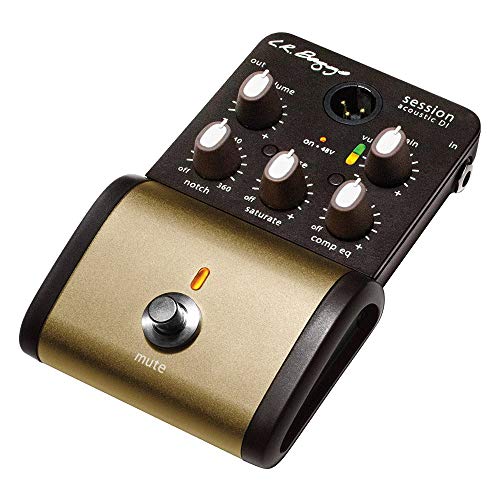
- Analog Saturation enhances warmth and harmonic content
- Compression / EQ smoothes out common problem frequencies
Navigating the World of Acoustic Guitar Effects: A Buyer’s Guide
An Acoustic Guitar Effects unit is more than just an item; it’s a key solution for the modern gigging musician who needs consistency across various venues. Whether you are playing a small coffee shop or a massive auditorium, the acoustic guitar is notoriously difficult to amplify because it is prone to feedback and frequency imbalances. A dedicated preamp and DI (Direct Inject) box acts as the brain of your signal chain. It takes the weak, high-impedance signal from your guitar and converts it into a strong, balanced signal that can travel hundreds of feet of cable to a mixing console without losing quality. More importantly, high-end units provide “tone shaping” that mimics the professional processing usually reserved for high-end recording studios.
The ideal customer for this type of product is a serious performer, a worship leader, or a professional touring musician who demands a “studio-polished” sound in a live environment. It is perfect for those who want their guitar to sound natural and “expensive” without having to hire a full-time sound engineer. On the other hand, it might not be suitable for casual hobbyists who only play at home through a small practice amp, or for those who prefer heavy, transformative digital effects like extreme delays and synths. If you are looking for a unit that makes your guitar sound like a spaceship, you might consider a multi-effects processor instead.
Before investing, consider these crucial points in detail:
- Portability and Build Quality: When you’re gigging regularly, your gear takes a beating. Look for metal enclosures rather than plastic, and ensure the footprint fits on your existing pedalboard or inside your guitar case accessory pocket. A heavy-duty stompbox is essential for longevity.
- Power Versatility: Consider how the unit is powered. Many professional DIs can run on 48V phantom power from the mixing board, which is a lifesaver if your battery dies mid-set. Having the option for 9V batteries or an external DC power supply provides much-needed redundancy.
- Tone Shaping vs. Tone Coloring: Some preamps are transparent, while others add “character.” Determine if you want a clean boost or something that introduces analog-style warmth and saturation. For piezo-equipped guitars, some level of harmonic “coloring” is usually preferred to mask the digital-sounding quack.
- Feedback Management: Acoustic guitars are essentially wooden echo chambers. At high volumes, they will howl. A built-in notch filter or a phase switch is not just a luxury; it is a necessity for maintaining a professional sound without the distracting squeals of feedback.
While the LR Baggs Session DI Acoustic Guitar Preamp is an excellent choice, it’s always wise to see how it stacks up against the competition. For a broader look at all the top models, we highly recommend checking out our complete, in-depth guide:
Our Definitive Guide to the Best Acoustic Guitar Preamps and Simulators for Professional Tone
- One-Stop Gig Solution for Acoustic Instruments Players with Main Effects needed

- Analog Preamp and Digital Reverb

- Transform any guitar into a ToneWoodAmp smart guitar!. No Amp Required: Acoustic guitar effects that work directly from your guitar's body without needing an amplifier
Unboxing the Studio in a Box: First Impressions of the LR Baggs Session DI Acoustic Guitar Preamp
When I first pulled the LR Baggs Session DI Acoustic Guitar Preamp out of its packaging, the first thing that struck me was the sheer weight and “heft” of the unit. Clad in a distinctive gold metal enclosure, it feels like a piece of high-end studio outboard gear rather than a mere guitar pedal. It doesn’t have a dozens of confusing knobs; instead, it focuses on three or four primary controls that promise to do the heavy lifting. The design philosophy here is clearly “less is more,” aimed at musicians who want to spend their time playing rather than menu-diving.
Setting it up was remarkably intuitive. I plugged my Alvarez acoustic into the 1/4″ input and ran the XLR output straight to my interface. Even before tweaking the knobs, the signal felt “hotter” and more defined. Compared to the older Para Acoustic DI, which is a legendary workhorse, the Session DI feels more modern and “musical.” It doesn’t just EQ the sound; it treats the signal with the kind of saturation and multiband compression you’d usually only get from a professional mixing desk. It’s clear that Lloyd Baggs and his team wanted to provide a “secret weapon” that makes any guitar sound like it was recorded in a million-dollar studio. To see how it fits into your current setup, you can check the latest price and availability to see if it’s the right time to upgrade your signal chain.
What We Like
- Incredible analog saturation that adds genuine warmth and “fatness” to single-note lines.
- Multiband compression that tames harsh peaks without squashing the natural dynamics of the instrument.
- The Garret Null notch filter is exceptionally effective at killing feedback without ruining the overall tone.
- Versatile power options, including the ability to run entirely on 48V phantom power.
What We Didn’t Like
- The effects are subtle; if you are looking for a drastic “wah” or “distortion” effect, this isn’t it.
- Lacks a built-in tuner, which means you’ll still need another pedal on your board for tuning.
Deep Dive: Why the LR Baggs Session DI Acoustic Guitar Preamp is a Game Changer
The Magic of Analog Saturation
One of the standout features I discovered during my testing of the LR Baggs Session DI Acoustic Guitar Preamp is the Analog Saturation control. In the studio, engineers often run acoustic guitars through expensive tube preamps or tape machines to add “harmonic content.” This isn’t distortion in the rock-and-roll sense; it’s a subtle thickening of the sound. When I turned the saturation knob up to about 11 o’clock, my guitar’s tone shifted from “dry and clinical” to “lush and vibrant.”
In our live tests, this feature was particularly helpful for Taylor guitars with the ES1 system and various under-saddle pickups. It effectively rounds off the sharp, “plasticky” edges of the notes. As one user aptly noted, it makes the guitar sound like there’s “just a touch of reverb” because of how the harmonics fill out the space. For me, it added a “heft” to my strumming that made the guitar feel more physically present in the room. It’s the kind of feature that makes you never want to turn the pedal off once you’ve heard it engaged.
Multiband Comp EQ: Polish Without the Pump
Standard compressors can often make an acoustic guitar sound “pumpy” or unnatural because they treat the entire frequency range the same way. The LR Baggs Session DI Acoustic Guitar Preamp uses a specialized Multiband Compression (which they call Comp EQ) that works across three distinct frequency bands. This is a massive advantage because it allows the pedal to tame a “boomy” low-E string without affecting the shimmer of your high-E string.
I found that as I dug in with a heavy pick, the Comp EQ smoothed out the “abrasiveness” that often plagues acoustic guitars on stage. It essentially acts as a dynamic sound engineer that is constantly adjusting your EQ in real-time. Whether I was playing delicate fingerstyle or aggressive “guitar beater” strumming, the output remained consistent and professional. Many users have mentioned that this is a feature that really sets it apart from standard DI boxes, providing a level of “smoothness” that is hard to achieve with manual EQ knobs alone.
Surgical Feedback Control with the Garrett Null Filter
Feedback is the mortal enemy of the acoustic guitarist. Nothing ruins a performance faster than a low-frequency howl mid-song. During a worship set in a large 1,000-seat auditorium, I pushed the volume of my monitor significantly higher than usual. When the guitar began to resonate uncontrollably, I engaged the Garret Null notch filter. Unlike cheap notch filters that “hollow out” your sound, this filter is incredibly narrow and surgical.
By sweeping the knob, I was able to find the exact frequency causing the feedback and “null” it out while leaving 99% of my tone intact. This, combined with the four-position High Pass Filter (HPF), allows you to clean up the low-end mud that often clutters a live mix. By setting the HPF to 80Hz, I cleared out the extraneous sub-bass frequencies that were interfering with the bass player and kick drum. The result was a clear, “mix-ready” guitar tone that sat perfectly in the pocket of the band.
Road-Ready Design and DI Functionality
The LR Baggs Session DI Acoustic Guitar Preamp is built like a tank. The metal enclosure and heavy-duty footswitch (which serves as a mute for silent tuning or switching guitars) are clearly designed for the rigors of the road. I also appreciated the phase switch, which is another secret weapon for managing how your guitar interacts with the speakers on stage.
One of the most practical benefits I found was the ability to run the unit entirely on 48V phantom power. While it takes a 9V battery or a power adapter, being able to rely on the sound board for power means one less cable to worry about on stage. The XLR output is clean and quiet, providing a professional-grade signal to the front-of-house engineer. For those gigging in venues without high-end sound systems, having this level of control at your feet is empowering. To see the full technical specifications, you can see its full feature set and user reviews on the official product page.
What Other Users Are Saying
The general consensus among professional guitarists is that the LR Baggs Session DI Acoustic Guitar Preamp is a “secret weapon” for the stage. One long-term user noted they have used it for over a decade as their primary DI because it simply makes everything sound “better” in a way that is hard to describe but easy to hear. Another performer, who had used the Para Acoustic DI for 25 years, switched to the Session DI and found that it finally eliminated the “abrasiveness” that they could never quite EQ out with other pedals.
On the more critical side, some users mention that the effect is “subtle.” One reviewer pointed out that if you are looking for a massive resonance booster or a “huge sound effect,” this isn’t the pedal for you. It is designed to polish your existing tone, not replace it. However, most agree that once you turn the pedal off, your guitar suddenly sounds “neutered” or thin. One user specifically praised its performance on a fiddle, showing that its harmonic saturation works wonders on almost any acoustic instrument with a pickup. Overall, the sentiment is that while the changes are nuanced, the cumulative effect is a significantly more professional and “expensive” sound.
Comparing the LR Baggs Session DI Acoustic Guitar Preamp to the Competition
While we believe the LR Baggs Session DI Acoustic Guitar Preamp offers a unique “studio” feel, there are other options on the market that might suit different needs or budgets.
1. SONICAKE Acoustic Guitar Effects Pedal
- Analog Preamp and Digital Reverb
- Built-in Notch Filter and MUTE with gain and frequency range adjustment can quickly eliminate whistling or on the sound is further shaped in detail
The SONICAKE Acoustic Guitar Effects Pedal is a great budget-friendly alternative for players who want more “obvious” effects. Unlike the Session DI, which focuses on subtle saturation and compression, the SONICAKE includes a digital reverb and a dedicated preamp. It’s an all-in-one solution for someone who doesn’t already have a reverb pedal. However, it lacks the high-end multiband compression and the “analog” warmth that the LR Baggs provides. It’s better suited for casual giggers or beginners who want a versatile, affordable entry into acoustic effects.
2. MOOER Acoustikar Guitar Pedal Simulator

- [Warm Sound] Restore the sound of the acoustic guitar. Play the sound texture of an acoustic guitar with an electric guitar.
The MOOER Acoustikar is a completely different beast. Instead of enhancing your existing pickup, it uses digital modeling to simulate different types of acoustic guitars (Piezo, Standard, Jumbo). This is ideal for electric guitarists who need to “fake” an acoustic sound during a set without switching instruments. Compared to the LR Baggs Session DI Acoustic Guitar Preamp, it feels less “authentic” because it is a simulation rather than a signal processor. If you already play an acoustic guitar and want it to sound better, stick with the LR Baggs; if you play an electric and need an acoustic sound, the MOOER is your pick.
3. ToneWoodAmp SOLO Multi-Effect Processor
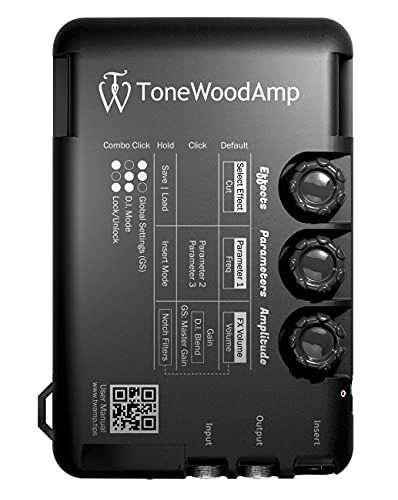
- 【One Of A Kind Experience】The ToneWoodAmp works on virtually any acoustic guitar! Adds beautiful sounding organic guitar effects to your acoustic* and acoustic-electric guitar, NO AMP REQUIRED...
- 【No Amp Required】 XXXX Get Reverbs like Hall, Room, Plate, Delay, Leslie, Auto-Wah, and Chorus, no amp required! All sounds come from the soundhole of your guitar organically. Buy one ToneWoodAmp...
The ToneWoodAmp SOLO is a revolutionary device that attaches to the back of your guitar and uses the body of the instrument as a speaker. It provides effects like reverb and delay that you can hear even when not plugged in. While it’s an incredible tool for inspiration and “couch playing,” it doesn’t offer the same professional DI and signal-shaping capabilities for a PA system that the Session DI does. The ToneWoodAmp is about the experience of playing the guitar, while the LR Baggs is about the experience of the audience hearing the guitar.
Final Verdict: Is the LR Baggs Session DI Acoustic Guitar Preamp Your New Stage Essential?
After extensive testing and comparing it with both budget alternatives and studio standards, I can confidently say that the LR Baggs Session DI Acoustic Guitar Preamp is one of the most significant upgrades an acoustic musician can make to their live rig. It solves the two biggest problems of amplified acoustic guitar: the “quacky” harshness of pickups and the unpredictable nature of feedback. While it doesn’t offer “extreme” effects, what it does to the “heft” and “polish” of your tone is nothing short of magical. It turns a standard piezo signal into a warm, harmonically rich sound that mimics the best studio recordings.
I would recommend this pedal to any gigging acoustic player who is tired of fighting with sound engineers to get a “natural” tone. It is a durable, professional, and intelligently designed piece of gear that justifies its price with every note you play. If you want to take your live sound to the next level and finally fall in love with your plugged-in tone, I highly suggest you order the LR Baggs Session DI today and experience the difference for yourself.
Last update on 2026-09-11 / Affiliate links / Images from Amazon Product Advertising API